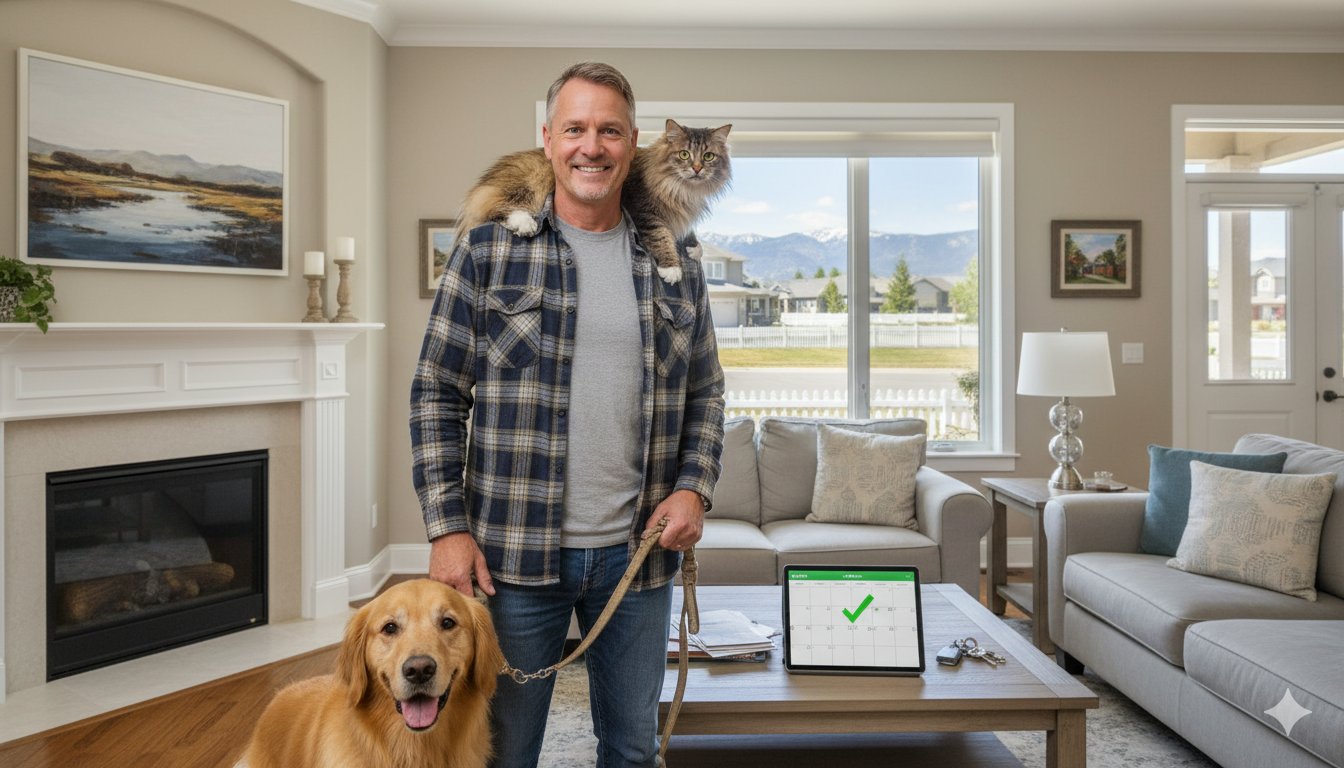
There is a specific kind of panic that sets in when you are staying in a multi-million dollar glass-walled villa, and the resident Golden Retriever decides to shake off a muddy pond adventure in the middle of the pristine living room.
It’s a moment that Instagram never shows. If you scroll through our feed, you’ll see us sipping espresso in Tuscany or hiking in the Swiss Alps with a Shepherd by our side. But the reality? That view is "rent" we pay in the form of muddy paw cleanups, 6 AM walks in the rain, and becoming experts in canine body language.
We’ve spent hundreds of days living in other people’s homes, from Sydney to the French mountains, and if there is one thing we have learned, it is that routine is everything. House sitting isn't just a free holiday; it is a job where the boss has four legs and can't verbally tell you when they have a stomach ache.
Whether you are a seasoned nomad or just figuring out your house sitter definition, looking after dogs is a serious responsibility wrapped in a very furry, cute package. Here is exactly how we manage it, keeping the dogs happy and the homeowners giving us five-star reviews.
The Foundation: Why Routine is Your Best Friend
Research suggests that maintaining a dog's routine for feeding, exercise, and play is essential for their well-being. Unlike us, dogs don't thrive on spontaneity. When their owners leave, their world is already turned upside down. As the sitter, your job is to be the anchor.
We always aim to replicate the owner's schedule as closely as possible. If the dog eats at 7:00 AM, we are up at 6:45 AM. If they get a walk before bed, we put our boots on. Disrupting a dog's schedule is the fastest way to induce anxiety, which can lead to accidents in the house or destructive behavior.
When we are browsing house sitting jobs, we always look for descriptions that detail the daily flow. This helps us decide if the sit matches our work schedule. If a dog needs four hours of active hiking a day and we have a heavy workload that week, it’s not a match.
The Pre-Sit Strategy: Meet-and-Greets and Questions
We cannot stress this enough: Evidence leans toward early meet-and-greets helping build trust.
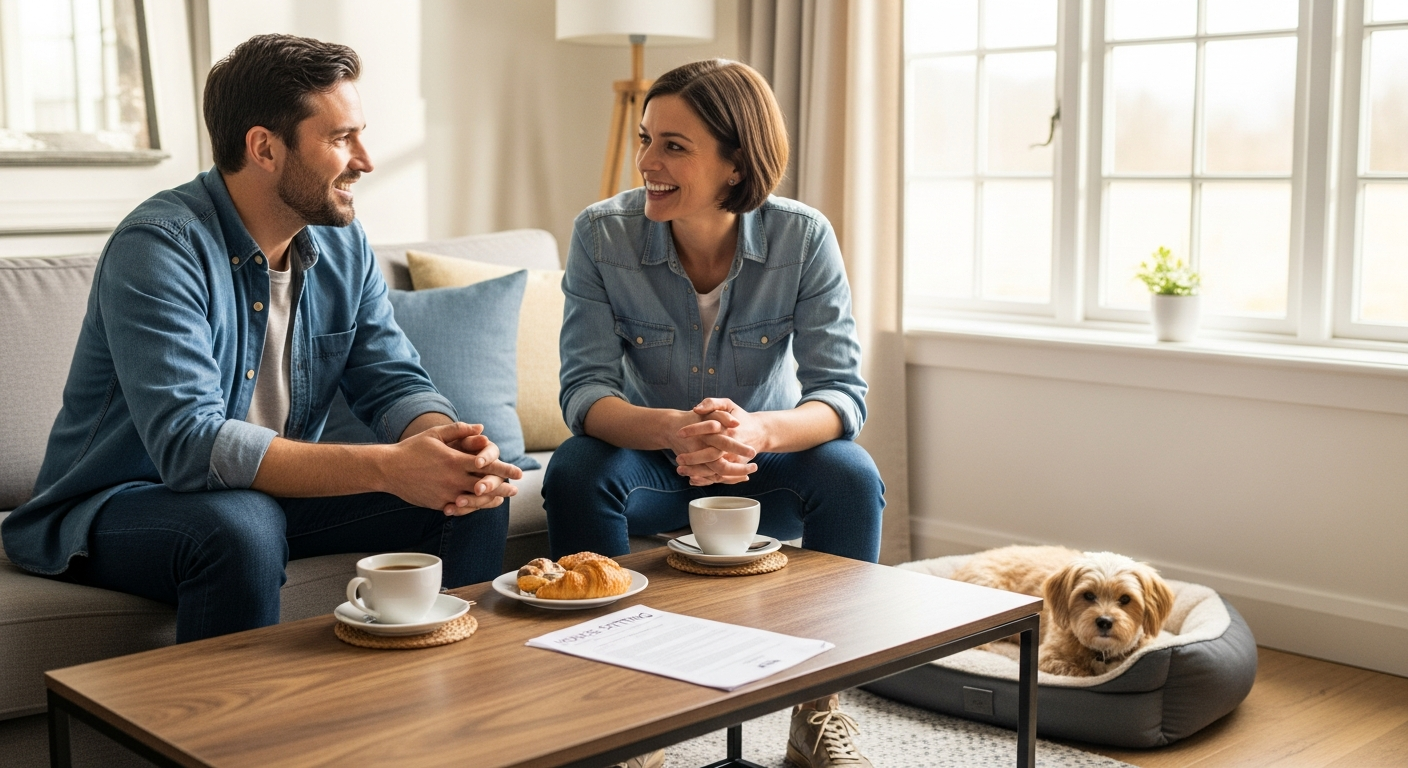
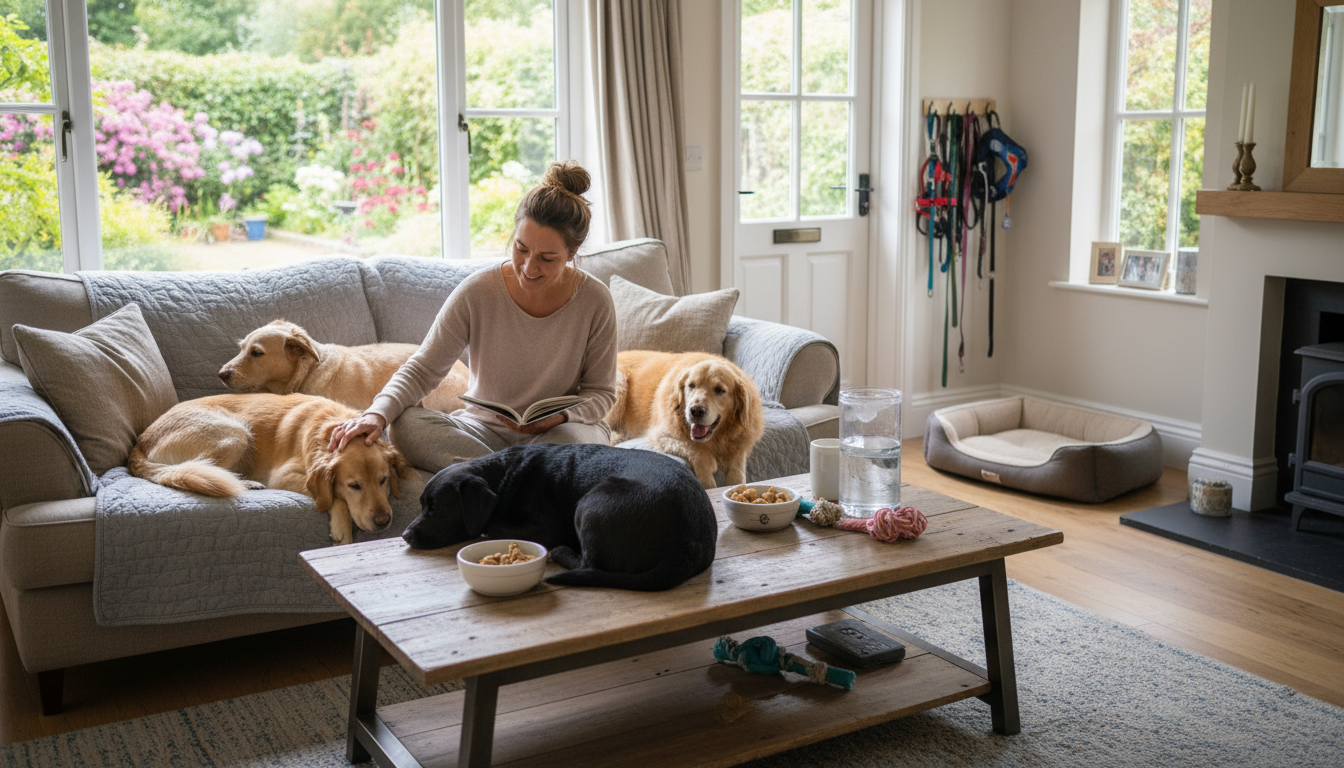
Before we even confirm a sit, we usually hop on a video call to get a vibe for the owners and the pets. But nothing beats meeting in person. If we are already in the area, we arrange to come by a day early. This allows the dog to see us interact with their owners, signaling that we are "friends" and not intruders.
During this time, we aren't just petting the dog; we are interviewing the owner. We utilize a mental checklist of questions to ask a homeowner. You need to know:
Where is the breaker box?
Where is the water shut-off?
Does the dog have any triggers (thunder, mailmen, other dogs)?
What is the exact command for "drop it"?
We also use this time to assess the home. We look for potential escape routes in the garden and check if the fence is secure. I used to own a Foxy terrier who was an escape artist. Learning this sort of information from the owners before beginning a house sit will allow you to not stress if the dog runs away and gives you an indication of what to do if that is the case.
Also, helps to know this so you can inspect the house before hand to get a good idea of potential escape routes.
A Typical Day: The Dog Sitter’s Grind
Unlike house sitting for cats, where you might have hours of uninterrupted independence, dogs dictate the rhythm of your day.
Mornings: Usually start between 7:00 AM and 8:00 AM. It’s straight out of bed and out the door for a potty break or a walk. Then comes feeding. We always watch them eat, appetite changes are the first sign of illness.
Midday: Depending on the breed, they will likely need a midday break. We structure our sightseeing or remote work around this. You can't leave a dog alone for 10 hours while you explore a new city.
Evenings: Another walk, dinner, and then the best part: cuddles on the sofa (if allowed).
We always make sure to simplify taking photos throughout the day. Owners love seeing their pets happy. A quick snap of them sleeping or playing fetch sent via WhatsApp puts the owner's mind at ease and builds your reputation.
The Danger Zone: Toxic Foods and Hazards
It seems likely that avoiding common toxic foods prevents health risks, yet accidental exposure remains a massive concern in unfamiliar homes. When you are in a new kitchen, it’s easy to drop a crumb or leave a bag open.
We are hyper-vigilant about what we eat around the dogs. Xylitol is a silent killer found in gum and peanut butter, and even a small amount can be fatal.
Foods we absolutely ban from dog reach:
Chocolate: The darker, the more dangerous.
Grapes and Raisins: Can cause sudden kidney failure.
Onions and Garlic: Damage red blood cells.
Macadamia Nuts: Cause weakness and tremors.
Cooked Bones: They can splinter and puncture the stomach.
Alcohol/Yeast Dough: Vomiting, incoordination, coma.
Caffeine: Panting, seizures, death.
Avocado: Upset, cardiac issues in some.
Citrus: Irritation, depression.
Milk/Dairy: Diarrhea.
Coconut: Loose stools.
Salt: Tremors, seizures.
We also do a "visual sweep" of the floor daily, nothing to hardcore, just checking after we cook something, or eat snacks.
During one of our house sits house sits, we found a dropped pill that was dry under the table from the previous owner. If the dog had found it first, it could have been a disaster.
Reading the Room: Signs of Distress and Aggression
Dogs are excellent communicators; humans are just bad listeners. Signs of distress, aggression, or illness often overlap.
We monitor behavior closely without assuming the worst. If a dog is pacing, whining, or yawning excessively, they are likely anxious. We don't force affection on an anxious dog. Instead, we sit quietly on the floor and let them come to us.
Watch out for these subtle red flags in behavior:
Whale Eye: You can see the whites of their eyes.
Lip Licking: When no food is present.
Freezing: If a dog suddenly goes stiff, stop what you are doing immediately.
If a dog shows aggression, we back off. We never try to "dominate" a strange dog. We respect their space and contact the owners immediately. This is also why checking insurance coverage before the sit is important. You need to know who pays if something goes wrong. In most cases it's the responsibility of the Pet owners.
15 Red Flags to Watch For
Not every house sit is a dream vacation. Sometimes, you get a gut feeling that something is off. Over the years, we have learned to spot red flags in a pet sitter listing or owner behavior that send us running.
Vague Health Details: "He has a little cough" often means "He needs complex medication 4 times a day."
No Video Call: If they don't care who stays in their home, they usually don't care about your comfort either.
Messy Homes: If the house is dirty in the photos, it will be worse in person.
The "Easy" Dog: If an owner says the dog requires "zero effort," they are lying. All dogs need effort.
Broken Cameras: Undisclosed cameras are a privacy violation.
Micromanaging: If they have a 40-page manual for a goldfish, imagine the stress of the dog sit.
Aggression History: Any mention of "nipping" needs serious clarification.
No Reviews: Everyone starts somewhere, but for a complex dog sit, we want social proof.
Overcrowding: Three large dogs in a small apartment is a recipe for stress.
Last Minute Panic: Owners booking 24 hours before a month-long trip often leave things disorganized.
Exploitation: Watch out for owners who exploit sitters by asking for major renovation work or deep cleaning disguised as "light duties."
Unclear Dates: Ambiguity about return times can leave you homeless for a night.
Lack of Supplies: If they don't have a leash or poop bags, they aren't prepared.
No Vet Details: This is non-negotiable.
The Gut Feeling: If it feels wrong, it is wrong.
Tips and Tricks for a 5-Star Sit
We treat every house sit like an audition for the next one. We want that glowing review on Trusted House Sitters or whichever platform we are using.
Here are some tips on how to look after dogs, that may come in handy while house sitting. For Caro and I, we find that the best approach with Dog's in particular is to not force anything.
You have time to build a better relationship with the pets. Once they notice that you are providing them food, taking them for walks etc then they will start to get more and more comfortable with you on their own.
Conduct a detailed questionnaire on pet needs.
Assume potential aggression; approach calmly.
Let the dog initiate contact for trust-building.
Research breed-specific traits beforehand.
Note health changes like appetite shifts, and inform the house owner if it continues over a few days
Distract anxious dogs with toys or routines.
Learn body language to read moods.
If you are just learning how to get started, remember that professionalism sets you apart. We treat this as a career, even if no money changes hands.
Managing Expectations and Legalities
It is important to understand the legal issues surrounding house sitting. Liability can be tricky. If the dog bites someone while you are walking them, who is responsible? Generally, having an agreement via the platform helps clarify this.
We also discuss visitors upfront. Can house sitters have visitors? Usually, the answer is no, or it must be cleared explicitly. Bringing a stranger into a dog’s territory can trigger aggression or anxiety, so we generally avoid it to keep the peace.
Is It Worth It?
People often ask us is house sitting worth it? When we are hiking a trail in Italy with a happy dog, looking at a view we didn't have to pay for? Absolutely.
But it requires work. It requires you to be selfless. You have to prioritize the animal's needs over your desire to sleep in or stay out late. If you prefer total freedom, you might want to look into house sitting without pets—though those gigs are rare unicorns!
For us, the bond we build with these animals is the real reward. There is nothing quite like the greeting a dog gives you when you return to the house, tail wagging, treating you like the most important person in the world.
Final Thoughts
Whether you are using Rover for paid gigs or trading care for accommodation, the principles remain the same. Safety, communication, and love.
If you are ready to jump in, make sure your house sitting profile reflects your experience with animals. Be honest about your capabilities. If you can't handle a 40kg German Shepherd pulling on the leash, don't apply for the sit.
Good luck with your house sits! If you are worried about getting a negative review, just follow the dog's routine, keep them safe, and communicate often. You'll do great.
Caro & Konrad 🐾🚐

How long should I leave a dog alone during a house sit?
It depends on the dog's age and breed, but generally, dogs should not be left alone for more than 4-6 hours. Always clarify this with the owner beforehand to ensure it fits your schedule.
What should I do if the dog gets sick while house sitting?
Contact the owner immediately to inform them of the symptoms. If it's an emergency, take the dog to the vet listed in your emergency contact sheet; don't wait for a reply if the situation is critical.
Do house sitters provide their own food?
Yes, house sitters typically provide their own food. However, owners often allow sitters to use condiments, spices, and perishable items that would otherwise go bad, but always ask first.
How do I handle a dog with separation anxiety?
Maintain a calm routine, avoid making a fuss when leaving or returning, and use distractions like puzzle toys or treats. If the anxiety is severe, stay home more often to provide companionship.
Is it safe to walk dogs off-leash during a sit?
We strongly recommend keeping dogs on a leash unless you are in a securely fenced area approved by the owner. Even well-behaved dogs can bolt in unfamiliar situations or if startled.