

Home > Blog > House Sitting Legal Issues
Quick Facts
| Is house sitting legal? | Yes — a private domestic arrangement, not commercial or tenancy |
| Is a sitter a tenant? | No — sitters are licensees, not tenants, with no tenancy rights |
| Who is liable for damage? | Depends on negligence — pre-existing issues are the homeowner's responsibility |
| Are platform plans insurance? | No — all major platforms state their plans are not insurance policies |
| Do platforms take responsibility? | No — every platform is an introduction service, not party to any sit |
| Best protection | A written agreement, documentation, and your own insurance |
House sitting is legal everywhere and creates neither tenancy nor employment. Platforms only make introductions and their plans are not insurance; liability follows negligence. Homeowners carry all vet costs, sitters need their own travel and medical cover, and leaving early without notice earns a TrustedHouseSitters lifetime ban.
This is not insurance or legal advice. We are not insurance brokers or lawyers. The information in this article is based on our own research into how platform cover plans and personal insurance policies generally work. Coverage varies significantly by insurer, policy, and country. Always confirm the specifics directly with your own insurance provider before relying on anything here.
The short answer: House sitting is legal, creates no tenancy, and is governed by private agreement between two people. Platforms facilitate introductions. They do not insure you, guarantee anything, or take responsibility for what happens during a sit. Your real protection comes from clear agreements, honest communication, and appropriate insurance.
Is House Sitting Legal?
Yes. House sitting is legal in virtually every jurisdiction. It is a private domestic arrangement where one person provides home and animal care and the other provides free accommodation. Because no rent is exchanged it does not fall under residential tenancy law. Because neither party employs the other it creates no employment rights or obligations.
This characterisation is consistent across every major platform. TrustedHouseSitters describes sits as "a private, domestic arrangement made for the purposes of leisure and tourism... intended to be unpaid and of short duration." Nomador describes house sitting as "a free exchange of services between house-sitters to look after the owner's flat or house and their pets." Aussie House Sitters confirms that "housesitting arrangements are typically based on a free exchange."
The legal complication most international sitters encounter is not legality but immigration. A sit does not grant any visa status. Sitters must comply with the immigration rules of every country they visit. For sits in Europe this includes the Schengen 90/180 day rule, the ETIAS pre-travel authorisation that will eventually apply to visa-exempt nationalities, and long-stay visa requirements for sits exceeding 90 days. ETIAS is not operating yet, and as of September 2026 there is no confirmed launch date: the EU has postponed it again, France and 29 other countries are still waiting for a start date, and visa-exempt travellers cannot apply. Nothing changes for you until it goes live. Our Europe guide covers all three in detail.

What Platforms Are (and Are Not)
Every major house sitting platform is an introduction service. None of them are party to the agreement between a homeowner and a sitter. None take responsibility for what happens during a sit.
TrustedHouseSitters: "We are not involved directly in discussions between Members or the arrangement or performance of any Sit and are not a party to any agreements you may make with other Members."
Nomador: "Any dispute between Members resulting from the improper execution or non-performance of the contract between them is not the responsibility of NOMADOR. Only the responsible party can be held liable."
Aussie House Sitters: "Aussie House Sitters simply collects a service fee in consideration for providing this introduction service and does not have any obligations or liabilities to, and is not a party to any contract between, Owners and Sitters."
The same principle applies to Kiwi House Sitters, House Sitters UK, House Sitters Canada, and House Sitters America, all operated by the same group as Aussie House Sitters, with equivalent terms.
When you confirm a sit, the agreement is between you and the other person. The platform connected you. Everything that happens during the sit is your arrangement, not theirs.
Are You a Tenant?
No. This distinction carries real legal weight.
A tenant pays rent, signs a lease, and acquires legal protections including rights against eviction. A house sitter is a licensee: someone with permission to occupy a property for a specific purpose and duration, without those rights. When the sit ends, the sitter leaves. There is no process required.
All platforms require the arrangement to be documented as a non-tenancy. Aussie House Sitters states explicitly that owners "are not permitted to charge rent, even at a reduced rate, to Sitters under any circumstances." For longer sits of several months, it is worth including a written statement confirming that no tenancy is being created and no rent is being paid. This protects both parties from any later argument about the legal nature of the arrangement.
The Written Agreement
Because the sit agreement is between you and the other person, what you actually agreed to is what determines your position in any dispute. A written record of that agreement is your most practical protection.
It does not need to be formal. A message thread or a shared document covering the key terms is sufficient. What it should address: exact dates and handover times, all pet care responsibilities, home maintenance tasks, house rules including guest policy, who covers utilities on longer sits, how any costs the sitter pays upfront will be reimbursed, and what happens if either party needs to cancel.
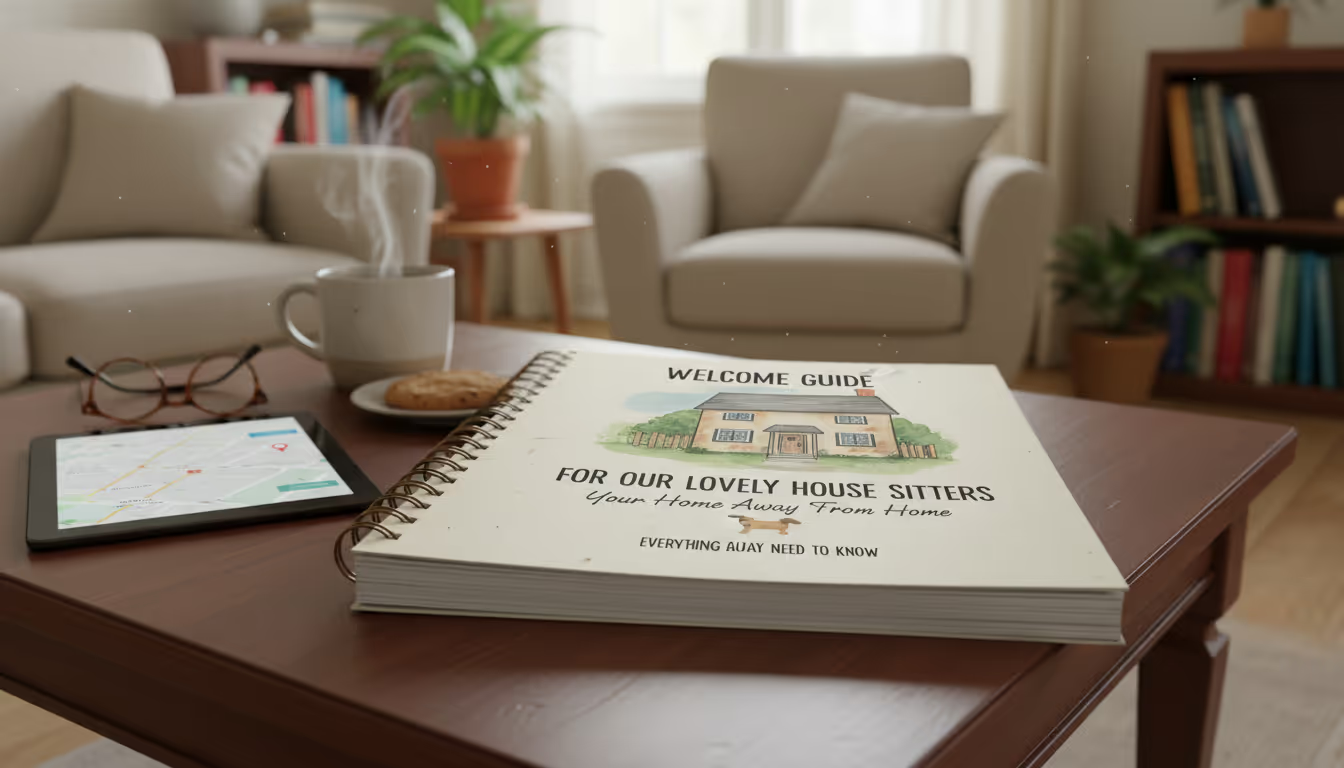
All major platforms require homeowners to accurately describe sit responsibilities in their listings and welcome guides. A welcome guide containing requirements not disclosed in the listing is a breach of platform terms and the basis for a legitimate dispute. We covered how to handle that in detail in our guide to exploitative homeowners.
Liability: The Negligence Principle
When something goes wrong, liability follows negligence. This principle is consistent across all platforms and jurisdictions.
If a sitter's careless action causes damage, the sitter is likely responsible. If damage results from a pre-existing problem, normal wear and tear, or events unrelated to the sitter's actions, that is generally the homeowner's responsibility. Pre-existing veterinary conditions in pets are the homeowner's financial responsibility regardless of when symptoms appear during the sit.
All three platforms are explicit about veterinary costs. TrustedHouseSitters requires homeowners to "remain responsible at all times for any veterinary treatment that your pet(s) may require, including all costs and expenses incurred by the Sitter." Nomador states that owners "are and shall remain solely responsible for any veterinary treatment or care that their pets may require." Aussie House Sitters confirms that "all costs associated with the pet, including veterinary services, are the responsibility of the Owner."
On all three platforms, sitters are expected to pay emergency vet costs upfront and seek reimbursement from the homeowner within a specified period (typically 14 to 15 days).
For property damage, the principle is the same: sitter negligence means sitter responsibility. Pre-existing damage, weather events, and appliance failures unrelated to sitter actions are the homeowner's cost.
The practical protection for both parties is documentation. Note the condition of the property when you arrive, photograph anything already damaged, report new issues to the homeowner immediately, and keep a record of all communication. That record determines who is responsible for what if there is ever a dispute.
What Platform Plans Cover and Don't Cover
The plans offered by platforms are not insurance. Every major platform states this explicitly.
TrustedHouseSitters
Three discretionary plans, all offered "at our sole discretion":
The Home and Contents Plan covers homeowners for property damage, theft, and third-party liability. Maximum $1,000,000 per sit, $100,000 contents limit, $1,000 minimum claim threshold, $250 homeowner contribution. The homeowner must have their own home insurance and must claim against it first. This plan only applies if that claim is rejected.
The $1,000 rule: Most everyday damage falls below the $1,000 minimum. A broken lamp, a stained rug, a chipped tile. These must be resolved directly between the homeowner and the sitter. The plan does not cover them.
The Sit Cancellation Plan covers Premium members for short-notice cancellations. $1,500 maximum at $150 per night, triggered within 14 days of the start date, $150 member contribution, 24-hour notification required.
The Accident and Third-Party Liability Plan covers Standard and Premium sitters for damage or injury caused by a pet. $1,000,000 maximum per incident, $50 sitter contribution, 24-hour notification, dogs and cats only.
Nomador
The Trip Cancellation Reimbursement Service covers both parties if the other cancels less than 30 days before the start date. Standard members up to €250, Premium up to €500. Covers emergency accommodation, non-refundable transport, and cancellation fees. Notification within two working days required.
The Nomador Home Protection covers homeowners for material damage caused by a sitter or pet. Up to €50,000 per year, €30 deductible per incident. Also covers professional cleaning and damage to valuables up to €1,000 per year. Incidents must be reported within 15 days of departure.
Compared to THS: Nomador's cancellation trigger is broader (30 days vs 14 days), the home protection deductible is significantly lower (€30 vs $250), and the homeowner does not appear required to exhaust their own insurance first. The maximum payout is lower ($50,000 vs $1,000,000), but access conditions are less restrictive.
Aussie House Sitters and regional platforms
Regional platform notice: Aussie House Sitters, Kiwi House Sitters, House Sitters UK, House Sitters Canada, and House Sitters America offer no cancellation or damage protection plans. Unlike THS or Nomador, these platforms provide no financial safety net if a sit falls apart. You are entirely reliant on your private agreement with the homeowner and your own personal insurance. Factor this in when deciding whether to take a sit through these platforms without separate insurance in place.
Aussie House Sitters, Kiwi House Sitters, House Sitters UK, House Sitters Canada, and House Sitters America offer no financial protection plans. The terms state directly: "Aussie House Sitters will have no liability or obligation to you if a Sitter cancels Housesitting Services... and you will not be entitled to any compensation." Any issues must be resolved between the parties.
Platform protection comparison:
| THS | Nomador | Aussie/Kiwi/UK /Canada/America | |
|---|---|---|---|
| Home damage plan | Up to $1m, $1,000 minimum | Up to €50,000/yr, €30 deductible | None |
| Cancellation plan | Premium only, $1,500 max | Standard and Premium, €250/€500 | None |
| Cancellation trigger | 14 days or fewer | Less than 30 days | N/A |
| Sitter liability plan | Up to $1m for pet-caused damage | Not specified | None |
| Platform responsible for sit? | No | No | No |
Insurance: What You Actually Need
Platform plans are supplements. Your own insurance is the foundation.
Homeowners are required by all platforms to have home insurance covering sitter occupancy. Check with your insurer before your first sit, as some policies require a specific declaration for non-paying occupants. TrustedHouseSitters, Nomador, and Aussie House Sitters all require this in their terms as a condition of using the platform.
Sitters are required by all platforms to have travel and medical insurance before any sit begins. This is a membership condition, not an optional extra. TrustedHouseSitters requires sitters to "have suitable insurance in place that will cover you for any travel and medical expenses." Nomador and Aussie House Sitters state the same requirement. For international sits, medical coverage and repatriation cover are the baseline. Third-party liability coverage is worth considering for sits involving dogs in public spaces.
Cancellations and Leaving Early
All platforms treat leaving a sit early without notice as a serious breach.
TrustedHouseSitters is the most explicit, issuing a lifetime ban for sitters who leave without first informing the homeowner and giving them time to arrange alternative care. Nomador and Aussie House Sitters both require notice and reasonable time for the homeowner to respond before a sitter departs.
Legitimate reasons to leave early exist: an uninhabitable property, a safety concern, a sit that was materially misrepresented. In those cases: document everything, contact the homeowner first, allow time for a response, and contact platform support before leaving. This sequence protects your standing and creates a record if the homeowner later disputes what happened.
On TrustedHouseSitters, if a sitter leaves because the property is uninhabitable, the Sit Cancellation Plan's "Unliveable" provisions allow THS to request evidence from both parties before determining whether the cancellation was justified.
Conclusion
House sitting is a clear and legally well-established arrangement. Private domestic agreement, no tenancy, no employment, liability following negligence. The platforms connecting homeowners and sitters are introduction services. Useful, well-resourced, and in some cases providing meaningful discretionary financial plans, but not liable for what happens between the two people they connected.
The most important protection is the same whether you are on TrustedHouseSitters, Nomador, Aussie House Sitters, or any other platform: a clear written agreement before the sit begins, documentation of the property's condition when you arrive, prompt communication when anything goes wrong, and appropriate insurance on both sides.
DM us @housesittersguide on Instagram if you have questions. We answer everyone.

Frequently Asked Questions
Is house sitting legal everywhere?
Yes. A private domestic accommodation exchange is not prohibited in any jurisdiction we are aware of. The legal question for international sitters is immigration: does your visa allow you to be in that country, and for how long? In Europe, ETIAS authorisation will eventually be required for visa-exempt nationalities, but it is not operating yet, so nothing changes for you until a launch date is confirmed. Stays beyond 90 days in the Schengen Area require a longer-term visa. Research your specific situation before travelling.
Can a homeowner legally ask a sitter to leave?
Yes, because sitters are licensees not tenants. A licensee has permission to occupy a property for a specific purpose and duration, without the tenancy protections that prevent eviction. A written agreement confirming no tenancy is created is advisable for any sit exceeding a few weeks, as this removes any ambiguity about the nature of the arrangement.
Do platforms provide insurance?
No. Every major platform explicitly states that its plans are not insurance policies. TrustedHouseSitters, Nomador, and the Aussie House Sitters group all say this in their terms. Platform plans are discretionary financial supplements in specific circumstances. Homeowners need their own home insurance and sitters need their own travel and medical insurance. These are membership requirements, not optional extras.
Who pays for vet costs during a sit?
The homeowner bears all veterinary costs. This is explicit in the terms of every major platform. Sitters are expected to pay emergency costs upfront and request reimbursement within the platform's specified timeframe. A pre-existing condition in a pet does not become the sitter's financial responsibility because it surfaces during the sit.
What should I do if I need to leave a sit early?
Contact the homeowner first and give them reasonable time to arrange alternative care. Every platform treats leaving without notice as a serious breach. TrustedHouseSitters issues a lifetime ban. If the sit is uninhabitable or unsafe, document the conditions, message the homeowner, allow time for a response, and contact platform support before you leave. This protects your standing and creates a record of the legitimate reason for departing.


Responses
What are your thoughts on this post?