

Home > Blog > House Sitting Jobs
Quick Facts
| Paid house sitting | Rover and Pawshake — earn $50–$120/night, platform takes 15–20% |
| Free exchange | TrustedHouseSitters, Nomador, Aussie House Sitters — free accommodation, no income |
| Can you do both simultaneously? | Not realistically — the two models serve different purposes and lifestyles |
| Best for paid income | Rover (US/UK/Canada), Pawshake (AU/NZ/Europe — 15–20% commission) |
| Best for free accommodation while travelling | TrustedHouseSitters globally, Aussie House Sitters for Australia |
| Tax on paid sits | Yes — self-employment income in most countries |
House sitting job means two different things. Rover and Pawshake pay $50 to $120 a night but take roughly 28% of the transaction; TrustedHouseSitters charges $129 a year for free accommodation instead of cash. They cannot run together: each needs you in a different place.
The phrase "house sitting job" means two completely different things depending on who is using it. One version pays you money. The other gives you free accommodation. They are not the same model, they do not run on the same platforms, and trying to do both at once is harder than most people realise. This guide separates them clearly so you can choose the right approach for what you actually want.
The Two Models: An Honest Comparison
| Exchange sit | Paid sit (Rover / Pawshake) | |
|---|---|---|
| Primary benefit | Free accommodation — rent eliminated | $50–$120+ per night cash income |
| Tax status | Generally non-taxable exchange | Self-employed income, taxable |
| Platform fee | Annual membership ($29–$259); Basic/Standard add $12 booking fee per sit | 20% sitter commission + 11% owner fee = ~28–31% total |
| Platform insurance | Discretionary plans — not true insurance | Rover: included for platform bookings |
| Best for | Travellers, digital nomads, slow travel, retirees | Local side income, staying in one city |
| Works internationally | Yes — the core travel house sitting model | Requires work visa in most countries |
The fundamental difference is this: exchange sits eliminate a cost. Paid sits generate an income. If you want to travel affordably and live rent-free, the exchange model is the right tool. If you want to earn money looking after pets in your own city, Rover or Pawshake is the right tool. Combining both is possible in theory but difficult in practice, and most sitters who try find one model suffers.
Neither model makes anyone better at the job, and we argue that case properly in our guide to being a professional house sitter. A paid sitter is not automatically a better one, and most of the difference comes down to communication rather than the fee.
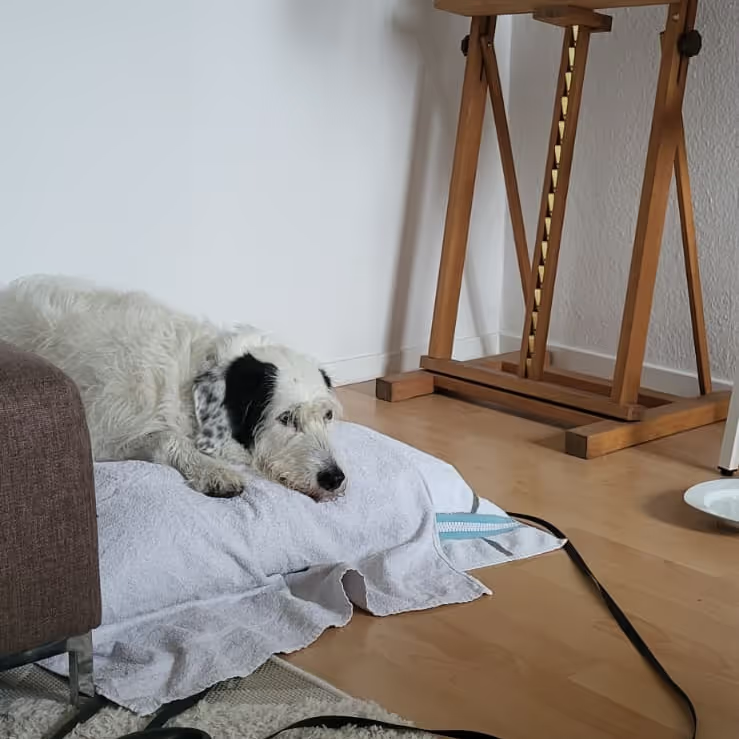
Paid House Sitting: Rover and Pawshake
Rover
Rover is the largest paid pet care marketplace in the world and the dominant platform for paid house sitting in the US, UK, and Canada. Sitters set their own rates, which typically run $50 to $120 per night for overnight house sitting depending on location, number of pets, and experience. Rover takes around 20% commission from each booking.
For bookings made through the platform, Rover provides insurance coverage and a 24/7 support line. Building a Rover profile in a new city takes time. The first few reviews are the hardest, and the algorithm favours sitters with review history. Sitters who build a five-star reputation in one city can earn consistent income from repeat clients, which is the path to Rover being a genuine side income rather than an occasional booking.
The real cost of Rover's fees
Rover advertises a 20% sitter commission, but the total platform take is closer to 28 to 31% of the transaction. Here is how the maths works: you set a rate of $100. Rover takes 20% from you, so you receive $80. On top of your $100 rate, Rover charges the owner an 11% service fee, so the owner pays $111. Rover has collected $31 from a $111 transaction, roughly 28% of the total. In California, transparency laws changed the structure: Rover shifted to a 25% sitter fee (your $100 rate becomes $75 take-home) while still charging the owner the 11% fee on top.
Additionally, new sitters in 2026 must pay a $49 to $79 profile review and background check fee before they can accept their first booking. Factor this into your calculations before signing up.
Rover operates in the US, UK, Canada, and parts of Europe. In Australia and New Zealand, the paid pet care market runs on different platforms.
Pawshake
Pawshake is the dominant paid pet care platform in Australia, New Zealand, and much of Europe outside the UK. The commission runs 15 to 20% per booking depending on the market. UK and European markets moved toward 19% in 2025. Like Rover, sitters set their own rates and the platform handles booking, payment, and basic insurance for confirmed bookings.
In Australia, MadPaws and PetCloud are also significant paid platforms worth adding alongside Pawshake if you are building a local paid pet care business.
What Paid Sitting Actually Involves
Paid sitting on Rover or Pawshake is a local service business, not a travel model. You are providing a professional service to pet owners in your city, building a repeat client base, and managing your availability, rates, and reviews as you would any self-employment work. The income is real and taxable. In most countries, regular paid pet care work is self-employment income and needs to be declared. In the US, you are responsible for self-employment tax on Rover earnings.
Building a sustainable paid house sitting business takes time. The realistic path is: establish a Rover or Pawshake profile, deliver excellent service on the first few bookings, collect five-star reviews, build a repeat client base, and gradually increase your rates as your reputation grows. Some experienced paid sitters eventually develop direct client relationships alongside their platform work.
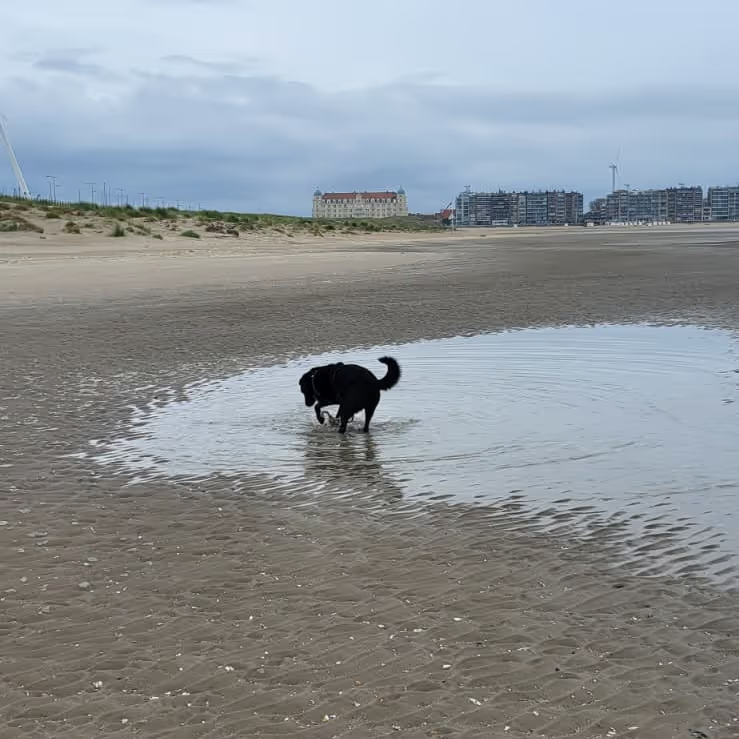
Free Exchange Sitting: The Travel Model
The exchange model is what makes house sitting careers and long-term slow travel financially viable. You provide reliable care for a homeowner's property and animals. They provide free accommodation. No money changes hands.
This eliminates your single largest travel cost. Over three years and 20 sits across 12 countries, Caro and I have saved over €24,000 in accommodation costs through this model. The TrustedHouseSitters Standard plan costs $129 per year, around $97 after our 25% discount. For most sitters, Standard is the right starting point. The $12 booking fee per sit only becomes worth upgrading to Premium ($259/year, ~$194 after discount) once you are doing more than five or six sits per year. At that point the avoided booking fees roughly cover the price difference, and you also gain access to the 24/7 vet advice line and additional support. Either way, the annual membership cost is recovered in the first night of avoided accommodation.
All platforms feel expensive before the first sit. The moment you spend two weeks in a property that would have cost €2,000 to rent for the equivalent period, the maths shifts permanently. A $97 membership that saves you €2,000 in the first month has a return that most annual subscriptions cannot match.
The exchange model also allows international travel without work visa complications. Because no money changes hands, the arrangement is treated as a private domestic exchange rather than employment in virtually all jurisdictions. Our legal issues guide covers this distinction.
Which Exchange Platform for Which Region
The right exchange platform depends on where you want to sit. The rule is simple: go where the listings are highest for your target region, because more total listings means more sits of every type including long-term sits and pet-free sits.
| Region | Best exchange platform | Why |
|---|---|---|
| Worldwide | TrustedHouseSitters | Largest global listing count by far |
| Australia | Aussie House Sitters | More AU listings than any other exchange platform |
| New Zealand | Kiwi House Sitters | Most NZ listings |
| France and French-speaking | Nomador | Dominant in France, Belgium, Quebec |
| Canada | House Sitters Canada | Strong rural BC and regional Canadian coverage |
| Budget global add-on | MindMyHouse | $29/year, worth adding for occasional extra coverage |
Our house sitting sites guide has full listing counts and pricing for every major platform.
Why You Cannot Do Both at the Same Time
The conflict between the two models is not logistical. It is physical. You cannot be in two homes at once.
If you are doing an exchange sit, you are living in the homeowner's property for the duration of the sit. You cannot simultaneously be staying in another person's home doing a paid Rover booking. The two arrangements require you to be in different locations. There is no workaround for this.
The two models are therefore for different life situations, not different times of the same week:
Exchange sitting is for when you are travelling. You move between locations, stay in homeowners' properties for free, and eliminate accommodation costs as you go. This is the model that enables house sitting careers, long-term slow travel, and the lifestyle most people associate with house sitting.
Paid sitting on Rover or Pawshake is for when you are living in one location. You are based at your own home or a fixed address, and you take in pets or travel to sit in clients' homes nearby on a booking-by-booking basis. It is a local service business that works because you have a stable base.
The moment you leave for an exchange sit in another country, your Rover bookings stop. The moment you take a Rover booking locally, you are not on an exchange sit. They do not overlap. They alternate.
There is also a terms of service dimension worth noting. If you attempted to bring a paid Rover client's dog into an exchange homeowner's property, you would be in breach of both platforms' terms simultaneously. The exchange homeowner's listing specifies which pets are present. The Rover booking is not authorised at that address. If that dog chews the homeowner's rug, you are personally liable with zero coverage from either platform. THS's Home and Contents Plan does not cover animals not listed in the sit. Rover's insurance only applies to bookings at the address registered in the booking. The overlap creates a liability gap that neither platform will fill.
Our coordination guide covers the planning tools that make managing a sit schedule practical.
Getting Started
For the exchange model, the starting point is your profile and your first sit. A profile that describes specific animal experience, includes genuine personal detail, and is written with the homeowner's perspective in mind is what opens doors. Our getting started guide and no-experience guide cover the full process.
For paid sitting on Rover or Pawshake, create a profile, set competitive introductory rates, deliver excellent service on the first few bookings, and build reviews. The first five reviews are the hardest. After that the platform algorithm starts surfacing your profile more prominently and bookings become more consistent.
Both models reward the same underlying quality: genuine care for animals and homes, honest communication, and the reliability to treat the responsibility seriously.
Conclusion
House sitting as a job means different things depending on which model you choose. Rover and Pawshake pay you cash and work best when you stay in one location building a local client base. Exchange platforms like TrustedHouseSitters eliminate your accommodation costs and work best when you are travelling.
Choose the model that fits what you actually want. If you want to travel and live rent-free, the exchange model is the right tool and TrustedHouseSitters is where to start. If you want to earn money looking after pets locally, Rover or Pawshake is the right tool. If you want both eventually, plan them sequentially rather than simultaneously.
DM us @housesittersguide on Instagram if you have questions about which model fits your situation. We answer everyone.

Frequently Asked Questions
Can I make money from house sitting?
Yes, through paid platforms like Rover and Pawshake, where homeowners pay you directly for overnight care and pet sitting. Rates typically run $50 to $120 per night in most US cities. Through the exchange model on platforms like TrustedHouseSitters, you do not earn cash. You receive free accommodation instead. The two models serve different purposes.
Is paid house sitting taxable?
Yes. Income through Rover, Pawshake, and similar platforms is self-employment income in most countries and needs to be declared. Exchange sits, where no money changes hands, are generally treated as a non-cash exchange rather than taxable income. If you are unsure about your specific situation, speak with a local tax professional.
What is the difference between Rover and TrustedHouseSitters?
Rover is a paid marketplace where homeowners pay sitters for pet care services. TrustedHouseSitters is an exchange platform where sitters receive free accommodation in return for caring for the home and pets. Rover takes around 20% commission per booking. TrustedHouseSitters charges an annual membership fee. They serve different needs and work best for different lifestyles.
Which platform is best for paid house sitting in Australia?
Pawshake is the dominant paid pet care platform in Australia, alongside MadPaws and PetCloud. For free exchange house sitting in Australia, Aussie House Sitters has more Australian listings than any other exchange platform.
Can I do paid and exchange sitting at the same time?
Not easily. Exchange homeowners want a sitter who is fully present and available. Rover clients want a sitter available for short-notice bookings. The availability requirements conflict. The practical model that works is using exchange sits as your primary travel accommodation strategy and doing paid bookings opportunistically during confirmed gaps when you are settled in one city long enough to build a local client base.


Responses
What are your thoughts on this post?