

Home > Blog > Can House Sitters Have Visitors
Quick Facts
| Quick Facts | |
|---|---|
| Can house sitters have visitors? | Yes, but only with explicit written permission from the homeowner |
| THS's actual policy | No third party is allowed on the property without prior written agreement between both members |
| Verbal approval on a call | Not sufficient. Get it in writing via WhatsApp, email, or platform messaging |
| Highest-risk visitor type | Overnight guests, due to insurance and occupancy exposure |
| Never acceptable | Bringing someone you just met back to the property |
| Our track record | 20 house sits, 12 countries, asked every time, never told no |
| Our current sit | A Portuguese farmhouse with a spare room, approved for guests, still waiting on takers |
Yes, house sitters can have visitors, but only with the homeowner's explicit written permission, given in advance. Trusted House Sitters' actual policy states that no third party is allowed on a property during a sit without prior written agreement from both members, and a verbal "sure, that's fine" on a call is not enough to protect you if something goes wrong. The golden rule hasn't changed in twenty years of house sitting: if someone isn't on your profile, they don't come through the door unless the owner has said yes in writing.
This is not a complicated question. It is a trust question. Homeowners vetted you. They did not vet your friends, your partner, your family, or anyone else who might walk through their door.
If you are interested in getting into house sitting, our book Travel More for Less puts the whole process in one place: clear, step by step guidance from your first questions to your first confirmed sit, and the reviews that open the door to the next one.
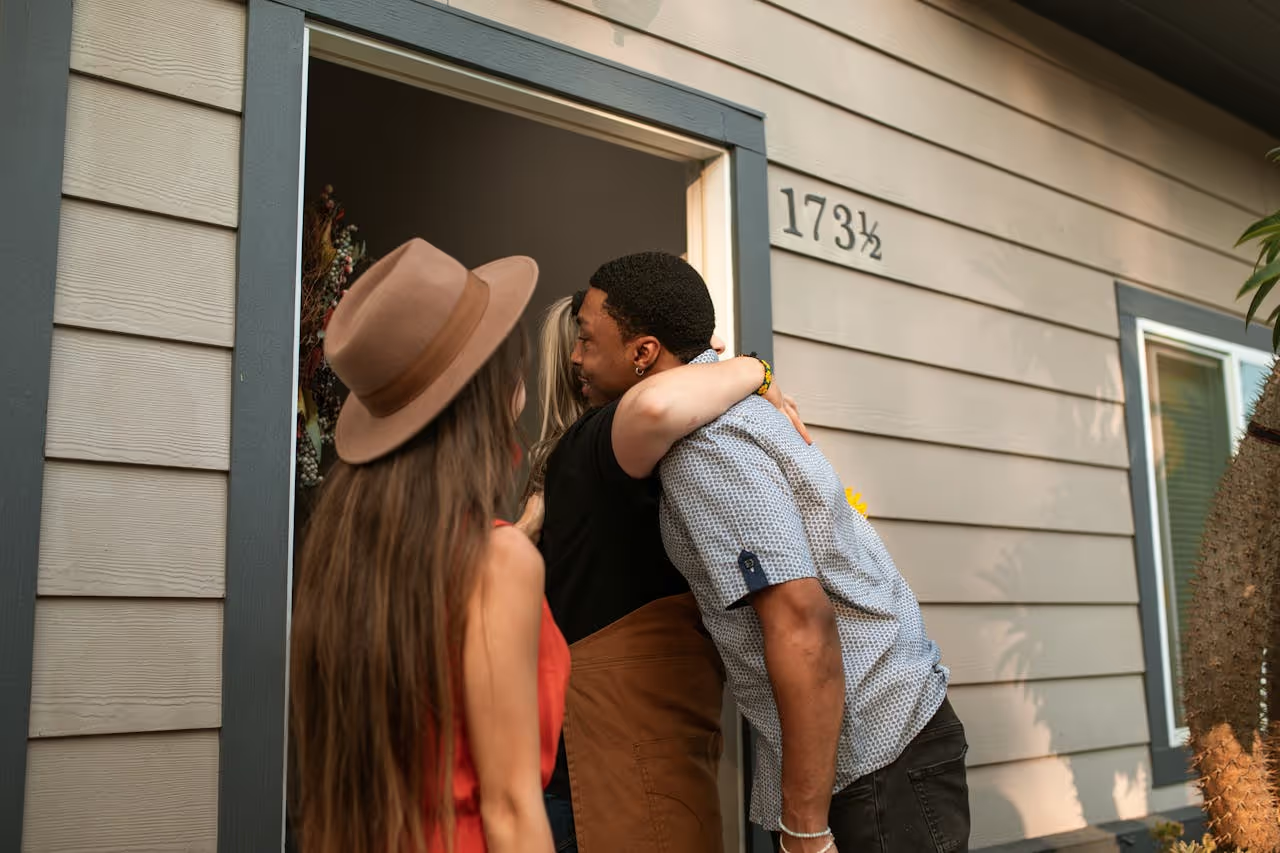
What Does THS's Actual Visitor Policy Say?
This is a documented platform rule, not a grey area sitters can interpret loosely.
Listings can also indicate a homeowner's general guest and pet preferences, which is useful context when you're deciding whether to apply. But that listing-level information describes a homeowner's general openness, not a blanket authorisation for a specific person you want to bring. Even a relaxed-seeming listing still requires you to name the actual visitor and get a yes before they arrive.
What this means for sitters: check a listing's stated guest preferences before applying if they're available. If a homeowner's guidelines say no visitors, don't apply assuming you can negotiate later. Whatever the general stance, message the homeowner specifically about any visitor you're planning, through the platform or in writing, rather than relying on a verbal "yeah, that's fine" during your video call.
More significantly: if a homeowner verbally approves a visitor during a call and something goes wrong later, a written record via WhatsApp, email, or platform messaging is the difference between a protected situation and a disputed one. Get it in writing every time, no exceptions.
The Four Visitor Types (And Why They Are Not Equal)
Not all visitors carry the same risk, and treating them the same is where most sitter-homeowner conflicts start. These are four meaningfully different situations.
The pop-in visitor: a friend dropping off food, stopping by for twenty minutes, collecting you for a night out. Many sitters assume this needs no permission. Many homeowners still consider it a breach of privacy. The safest position: ask anyway. The message takes thirty seconds.
The dinner guest: someone staying three to four hours. This is the most common approved scenario in our experience. Family visiting for a meal, a friend passing through who joins you for dinner. Most homeowners say yes when asked with specific detail. We've had Caro's father and stepmother over for dinner during a sit, roasted vegetables with feta over gnocchi, a lovely evening, fully approved in advance.
The overnight guest: the highest-risk category. While you're asleep or in another part of the house, someone the homeowner has never met has unsupervised access to their property. Always ask with significant advance notice, be specific about dates, and offer the homeowner a video call to meet the guest if they want one. In some jurisdictions, a guest who stays for an extended period can begin to acquire occupancy-type protections that make them genuinely difficult to remove, even after the homeowner returns. Exactly how this works varies enormously by country and even by region, but it's a real enough risk that it's worth being conservative with overnight stays, particularly longer ones, and always keeping the homeowner informed. Our house sitting legal issues guide covers the broader legal landscape sitters should understand.
The "dates or hook-ups" scenario: there's a growing conversation in house sitting forums about sitters using properties as venues for people they've just met. This is a hard no. Inviting someone you met that day into a homeowner's property puts their possessions, pets, and security at risk from a completely unknown person. Homeowners specifically watch for this pattern in reviews. It is not a grey area.
| Visitor Type | Risk Level | 2026 Recommendation |
|---|---|---|
| The pop-in (under 20 mins) | Low | Send a quick heads-up message, even for brief visits |
| Dinner guest (3–4 hours) | Medium | Written approval via platform or WhatsApp before they arrive |
| Overnight guest | High | Video call introduction, written consent, and advance notice |
| Dates / hook-ups | Never | Immediate grounds for termination and a permanent ban |

What Are the Legal and Insurance Risks of Bringing a Visitor?
An unapproved guest who causes damage or has an accident can void the homeowner's insurance entirely, since many policies only cover named or specifically authorised occupants.
If an unapproved guest slips on the homeowner's rug, breaks a door, or starts a kitchen fire, the homeowner's insurance may refuse to pay because the person who caused the damage wasn't authorised to be there in the first place.
We are not lawyers or insurance brokers, and the specific exposure depends heavily on jurisdiction, policy wording, and the individual insurer. But the direction of travel across most home insurers is toward stricter enforcement of occupancy clauses, not looser. The practical advice doesn't change: get written approval before bringing anyone over. It's also increasingly the difference between a homeowner being covered or left exposed if something goes catastrophically wrong. For a full breakdown of what happens when something breaks or is damaged during a sit and who bears the cost, read our guide to damaging property during a house sit, and our insurance coverage guide for what different platform protection plans actually include. Our broader house sitting safety guide covers the wider set of risks worth understanding before you take any sit.
The reactive pet factor: pets behave differently with strangers. A dog that's calm and friendly with you may become territorial, anxious, or aggressive when unknown people enter its home. Cats may hide for days. This isn't a character flaw in the animal, it's normal behaviour in a territory-based creature. If a pet becomes distressed or aggressive around an unauthorised visitor and someone is bitten or scratched, the liability question gets complicated fast: you invited the person, you didn't have permission, and the homeowner's pet caused the injury. Our guide to reactive and aggressive dogs during a house sit covers how to read and manage this properly. When visitors are present, we maintain all pet care routines ourselves and don't introduce unknown people to animals we're responsible for unless we're confident the animal handles strangers well. Our full guide to looking after dogs during a house sit covers the broader responsibility.
Home security cameras: most homeowners have a doorbell camera covering the entrance, and many have interior cameras in common areas for pet monitoring (interior cameras generally need to be switched off during the sit, per most platform terms, to protect sitter privacy). Person-detection alerts, where a homeowner's phone is notified the moment an unrecognised face appears at the door, have been a standard feature on most doorbell cameras for years now, not something new. The practical reality: there is no hiding an unapproved visitor. The question isn't whether you'll be noticed, it's whether you asked first, which determines everything that happens next. A sitter who asked and got approval can explain the situation calmly. A sitter who didn't ask has no defence for that conversation. Documenting your side of things, including photos throughout the sit, is good practice regardless of visitors, since it protects you in any dispute.
The Bochum Template: Why to Ask Early
Our very first sit was in Bochum, Germany, in June 2023. I applied as a solo sitter because Caro and I had only been together a few months. I wanted her to visit during the sit. I messaged the homeowner on WhatsApp after I was confirmed:
"Hi [Name], hope you are doing well. I wanted to ask you, if it would be ok with you that I invite my partner to join me from time to time while on this house sit. Her name is Caro and I would be more than happy to introduce her to you over a call. Thank you and I hope you are having a lovely day."
The homeowner was enthusiastic. Both she and Caro are German, coordination shifted naturally to the three of us, the sit went perfectly, and we were invited back the following year. That message took two minutes to write and protected everything that followed.
The better approach for anything predictable: mention it in the application itself, before confirmation, rather than raising it after you're already booked. If your partner will join you for the whole sit or regularly throughout it, add a line to your application: "I will be sitting with my partner Caro, who is also a passionate animal lover and an experienced sitter. Happy to introduce her on our video call." This is transparent, gives the homeowner full information to make their decision, and removes any sense of surprise after confirmation. Our guide to using AI for winning house sit applications and our full profile writing guide cover how to weave this in naturally without it reading as a caveat.
Reserve the post-confirmation ask, Bochum-style, for genuinely unexpected situations: a friend passing through, a family member who decides to visit during a long sit. For anything you know about in advance, mention it upfront.

The Message Template: How to Ask
The best visitor requests name the who, the when, the what, and the reassurance, all in a few short sentences.
The who: name the person and your relationship. Not "a friend" but "my sister who lives in the city" or "my father and his partner."
The when and how long: a specific date, arrival time, departure time. "Saturday the 15th, around 6pm, leaving by 9pm" is answerable. "Sometime this weekend" is not.
The what: brief context on the visit. Dinner, coffee, dropping something off.
The reassurance: address the homeowner's likely concern before they have to raise it. "She's a fellow pet lover and won't be staying overnight" or "He's completely comfortable around dogs."
Example: "Hi [Name], my sister who lives in [city] would love to come over for dinner on Tuesday evening. She would arrive around 7pm and leave by 10pm. She is great with animals and will not be staying the night. Would you be comfortable with this?"
Short, specific, respectful, reassuring. This structure has worked for us across every sit.
Platform-Specific Visitor Policies
Every platform handles visitors differently, and the strictness of the policy generally tracks the strictness of the platform's overall vetting.
Trusted House Sitters: the most detailed visitor framework of any platform we've used. Written agreement is required under platform terms for any third-party access. If something goes wrong with an unapproved visitor, THS's own policy doesn't protect you. Our full THS review and THS pricing breakdown cover the platform in depth.
HouseSitMatch: built around a layered ID and background-check system, including ID verification for all members and an optional police check through their verification partner. If you're comparing how thoroughly different platforms vet their members before you decide who to trust with a visitor conversation, our house sitting background checks guide breaks down exactly what each platform does and doesn't verify. Their culture around property access tends to be stricter than budget platforms, and bringing an unapproved visitor here is more likely to result in a formal dispute.
Nomador: trust is built through a documented "Trust Index" and an endorsement system, where verified documents and written recommendations directly affect how credible your profile looks to homeowners. An unauthorised visitor situation that damages a sit reduces your endorsement potential, which compounds across every future application.
MindMyHouse: fewer built-in protection features than the larger platforms. This makes it more important, not less, to use a written house sitting agreement that explicitly defines visitor rules before the sit begins. On a platform without a formal visitor framework, the contract between you and the homeowner is the only documentation either of you has.

How Does Sit Length Change Visitor Expectations?
Sit length changes what's reasonable to ask for, though it never changes whether you need to ask.
| Sit Length | What's Reasonable | Our Recommendation |
|---|---|---|
| Weekend (2–3 days) | Nothing planned in advance | Don't ask unless someone unexpectedly appears. Drive to friends instead of bringing them to the property |
| One week | A brief visit if someone happens to be in the area | Keep it specific: a coffee visit, not an overnight stay |
| One month or more | Dinner guests, family visits, occasional overnight stays | Raise visitor expectations during the pre-confirmation video call, and revisit our cleaning and etiquette standards for longer stays |
| Three months or more | Regular guests, family stays, a genuinely lived-in rhythm | Confirm expectations upfront, then keep asking for each specific visitor as they come up |
We're currently a few months into a six-month farmhouse sit in Portugal, a genuinely beautiful property with a spare bedroom, a big garden, and incredible views. We asked upfront whether visitors were welcome, and the homeowners said yes, offered the spare room, and just asked that we not bring young children over. We've since invited both our families and several friends. So far, the only confirmed guests are Caro's dad and stepmom. Everyone else has seen the photos, said it looks incredible, and then simply not found the time. It's a genuinely funny outcome given how much effort went into asking properly, and a good reminder that having permission and having takers are two completely different things.
The French Alps example: during our month-long sit near the Swiss border, we had friends living twenty minutes away by the lake. We didn't invite them over. We drove to them, sat by the lake, had pizza and drinks. No stress, no need to involve the homeowner, no risk to the sit. Sometimes the right answer is to take the social life off the property entirely.
Ever had a homeowner say no to a visitor request? We'd genuinely like to hear about it in the comments, since every case we've had has gone the other way.
Our Personal Rules
These are the rules we follow after 20 sits across 12 countries.
Under two weeks: don't ask unless someone is unexpectedly nearby. Keep any visit brief and supervised, and still ask.
One month or more: raise visitor expectations during the pre-confirmation video call.
We now apply exclusively as a couple, with both names on our profile from the start. Hiding a partner's involvement is the fastest way to damage trust with a homeowner, and couples are generally more appealing to homeowners anyway. Our full guide to house sitting as a couple covers the practical side of always applying together.
Friends nearby on short sits: drive to them.
Family during longer sits: ask well in advance with specific dates and duration.
People we've just met: never. The sit is not our home to introduce strangers into.
Emergencies: contact the homeowner immediately, explain the situation clearly, ask for their guidance. Most reasonable people accommodate genuine emergencies. "My friend surprised me by flying in" is not an emergency, but a real family emergency during a sit is a completely different conversation, and homeowners are generally far more understanding than sitters expect.
These rules have produced zero conflicts and multiple return invitations.

What Should You Do If the Homeowner Says No?
Accept it gracefully and don't push back, since the homeowner almost always has a reason you're not aware of.
The homeowner has valid reasons you may not know about: insurance constraints, previous bad experiences, property rules from a landlord, a pet that doesn't handle strangers well.
A graceful "no problem, completely understood" costs nothing and preserves the relationship for a good review and a future invitation. A defensive or negotiating response signals that you might ignore the boundary anyway, which is exactly the outcome the homeowner was trying to prevent, and it's the kind of thing that ends up in a negative review that follows your profile for years. If you do find yourself in a dispute with a homeowner over this or anything else, our guide to TrustedHouseSitters conflict resolution covers how to handle it without damaging your profile.
Bottom Line
Ask first, in writing, with specific detail, every single time, regardless of how relaxed the homeowner seems.
Respect the answer. Maintain the primary responsibility, the pets and the property, regardless of who is present. Keep a record of the approval. Introduce visitors to the animals carefully. Never invite someone you've just met. Drive to friends rather than bringing them to the property on short sits. The thirty seconds it takes to send a polite message asking permission protects years of reputation and every future sit that depends on it, along with the savings that make house sitting worth it in the first place. For the fuller picture of behaviour that damages a sitter's standing, our guide to cardinal sins to avoid and our overview of what house sitters actually do day to day are both worth reading alongside this one.
Caro and I have completed 20 house sits across 12 countries, driven 19,000km in Australia and 24,000km in our 1998 VW T4, and saved over $26,500 in accommodation costs over three years of house sitting. If you have a visitor situation you're not sure how to handle, drop it in the comments below or DM us @housesittersguide, we answer everyone. And if you're setting up Trusted House Sitters membership, our discount code is worth grabbing before your first application.

Frequently Asked Questions
Can I have my partner visit during a house sit?
Yes, with permission. If your partner will be present for the entire sit, apply as a couple from the start rather than hiding the relationship. If they'll join for part of the sit, ask the homeowner specifically: who they are, when they'll arrive and leave, and whether you can introduce them via a quick video call. We asked for Caro to join our first Bochum sit as a solo sitter, and the homeowner was enthusiastic.
What if a friend shows up unannounced?
Politely explain that this isn't your home and you can't have guests without prior permission. Contact the homeowner immediately, explain the situation clearly, and ask if a brief visit would be acceptable. Don't let anyone inside until you have explicit approval. "They just showed up" isn't a defence if something goes wrong.
Does the homeowner's insurance cover my visitors?
Almost certainly not unauthorised visitors, and potentially not authorised ones either. Many home insurance policies only cover named occupants. If a guest causes damage or has an accident on the property, you may be personally liable. This is one of the strongest reasons to get written approval before bringing anyone over, since it creates a record of the homeowner's consent.
Can a homeowner cancel the sit if I have guests without permission?
Yes. Bringing an unauthorised person into a homeowner's property is a material breach of the house sitting agreement on most platforms. This can result in immediate termination of the sit and a negative review that follows your profile indefinitely.
What does TrustedHouseSitters' visitor policy actually require?
THS requires prior written agreement from both members before any third party is allowed on the property during a sit. A verbal approval during a call isn't sufficient protection under platform terms. Get any approval in writing via WhatsApp, email, or platform messaging, and check a listing's stated guest preferences before applying.
Is it different for dinner guests versus overnight guests?
Significantly different. A dinner guest is a lower-risk, lower-concern request that most homeowners approve readily when asked with specific detail. An overnight guest has unsupervised access to the property while you sleep, requires a higher level of trust, and in some countries can carry legal implications around occupancy rights if the stay runs long. Always ask for both, but treat overnight requests as needing substantially more advance notice and detail.
Related Guides
What Not to Do When House Sitting: Cardinal Sins to Avoid — The broader rulebook
Damaging Property During a House Sit — What happens when things go wrong
House Sitting vs Unpaid Labor: Where to Draw the Line — Understanding the nature of the exchange
House Sitting Red Flags: Spotting Unpaid Labor Traps — What to watch for before you apply
What Do House Sitters Actually Do? — The full daily reality


Responses
What are your thoughts on this post?