Breadcrumbs: Home > House Sitting Guide > What Not to Do When House Sitting
📊 QUICK FACTS:
The number one rule: Treat the home with more care than your own, not less
Most common mistake: Going quiet on communication mid-sit
Most damaging mistake: Hiding an accident instead of reporting it immediately
Most overlooked: Social media security — even a window view can geolocate a home
Final impression: The state you leave the home in is what the homeowner remembers most
The most common advice about house sitting is to treat the home like your own. That is terrible advice.
You should treat it with more respect, more care, and more diligence than any place you have ever lived. This is not a free hotel. It is a fragile ecosystem built entirely on trust, and one misstep can bring it crashing down faster than you think.
After 3 years and 15+ sits across 9 countries, we have made small mistakes, caught ourselves before bigger ones, and heard enough stories from the community to know exactly where things go wrong. Getting five-star reviews is not just about doing the right things. It is about aggressively avoiding the wrong ones.
What Are the Worst Things a House Sitter Can Do? (Privacy and Trust)
1. Don't go snooping.
There is no version of this that is acceptable. A homeowner's personal space is sacred, and the moment you start opening drawers or reading documents you were not given access to, you have broken the one thing the entire exchange is built on. We have read enough Reddit posts from homeowners who came home to subtle evidence of this to know it is not rare. A room that was asked to stay closed means it stays closed. Full stop.
2. Don't invite guests without asking.
This one is more nuanced than it sounds. It is not that having a friend visit is inherently wrong. It is that doing it without permission puts the homeowner in a position they did not agree to. They are trusting a specific person with their home. Adding anyone else to that arrangement without a conversation changes the terms. Ask first, every time, even if it is just someone sitting on the terrace for an hour. We cover the full picture in our guide to having guests when house sitting.
3. Don't post carelessly on social media.
In 2026 this matters more than it ever has. A photo of a recognisable view from a window is enough for someone using basic open-source intelligence tools to pinpoint a home's exact address. Most homeowners are happy for you to share photos of their pets. The animals are safe. The home's location is not.
This also applies if you run a blog or any kind of content about house sitting, as we do. Ask the homeowner explicitly whether you can publish photos of their property as part of that content. We have started doing this as standard practice after realising we had never asked. It takes ten seconds and it is the right thing to do, particularly given how sophisticated digital scams have become.
What House Sitting Mistakes Can Harm the Pets?
The pets are why you are there. Everything else is secondary.
4. Don't deviate from the pet's routine or diet.
Good intentions cause real problems here. Homeowners have spent years learning what their animals need. You have been there three days. Do not decide the dog would enjoy a different food, or that the cat does not really need her evening pill. Stick to the instructions exactly. A change in diet causes stomach upset. An altered routine creates anxiety in animals that cannot tell you what is wrong.
5. Don't guess with medications.
This one we learned the real way. During a sit in Italy, we were giving a Labrador his three pills with dinner. After he finished eating, we found a dry pill on the floor under the table. Had he spat it out? Was it an old one that had rolled there at some point? We genuinely had no idea. Instead of guessing and potentially double-dosing him, we contacted the owners immediately. They told us to hold off on any further pills that evening and to monitor him. It was the right call, and the owners were grateful we had communicated it rather than made the decision ourselves.
Never make a medical call alone. The owners know the animal. You do not.
6. Don't freeze in a pet emergency.
Our first sit together in Bochum, one of the cats developed a swollen paw. We did not know if it was serious. We used the THS 24/7 vet line, had a qualified vet assess the situation remotely via photos within minutes, and had a diagnosis and care plan by the time the homeowner had even fully read our message. The cat had a bee sting. Monitor the paw, watch for worsening. Sorted.
The lesson is not that emergencies are manageable because they always end well. It is that having a plan before one happens changes everything. Know where the nearest vet is before you need it. Know the THS vet line number. And when something goes wrong, contact the homeowner first, stay calm, and document everything.
💡 This is exactly why we pay for the THS Premium plan. The 24/7 vet line saved us a €100+ emergency vet visit and three hours of panic on our very first sit. For anyone sitting regularly, that alone justifies the upgrade. See our full breakdown of THS plans and what each covers →
How Should You Treat a Homeowner's Property During a House Sit?
7. Don't become an unqualified handyman.
In Leysin, Switzerland, the home had a coffee machine that was simple enough to use. No special instructions were given and we used it without issue on the morning of day two it stopped working properly. We notified the homeowner immediately and because he was still in the area, he came back and we worked on the coffee machine together . The beans had been slightly too moist and had jammed the machine. We cleaned it out together, it cleared, and nothing was damaged. We were lucky.
The lesson was not about the machine specifically. It was about what happens when something in a home stops working and you are the one responsible for it. If we had tried to fix it ourselves without involving the owner, the outcome could have been very different. When something stops working, the right move is always to tell the homeowner immediately and solve it together rather than independently. A squeaky hinge is fine to oil. A pipe bursting means you find the main water shut-off, turn it, and call the owner so they can arrange a professional. Attempting repairs you are not equipped for turns small problems into expensive ones and creates legal complications neither side wants.
💡 Worried about accidental damage? This is exactly where third-party liability cover earns its keep. THS Premium covers this for members, but we also carry our own travel insurance alongside it for complete cover. Read our full house sitting insurance guide →
8. Don't let mess accumulate.
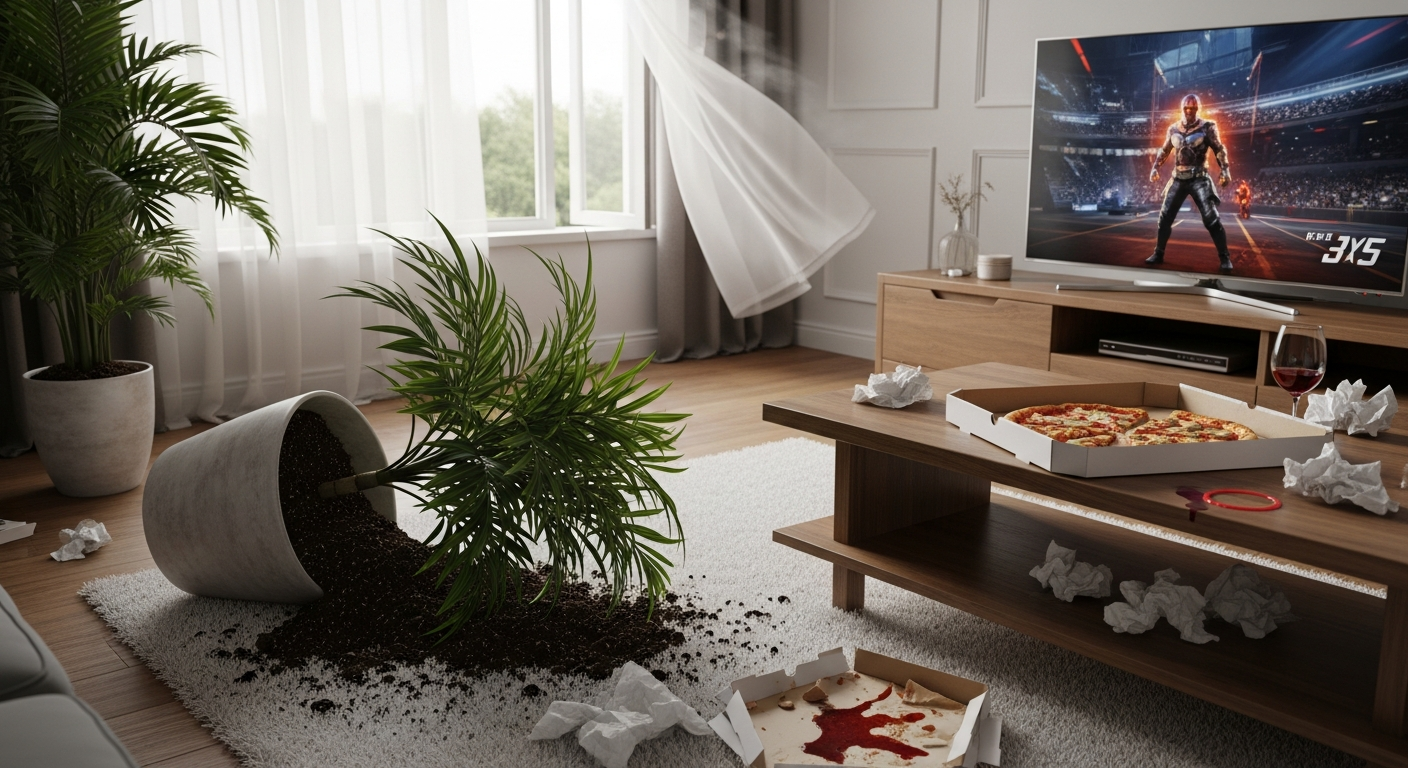
Our belief, built from experience: it is when things get messy that things start to break. A cluttered kitchen bench means things get knocked off it. Shoes left in doorways get tripped over. Dirty dishes left overnight attract problems. Keep the kitchen clean, tidy as you go, and do not treat the sit as a hotel stay where housekeeping handles everything. You are a custodian of someone's home.
9. Don't abuse the utilities.
If the home has a hot tub, a sauna, or air conditioning, use them reasonably. Someone else is paying the bills. Enjoy the amenities properly, be mindful of running costs, and do not leave heating or cooling running with windows open. In Cries, Switzerland, the home had sauna. We didn't have the sauna running for days at a time, we would turn it on and off when we used it, which was twice during our stay.
10. Don't forget security basics.
Every time you leave, even for five minutes: windows closed and locked, alarm set if applicable, front door secure. Make it a 30-second habit before every departure. Our house sitting safety guide covers what a proper security routine looks like across different property types.
✅ The 10-Minute Departure Checklist
Before you hand back the keys, run through this:
[ ] Bins emptied and put out on the correct day
[ ] Fridge cleared of your own food
[ ] Bedding stripped and placed in the washing basket (or washed if agreed)
[ ] Floors vacuumed and mopped
[ ] Kitchen and bathrooms cleaned
[ ] Key left in the agreed spot
[ ] Final pet photo sent to the homeowner
[ ] All surfaces wiped down
[ ] Any broken or damaged items reported and documented
[ ] Windows and doors locked, alarm set if applicable
The state you leave the home in is the last thing the homeowner sees before they write your review. Everything else in this article builds toward that final impression.
What Communication Mistakes Do House Sitters Make?
Good communication can solve almost any problem. A lack of it creates problems where none exist.
11. Don't go radio silent.
A homeowner on the other side of the world is thinking about their pets and their home. A daily photo and a short message completely changes that. In Lullin, France, we sent daily updates to the homeowners with photos of the two outdoor cats going about their business. It took five minutes and meant the owners could genuinely switch off on their holiday. Discuss the communication frequency before they leave, and then stick to it. Over-communicating is always better than going quiet.
12. Don't hide accidents.
In Vlaardingen in the Netherlands, Konrad broke the handle off a kitchen knife cutting cheese. Not the blade, just the handle, but broken is broken. We told the homeowners the same day, apologised, and offered to replace it. They were completely fine about it. The thing they appreciated was not being surprised by it when they returned. In Leysin, Caro broke a glass. Same approach: immediate honesty, offer to replace, no drama.
Homeowners are reasonable people. What they cannot tolerate is dishonesty. A broken item stays broken whether you tell them or not. Your integrity, on the other hand, only survives if you tell them.
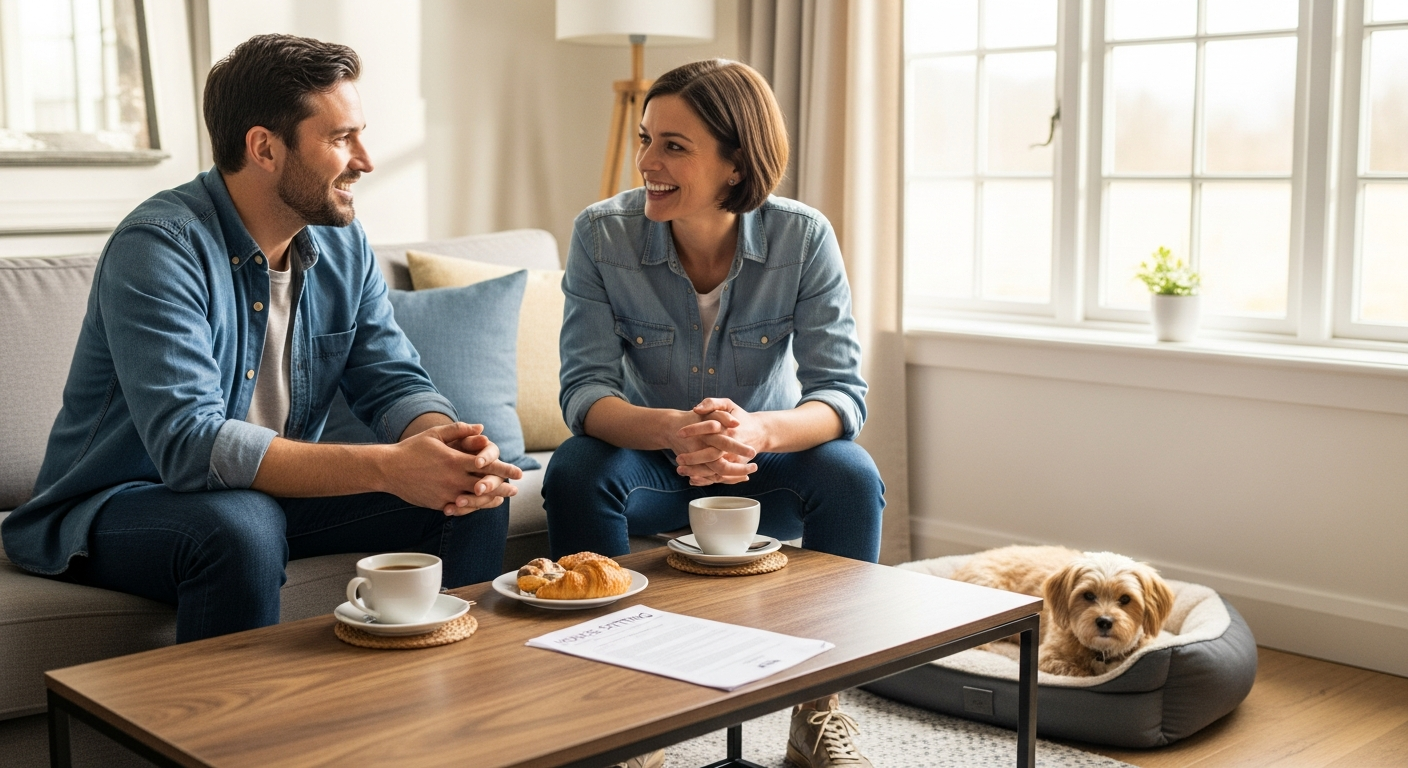
13. Don't rely only on a verbal briefing.
People forget things when they are stressed and packing for a trip. If the homeowner does not have a written welcome guide, take notes yourself as they walk you through the house. Ask them to confirm details. In Cortona the digital welcome guide the owners left covered everything from the dogs' feeding schedules to which day the bins went out to the local markets and their opening hours. We consulted it constantly for the first two days and barely needed to message the owners after that. A good welcome guide is a gift. If one does not exist, build your own notes during the handover.
14. Don't mess up the bins.
Every country, and sometimes every street, has its own system. In Germany, where we lived in Bochum, incorrect waste separation is taken seriously enough that neighbours will let you know about it. Ask for clear instructions during the handover, check the welcome guide, and if in doubt look at what the neighbours are putting out and when. Getting this wrong can leave the homeowner with uncollected rubbish or a fine when they return.
15. Don't leave a mess behind.
Strip the bedding and place it in the washing basket, vacuum and mop the floors, clean the kitchen and bathrooms you used, and remove all traces of your stay. The homeowner has been away, possibly for weeks, and they are coming home. The best thing you can give them is a clean house that feels like they never left, with happy, well-fed animals waiting at the door.
That clean home is what earns the kind of verified review that makes every future application easier.
When It Is Not Your Fault
This article is about what sitters should not do. But respect runs in both directions, and the most important thing we can tell any sitter is this: the rules of deference to a homeowner change entirely when the homeowner has broken the trust first.
If you arrive to find undisclosed cameras in a bedroom, bathroom, or any private space, you are not obligated to stay. Hidden cameras in private areas are against THS terms of service, potentially illegal depending on the country, and a fundamental violation of the exchange. Document it, contact THS support immediately with evidence, and do not feel pressured to remain in a situation that is genuinely unsafe.
The same applies if the sit is materially different from the listing. Nine cats instead of one, a flea infestation, a property in a condition that was not disclosed. You have rights as a sitter. The platform exists to protect both sides, not just homeowners. Contact support, document everything, and if you need to leave, leave.
We covered the full picture of sitter rights, including when and how to exit a sit that was misrepresented, in our unpaid labour guide and our cancellation guide.
Respect is the foundation. But it has to exist on both sides of the door.
Avoiding all of this comes down to one principle: genuine respect. For the pets, the property, and the privacy of the people who trusted you with their home. Get that right and you will have your pick of the best house sitting opportunities available.
Konrad & Caro 🐾🚐
DM us @housesittersguide if you have questions — we answer everyone!

FAQ
What is the number one rule of house sitting?
Treat the home with more respect than your own, not the same amount. You are a custodian of someone's home and the primary carer for their animals. Everything else follows from taking that seriously.
Can I have a friend over while house sitting?
Not without explicit prior permission from the homeowner for that specific person on that specific occasion. Their home is not a social venue. Asking is always the right move, even for a short visit.
What happens if I break something?
Tell the homeowner immediately and honestly. Offer to replace or repair it. We have broken a glass in Leysin and a knife handle in Vlaardingen. Both conversations went fine because we were upfront. Hiding an accident is far worse than the accident itself.
How often should I send updates?
Discuss it before they leave. For short sits, daily contact with a photo is a good baseline. For longer sits, every few days may be agreed. Over-communicating is always better than going quiet.
Is it okay to post photos of the sit on social media?
Only with permission. Even then, stick to pets rather than the home itself. A recognisable view from a window is enough for someone to use open-source tools to locate the property exactly. If you run a blog or content account, ask specifically about publishing photos of the home. When in doubt, do not post.