

Home > Blog > Recovering From a House Sit Cancellation
Quick Facts
| Who can cancel on THS | Homeowner only via the platform. Sitters must request cancellation through THS support — never just walk away |
| THS cancellation cover | Premium only — up to $1,500 at $150/night, discretionary, requires 24hr notification and $150 sitter contribution |
| THS 20-mile rule | Alternative accommodation must be within 20 miles of the original sit location to qualify for the Premium claim |
| Basic and Standard cover | Zero cancellation cover. Booking fee refund only if the homeowner cancels |
| THS trigger | Homeowner must cancel within 14 days of the sit start date |
| Nomador cancellation cover | Standard up to €250, Premium up to €500, triggered at 30 days — covers transport costs as well |
| Best real-world protection | Refundable travel bookings, a buffer fund for emergency accommodation, and travel planned around the destination not the sit |
House sitting has no front desk. Only TrustedHouseSitters Premium covers cancelled sits, up to $1,500 at $150 per night, and you must notify them within 24 hours. Regional platforms offer nothing. Structure travel around destinations you want regardless, with refundable bookings and a buffer fund.
The message came through two weeks before the sit. "Our son is sick and wants to be back home. Is that okay with you?"
Caro and I had confirmed a week-long sit about two hours from our Bochum apartment, heading towards the Netherlands. We had cleared our plans around it and cancelled catch-ups with friends. Nothing expensive, no flights booked. We stared at the message for a second.
What were we supposed to say? "No, your son cannot come home because we have a house sit?"
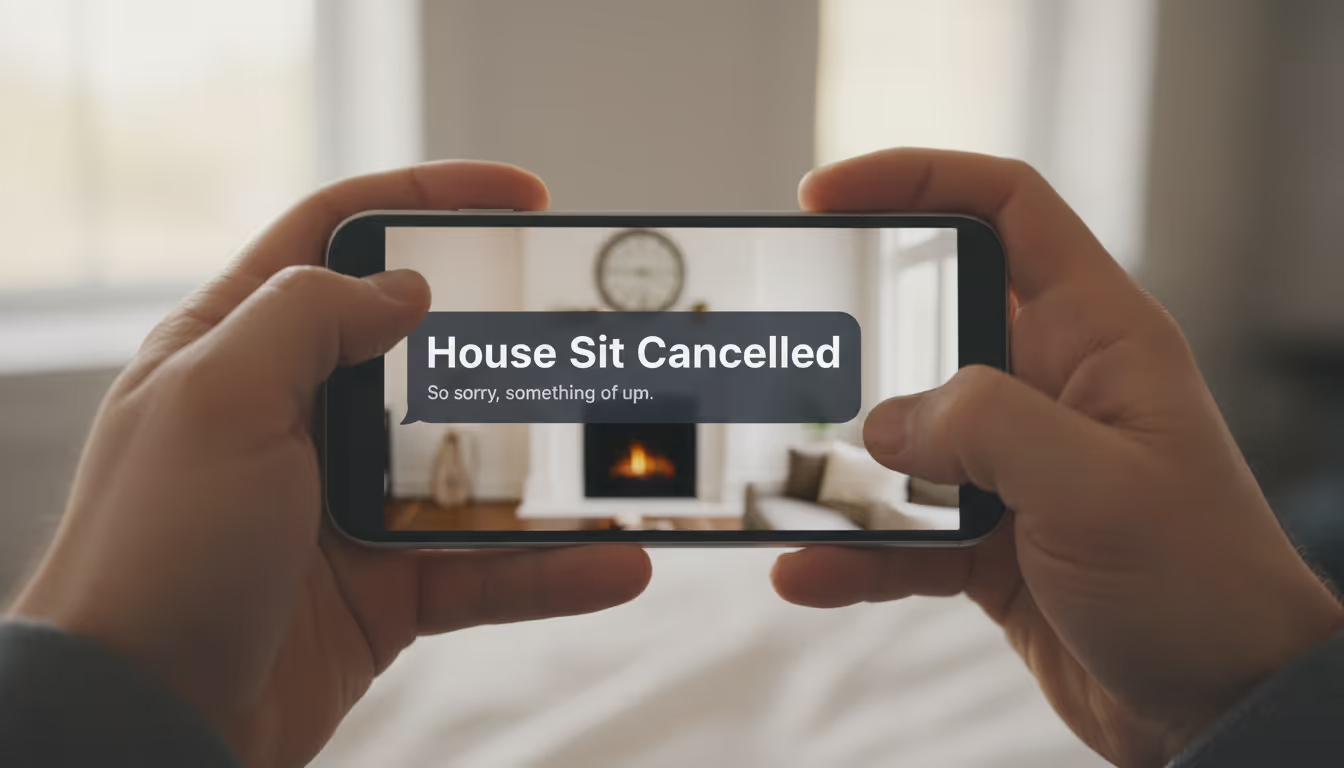
We typed back: "No problem, we hope he gets better soon." Within a minute the notification came through. Sit cancelled.
We were not heartbroken about it. We had not spent anything. We stayed in Bochum instead, walked along the river, did bike rides through the forests, had pizza in a field. It was not what we had planned for, but it was a good week.
What the message made us think about properly, though, was what we would have done if we had booked flights. And it made us think about accountability. An adult son wanting to stay home in his parents' house rather than in his own apartment is a fairly shallow reason to cancel on confirmed sitters. It was frustrating. Some form of accountability beyond a note on the homeowner's record would feel fair. That kind of repeat cancellation behaviour deserves more visibility in the review system than it currently gets.
House Sitting Has No Front Desk
House sitting is not a hotel booking. There is no formal contract with legal teeth, no corporate guarantee, and no customer service line you can call to get your room back. The arrangement is built on mutual trust, and that trust can break down on either side.
Because no money changes hands for the accommodation, the legal protections that come with commercial arrangements largely do not apply. A homeowner who cancels is not breaching a financial contract. They are withdrawing an invitation. That is frustrating and can seriously disrupt your plans, but the platform cannot force them to let you into their home.
The variables that cause cancellations are usually real and human. A family illness. A dog reaching the end of its life and the owner wanting to be home. Flights cancelled on their end. We read these stories regularly in Reddit threads and community forums. Most of the time, the reason is genuine. Occasionally it is not.
The practical risk depends almost entirely on how you are getting there. If you are driving or staying in the same country, a cancellation is an inconvenience. If you are flying internationally, the variables stack up: flights already booked, visa used, non-refundable accommodation. This is why our core philosophy on international sits is travel first, sit second. Go to a country because you want to be there. Use the sit to solve your accommodation. If the sit falls through, you still have a trip.
What Counts as a Valid Cancellation
The community standard is that cancellations should only happen in genuine extraordinary circumstances: a death in the family, serious illness, a house fire, or being denied entry at a border. No reasonable sitter argues with those.
What is not acceptable: changing your mind, finding a better option, cancelling without explanation, or reposting the same sit for the same dates immediately after cancelling. We have read accounts of homeowners doing exactly the last of those. It is a breach of the community's trust regardless of what platform terms technically permit.
The same standard applies to sitters. We have never had to cancel a confirmed sit. We came close once in Italy. We had done a video call with a homeowner who seemed enthusiastic, but he was not sure whether he needed a sitter at all or exactly when. He told us we were backup to other sitters he had already spoken to.
Rather than leave it in limbo, we asked him not to confirm the sit on the platform yet. We told him we would keep looking and let each other know if anything changed. Within a few days we had confirmed a sit in Ostuni. We messaged him to let him know. We got a reply that was, to put it diplomatically, incoherent. It seemed like he had been drinking. We were quite glad that one did not go ahead.
The point: if something is unconfirmed, you are free to move on. Once it is confirmed, the commitment is real. Cancelling a confirmed sit for a better offer damages your reputation, damages the platform's ecosystem, and will follow you in your reviews.
What Platforms Cover and What They Do Not
The first question after a cancellation is whether the platform covers you. The answer depends on which tier you are on, and most sitters do not check this until after something goes wrong.
TrustedHouseSitters
Basic and Standard: zero cancellation cover. THS will typically refund your per-sit booking fee if the homeowner cancels, but that is the extent of it. No accommodation reimbursement.
Premium: up to $1,500 at $150 per night. But read the conditions carefully. The homeowner must cancel within 14 days of the sit start date for the plan to apply. You must notify THS within 24 hours of the homeowner's cancellation. You must pay a $150 sitter contribution before any payout. Alternative accommodation must be within 20 miles of the original sit location. The plan is discretionary, not regulated insurance. THS assesses the claim and pays at their judgment. These conditions are buried in the terms and trip up a significant number of Premium members who assumed automatic coverage.
The booking fee refund is also not automatic on Basic and Standard. You need to request it specifically when contacting THS support.
Nomador
Nomador's cancellation reimbursement is available on Standard (up to €250) and Premium (up to €500). The trigger window is 30 days, which is broader than THS's 14 days. It also covers transport costs as well as accommodation, which THS does not. As with all platform protection plans, it is discretionary rather than regulated insurance. Our subscriptions and insurance guide covers what discretionary means in practice and what both platforms actually pay out.
Regional platforms
Aussie House Sitters, Kiwi House Sitters, House Sitters UK, House Sitters Canada, and House Sitters America offer no financial cancellation protection whatsoever. These platforms are intermediary-only services and their terms explicitly state they have no liability for cancellations or disruptions. If a sit cancels on one of these platforms, you are entirely on your own for accommodation and any travel costs. This makes the advice about refundable bookings, buffer funds, and destination-first travel planning more critical, not less, if you are using regional platforms without a THS or Nomador backstop.
The real protection
The most reliable protection against a cancellation disrupting your life is not the platform plan. It is the structure of your travel. Refundable bookings wherever possible. A small emergency fund specifically for unplanned accommodation. A three-night hotel buffer covers most cancellation scenarios. And travel built around destinations you want to be in regardless of whether the sit happens.
How to Spot a Cancellation Risk Before It Happens
Some cancellations are impossible to predict. Others have warning signs if you know what to look for.
A homeowner who is vague about dates, asks questions that should have been answered in the listing, or changes details after confirming is worth paying close attention to. A homeowner who has cancelled on previous sitters (sometimes visible in their review history if sitters mentioned it) is a higher risk.
The video call is your best pre-cancellation filter. A homeowner who is organised, specific, and clear about their plans is less likely to cancel than one who seems uncertain about whether they are actually travelling. Listen to what they say about the trip itself. "We're definitely going to Portugal on the 15th" is different from "we're thinking about maybe taking a break around then."
If anything in the video call makes you feel uncertain, ask directly. "Have you used house sitters before? Have you ever had to cancel a confirmed sit?" These are practical questions, not accusatory ones. A homeowner who has never thought about cancellation contingencies is more likely to cancel impulsively than one who understands the disruption it causes.
What to Do When a Cancellation Comes Through
Stay calm and act quickly on the practical side. Here is the step-by-step process:
| Step | What to do | Why it matters |
|---|---|---|
| 1. Acknowledge the homeowner | Send a short, professional reply acknowledging the cancellation | Keeps the relationship civil and creates a written record of the cancellation |
| 2. Screenshot everything | Screenshot the cancellation message and any explanation given | Evidence if you need to review the homeowner or raise a dispute with the platform |
| 3. Contact the platform | THS: contact support to request your booking fee refund (Basic/Standard) or start the cancellation plan claim (Premium). Other platforms: contact support to log the cancellation | The booking fee refund is not automatic — you must request it. Premium claims must be notified within 24 hours. |
| 4. Find emergency accommodation | Start searching for hotels, hostels, or short-term rentals immediately | Do not wait for the platform to resolve things before you solve the accommodation problem |
| 5. Apply for replacement sits | Apply for other sits for your now-open dates with a message explaining the situation | Homeowners respond well to honest context. Your dates may still be filled by a sit |
| 6. Check your travel bookings | Review flights, transport, and any other bookings tied to the sit | Refundable bookings can be changed; non-refundable ones may have travel insurance options |
| 7. Report to platform support | If the cancellation was avoidable or the homeowner has a pattern of cancellations, report it to the platform's support team | On THS, a cancelled sit cannot receive a review from either party. Reporting ensures the cancellation is logged on the homeowner's internal record even if it is not visible publicly. This helps the platform flag repeat cancellation behaviour. |
For THS Premium members specifically: step 3 must happen within 24 hours of the cancellation to trigger the Sit Cancellation Plan. Missing that window means the coverage does not apply regardless of the circumstances.
The Process When You Need to Cancel
As a sitter, you cannot unilaterally cancel a confirmed THS sit. The process is: contact THS support directly, explain the reason, and request a cancellation through the help desk. The platform needs to log it. Never simply stop responding or ghost a confirmed sit. The platform record matters, the homeowner is depending on you, and the animals are waiting.
If you have a genuine emergency that prevents you from sitting, contact both THS support and the homeowner simultaneously. Be clear about the reason. Most homeowners respond with understanding to a genuine emergency. It is the unexplained or last-minute cancellations that damage relationships and records.
For sitters on other platforms, the process is the same principle: notify the platform's support channel, explain the reason, and give the homeowner as much time as possible to find alternative cover. Never leave them discovering the problem on arrival day.
Building a Cancellation-Resistant Approach
The sitters who are least disrupted by cancellations are the ones who have built their travel so it does not depend entirely on any single sit.
The clearest example from our own experience: when Caro and I went to Australia, our plan was to buy a van, build it out, and drive up and down the east coast. We had a base at my parents' home in Nimbin when we needed it. The van was ready, we started driving, and occasionally a house sit would come up and we would take it. It was a bonus, not a plan. It broke up the van life, gave us a change of scene, and was enjoyable every time. But we were never dependent on it. If a sit had cancelled, it would have been a small disappointment, not a problem.
That is the ideal scenario: travel with its own logic, where a house sit is something nice that happens rather than the reason the whole trip exists.
Not everyone travels that way, and that is fine. Many people plan a specific holiday that is built around house sitting as a way to keep accommodation costs down. If that describes your trip, the same principle applies in a more structured form. Use a paid platform. The verification systems and accountability structures reduce the likelihood of a cancellation compared to free classifieds. Have enough savings to cover three to five nights of emergency accommodation without stress. And know in advance that if a cancellation does happen, the situation is manageable.
If a cancellation does come through, find somewhere safe to stay first. Then take yourself out for a decent meal. Let the initial stress pass before you start solving the next problem. When you are calm and settled, contact platform support, request any applicable refund, and start searching again. Cancellations often open up new possibilities. There may be a house sit an hour or two away that was not on your radar, one that would never have appeared if the original sit had held. A bus or train to a different area is rarely the catastrophe it feels like in the first thirty minutes after a cancellation message arrives.
The practical steps, in order:
| Step | Action |
|---|---|
| 1 | Find safe accommodation — this is the only urgent priority |
| 2 | Have a meal, let the initial stress pass |
| 3 | Contact platform support and request any available refund or claim |
| 4 | Search for house sits in the same area or within a short travel radius |
| 5 | Check bus, train, or car hire options if interesting sits are nearby |
| 6 | Apply with a short message explaining your situation — most homeowners respond well |
The mental approach matters as much as the practical one. Panic and stress do not help the situation and they make everything harder to solve. The sit cancelled. You have a roof over your head. The next sit exists somewhere. Finding it is a solvable problem.
Conclusion
Cancellations happen. The cancellation with the homeowner's son taught us to think properly about what we would have done with flights booked. The Italy non-confirmation taught us how to handle a sit that never quite formed. The answer to both is the same: structure your travel so the sit enhances it rather than defines it.
Check your platform's cancellation cover before you need it. Understand the conditions. Keep a buffer fund for emergency accommodation. And apply for enough sits at any given time that one cancellation is a single disappointment rather than a serious problem.
Use our 25% discount on TrustedHouseSitters or Nomador for France and Europe.
DM us @housesittersguide on Instagram if you have a specific cancellation situation you are navigating. We answer everyone.
Frequently Asked Questions
What happens if a homeowner cancels my house sit?
On THS Premium, you may be covered for up to $1,500 in alternative accommodation if the cancellation is within 14 days and you notify THS within 24 hours. Basic and Standard members receive only a booking fee refund. On regional platforms with no protection plans, resolution is directly between you and the homeowner. Regardless of platform, document the cancellation, request any available refund, and start looking for alternatives immediately.
Can I cancel a confirmed house sit?
As a THS sitter, you cannot cancel unilaterally. You must contact THS support to log the cancellation. Never ghost a confirmed sit. Explain the reason to both THS and the homeowner as early as possible. The same principle applies across platforms: notify support, explain the reason, give the homeowner time to find alternative cover.
Does TrustedHouseSitters cover cancellations?
Only for Premium members, and only under specific conditions. The homeowner must cancel within 14 days of the sit start date. You must notify THS within 24 hours. You must pay a $150 contribution before any payout. The plan covers up to $1,500 at $150 per night and is discretionary, not regulated insurance. Basic and Standard members receive only a booking fee refund. Our insurance guide explains the full conditions.
How do I avoid being badly affected by a cancellation?
Structure your travel so the sit is not the only reason you are in a location. Book refundable accommodation and transport where possible. Keep a small emergency fund for unplanned hotel nights. Maintain a list of backup sits for the same period. And apply for enough active sits at any time that one cancellation is a single disappointment rather than a serious disruption.
What should I say when a homeowner cancels with little notice?
Be professional, document the cancellation, and report it to the platform's support team. On THS, a sit that was cancelled before it started cannot receive a review from either party. Your review option is gone. Reporting the cancellation to THS support instead ensures it is logged on the homeowner's internal record, even if it is not publicly visible. This helps the platform identify homeowners with a pattern of cancellations. On other platforms, check their specific review policy for cancelled sits before assuming you can leave a review.


Responses
What are your thoughts on this post?