Breadcrumbs: Home > House Sitting Guide > House Sitting for Remote Workers
📊 QUICK FACTS:
Monthly cost during house sits: ~€500 (vs ~€1,200 in the campervan, ~€1,500 in a Bochum apartment)
Documented savings: €32,400+ through house sitting
Wi-Fi: Video call the homeowner first and you can see the setup; European homes almost always have solid internet
Best sits for working remotely: Any sit with a desk or table, good light, and reliable internet
Recommended platform: TrustedHouseSitters for international reach
We were in Cortona, Italy, working from a house in the valley with a view up to one of Tuscany's most beautiful old cities. I was mid-task on the laptop when Teddy, one of the two Labradors we were looking after, pushed his nose into my elbow with complete conviction. It was noon. The garden wasn't going to smell itself.
That moment captures something about what house sitting actually is for remote workers. You are not in a co-working space. You are not in an Airbnb where the neighbours are strangers and the kitchen is a single hotplate. You are in a real home, with fast internet and a washing machine and a reason to leave your desk at lunch. The interruption is part of the point.
Caro had a different kind of moment more recently, during our current house sit in Athens. She was at the kitchen table reading an article about freelancers and stopped mid-paragraph. She had been selling digital products online for a while, making real money from it, but something about reading that article made it click. She is a freelancer. She is her own boss. She turned the laptop around and showed me the screen. We had talked about it plenty of times, but sometimes you need to read it somewhere else to actually believe it.
Both moments happened during house sits. That is not a coincidence.

The Real Numbers
Before Caro and I went full-time on the road, we lived in a small apartment in Bochum. Rent and utilities came to around €800 a month. Add insurance, food, petrol, and general living costs and we were spending closer to €1,500 a month before we'd done anything interesting with our time.
In the campervan, that figure drops slightly to around €1,200 a month, but fuel is a serious expense and we tend to eat out more because cooking in a small van is less appealing than it sounds. The campervan is freedom, but it is not cheap freedom.
During a house sit, our monthly spending drops to roughly €500. We are not driving much. We are cooking in a proper kitchen, buying food in bulk, and living inside four walls with heating we are not paying for. The maths are hard to argue with. We have saved over €32,400 through house sitting, and the bulk of that saving comes from the simple fact that accommodation disappears as an expense.
For remote workers who are already location-independent, this is the obvious next step. You are paying rent somewhere. House sitting means you stop.
Working From a Sit vs Working From a Van
Caro and I work from laptops. That is the whole setup. A table, a seat, a power socket, and an internet connection covers everything we need.
In the campervan, we get a few hours of work done until the batteries need recharging. Sometimes that means a half day in a coffee shop or a shopping centre where we can plug in and run both laptops while topping up the powerstation. It works, but it requires planning every day.
During a house sit, there is none of that. There is a desk, or a kitchen table, or a sofa with a coffee table, and unlimited power. We can open the laptops at nine in the morning and still be working at ten at night if we need to. For me personally, I like working from coffee tables. A house sit almost always has a comfortable living room, which means I can set up exactly how I prefer. Caro tends to prefer a proper desk. Most homes have both.
The result is that we consistently do our best work during house sits rather than between them. It is quieter, more comfortable, and there is no pressure to pack up and move.
The Wi-Fi Question
This comes up a lot. The honest answer is that in three years of sitting across Europe and Australia, we have not had a single seriously bad internet experience. European homes in particular tend to have solid broadband as standard, and an increasing number have Starlink, especially in more rural locations where standard broadband is slower.
That said, verifying the internet before you commit to a sit is easy and professional. During the video call with homeowners, you can see the router in the background, ask directly about speeds, or request a quick Ookla speed test screenshot. Framing it simply works well: "I work remotely and need reliable internet for calls and uploads, would you be able to check the speed for me?" No reasonable homeowner finds that offensive. It shows you take both the work and the sit seriously.
The video call itself is the most underused tool in the whole application process. We do one before every sit. You find out things about the property that no listing photo would ever show you, including whether the workspace is actually usable. Our full guide on house sitting video calls covers what to ask and how to read what you see.
The View From the Office
Back in Bochum, Caro and I would sit at our desks and look at the desktop screensaver. Those images of mountain lakes and coastal sunrises and alpine valleys. They are on every laptop by default because they represent somewhere most people want to be but are not.
We are now, fairly regularly, sitting in those screensavers.
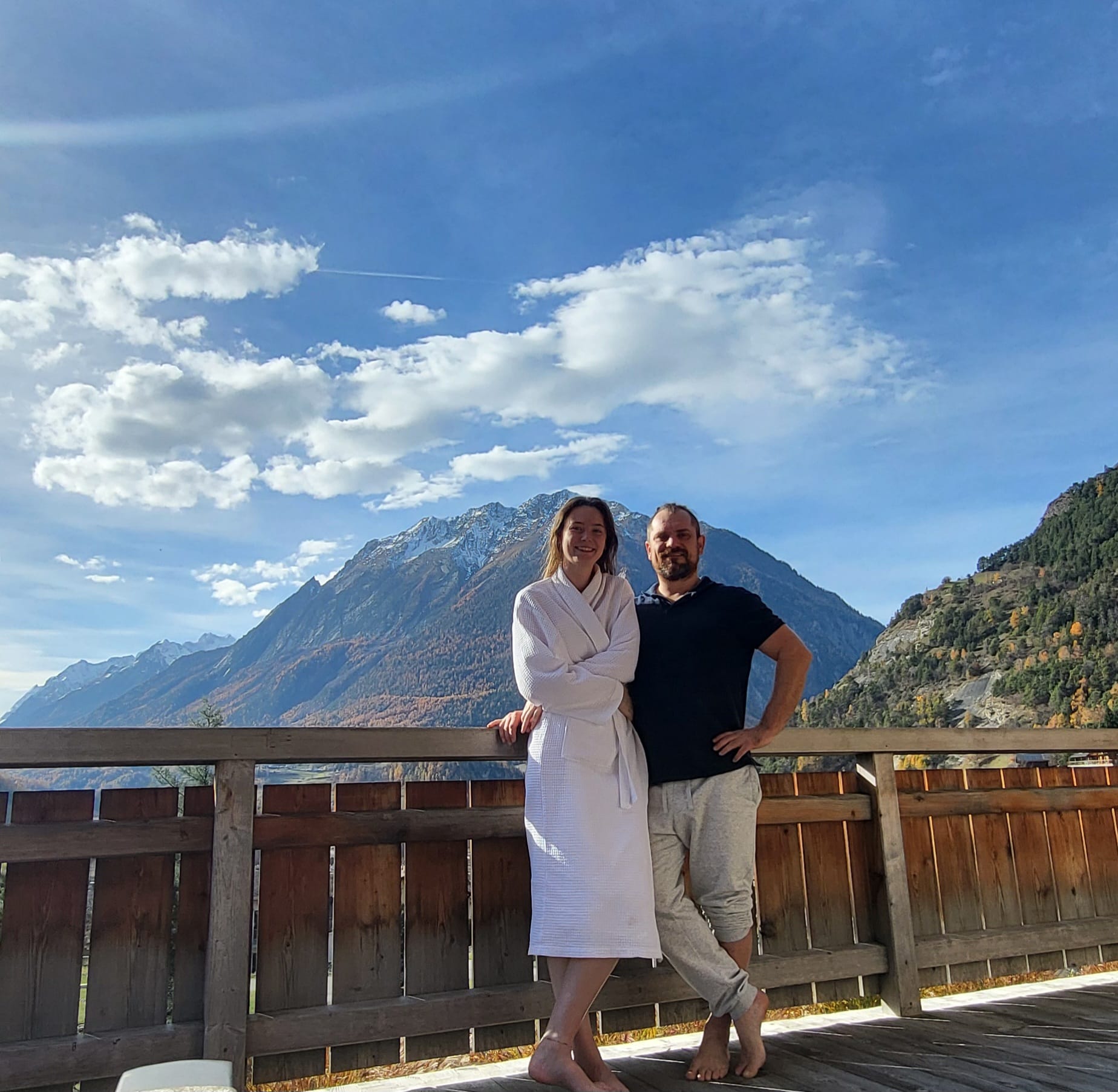
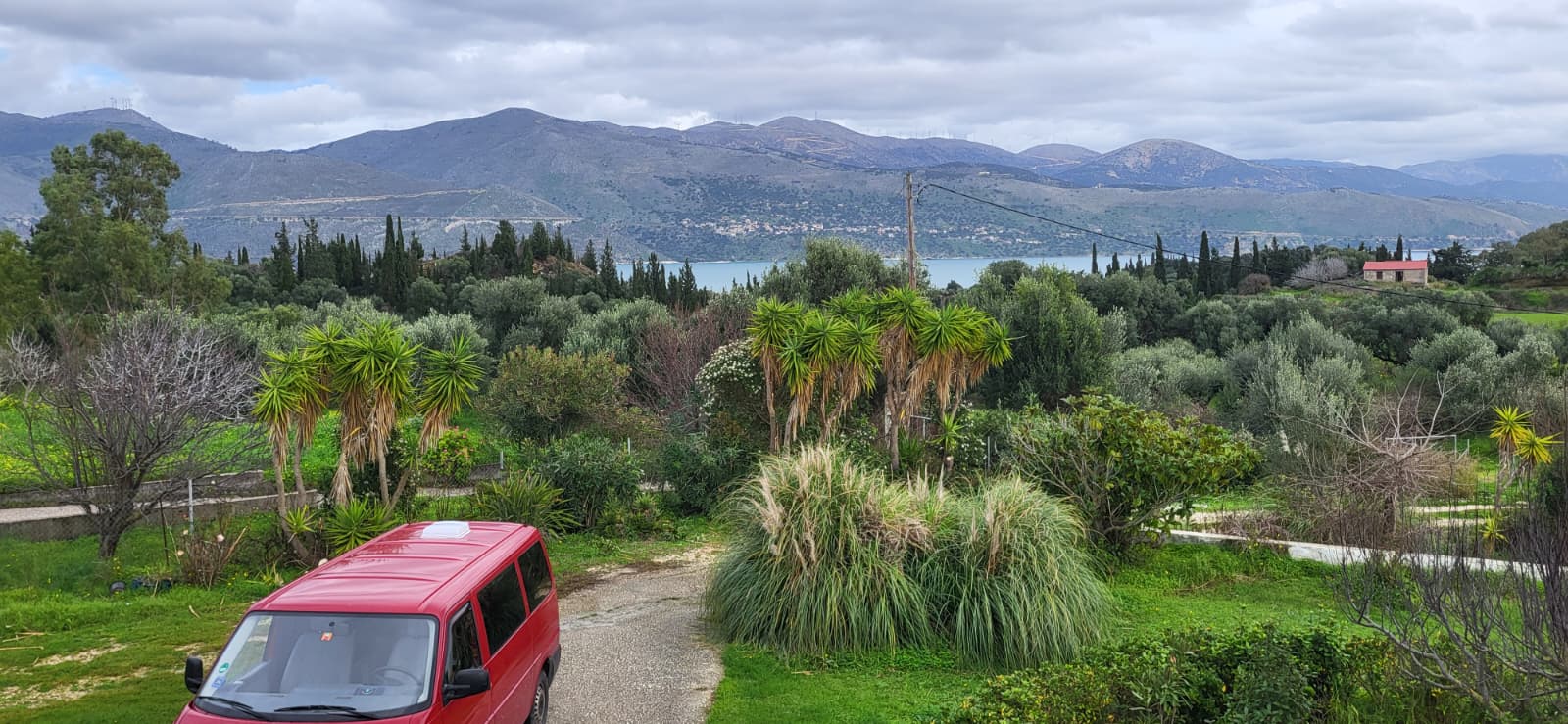
In Kefalonia we had a table with a view over the sea and the mountains. In Cries, Switzerland, we looked out at a mountain range that included Mont Blanc. In Lullin, France, we watched the mountains turn orange at sunrise and the same colour again at sunset, from inside a warm kitchen with a coffee. In Athens right now we are working from an apartment in a city that most people visit for a week and feel rushed the entire time.
There is something genuinely motivating about a new working environment. Every sit is a fresh start. The view changes, the light changes, the rhythm of the neighbourhood is different. After a few days it stops being a novelty and just becomes where you work, but it is a version of where you work that you chose rather than one that happened to you. That shift in perspective is difficult to put a number on, but it is real.
Balancing Work and Pet Care
The structure of a working day during a sit is not complicated, but it does require being intentional. The pets set the rhythm and you build your work around it.
A typical day for us: Caro is usually up first and handles the morning pet routine. By the time I am at the table with coffee, the animals have been fed and walked and the quiet window for focused work has opened. That window lasts until around midday when most dogs need another walk. We treat that as a lunch break, which is probably healthier than eating at the desk anyway. Afternoons are another solid block of work. Evenings belong to the pets again.
Cats are considerably easier for heavy workloads. In Cries, Switzerland, we had three cats and the most demanding requirement was weighing out exactly 82 grams of food per cat. The rest of the day was entirely ours. Our sit in Lullin, France, involved two outdoor cats who needed feeding and occasional tick checks. We had complete freedom to structure the day however we wanted. For remote workers who need long uninterrupted working sessions, a cat sit or a small dog with a calm temperament is the natural fit.
If you want to think through which kinds of sits suit your working style, our guide on looking after dogs during a house sit covers the practical reality of dog care in more detail.
The Visa Reality
This is the question we see most often in our DMs. We are both European, so it has not been a personal issue for us. When we entered Australia, Caro had a visa and I had citizenship, and nobody asked us anything about our plans beyond standard entry questions.
The honest answer is that the rules vary significantly by country and change over time. The UK and the US in particular have moved toward treating any exchange of value, including free accommodation, as a form of work, which can technically conflict with tourist visa conditions. This is worth researching properly before applying for a sit in a new country, not something to assume either way.
What is true is that house sitting is voluntary and unpaid. You are not receiving a salary. You are a guest who cares for a home and animals in exchange for a place to stay. If a border official asks, saying you are visiting friends or travelling for tourism is accurate. You are doing both. We would not recommend telling anyone to say something that is not true, but describing house sitting as tourism or as staying with people you know through a platform is not a stretch. Our article on house sitting legal issues goes into more detail on this.
Finding the Right Platform
For international sits, TrustedHouseSitters has the largest volume and the widest geographic range. The membership cost is recovered after one or two sits, and the review system means that once you have built a track record, the better sits become consistently accessible. Our full TrustedHouseSitters review covers the current pricing and what you actually get for it, and our discount code page has the current verified offer.
For specific regions, Nomador is the strongest platform for France and French-speaking Europe. Aussie House Sitters for Australia, House Sitters Canada for Canada, UK House Sitters for the UK, and Kiwi House Sitting for New Zealand. Country-specific platforms often have less competition for longer sits, which matters when you are looking for a three-month base rather than a long weekend.
Our comparison of the best platforms for international house sitting covers how each one stacks up in more detail.
Building a Profile That Gets the Long Sits
The sits that work best for remote workers, a month or more in one location with reliable internet and a manageable pet routine, are also the sits that attract the most competition. The homeowners posting them are often going on extended trips and want someone stable and trustworthy, not just available.
A profile that shows consistency, clear communication, and real engagement with what the homeowner has written will outperform a generic one every time. We use the pets' names in every application message. We reference something specific from the listing. We keep the house sitting profile itself honest and specific rather than vague and enthusiastic. Our guide on using AI for house sit applications covers how to structure a message that reads like a person and not a template.
If you are just starting and do not yet have reviews, begin with shorter local sits. The first review is the hardest to get. After that, each one makes the next application easier. Our AI profile writing guide can help structure that first profile in a way that compensates for the lack of a track record.
Konrad & Caro 🐾🚐
DM us @housesittersguide if you have questions — we answer everyone!

FAQ
Is house sitting a viable alternative to paying rent for full-time remote workers?
For us, yes. Our monthly spend during a house sit is around €500, compared to €1,200 in the campervan and €1,500 when we had an apartment in Bochum. Accommodation disappears as an expense, you have a proper kitchen so you cook rather than eat out, and you are not driving so fuel costs drop too. Over three years, we have saved over €32,400 through house sitting. If you are already working remotely and location-independent, removing rent from your expenses is the single biggest financial lever available to you.
How do I check whether a sit has fast enough internet before I accept it?
Ask during the video call. Explain that you work remotely and need reliable internet for your job, then ask the homeowner to run a quick test at speedtest.net and send you a screenshot. It is a professional, reasonable request that most homeowners are happy to fulfil. In our experience across Europe, internet has never been a serious problem. Many rural properties now have Starlink as a backup. The video call itself also lets you see the router and workspace setup first-hand.
What kinds of sits work best for remote workers?
Cats and calm small dogs are the easiest to manage around a full working day. They set a loose rhythm of morning and evening feeding and care, with long quiet windows in between for focused work. Sits with two or more large, energetic dogs are harder to structure around deep work sessions. Whatever the pet, you need a property with a decent table or desk, good natural light, and reliable internet. Most European homes tick all of those boxes.
How do visas work for long-term house sitting abroad?
It depends on your passport and the country you're sitting in. As Europeans, Caro and I have not personally run into issues. House sitting is unpaid and voluntary, which means it does not fit the legal definition of work in most jurisdictions. That said, the UK and US in particular have rules that can treat any exchange of value, including free accommodation, as a form of work. Research the specific visa rules for each country before you commit to a long sit there. Our article on house sitting legal issues covers the key considerations.
Which platforms are best for finding longer remote work-friendly sits?
TrustedHouseSitters has the largest volume globally and the best filtering options for sit duration. For France and francophone Europe, Nomador is stronger. Country-specific platforms like Aussie House Sitters, House Sitters Canada, and UK House Sitters tend to have less competition for the longer listings, which is worth considering if you have a specific region in mind.
Does working remotely from a house sit actually feel different to working from home?
Yes, and in a way that is hard to fully explain until you experience it. Caro realised during our Athens sit that she is a genuine freelancer, something we had talked about for months but that only clicked when she was sitting in a different city reading about it. Every sit is a fresh environment. The light is different, the view is different, the rhythm of the neighbourhood is different. It is consistently more motivating than staring at the same four walls. We used to look at laptop screensavers of mountain lakes and coastal sunsets. Now we just look out the window.