Breadcrumbs: Home > House Sitting Guide > What to Tell Customs When You're House Sitting Abroad
⚠️ Important Disclaimer: Konrad and Caro are not lawyers, immigration advisors, or customs officers. The information in this article is based on personal experience and research gathered from community forums, Reddit threads, and fellow travellers in the house sitting community. It is not legal advice. Border regulations, visa conditions, and entry requirements change frequently and vary significantly between countries. Always verify the rules for your specific nationality and destination through official government websites before you travel. We do not recommend providing false information on any visa application, customs form, or to any border official. Everything you declare should be truthful.
📊 QUICK FACTS:
Simplest answer at any border: "I am traveling as a tourist and staying with friends" — and mean it
The real strategy: Travel first, house sit second. Never the other way around
EU citizens in Europe: No border checks, no customs, no visa concerns within Schengen
Non-EU visitors to Schengen: 90 days maximum, stick within that and house sitting is completely fine
Biggest mistake: Planning an entire trip around a sit that could cancel at any moment
What to carry: Your phone, WhatsApp, offline Google Maps, offline Google Translate
The advice you will find on most forums about crossing borders as a house sitter is some version of: "be careful what you say." Technically correct, but it is solving the wrong problem.
After 3 years and 15+ sits across 9 countries, our actual answer to what you tell customs is much simpler: you tell them you are a tourist, because you genuinely are one. The house sit is not why you traveled. It is a bonus that came along while you were already traveling.
That distinction is not a technicality. It is the entire philosophy behind how we travel, and it makes every border crossing, every visa question, and every customs conversation completely straightforward.
Why the "House Sitting" Label Creates Problems
Most countries with strict tourist visa rules draw a line at any form of compensation for services, including in-kind exchanges. Free accommodation in exchange for pet care technically sits in a grey area in some jurisdictions. An immigration officer who hears "house sitting" may hear "working without a visa" and the conversation deteriorates quickly from there.
This is not because house sitting is illegal. It is because the word itself triggers associations that a border agent is trained to flag. The same situation, described differently, raises no concerns at all.
The distinction matters most if you are traveling from outside the Schengen zone, or if you are heading to countries like the UK, USA, or Australia where visa conditions are specific and enforced carefully. For those trips, what you say at the border and, more importantly, how you have structured your travel, matters a great deal.

The Mindset Shift That Changes Everything
When Caro and I traveled to Australia, she applied for a tourist visa. She wrote that she was traveling as a tourist. At the border crossing, there were no complications and no difficult questions. That is because, at that point in the trip, we genuinely were tourists. We had not yet decided to do any house sitting. It was only during the trip, while we were already there exploring, that we started picking up sits.
That sequence is the key. We were not in Australia because of a house sit. The house sit happened because we were in Australia.
If you travel to a distant country specifically because of a sit you found online, you are carrying enormous risk. What happens if the sit gets cancelled a week before you fly? What happens if the homeowner has a family emergency? What happens if your flight is delayed and you miss the handover? What happens if a customs officer asks enough questions that the picture does not add up?
You have put everything on the line for a single arrangement that could collapse at any point.
The safer approach is to decide where you want to travel, travel there as a tourist, and treat any house sit that appears as the cherry on the cake. Not the cake itself. When you cross the border you are not making anything up. You are a tourist who is also going to stay with some friends for part of the trip. That is the complete truth.
For European Citizens: The Schengen Advantage
Caro and I are both European citizens. She is German, I hold Polish as well as Australian citizenship. Within the Schengen zone, there are no passport checks at internal borders, no customs declarations between member states, and no visa requirements. The freedom of movement this provides is one of the most significant practical advantages of house sitting in Europe.
Traveling from Germany to Switzerland to Italy to Greece to France — all sits we have done — involved no border formalities at all. We simply drove or took a ferry and arrived. The customs question that worries so many house sitters simply does not apply within this area.
For non-European visitors, this is still great news. The Schengen zone allows most nationalities a 90-day tourist stay. Across that 90 days you can house sit freely across dozens of countries without any border complications, as long as you stay within the time limit. Europe has an extraordinary variety of sits available on TrustedHouseSitters and Nomador. Three months of sitting across Spain, Portugal, France, Italy, and Greece is entirely possible without a single customs conversation.
When Borders Do Come Up
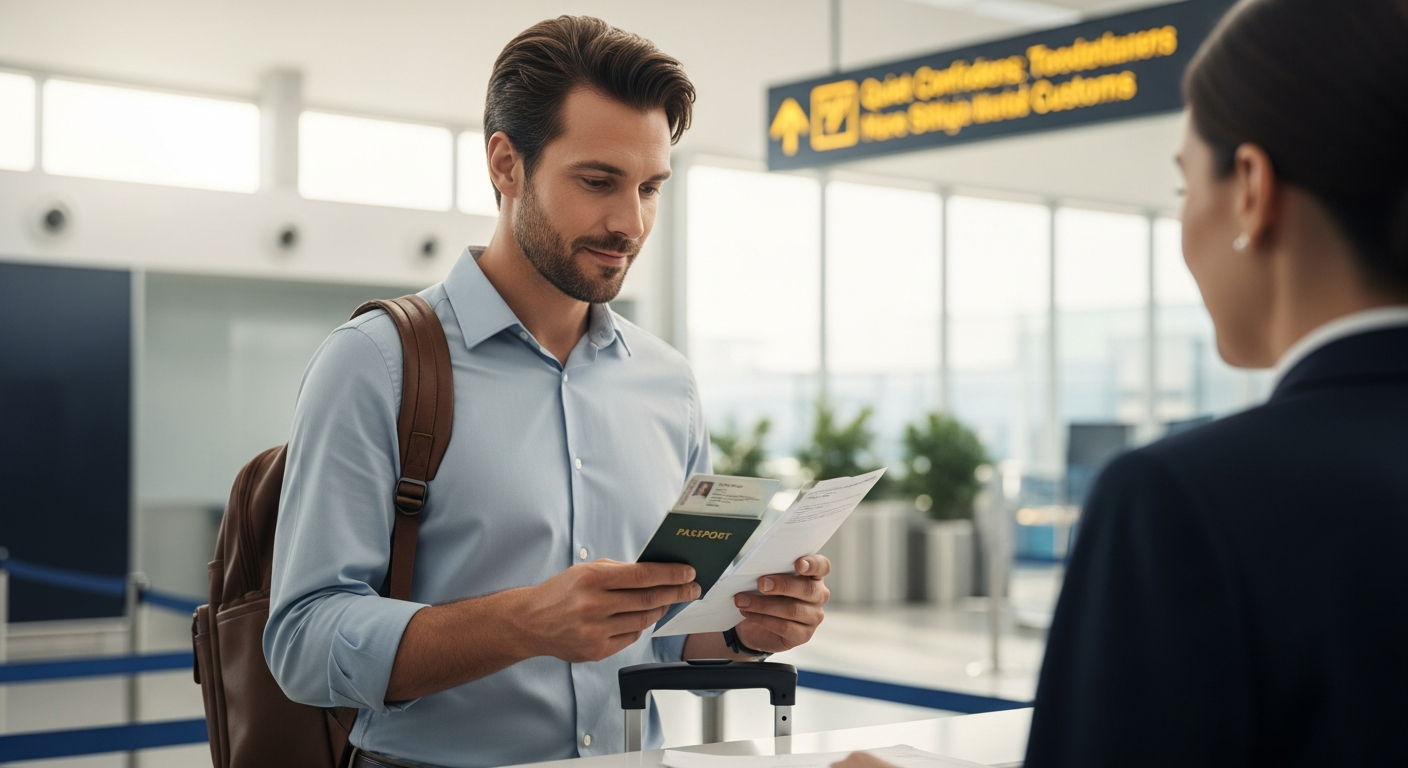
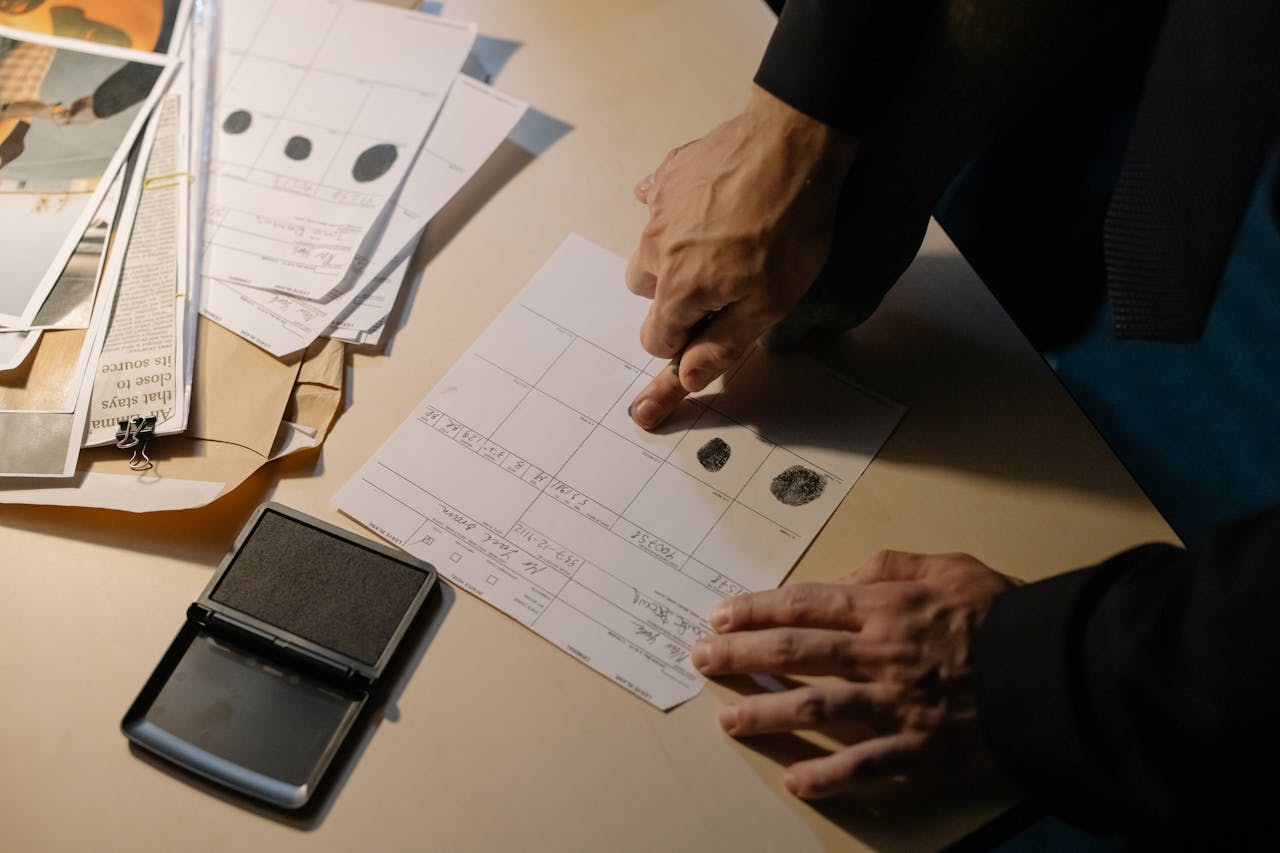
We did have one crossing that involved showing documents and answering questions: driving from Italy to Albania on the way to take a ferry. Albanian customs asked for our documents, asked us to declare alcohol, cigarettes, and cash, and asked where we were going. We told them we were traveling. That was the end of it. They waved us through and wished us well.
The reason it was that simple is because we were traveling. There was no complicated story to maintain, no version of events to keep straight. We said what was true.
What to Say If You Are Staying With a Homeowner You Met Through a Platform
If a customs officer asks where you are staying and you are heading directly to a sit, the honest and accurate answer is that you are staying with friends. This is not a workaround. It is a genuine description of the relationship.
When Caro and I do a video call with homeowners before a sit, it genuinely feels like making friends. You spend 30 minutes learning their names, hearing about their animals, seeing their home, understanding what matters to them. By the time the call ends, these are not strangers. They are people you know. Calling them friends at a border is not a stretch. It is accurate.
If asked for more detail: you are staying at their address, you are looking after their pets while they are away on holiday, and you have known them for some time. All of that is true. None of those words are "house sitting," none of them suggest a formal work arrangement, and none of them will cause a trained officer to raise an eyebrow.
The practical preparation is simple. Know the homeowner's full name. Know the address of the property. Have it in your phone. Have their WhatsApp contact ready. That is all you need if someone asks for supporting detail.
What to Have on Your Phone
Everything is digital now. You do not need a folder of printed documents. What you do need:
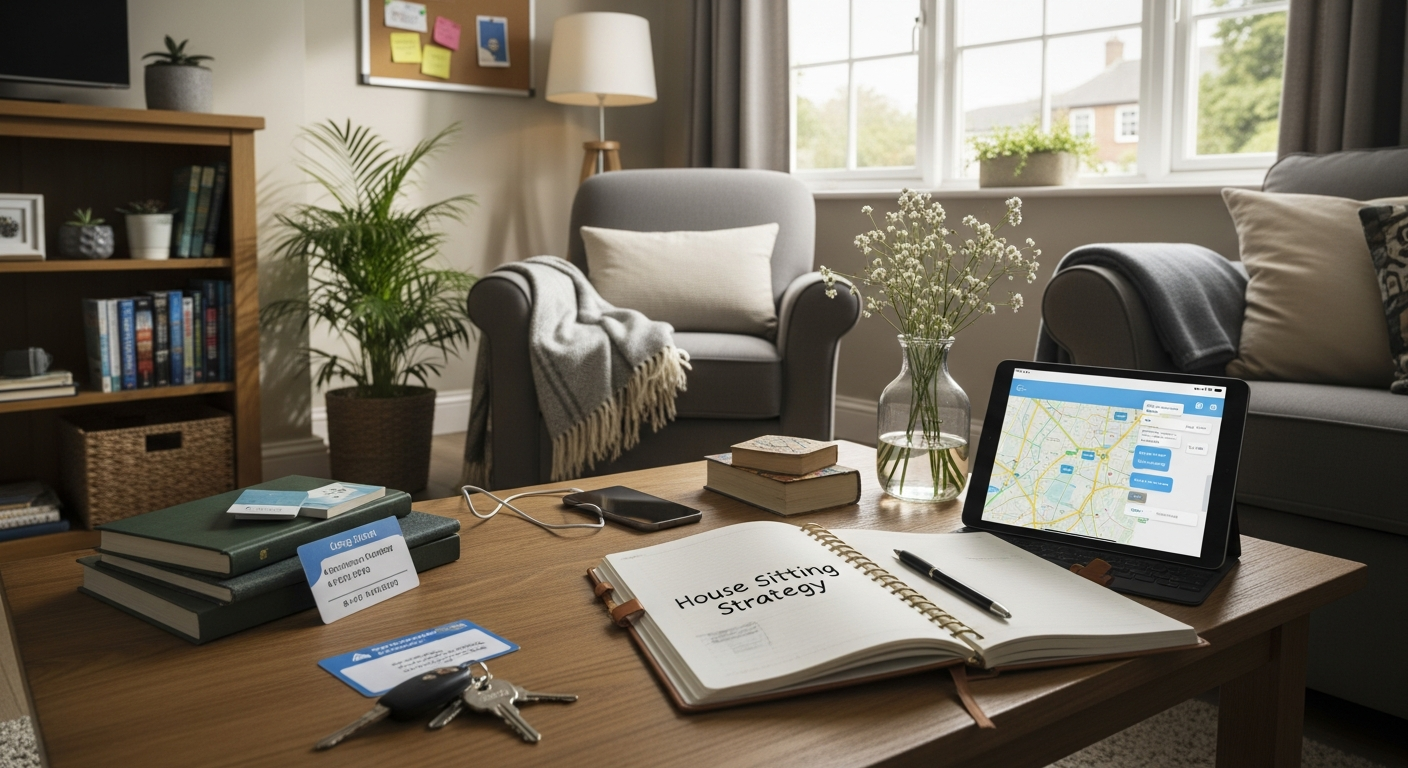
Your homeowner's contact saved in WhatsApp. The property address saved in Google Maps offline (download the offline map for the region before you leave — it works without signal). Google Translate downloaded offline for the destination country. A basic itinerary of what you are doing during the trip, even a rough one.
One more thing worth adding: a refundable hotel or hostel booking for your first night. Even if you are heading straight to a sit, having a Booking.com or hostel reservation for that first 24 hours is a genuine asset at any border. If an officer asks where you are staying tonight, you show the hotel booking and the conversation ends there. It costs nothing to hold a refundable reservation and it removes the one question that can catch sitters off guard if they are arriving on a sit's first day.
One important caution on documentation: do not show a THS sit confirmation letter to a border officer. The official platform paperwork describes an in-kind exchange — free accommodation in return for pet care — which is precisely the framing that can cause problems. The WhatsApp chat with your homeowner is far better evidence of a genuine personal connection. It looks like what it is: a conversation between people who know each other. The formal letter looks like a contract.
That last one is useful not just for customs but for your own peace of mind. Knowing where you are going after the sit, what you plan to see, how long you intend to stay, makes every conversation about your travel more natural and confident.

Our View on UK and US Sits
We are seriously considering sits in the US and UK. The approach will be exactly the same: we will travel there as tourists first. If a sit presents itself while we are already there, we will take it. We will not fly across the world because of a sit we found on a platform. We will fly because we want to go there.
That approach means arriving at the border with the most straightforward answer imaginable: we are tourists. Which is the truth.
House sitting works best as a way of enriching travel that is already happening. Not as the primary reason for it. Get that order right and the customs question answers itself.
Two Important 2026 Updates for Non-EU Travellers
The UK ETA (in effect from 2 April 2026): From 2 April 2026, all non-visa visitors to the UK — including US, EU, Australian, and Canadian passport holders — are required to hold a UK Electronic Travel Authorisation before boarding any flight or ferry. The ETA costs £10 and is applied for digitally before travel. Without it, you will not be permitted to board. This is the UK's "No Permission, No Travel" enforcement and it applies to nationalities that have historically entered visa-free. If you are planning a UK sit in 2026, apply for the ETA well in advance. More information is available directly from the UK government's official travel pages.
The US ESTA and digital vetting: US Customs and Border Protection has moved toward a mobile-first ESTA process that now includes a liveness selfie during application and, in some cases, requests for social media handles. This means your digital trail is being assessed before you ever stand in front of an officer. Keep your public social media consistent with your stated travel purpose. If your Instagram shows you describing yourself as a house sitter travelling Europe and your ESTA says you are a tourist visiting friends, that inconsistency could raise questions. Again: the cleanest position is to genuinely be a tourist first.
Konrad & Caro 🐾🚐
DM us @housesittersguide if you have questions — we answer everyone!
FAQ
What should I tell customs if I am house sitting abroad?
Tell them you are traveling as a tourist and staying with friends. This is accurate. The homeowners are people you have spoken to, whose names and home you know. If you have structured your trip as tourism first and house sitting as a bonus, you are not simplifying the truth — you are stating it.
Is house sitting considered work at the border?
In some countries, the in-kind exchange of free accommodation for pet care sits in a legal grey area under tourist visa conditions. The word "house sitting" can trigger scrutiny from officers who associate it with unauthorised work arrangements. The way to avoid this is to describe your situation accurately without using the term: you are a tourist, staying with friends, and helping look after their pets while they are away.
Do European citizens need to worry about customs when house sitting in Europe?
No. Within the Schengen zone there are no internal border checks for EU citizens. The customs question that concerns many international sitters simply does not arise. Non-EU visitors can stay for up to 90 days across Schengen countries on a tourist basis, which is more than enough time for multiple sits across several countries.
What is the biggest mistake house sitters make when planning international trips?
Building the entire trip around a sit. If you travel specifically because of a house sit and that sit cancels, you are stranded with a plane ticket, an empty itinerary, and a very uncomfortable answer to give at the border. Travel as a tourist first. Let the sit be a bonus that improves the trip rather than the reason for it.
What documents do I need to carry for a house sit abroad?
You do not need printed documents. Keep your phone with you: WhatsApp contact for the homeowner, the sit confirmation in your platform app, the property address saved in offline Google Maps, and offline Google Translate for the destination country. That covers any situation a border officer might raise.
Can I house sit in the UK or USA on a tourist visa?
This is a genuine grey area and the answer varies by individual circumstance. Our approach: travel to those countries as tourists with a genuine tourism itinerary, and treat any sit that arises during the trip as an addition to existing travel plans rather than the reason for them. That way the answer you give at any border is the complete truth.