Breadcrumbs: Home > House Sitting Guide > Difference Between House Sitting and Unpaid Labor
📊 QUICK FACTS:
Fair exchange: Pet care and home security in return for free accommodation
Unpaid labor: Physical work, commercial activity, or excessive duties beyond agreed scope
Red flag listings: Farm labour, Airbnb management, 6+ hours of daily dog walking, paying for utilities
Our rule: Four or more high-needs pets stops being a house sit and starts being a job
Best protection: Read every listing carefully, ask every unclear question on the video call
We were sitting in a café in Cortona, halfway through the ten-day sit there, scrolling through listings to plan what came next. Caro stopped and turned the laptop toward me. A listing was asking for someone to help around the farm, assist with maintenance tasks, and manage guest check-ins for an adjoining rental unit. In exchange: a small room and use of the kitchen.
We have come across dozens of listings like this over three years, and every time we share them on Reddit the reaction is the same. Sometimes worse, because some of what gets posted makes that one look reasonable. There are homeowners genuinely using house sitting platforms to source free labour, and they are banking on inexperienced sitters not knowing the difference.
This article is about knowing the difference.
What House Sitting Actually Is
The exchange model is built on one principle: mutual benefit. The homeowner gets their pets cared for one-on-one in a familiar environment, their home stays secure and lived-in, and they travel without the stress of wondering if everything is fine. The sitter gets free accommodation in places they could never otherwise afford to stay. Both sides win.
That mutual benefit is why the model works. A homeowner comparing the cost of kennelling multiple pets for a month against the cost of a platform membership will quickly see the financial case for the exchange. We covered the full maths in our house sitting costs guide. The savings for homeowners are significant, which is exactly why some of them push their luck.
Standard house sitting involves feeding and caring for pets, keeping the home clean and secure, watering plants, and being a responsible, communicative presence. That is the deal. Everything beyond that needs to be discussed, agreed in advance, and assessed honestly against whether it still constitutes a fair exchange.
The Listings That Cross the Line
Just today I came across a listing advertising two dogs. Reading further, the homeowner wanted a sitter to come to the house at lunchtime each day to feed and play with the dogs, then leave, because a separate house sitter was already living there but was out working during the day. No accommodation offered. No payment mentioned. Pure pet sitting with zero benefit to the sitter. When I posted it on Reddit, the response was exactly what you would expect.
Another one circulating recently was a UK family with a farm: horses, dogs, cats, sheep, and more. They wanted full farm management in exchange for accommodation, plus £500 per month contribution toward utilities. My comment on that thread was "modern day slavery, and you have to pay for it as well."
Then there was a listing in New York asking for two dogs to be walked separately for one hour each, three times a day. Six hours of walking daily. I have no idea whether that was a typo or genuine, but it is the kind of thing that needs to be addressed directly on a video call before you commit to anything. Because if it is genuine, that is a paid job, not an exchange sit.
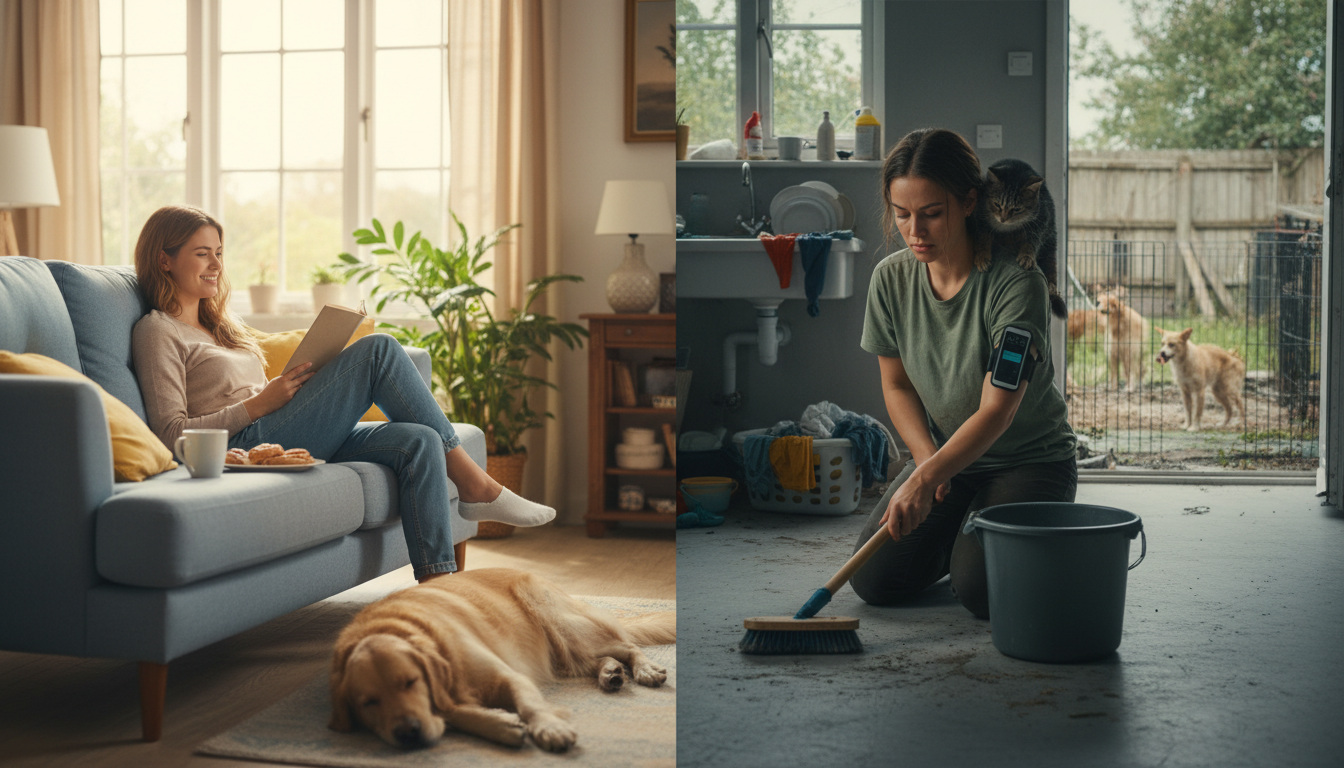
These are not edge cases. They come up regularly, and they tend to cluster around certain patterns.
The Red Flags to Look For in Any Listing
Hourly schedules or work quotas. Any listing that specifies a set number of hours per day for tasks unrelated to pet care is describing employment, not house sitting. "Four hours of garden maintenance daily" is a job description.
Commercial activity. Managing Airbnb guests, handling check-ins for a rental annex, accepting business deliveries, or maintaining a working farm generates income for the homeowner. You are not a business partner. You are a sitter. If your presence is making them money beyond the value of having their home occupied, that exchange is not equal.
Physical labour beyond light maintenance. Watering plants, keeping communal areas tidy, and taking out bins are reasonable. Mowing large lawns, mucking out stalls, lifting heavy equipment, or anything requiring specialist physical skill is labour. In any country, a person doing that work would be paid.
Paying for utilities. Reasonable use of electricity, water, and heating is standard. Being asked to contribute financially to utility bills while providing free pet care and property security is not an exchange. It is working for less than nothing. And the logic does not hold up: a sitter's presence in a home prevents burst pipes, deters break-ins, and means someone is there if something goes wrong. That security value far outweighs the few euros a day a sitter uses in electricity. Homeowners asking for utility contributions are essentially charging you for the privilege of protecting their home.
Vague or overwhelming pet numbers. We have a loose rule: four or more high-needs pets stops being a house sit and starts being a job. The time required to care for a large number of animals leaves little time to explore, work, or rest. Which raises the question of what exactly the sitter is getting from the arrangement.
When the Listing Looks Fine and the Reality Is Not
Sometimes the listing reads perfectly and the reality is different. That happened to us in Kefalonia.
The listing described one dog and one cat. When we arrived, there were nine cats. The cats lived outside, which is fine in principle, but nine cats meant we could not step out of the door without being immediately surrounded. One in particular was unpredictable: scratchy, occasionally bitey, and not particularly interested in being told no.
More seriously, the cats had fleas. We washed all the chair cushions, all the blankets, and gave the dog a flea pill. Over two weeks we did everything we could think of, but with nine outdoor cats we could not treat the source of the problem. We were getting bitten every day for the entire sit.
We chose to stay. We are genuinely grateful for the experience and for what we learned from it. But the gap between what the listing described and what we arrived to was significant, and it is the clearest example we have of why every unclear detail needs to be surfaced before you accept, not after you arrive.
💡 NOMAD TIP:
If a listing mentions "outdoor cats," always ask whether they are treated for parasites. In Southern Europe in particular, "outdoor" often means community cats that are not medically managed the same way as indoor pets. One question before you arrive can save two weeks of flea bites.
The video call is the moment to do that. Ask specifically: how many animals are there in total? Are any of them outdoor animals we might not have seen in the photos? Are there any known health issues or behaviours we should know about? A homeowner who is straightforward will answer those questions without hesitation. One who deflects or glosses over them is telling you something.

Scope Creep After You Arrive
Even when a listing is honest, expectations sometimes expand once you are there. A request to also water the back garden, mentioned casually on arrival day. An ask to handle a delivery for a home business, framed as a small favour. A note that the cat actually needs medication twice a day, somehow not mentioned in the listing.
Small things that shift incrementally. The right response is to refer back to the original listing and the conversation you had beforehand. You can say yes to genuinely minor additions without resentment. For anything that materially changes the scope of what you agreed to, it is entirely reasonable to say you are not able to take that on.
If the homeowner reacts badly to a polite and honest response to scope creep, that tells you more about them than any listing could. If the situation becomes untenable, our guide on how to gracefully cancel a house sit when you spot a red flag covers your options for exiting without damaging your profile.
The Camera Issue
We have not personally experienced this, but it comes up regularly in the house sitting community on forums and Reddit: homeowners with interior cameras that are not clearly disclosed, sometimes in bedrooms or bathrooms. Sitters have changed clothes in front of cameras they did not know were there.
This is a serious violation of privacy and it is explicitly against TrustedHouseSitters' terms and conditions, as well as most other platforms. Interior cameras, if present, must be disclosed upfront. If a homeowner wants to monitor their home while they are away, they should hire a professional service where all parties understand the arrangement, not invite a sitter in under a trust-based exchange.
If you arrive at a sit and find cameras that were not disclosed, you have every right to contact the platform and to leave. Our house sitting safety guide covers your rights in situations like this in more detail.
Knowing What You Bring to the Table
When we started, we felt grateful for everything and pushed hard to over-deliver. That is natural early on. But something shifted after we crossed ten reviews.
Homeowners started treating us differently. Dinner invitations on arrival. Small gifts left out. Notes thanking us before they had even left. We started to understand that experienced sitters with strong profiles are genuinely sought after, particularly in Europe where most accounts have fewer than ten reviews. Reaching double digits changes how homeowners perceive you, and it changes how you perceive yourself in the arrangement.
The value we bring is not just competent pet care. It is complete peace of mind. A homeowner on holiday who is not thinking about their house, who is not checking their phone anxiously, who is receiving regular photo updates and knows everything is fine. That is what we provide. A good kennel cannot do that. A nervous, inexperienced sitter cannot do that consistently. We can, and we know it, and that confidence comes through in every application and every sit.
For anyone building toward that level, our house sitting profile guide and our AI application guide are the best places to start.
How to Find the Homeowners Who Get It
The quality of listings varies significantly by platform. Platforms that charge homeowners a membership fee generally attract more serious, considered homeowners. The act of paying to list filters out people who view sitters as a free resource with no obligations.
TrustedHouseSitters is where we do most of our sitting. The verification process, the review structure, and the volume of listings mean you can afford to be selective. When a listing does not feel right, you move on. There are enough good ones that you never have to settle.
Read listings for what they emphasise. A homeowner who writes at length about their pet's personality, their routines, and what makes them happy is someone who understands that the sitter's experience matters. A homeowner whose listing reads like a job specification is showing you exactly how they see the arrangement.
Check the reviews of previous sitters carefully. Short or vague reviews, or any mention of miscommunication, are worth taking seriously. Our TrustedHouseSitters review covers how the review system works and what to look for. And our guide on what not to do when house sitting covers the sitter's side of keeping the exchange genuinely fair.
Konrad & Caro 🐾🚐
DM us @housesittersguide if you have questions — we answer everyone!

FAQ
Is it normal for house sitters to do garden maintenance?
Light watering of indoor plants or a small patio is standard. Mowing large lawns, weeding for hours, or managing extensive grounds is manual labour and should not be expected of an unpaid sitter. If it is in the listing, treat it as a signal about how the homeowner views the exchange.
What should I do if a homeowner adds tasks after I arrive?
Refer back to the original listing and the agreement you reached before arrival. You can accept genuinely minor additions without issue. For anything that materially changes what you agreed to, it is reasonable to politely decline. A homeowner who reacts badly to that response is telling you something useful about how the rest of the sit will go.
Should I accept a sit that requires caring for many animals?
It depends on the animals. Two independent outdoor cats is very different from four high-needs dogs requiring multiple daily walks. Our loose rule is that four or more high-needs pets stops being a fair exchange and starts being a job. Always ask specifically how many animals there are in total, including outdoor animals, before you commit.
Are interior security cameras allowed in house sits?
Disclosed exterior cameras are generally acceptable. Interior cameras that were not disclosed are a serious privacy violation and are against the terms and conditions of TrustedHouseSitters and most other platforms. If you find undisclosed interior cameras at a sit, you have every right to contact the platform and to leave.
When does a house sit become a paid job?
When the responsibilities go beyond pet care and standard home maintenance into commercial activity, specialist labour, or care that prevents you from having a normal daily routine. Managing Airbnb guests, farm labour, six hours of daily dog walking, or round-the-clock care for a high-needs animal are all paid job territory. Our average pay for house sitters guide covers what the paid market looks like.
How do I use the video call to spot a bad listing?
Ask every question the listing left unclear. If it says two dogs, confirm there are only two dogs, and no other animals. Ask what a typical day looks like hour by hour. Ask what the homeowner's expectation is for how long the pets can be left alone. A homeowner who is reasonable and honest will welcome those questions. One who deflects, minimises, or seems irritated by them is giving you important information before you commit to anything.