

Home > Blog > Damaging Property During a House Sit
This is not legal advice. I am not a lawyer. The information below is based on research into how property damage claims and burden of proof work in civil disputes. Laws vary by country and jurisdiction. If you face a serious claim, speak with a lawyer before taking any action.
Quick Facts
| First step after any damage | Tell the homeowner immediately — within 30 minutes if possible |
| Message format | What happened, acknowledgment, offer to make it right |
| Damage vs malfunction | Damage you caused is your responsibility; equipment failure is usually the homeowner's |
| Platform cover plans | Not insurance — discretionary plans from THS and Nomador, nothing from regional platforms |
| Our incidents | Two broken glasses, one snapped knife handle, a blocked coffee machine, melted electrical fuses |
| What homeowners actually care about | Communication. Every single time, transparency led to understanding |
Something breaks or fails on almost every long sit eventually, a glass, an appliance, a fuse board, or something more urgent like a burst pipe. The response is always the same regardless of what it is. For water specifically, find the stopcock first and stop the damage before you do anything else. For everything else, tell the homeowner immediately, keep the message short and honest, and offer to make it right. Across every incident in our 20 sits, prompt honest communication produced understanding rather than conflict. Hiding damage or waiting always makes things worse.
Twenty sits across 12 countries, and there has never been anything Caro and I couldn't handle. That is the thing worth keeping in mind before anything else in this article. Homes have things that break. Appliances fail, pipes make strange noises, a fuse blows at the worst possible time. It is no different from living in your own home, you never know exactly what might happen, and most of the time, whatever does happen is easily solved.
What actually matters is how you respond in the moment. Follow a few simple steps to limit the damage, keep the homeowner informed, and the situation resolves itself far more often than it turns into anything close to a real problem. Being prepared, knowing where the essentials are, knowing how to communicate clearly when something goes wrong, is what turns a stressful five minutes into a non-event. This article covers exactly that, from the everyday accidents to the more urgent situations like a water leak, based on what has actually happened across our own sits.
Tell Them Immediately
When something breaks, the instinct is to pause. Maybe it can be fixed quietly. Maybe it is too small to mention. Maybe the homeowner will not notice.
None of these instincts serve you well.
We message homeowners within 30 minutes of any incident. Not because we enjoy delivering bad news, but because delay creates suspicion. If you wait until the next morning, the homeowner wonders why you did not say something straight away. If you wait until they return, they assume you were hiding it. The speed of the message is itself evidence of honesty.
When the first glass broke at our very first sit in Bochum in June 2023, the message went out while the shards were still on the floor. The homeowner replied within the hour saying not to worry. The second glass broke during a sit in Switzerland. When we messaged the homeowner, he replied that his wife goes through a pack of glasses every six months, so a broken glass was nothing. The knife handle was a different sit entirely. It snapped while cutting cheese, the message went out straight away, and the homeowner's response was equally measured.
Speed demonstrates transparency. Transparency builds trust. Trust is what generates return invitations and five-star reviews.

What to Do If a Pipe Bursts or You Find a Water Leak During a House Sit
Water is different from almost every other kind of household emergency, because delay makes the damage worse by the minute. If you discover a leak, a burst pipe, or water coming from somewhere it shouldn't, the first thing to do is find the stopcock and turn it off. Do this before you message anyone. It is fully within your responsibility as a sitter to stop the situation from getting worse, and no reasonable homeowner would expect you to wait for a reply first.
Stopcocks tend to turn up in the same handful of places across most homes: the kitchen, near the front door, by the front gate, or on an exterior wall. If you cannot find it within a few minutes, message the homeowner immediately and ask. Better still, find out where it is on the day you arrive at any sit, not the day you actually need it. I learned this the hard way. I have been on our current Portugal sit for close to two months and only recently checked where our own stopcock actually was. It turned out to be in the kitchen, easy to find once I looked, and I genuinely should have known that on day one.
Not every plumbing noise is an emergency. On a sit in Lullin, France, we heard the pipes vibrating every time we flushed the toilet, starting almost the moment the homeowners left. We assumed it was just a quirk of an older house and left it alone. It turned out to be trapped air in the system, and while it resolved itself without causing any damage, that kind of assumption is a gamble. If something sounds or looks unusual and you are not confident it is harmless, treat it seriously rather than hoping it sorts itself out.
Once the water is off, get towels down and move anything nearby that could be damaged, rugs, boxes, electronics, out of the immediate area. A bucket under anything dripping from above buys time and limits how far the damage spreads. Essentially, contain the area as best you can while you sort out what happens next.
From there, the advice in this article applies exactly as it does for any other household issue: message the homeowner straight away, be transparent, and let them lead on arranging repairs. They will almost always have a plumber or tradesperson they already trust, someone who knows the house and, importantly, speaks the local language, which matters enormously if your own language skills are limited. See the sections below on what to actually say and how to document everything properly.
One thing worth doing specifically for anything water-related, given how quickly it can turn into a larger repair bill: email yourself a written record as soon as you can. A short note with the time and date, what happened, and a summary of what you discussed with the homeowner. If you have an actual message exchange with them, even better, since that stands as its own record. This protects you if any question about responsibility comes up later, and it costs nothing beyond two minutes of writing it down while everything is still fresh. Unless you are the reason the issue happened in the first place, this kind of documentation is simply good practice, not a defensive measure against a homeowner you don't trust.
The Coffee Machine
Day two of our Swiss chalet sit, the €1,500 coffee machine started making grinding noises and barely produced any coffee. Everything looked fine from the outside but nothing was coming through properly.
This felt different to a broken glass. Expensive equipment, and I was the last person to use it.
We sent the message anyway. The homeowner was still in the area and drove over. Together we pulled the machine apart and used a vacuum and compressed air to clear a clog in the system. The coffee beans had gotten too moist and blocked the mechanism. Once cleared it worked perfectly for the rest of the month.
Equipment failures often are not your fault. Hiding them always is.
The Fuses in Kefalonia
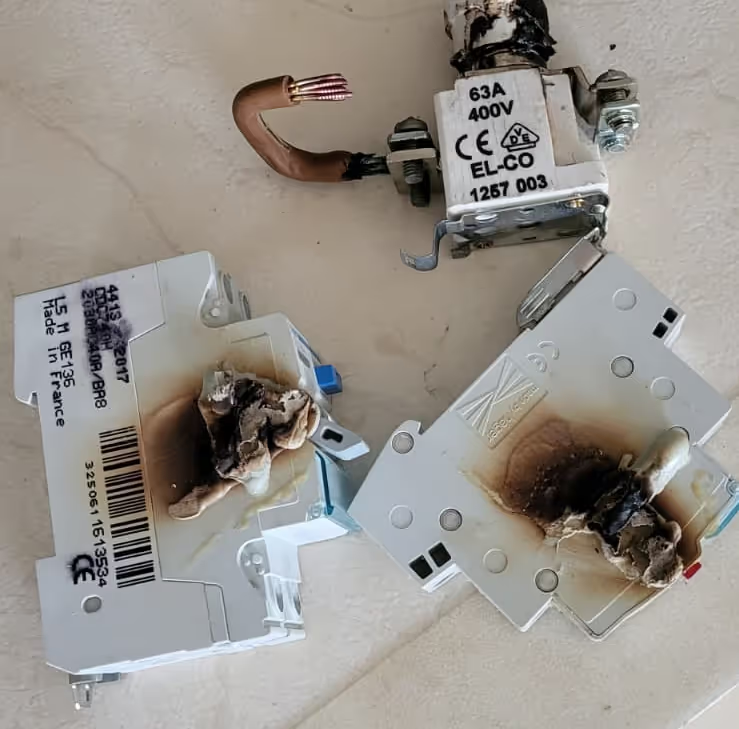
The most dramatic incident we have had was on Kefalonia. The house had a solar heater with an electric water boiler as backup. The homeowners gave us clear instructions: flip specific switches on the fuse board to activate the boiler.
We followed the instructions exactly. An hour later, all electricity cut out.
One fuse had melted completely and damaged two others. We sent photos immediately via WhatsApp. The homeowners arranged an electrician who replaced the three fuses and explained that the house could not run the heater and boiler simultaneously without overloading the system. From that point forward, we turned off the heater for a few hours whenever we needed hot water.
This was not our fault. We followed the instructions we were given. But consider what would have happened if we had waited to report it, or tried to manage it quietly, and the homeowner had returned to find melted fuses and no explanation.
Damage vs Malfunction
Understanding the distinction shapes how you communicate and whether the platform needs to be involved.
Damage you caused means something you did broke something. A dropped glass, a cracked plate, a spilled drink on a rug, a scratched surface. You are responsible. Tell the homeowner, offer to replace or reimburse, and follow through.
Equipment malfunction means something failed independently of what you did. A dishwasher stopping mid-cycle, a washing machine that leaks, a boiler that trips the fuses when used as instructed, a plumbing issue. These often reveal pre-existing problems and shift responsibility to the homeowner. You still need to report them immediately, but your position is different.
The Kefalonia fuses were a malfunction following the homeowner's own instructions. The coffee machine was a pre-existing mechanical issue triggered by bean moisture. Neither was our fault. Both required immediate communication.
When in doubt, report it and let the homeowner determine what happened. Never decide on your own that something was not your fault and therefore does not need to be mentioned.
The Message Format
Most people overcomplicate damage reports. They write paragraphs of explanation, apology, and context. Homeowners need three things: what happened, acknowledgment that you are telling them, and an offer to make it right.
For damage you caused:
Hi [Name], just wanted to let you know that [item] broke this morning. Really sorry about this. Happy to replace it or reimburse you, whichever works best for you.
For equipment malfunctions:
Hi [Name], the [appliance] is not working properly. [One sentence description of what happened]. I have checked [what you looked at] but it is still not functioning. Can you advise on next steps? Happy to contact a repair service if that would help.
Include a photograph whenever it is useful. A picture of the broken item, the error message, or the melted fuse removes ambiguity and shows you documented the situation rather than leaving it vague.
Keep the message short. The goal is to inform, not to defend or justify. A brief, honest message will always be received better than a lengthy explanation.
Photographing the Damage
Before you clean anything up, take photographs. This is the practical step that protects both you and the homeowner.
Photograph the item in its current state before you move it. Photograph the surrounding area to show context. If there is an appliance fault, photograph the error message or the affected component. If fuses are involved, photograph the fuse board before and after.
This documentation does two things. It gives the homeowner a clear picture of what happened without relying on your description alone. And if the platform ever needs to be involved in a claim, documented evidence is what makes a claim processable.
If you arrive at a sit and notice something already damaged, photograph it immediately and send the homeowner a message to confirm what you found before the sit begins. This creates a record that protects you from being held responsible for pre-existing damage.
When to Involve the Platform
Platform cover plans exist for situations where the damage is significant enough that direct resolution between homeowner and sitter is not sufficient.
Neither TrustedHouseSitters nor Nomador offer insurance in the regulated sense. Both platforms state this explicitly in their terms. Their plans are discretionary and they may pay out, at their sole judgement, when specific conditions are met. They are a safety net in serious situations, not a replacement for honest communication and reasonable personal responsibility for minor damage.
For minor damage that you caused (a broken glass, a cracked plate, a snapped utensil), the direct approach is to offer to replace or reimburse the homeowner directly. This is faster, simpler, and preserves the relationship better than filing a platform claim.
For more significant damage (a broken appliance, structural damage, or anything where the cost is substantial), contact the platform after notifying the homeowner. On TrustedHouseSitters, the fastest way to reach a real person in 2026 is through the Live Chat icon in the THS app or on the website. THS has moved toward a live chat first model, and response times via chat are typically faster than email. Phone support is also available (UK: +44 808 178 0207, USA: +1 855 702 2702) for urgent situations during an active sit. Document everything before making contact.
THS requires homeowners to claim through their own home insurance first before the THS Home and Contents Plan is considered. The plan has a $1,000 minimum threshold, meaning damage below that level is handled between the parties directly regardless of platform membership. We covered the full details of how THS and Nomador plans work in our legal issues guide.
Platforms without cover plans, including Aussie House Sitters, House Sitters UK, House Sitters Canada, Kiwi House Sitters, and House Sitters America provide no financial protection for damage. On those platforms, all damage is resolved between the homeowner and sitter directly.
Prevention: What Actually Works
Once the homeowners have left and you are on your own in the property, do a slow walkthrough with your phone and film every room. Do it once you are alone. Filming during the handover while the homeowner is still there would feel odd and is unnecessary. What you want is a record of the home as it was when the sit began, taken the moment it becomes yours to look after.
Walk slowly. Open cupboards that might be relevant. Show the surfaces, the appliances, anything that looks worn or fragile. If you spot a pre-existing crack, scratch, or mark, make sure it is visible in the video.
Once you have the footage, send it to yourself in a private WhatsApp group. This gives you a timestamped copy stored independently of your phone. If your phone is ever lost or reset, the video is still there. The timestamp in WhatsApp is the closest thing you have to verifiable proof of when the recording was made.
Five minutes of footage, sent to yourself, can save weeks of stress if something is ever disputed. Most homeowners are wonderful and you will never need it. But you are staying in a home belonging to someone you met once on a video call. The video is not suspicion. It is professionalism.
What Homeowners Actually Care About
Across 20 sits, the pattern is consistent: homeowners who receive prompt, honest communication about damage respond with understanding. Every time. The glass in Bochum, the glass in Switzerland, the knife in another sit, the coffee machine, the fuses. In each case, telling the homeowner quickly produced a response that was measured and practical rather than upset.
What homeowners care about is not the item. A glass costs a few euros. A knife handle is easily replaced. Even a clogged coffee machine is fixable. What homeowners care about is whether the person they trusted with their home is being honest with them.
A homeowner who returns to find damage they were never told about has two problems: the damage, and the knowledge that the sitter decided not to tell them. The second problem is far worse than the first. It damages trust, produces a bad review, and ends any possibility of being invited back.
A homeowner who receives a prompt message about the same damage has only the damage to deal with. The trust is intact. In multiple cases across our sits, this has led to being invited back, being asked for dinner on the homeowner's return, and receiving five-star reviews that describe us as exceptionally trustworthy.
The review history you build across sits is your most valuable professional asset in house sitting. Every damage incident handled with honesty and speed is an opportunity to demonstrate exactly the character that produces that review history.
When a Homeowner Contacts You After the Sit
Everything above covers incidents that happen during a sit. But a different situation arises when a homeowner contacts you days or weeks after you have left, claiming something was damaged and asking you to pay for it.
This is worth treating very differently.
Before You Respond to Anything, Pause
The moment you acknowledge responsibility for damage, you have admitted fault. Once you have admitted fault, your legal and practical position changes significantly. Before you respond to any message claiming damage, take a moment to think carefully about whether you know, with certainty, that you caused the issue being described.
If you are not certain, do not acknowledge it.
This is not about dishonesty. It is about accuracy. A homeowner who messages you a month after a sit claiming there is an oil stain on the table cannot know with certainty how or when that stain appeared. You cannot know either, especially if you do not remember it. Multiple people may have been in that home before, or after your sit. Surfaces pick up marks over time in ways that are impossible to attribute definitively. The stain may have been there before you arrived. You simply do not know, and if you do not know, neither does the homeowner.
The Oil Stain Scenario
A sitter was staying in a home and at one point dyed her hair using the dining table. She did not notice any issue at the time. Weeks after the sit ended, the homeowner sent a message saying there was an oil-like mark on the table surface and asked the sitter to replace it.
The sitter did not clearly recall causing any mark. She had used the table, but she had no memory of leaving any residue.
If she responds saying "yes, that must have been from my hair dye." she has admitted fault. From that point forward, the homeowner has her own written confession. Without that admission, the homeowner has a table with a mark on it and no way to prove when it appeared, who caused it, or whether it was pre-existing.
If the sitter does not acknowledge fault, the homeowner faces a significant problem. There is no evidence tying the sitter to the damage. The sitter was in the home, but so were maintenance workers, cleaners, family members, or anyone else who had access during and after the sit. The homeowner would need to prove, on the balance of probabilities, that the sitter caused the damage. Without an admission or clear evidence, that is very difficult.
There is also a financial point worth knowing. If a sitter does take responsibility for damage, the amount owed is typically the depreciated value of the item, not the replacement cost. A homeowner cannot generally claim that a five-year-old table with normal use must be replaced at the current retail price of a new table. Courts and dispute resolution processes will consider the existing condition and age of the item. Acknowledging responsibility does not automatically mean paying full replacement value.

The Walkthrough Video: Your Single Best Protection
The practical protection that makes all of this much more concrete is a walkthrough video taken at the start of the sit.
When the homeowner leaves, or immediately after you are handed the keys, walk through every room slowly with your phone, filming as you go. You are not looking for anything specific. You are simply recording the condition of every surface, every piece of furniture, every appliance, every corner as it existed when the sit began. Send that video to yourself in a private WhatsApp group or upload it somewhere with a timestamp. Keep it.
If you want to be thorough, do a second walkthrough the day before the homeowner returns, recording the home in the same condition. This gives you a before and after record.
Before you dismiss this as excessive: a single walkthrough takes about five minutes. The protection it provides can save you from weeks of stress, hundreds or thousands of dollars in disputed claims, and a damaging review based on something that was never your fault.
I do this on every sit. The vast majority of sits are with wonderful homeowners and you will never need the video. But you only know the homeowner from a video call and a brief handover. You do not know how they handle disputes, what their financial situation is, or whether they will be scrupulous about what they ask you to pay for. The video is not distrust. It is professionalism.
Keep a Paper Trail in Your Messages
Your written correspondence through the platform or WhatsApp is your strongest form of protection in any dispute. It documents what was communicated, when, and what was agreed.
If something goes wrong during a sit, record it in writing. When we had the blocked coffee machine in Switzerland, we sent a message as soon as we noticed the issue, explained what happened, and kept the exchange on whatsapp. When the fuses melted in Kefalonia, we sent photographs immediately and kept everything documented.
This written trail matters for a different reason too: if a homeowner claims something post-sit that you do not believe is your responsibility, the absence of any mention of that issue during the sit is itself useful. If it was significant enough to claim for after the fact, it would presumably have been noticed and mentioned earlier.
Conclusion
Damage happens. Things break, appliances fail, and situations arise that no one planned for. The difference between a sit that ends well and one that does not is almost never the damage itself. It is how quickly and clearly it was communicated.
Tell the homeowner within 30 minutes. Keep the message short. Offer to make it right. Photograph everything before you clean it up. Let the homeowner determine what happened and what is needed. Then do whatever you said you would do.
That process has produced nothing but understanding across every incident in our sits, and in multiple cases has led to a stronger relationship with the homeowner than would have existed otherwise.
DM us @housesittersguide on Instagram if you are dealing with a damage situation right now. We answer everyone.

Frequently Asked Questions
Should I tell the homeowner about every piece of damage, no matter how small?
Yes. A broken glass worth five euros should be reported in the same way as a broken appliance worth five hundred. The value of the item is not the point. The point is that the homeowner returns to a home with nothing unexplained. If you broke it, they should hear it from you rather than find it themselves. In every case we have experienced, telling the homeowner immediately produced understanding. Finding unexplained damage always produces the opposite.
What if I am not sure whether the damage was my fault?
Report it regardless and let the homeowner determine what happened. Describe what occurred as clearly as you can: what you were doing, what happened, and what the current state of the item or appliance is. If it appears to be a pre-existing problem or equipment failure, say so, but do not withhold the report on that basis. The homeowner knows their property and can often tell immediately whether something is new damage or a pre-existing issue.
Do I have to pay for damage I caused?
Expect to offer replacement or reimbursement for damage clearly caused by your actions. For minor items, a direct offer to replace or reimburse is faster and simpler than any platform process, and it preserves the relationship. For significant damage, the platform's discretionary plans may apply depending on your membership tier, though these have minimum thresholds and conditions that mean small incidents are always resolved between the parties. Our legal issues guide covers what each platform's plans actually cover.
What if an appliance breaks that I was using as instructed?
Report it immediately and frame it accurately: you were following the instructions you were given. Equipment that fails while being used correctly is a malfunction, not damage you caused. The homeowner is responsible for the condition of their appliances. Document what happened, what instructions you followed, and what the current state of the appliance is. Contact the homeowner and ask for guidance on next steps rather than attempting to diagnose or fix it yourself.
What should I photograph if something breaks?
Photograph the item before you move or clean it, the surrounding area for context, and any relevant information like error messages or damaged components. If the damage was caused by something specific, photograph that too. Send at least one photograph with your initial message to the homeowner. If the platform needs to be involved later, this documentation is what makes a claim processable.
One practical point for 2026: most smartphones automatically embed metadata into every photo, including a timestamp and GPS location. This is the closest thing to a legal black box in a damage dispute. If a homeowner later claims damage happened on a different day, the metadata on your photographs shows exactly when and where each image was taken. Do not crop or edit photos before sending them to the homeowner or the platform, as editing can strip this metadata. Send the originals.
Also photograph anything already damaged when you arrive at a sit. This creates a timestamped record that protects you from being held responsible for pre-existing issues.What should I do if a pipe bursts during a house sit?
Turn off the stopcock immediately, before contacting anyone. This stops the damage from getting worse while you sort out the rest. Common stopcock locations are the kitchen, near the front door, by the front gate, or on an exterior wall. Once the water is off, use towels and buckets to contain the area, then message the homeowner straight away. Let them arrange the repair, since they will usually have a trusted local plumber, and keep a written record of what happened and when for your own protection.


Responses
What are your thoughts on this post?