Breadcrumbs: Home > House Sitting Guide > Who Pays for Travel to a House Sit
📊 QUICK FACTS:
Standard rule: The sitter covers their own travel costs
Exception: If a homeowner invites you, travel cost negotiation is reasonable
Campervan advantage: Turns travel costs into near-zero while adding flexibility both sides benefit from
Most expensive sit travel we have paid: €160 ferry to Kefalonia
Car use: Negotiate on the video call, confirm insurance in writing, replace fuel as a baseline courtesy
Between sits: Campervan, wild camping, free parking. House sitting is the reset, not the only plan
The short answer is: you do. As a sitter who applies for a house sit, getting yourself there is your responsibility. That is the baseline expectation and it is a fair one. The homeowner is offering free accommodation. You are offering your time and care. Neither side should be out of pocket covering the other's logistics.
But that baseline is not the whole story, and treating it as the final word means you miss some of the more interesting edges of the exchange.

The Baseline and Why It Makes Sense
When you apply for a house sit, you are pursuing an opportunity that happens to be in a specific location. The homeowner did not ask you to travel there. They posted a listing and you applied. The cost of getting there is part of your decision about whether the sit makes sense for your plans.
This is why we have always recommended against building your entire trip around a confirmed sit. Apply for sits that are already on your route, that fit where you are going rather than defining where you go. That way the travel cost is not a house sitting expense at all. It is a travel expense for a trip you were already taking, and the sit is the accommodation bonus along the way.
Before the T4 campervan, Caro and I drove a VW Golf. Very fuel-efficient: around €70 for 800 kilometres, so roughly €140 return for a sit 800km away. We considered that the cost of access to a region we were already exploring, not the cost of the sit itself. Getting to Kefalonia for the cat and flea situation cost us €160 in ferry fees, which remains our most expensive journey to a sit. Worth it in theory, complicated in practice, but the point stands: we chose to go there because we wanted to be in Greece, not because we needed the sit.
The Campervan Changes the Equation Entirely
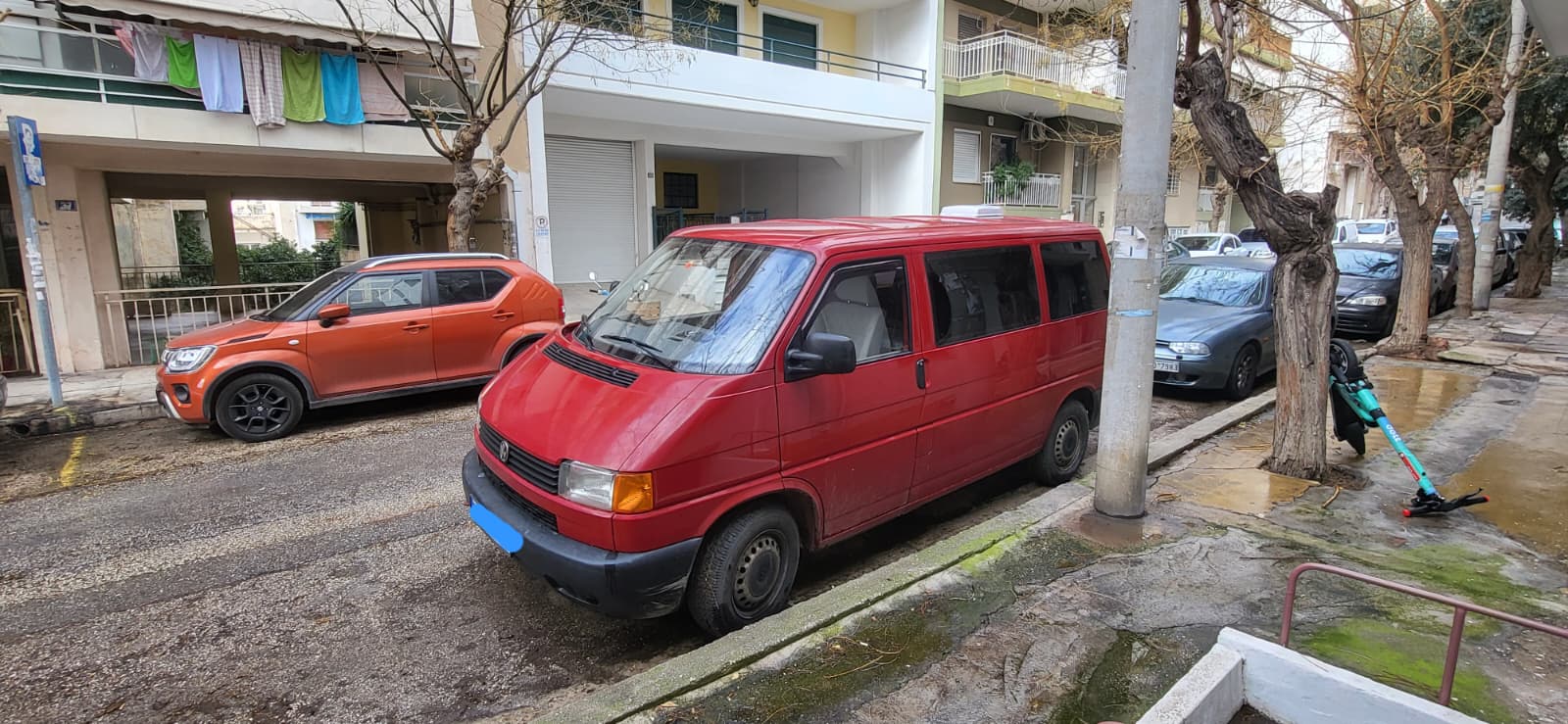
Travelling full-time in the 1998 VW T4 has changed how travel costs work for us in ways we did not fully anticipate when we started.
The van is our home. When we drive to a sit, we are not spending money to reach accommodation we need. We are diverting a journey we were already taking. The fuel we use to reach a sit would have been spent driving somewhere else that week anyway.
What the van also gives us is flexibility that homeowners genuinely value and that we mention directly in our application messages. We tell homeowners that their plans can change and we can work with them. No flight to catch, no hotel booked for the night before, no reason to leave on a fixed day. On our current Athens sit we extended our stay to suit the homeowners, and then extended again by a day when they offered us a thank you dinner. That kind of flexibility is only possible because home is in the car park.
Homeowners notice this. Since we started mentioning van flexibility in our applications, most homeowners have taken us up on it, either leaving a day earlier than planned or extending the sit when something changed. For a homeowner, the most stressful version of returning home is knowing their schedule depends on the sitter's flight. We remove that stress entirely, and it has become one of our genuine advantages in a competitive application pool.
The van fits in most car parks and on most streets, so parking at or near the property has never been an issue. We simply arrive in it, and it sits there quietly for the duration of the sit.
Using the Homeowner's Car
The one area where the sitter-pays-all rule most commonly bends is vehicle use at the sit, particularly in rural locations where a car is practically necessary.
My first solo house sit in Montanel, France, came with the use of the homeowner's car as part of the arrangement. It was genuinely useful, exploring the French countryside at my own pace for a month. But partway through, the homeowner informed me I would need to contribute to utility costs and the car running costs. It was not a large amount, but it was more than zero, and zero was what we had agreed.
That experience shaped how I think about car arrangements now. If something is not discussed and confirmed before you arrive, assume it does not exist. And if a homeowner tries to add costs after a sit has started, that is a material change to the agreed exchange. Our unpaid labour article covers exactly this situation. Contact the platform immediately and document everything.
When car use is offered legitimately, handle it properly:
Raise it on the video call. If the listing is in a rural area, ask directly: "What is the best way to get around for things like groceries and a pet emergency?" This opens the door for them to offer their vehicle without you having to ask for it as a favour.
Confirm insurance in writing. The homeowner needs to check with their insurer that a named guest driver is covered on their policy. Do not drive their car without this confirmed explicitly. Get the confirmation summarised in the platform's messaging system so there is a written record.
Replace the fuel, always. If you use someone's car, you return it with at least as much fuel as it had when you took it. Better still, fill it completely as a gesture of thanks before the homeowners return. You are saving the cost of a rental car, which would be five times the cost of the fuel and require a full tank on return anyway. This is basic courtesy and it costs almost nothing relative to what the car use is worth.
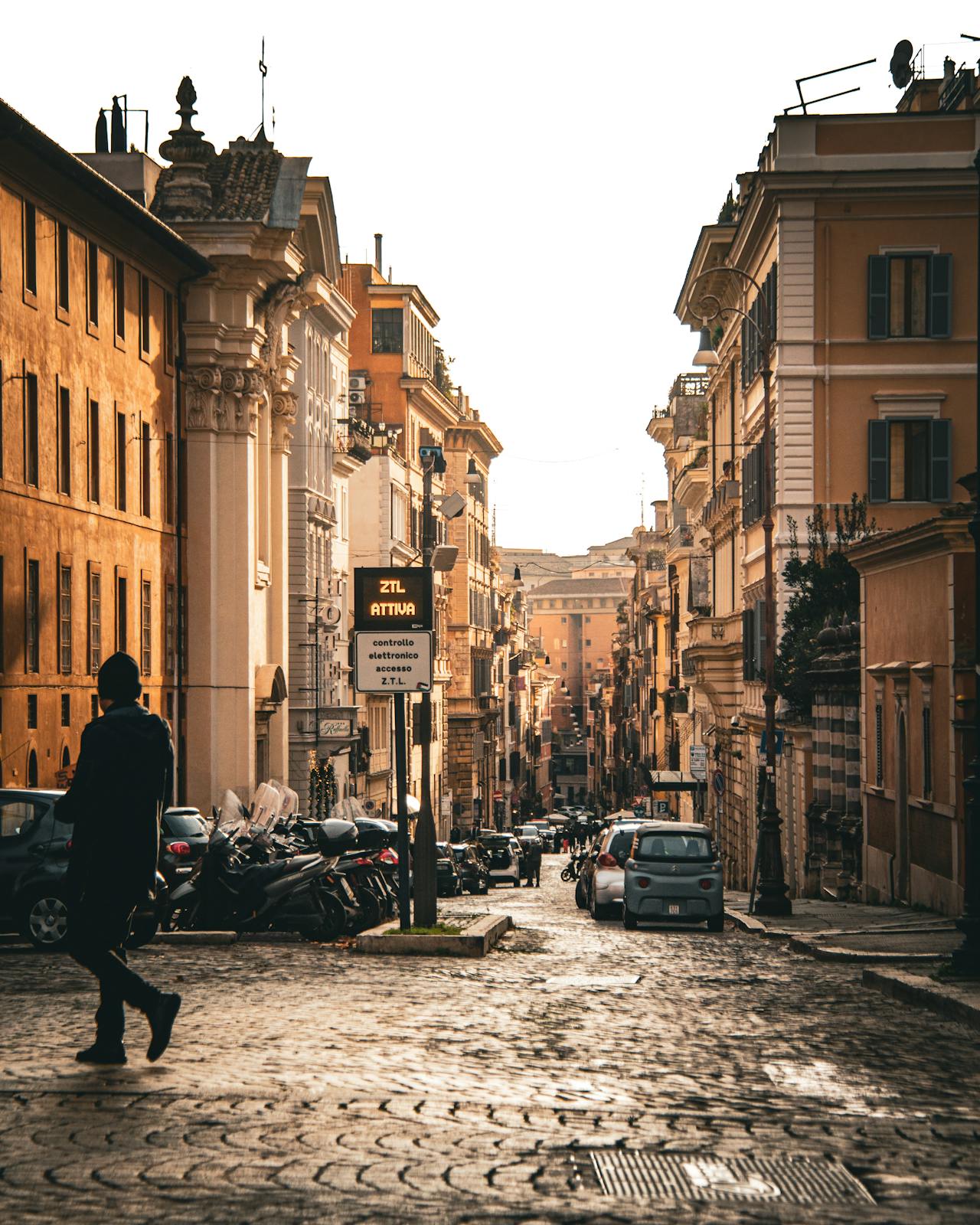
Check for emission zone permits. In 2026 this has become a genuine issue across Europe. Cities like Athens, Paris, and London require specific permits or vehicle registrations to enter certain zones: France uses the Crit'Air sticker system, London has the ULEZ, and Italian cities have ZTL zones that are notoriously expensive and easy to stumble into. Before driving a homeowner's car in any European city, ask whether the vehicle has the necessary permits and registrations for where you are planning to go.
We learned this the hard way in Brugge. We had no idea the city had a restricted zone, drove in, and received a €96 fine. It was an expensive but useful lesson. That fine prompted us to research ZTL zones thoroughly before driving in Italy, where they are widespread and strictly enforced. The research almost certainly saved us hundreds.
The practical tools: Google Maps shows emission and low-traffic zones when you plan a route. Selecting "avoid tolls" when navigating in Italy also tends to route you around the most aggressive ZTL areas. Neither is foolproof, but both are better than discovering a zone by receiving a letter three weeks after the sit ends.
When a Homeowner Invites You
Everything above applies when you are the one who applied. The dynamic changes when a homeowner seeks you out.
Caro and I were recently approached by a couple from the UK who invited us specifically for a sit, even though our profile location was set to Italy. That is a significant distance in a campervan. When a homeowner actively recruits you from outside your travel region because they want you specifically, contributing to travel costs is a reasonable conversation to have. They have chosen you. They are asking you to travel specifically for them. A partial or full contribution to travel costs, or a clear agreement about who covers what, is not an unreasonable ask in that scenario.
The conversation needs to happen before anything is booked. Not on the day of travel. Not after you have confirmed the sit. Before a single flight or ferry ticket is purchased, the full cost breakdown should be agreed in writing on the platform. Who covers flights. Who covers visas. Who covers travel insurance. Assume nothing.
The Accommodation Gap Between Sits
One question the travel cost discussion almost never addresses: what do you do between sits?
For us, this is where the campervan earns its keep most obviously. Between sits we are living in the van, parking in campsites, using free parking areas, wild camping where permitted. The van is home. House sitting is the reset: a week or two with a proper kitchen, a washing machine, reliable Wi-Fi, animals to spend time with, and room to stretch out. After a month of continuous travel and van life, a house sit genuinely feels like a holiday from the holiday. We always look forward to getting back on the road after one.
Without the van, the between-sit accommodation problem becomes the central financial challenge of the whole lifestyle. You would be dependent on hotels, staying with friends and family, or timing sits so tightly that there is no gap at all. The financial model only works cleanly if you have somewhere to be between sits that is not costing you accommodation money. The campervan solves that completely.
If you do not have a campervan, the honest advice is to build your sits around a base you already have: a family home you can return to, a city you live in, a region you know well. Use house sitting to extend trips you are already taking rather than as your entire accommodation strategy. That way the gaps between sits are simply time at home, not a budget problem.
Konrad & Caro 🐾🚐
DM us @housesittersguide if you have questions — we answer everyone!
FAQ
Who pays for travel to a house sit?
The sitter does, as a baseline. You applied for the sit, which means the travel is your investment in an opportunity you chose to pursue. The exception is when a homeowner actively recruits you from outside your existing travel plans. In that case, contributing to travel costs is a fair conversation to have before anything is booked.
Is it reasonable to ask a homeowner to cover your travel costs?
Only if they invited you rather than you applying to them. If you applied, the answer is no. If they sought you out and are asking you to travel specifically for their sit, a partial contribution or at minimum a clear discussion about costs is reasonable. Get any agreement in writing on the platform before you book.
How does travelling in a campervan change the travel cost question?
Almost completely. Your travel costs become near-zero because the journey to the sit is already part of a trip you were taking. More importantly, the flexibility a campervan gives you is genuinely valuable to homeowners: no fixed departure day, no flight to catch, no problem if dates shift. Most homeowners we have mentioned this flexibility to have taken us up on it.
Can I use the homeowner's car during a sit?
Sometimes, if it is discussed and agreed before you arrive. Raise it on the video call for rural sits where a vehicle is necessary. The homeowner must confirm with their insurer that you are covered as a named driver. Get that confirmation in writing through the platform. Never drive their vehicle without it. And always return it with at least as much fuel as it had when you took it.
What if a homeowner adds costs like fuel or utilities after the sit has started?
That is a change to the agreed exchange and should be treated seriously. Contact the platform immediately and document the conversation. Paying to look after someone's home and pets is not a value exchange. It is unpaid labour with an invoice attached. Our unpaid labour guide covers your options in that situation.
What do you do for accommodation between house sits?
We live in the campervan between sits, which solves the problem entirely. Without a van, the honest answer is that you need a home base to return to, or you need to time sits closely enough that there is no meaningful gap. The house sitting financial model works best when between-sit accommodation is already handled. Do not rely on house sitting as your only accommodation strategy without a plan for the gaps.