Breadcrumbs: Home > House Sitting Guide > Long-Term House Sitting
Article updated on: February 22, 2026
📊 QUICK FACTS:
Longest sit we have done together: 1 month — Lullin, France
Longest sit coming up: 6 months — Portugal, May 2026, cats and chickens
Biggest long-term mistake: No daily routine. The sit was wonderful; we still missed it
The sweet spot: Long enough to feel local, short enough that the travel itch does not become a problem
The key difference from short sits: You are not on holiday. You are temporarily living somewhere
Most travel content will tell you to move faster, see more, collect countries. After 15+ sits across 9 countries, our experience points the other way. The sits we remember most fondly, the ones where we actually felt like we lived somewhere rather than passed through, were the longer ones.
But long-term house sitting is a genuinely different proposition to a two-week sit. The logistics are different, the psychology is different, and the mistakes you can make are different. This is the honest version of what it actually involves.
Short-Term vs. Long-Term House Sitting: What Actually Changes
| Short-Term (1–14 Days) | Long-Term (1 Month+) | |
|---|---|---|
| Primary goal | Tourism / holiday | Lifestyle / remote work base |
| Daily routine | Low priority — novelty carries you | Essential — without it the days blur |
| Utility costs | Almost always included | Potential utility cap for sits over 3 weeks |
| Homeowner contact | Daily updates, higher frequency | 2–3 times per week |
| Pet bond | Surface level — still building | Deep — animals trust you fully |
| Wi-Fi vetting | Decent speeds sufficient | Speedtest screenshot required |
| Visa considerations | Tourism allowance covers it | May require D7 or Digital Nomad visa |
Pros and Cons of Month-Long House Sits: Lessons from Lullin
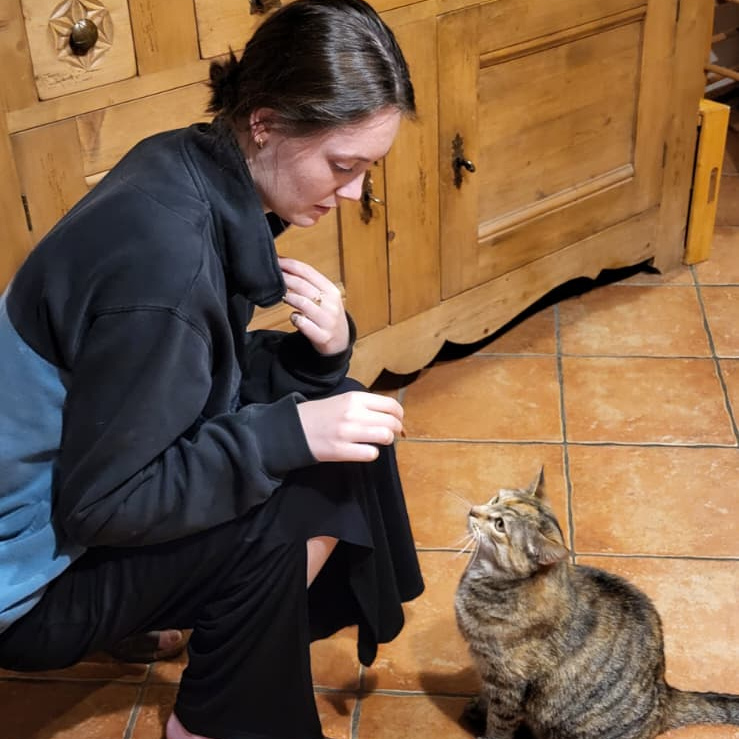
Our longest sit together was one month in Lullin, France. Two outdoor cats — Piton and Muscaton — a house in the Alps, and enough time to genuinely settle in rather than just pass through.
By the end of it, we were ready to leave. Not because anything had gone wrong. The sit was genuinely wonderful and when we think back on it now we remember it with real fondness. But by week four we had explored everything within reach, ticked off what we wanted to see, and the familiar pull of the road had started up again. We had a home in Bochum we wanted to return to and we had the travel itch.
The lesson we took from Lullin was not that a month is too long. It is that we went in without a structure. We had no daily routine — no fixed wake time, no exercise habit, no dedicated work hours, no date nights. When you are somewhere for two weeks, novelty carries you. When you are somewhere for a month, novelty runs out around week three and what you are left with is whatever daily rhythm you built, or did not build.
This is the single most important preparation for any long-term sit. Before you arrive, agree on a routine. Wake up at a specific time. Build in exercise. Designate work hours. Plan how you will explore the area across the whole duration rather than front-loading it in week one. Caro and I are already having these conversations in preparation for Portugal.
Full-Time House Sitting as a Digital Nomad: The Portugal 6-Month Plan
From May 2026 we have a six-month sit in Portugal lined up — cats and chickens, a proper long commitment. By the time we arrive we will have been on the road for six months in the campervan. That context matters enormously for how we are thinking about it.
By May, we will be ready to stop moving. Summer in a campervan without air conditioning is hard. In summer across southern Europe, police are more likely to check campervans, free camping becomes more restricted, and the heat makes the van genuinely uncomfortable. A house with a kitchen, a proper bed, a washing machine, and a garden is not just convenient — it will feel like a genuine luxury after six months of van life.
The Portugal sit is also a deliberate recharge before the next phase. After six months there, the plan is to drive north through Spain, France, and eventually the UK. Going into that leg of the trip rested, with a routine re-established and some months of stability behind us, will make the van feel fresh again rather than exhausting.
For anyone doing full-time house sitting as a digital nomad or remote worker, a six-month sit demands a different level of Wi-Fi vetting than a two-week trip. Decent Wi-Fi is not enough when you are going to be working from a property for half a year. We now ask for a Speedtest screenshot during the video call. If we are going to live somewhere, we need to be able to work there — video calls, uploads, everything. A homeowner who cannot provide a screenshot or does not know their speeds is a flag worth following up on before you commit to a long stay. Our house sitting for remote workers guide covers the full Wi-Fi vetting process.
💻 Digital Nomad Toolbox: For any sit of three months or longer, a travel router is worth carrying. If the homeowner's Wi-Fi router is in another room or on a different floor from where you work, a travel router lets you extend the signal to your desk without asking the homeowner to change their setup. It has saved us on more than one sit where the office was far from the router.
This is something worth understanding about long-term sits: they work best when they fit into the broader rhythm of your travel rather than interrupting it. Portugal is not a break from our lifestyle. It is a planned chapter in it.
Our Portugal routine plan — what we are building before we arrive:
08:00 — Chicken coop and cat feeding, outdoor checks
09:00–13:00 — Deep work block, no interruptions
13:00 — Lunch, reset
14:00 — Exploration or local walk, one new place per week minimum
17:00 — Second animal check, admin
19:00 — Offline time, cooking together, date nights on rotation

Why We Passed on Annecy
Earlier in our trip, Caro found a stunning long-term sit in Annecy, France. We both love that city. The sit looked beautiful. We did not apply.
The reason: we had only just started moving. We had been on the road for a matter of weeks and we had not yet explored enough to feel ready to settle. Committing to months in one place at the beginning of a trip, before the novelty of movement has run its natural course, is a recipe for restlessness.
Now, four months in, the calculation is completely different. We are actively looking forward to Portugal. The timing of a long sit matters as much as the sit itself.
Luxury Mansions vs. Small Homes: Which Is Better for Long-Term House Sitting?
The article you will find on most house sitting blogs talks about the luxury of large homes — multiple bathrooms, expansive kitchens, views from every window. All true. But Cries, Switzerland taught us something those articles do not mention.
We were in a large, beautiful house. It took two to three hours to clean properly. Every time we needed to tidy up it was a production. The rooms we were not using felt like a weight rather than a benefit.
We realised we actually prefer smaller, comfortable homes. The comfort matters more than the square footage. After you have spent months living in a 6-square-metre campervan, anything with a proper kitchen and a separate bedroom is already extraordinary. A house where you can clean in an hour and feel genuinely at home in every room beats a mansion that takes a whole morning to maintain.
This kind of self-knowledge — what you actually want from a sit rather than what sounds impressive — is one of the most useful things long-term sitting can give you. You cannot know it until you have lived it.
Long-Term House Sitting Costs: The Utility Trap and How to Avoid It
The most uncomfortable situation I have encountered in house sitting happened at the start of my solo five-month sit in Montanel, France. Just before I arrived, the homeowner asked for €500 per month to cover the car and utilities — something that had never been mentioned during any of our conversations before I was confirmed.
By then I was already committed. I paid it. I should not have had to.
This must be discussed before you accept any sit, and especially before any long-term sit. The standard arrangement is clear: you provide free care, the homeowner provides free accommodation. Any deviation from that — utility contributions, car costs, garden maintenance fees — must be on the table during the video call, not surfaced after you have confirmed.
🚩 2026 Red Flag: THS terms describe sits as "unpaid, private domestic arrangements" — utilities are not mentioned anywhere in the T&Cs. That means there is no official THS policy permitting or prohibiting utility contributions. If a homeowner asks for utility money after the sit is confirmed and it was not disclosed in the listing, THS has no formal mechanism to enforce it — but you also have no obligation to pay it. If a homeowner raises this after confirmation with nothing documented, contact THS support and keep all communications on-platform. Whatever is agreed, get it in writing inside the THS message thread before the sit starts.
If a homeowner raises financial contributions after you have committed with nothing in the listing, contact THS support immediately with your original agreement documented. You have recourse. Use it. Our guide to the difference between house sitting and unpaid labour covers exactly where the line sits.
Watch out for maintenance creep on long sits. On a six-month sit you are not just feeding cats — you are managing a property. If the listing includes mowing two acres of lawn, maintaining a pool, and tending a large garden on top of the animal care, that is no longer a house sit. That is a part-time job. Sitter burnout on long sits almost always traces back to a workload that was not made explicit in the listing and was accepted without being questioned. Read every task in the listing carefully. If the combined animal care and property maintenance would take more than two to three hours per day, it is worth a direct conversation about whether the exchange is still fair.

Building a Life, Not Just a Stay
On a two-week sit you can coast on exploration and novelty. On a month-long or longer sit, you need a life — a structure that gets you out of the house, into the community, and keeps the days from blurring together.
The habits that work: a regular morning walk with the pets that doubles as your exercise, a local café where you become a familiar face, a gym membership if you are somewhere long enough to justify it, dedicated work hours at a consistent time. The pets themselves provide structure — their feeding times and walks impose a rhythm that actually helps anchor the day more than most people expect.
For the Portugal sit, Caro and I are planning designated date nights, a weekly exploration day where we commit to a new place we have not been, and a consistent morning routine. The Lullin sit was wonderful without these things. Portugal will be better with them.
Day Trips and Overnight Absences
On longer sits with independent animals — cats particularly — day trips are straightforward and generally fine. We have taken them throughout our sits without issue.
Overnight trips are a different conversation. We have not done one without explicit homeowner permission, and we would not. If we wanted to go away for a night during a longer sit, we would message the homeowners directly: explain where we wanted to go, ask if they have a friend or neighbour who could check in, and get confirmation before booking anything.
Most issues during long sits are solvable with communication. WhatsApp means you are effectively in contact with homeowners wherever in the world they are. A short message with a photo every two or three days is the right rhythm for a long sit — often enough to reassure, not so frequent that it starts to feel like surveillance of both parties. If uncertain, default to a photo a day. It costs nothing and removes any ambiguity about how things are going.
Saying Goodbye
The emotional cost of long-term sitting is real and nobody talks about it honestly enough.
I have looked after many animals across many years — dogs, cats, farm animals. I have grown attached and I have learned to say goodbye. Caro is still learning this, and it is harder for her than for me.
The most difficult goodbye we have had was not from a long sit. It was from the shortest sit we have done — two nights in Luxembourg, looking after a puppy. On the morning we left there was no homeowner handover, just us closing the glass door to the living room with the puppy on the other side jumping up against it and crying. Caro cried on the way back to Bochum. I understood completely.
The connection with animals does not diminish the more sits you do. If anything it deepens. You understand more about how different animals are from each other, what they need, how they show affection. You just also get better at holding that love alongside the knowledge that it is temporary.
Some animals stay with you longer than others. The French Bulldog in Athens — her personality was so vivid, so genuinely joyful, that I found myself thinking about her for days after the sit ended. The homeowners are wonderful people and I hope we find our way back there one day.
We take photos. We stay in loose contact with homeowners. We know that the relationship does not disappear when the sit ends — it just changes form.
The Legal Reality: Visas and the 90-Day Rule
If you are planning a long-term sit in Europe, you need to understand the legal framework before you book anything.
The Schengen Area operates on a 90-day rule: non-EU citizens — including UK, US, Australian, and Canadian passport holders — can spend a maximum of 90 days within the Schengen zone in any 180-day rolling period. A six-month house sit in Portugal, for example, would exceed this limit for anyone without the right visa.
Long-term house sitting does not grant residency rights. The platform does not provide legal status. Arriving at a sit and planning to stay six months on a tourist allowance is not legal for most nationalities.
For non-EU sitters planning extended stays in Europe, the options most commonly used are:
Portugal's D7 Passive Income Visa or Digital Nomad Visa — Portugal was one of the first countries to introduce a specific digital nomad visa and it remains one of the more accessible routes for remote workers wanting to stay longer than 90 days legally.
Some sitters structure back-to-back sits across EU and non-Schengen countries — the UK, Albania, Georgia, and several Balkan countries are outside Schengen — to reset the 90-day clock without leaving Europe entirely.
We are EU citizens (Polish and German), so the 90-day rule does not apply to us in most of Europe. But if you hold a UK, US, Australian, or Canadian passport and you are planning any sit of more than three months in Schengen territory, consult a visa specialist or check the official government travel advice for your nationality before confirming. This is not a technicality — overstaying Schengen can result in bans from re-entry and serious complications at borders. Our guide to what to tell customs about house sitting covers border crossings and documentation in more detail.
Is a Long-Term Sit Right for You?
If you are new to house sitting, a month-long sit is not the right starting point. The pressure of a long commitment before you understand your own rhythms and preferences is too much. Do several shorter sits first — two weeks is a good ceiling for the first few — and let those teach you what you actually enjoy and what you find difficult.
Once you have that baseline, a longer sit is a completely different and significantly richer experience. You stop being a visitor and start being a temporary resident. The local café starts to know your order. You find the good market, the quiet park, the shortcut nobody uses. The animals trust you fully rather than just tolerating you.
That depth of experience is simply not available in two weeks. It requires time.
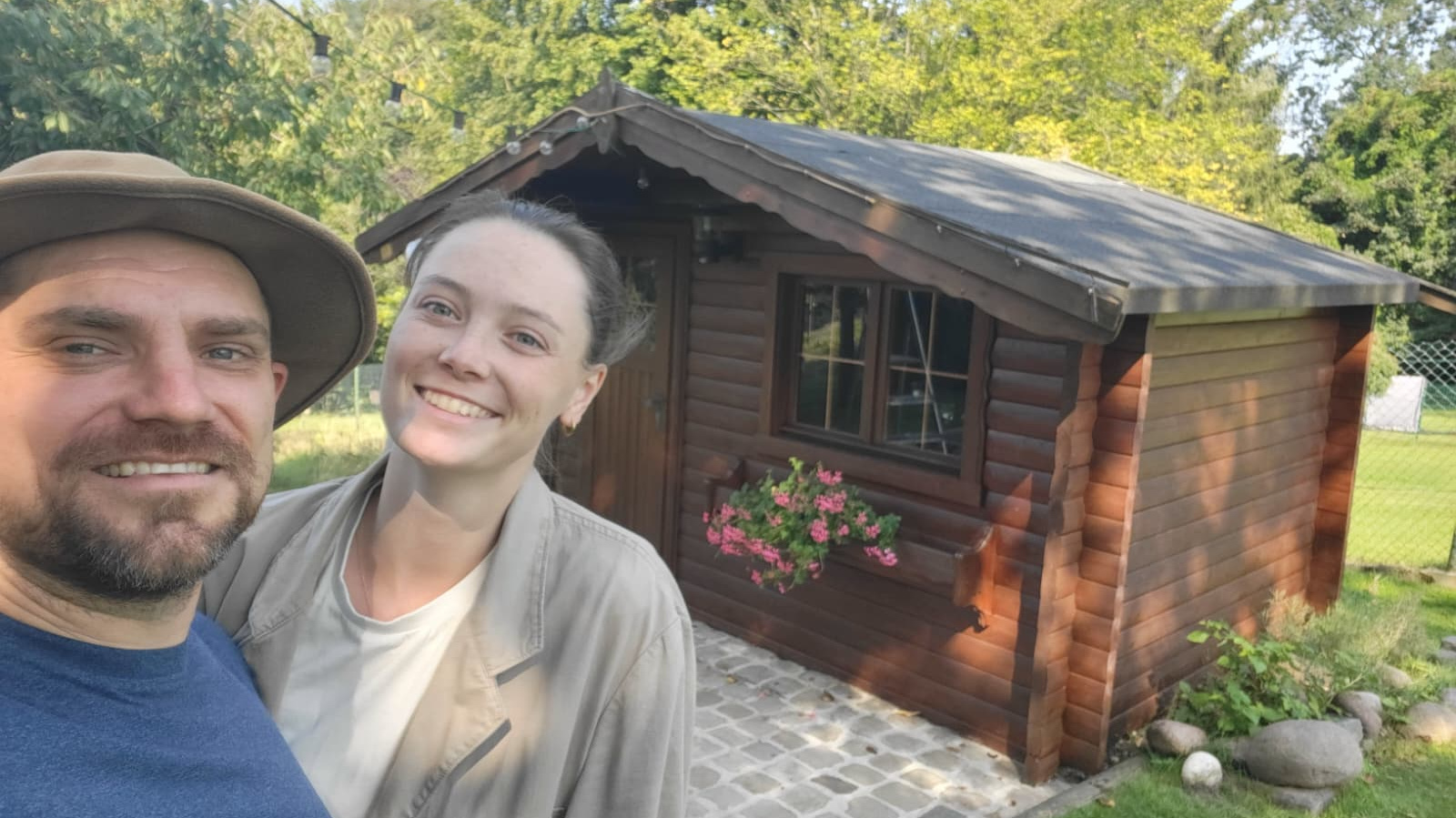
Konrad & Caro 🐾🚐
DM us @housesittersguide if you have questions — we answer everyone!
FAQ
How long is a long-term house sit?
Generally anything from one month upward. A two-week sit is substantive but still operates like an extended holiday. From one month onwards the dynamic shifts — you need a daily routine, you build real community connections, and the experience starts to feel like living somewhere rather than visiting.
What is the biggest mistake people make on long-term sits?
Going in without a daily routine. Novelty carries you through the first two weeks. After that, you need structure: consistent wake times, designated work hours, regular exercise, and a plan for how you will explore the area across the full duration rather than burning through it in week one.
Do long-term sitters have to pay utilities?
No — the standard exchange is free care for free accommodation. Any financial contribution, whether for utilities, car use, or anything else, must be discussed and agreed before you confirm the sit. If a homeowner raises this after you have committed, contact the platforms support with your original agreement documented.
Can you take day trips or overnight breaks during a long-term sit?
Day trips with independent animals like cats are generally fine. Overnight absences should be discussed with the homeowner first — ask whether a neighbour or friend can cover, and get confirmation before making any plans. Most homeowners on long sits are understanding about occasional short absences if you communicate well.
How do you handle saying goodbye to animals after a long sit?
It gets easier with experience, though it never becomes entirely comfortable. Taking photos helps. Staying in loose contact with homeowners keeps the connection alive. The attachment you build does not have to end when the sit does — it just changes form. Some of our best ongoing relationships have come from homeowners and pets we spent meaningful time with.
How do you maintain communication with homeowners on a long sit?
Less frequently than on a short sit. Every two to three days with a photo and a brief update is usually right. The homeowners do not want to be overwhelmed with daily messages over a six-month period. If uncertain, ask them at the start what rhythm they prefer.