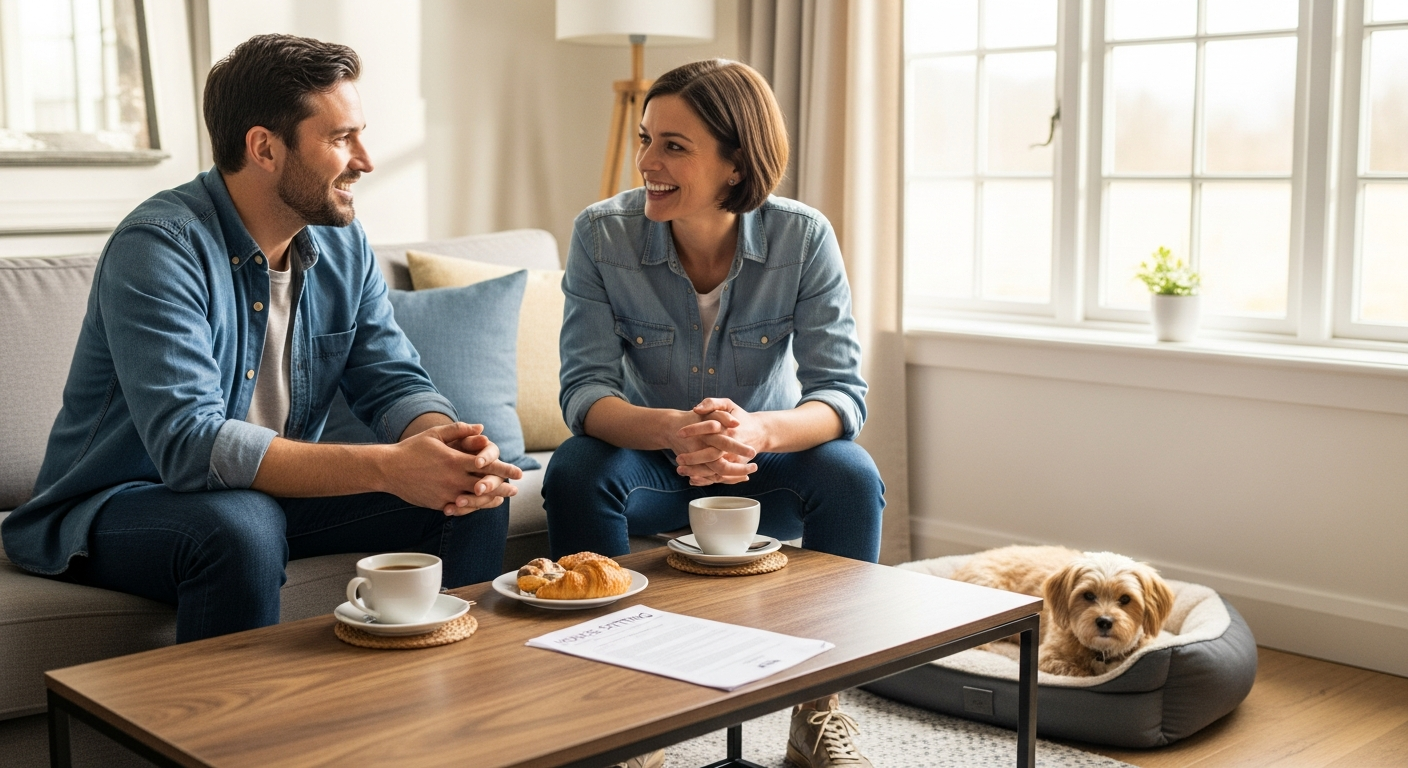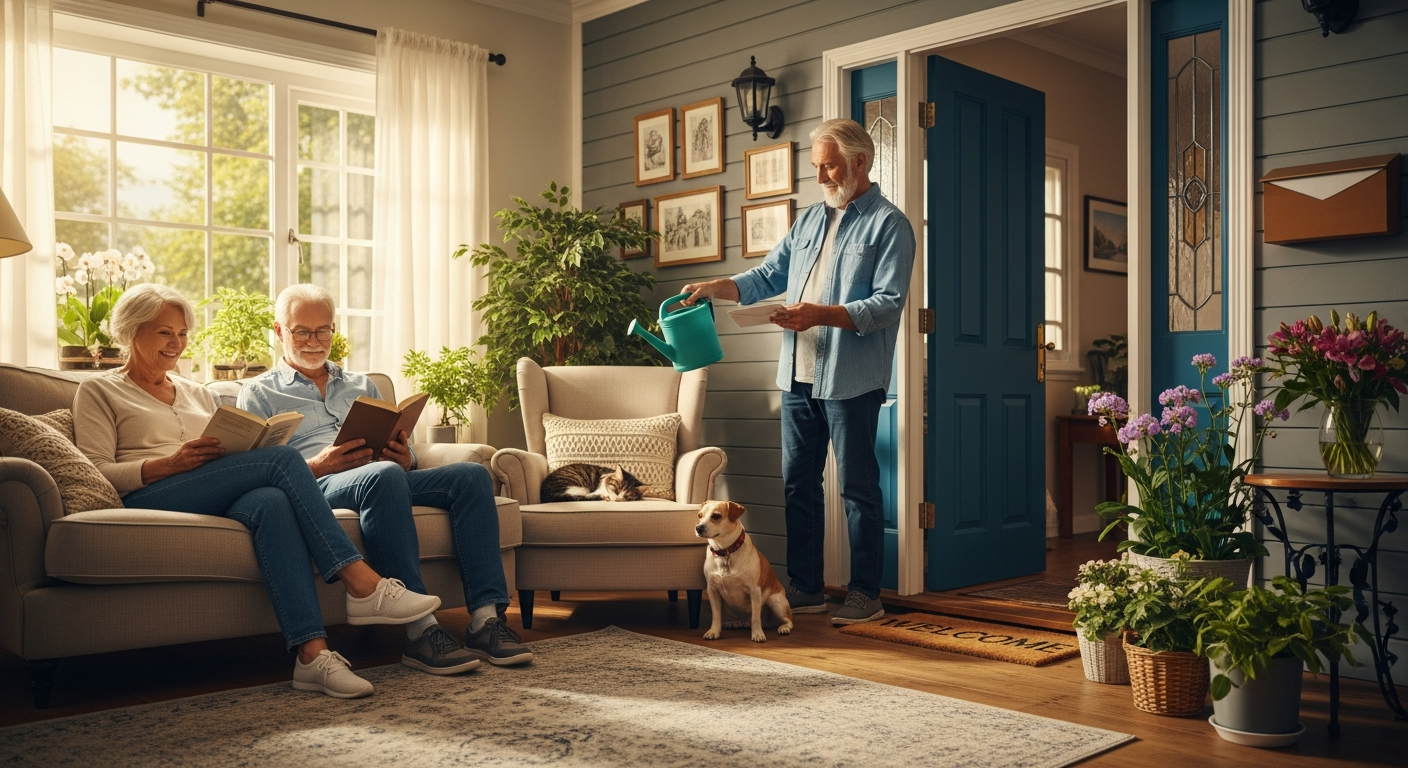
Breadcrumbs: Home > House Sitting Guide > House Sitting for Seniors
📊 QUICK FACTS:
No upper age limit on any major house sitting platform
TrustedHouseSitters: 21+ minimum, all other major platforms 18+
Accommodation savings: We've saved over €32,400 through house sitting
Best sits for seniors: Cats, small dogs, low-maintenance properties with good amenities
Key to success: Honest profile + right sit selection, not age
Recommended platform: TrustedHouseSitters for international sits, Aussie House Sitters for Australia
My mum is 68. My stepdad is also 68 and has Parkinson's. They house sit regularly in Australia and have no trouble finding sits or getting the ones they want. My mum is a lively, high-energy person with countless five-star reviews on Aussie House Sitters. My stepdad's condition is mentioned openly in their profile. Homeowners read it, know what they're getting, and still choose them. That's the thing about house sitting: honesty in your profile isn't a weakness. It's what builds trust.
That's the whole article, really. But let's go a little deeper, because there are real decisions to make about which sits to go for, which platforms to use, and how to frame your profile in a way that attracts the right homeowners rather than the wrong ones.

Age Is Not the Issue. Fit Is.
We arrived at a house sit in Brugge, Belgium, and the homeowners greeted us with visible relief. They told us about their previous sitters: an older couple with a profile full of glowing reviews. When they turned up, the husband could barely stand up straight. The pet was a young, energetic Labrador that needed vigorous daily walks. The homeowners had a flight to catch and no way to fix the situation. The couple left with a lower review, not because of their age, but because the sit was the wrong match.
This story isn't about discouraging older sitters. It's about the one thing that determines whether house sitting works at any age: choosing a sit that genuinely matches your abilities. A 70-year-old who is fit, active, and experienced with animals will get more out of this lifestyle than a 30-year-old who dislikes dogs but applies for every listing they find. The platform doesn't discriminate by age. Homeowners generally don't either, provided your profile is honest and your application is well-matched to what they need.
Before you browse a single listing, it's worth being clear with yourself. Can you walk a large dog twice a day on uneven ground? Are you comfortable in a property with multiple flights of stairs? Do you drive, and are you happy driving in an unfamiliar country? None of these are barriers to house sitting. They're filters that help you find the right sit rather than the wrong one.
The Sits That Actually Suit a Slower Pace
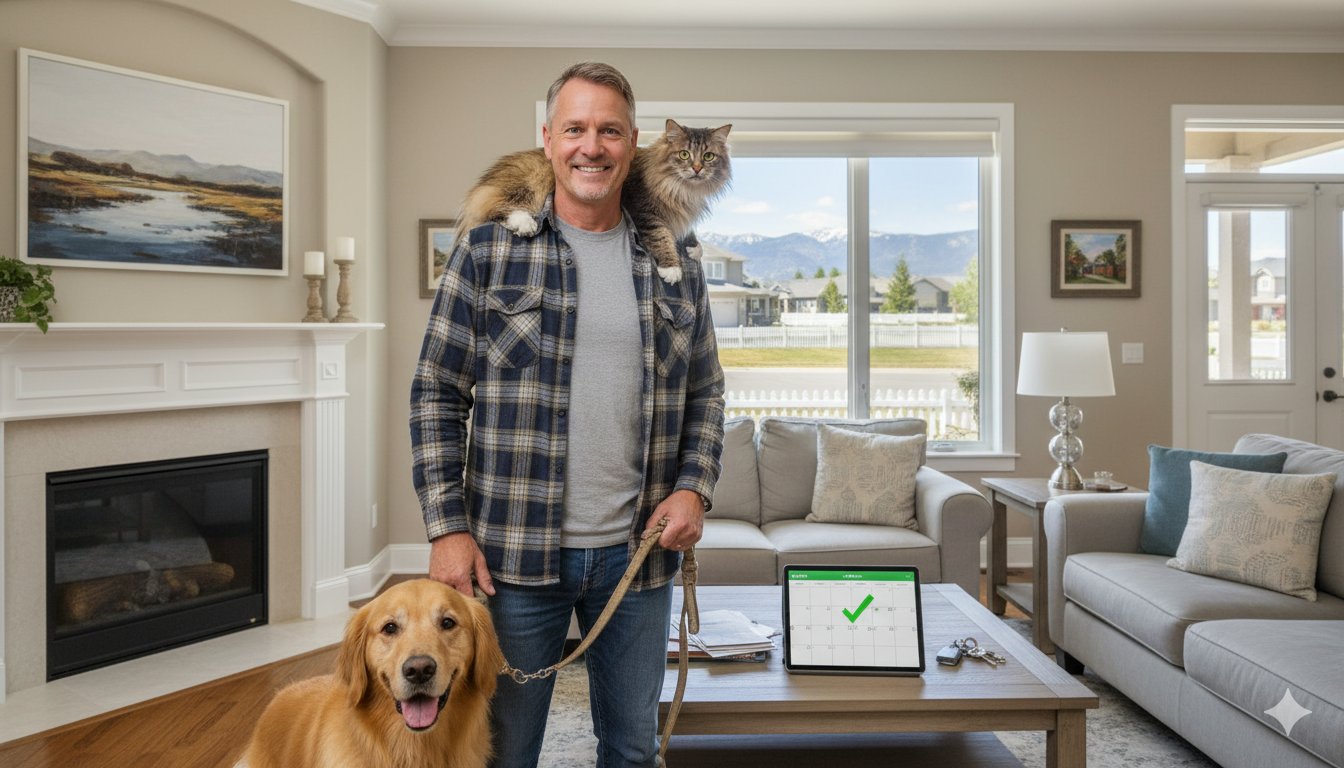
Not every sit involves a bouncing Labrador and a garden the size of a park. A huge portion of listings involve cats, small dogs, and low-maintenance properties where the main job is feeding, company, and keeping an eye on things.
We did a one-month sit in Lullin, France, looking after two outdoor cats. The routine was feeding, occasional pats, and tick checks. The rest of the time was ours. We went to local markets, explored the region, and genuinely relaxed. That kind of sit suits anyone who wants to slow down and actually inhabit a place rather than rush through it.
Our upcoming sit is six months in Portugal, looking after a cat and four chickens. It's about as low-pressure as house sitting gets. We chose it specifically because it gives us the space to focus on our own projects, get into a routine, and become part of the community. Six months in one place means you stop being a visitor and start being a neighbour. You find the good bakery, you know the shopkeeper's name, you walk the same paths every morning. That kind of slow, embedded travel is what the house sitting lifestyle does better than anything else.
For seniors and retirees, this is the version of house sitting that tends to work best. Cats, chickens, small dogs. Ground-floor apartments. Properties near towns and amenities. Sits of a month or longer where you can genuinely settle. These aren't compromise sits. They're often the most enjoyable ones. Our house sitting Europe guide and house sitting France guide have plenty of examples of this kind of listing.
What to Put in Your Profile
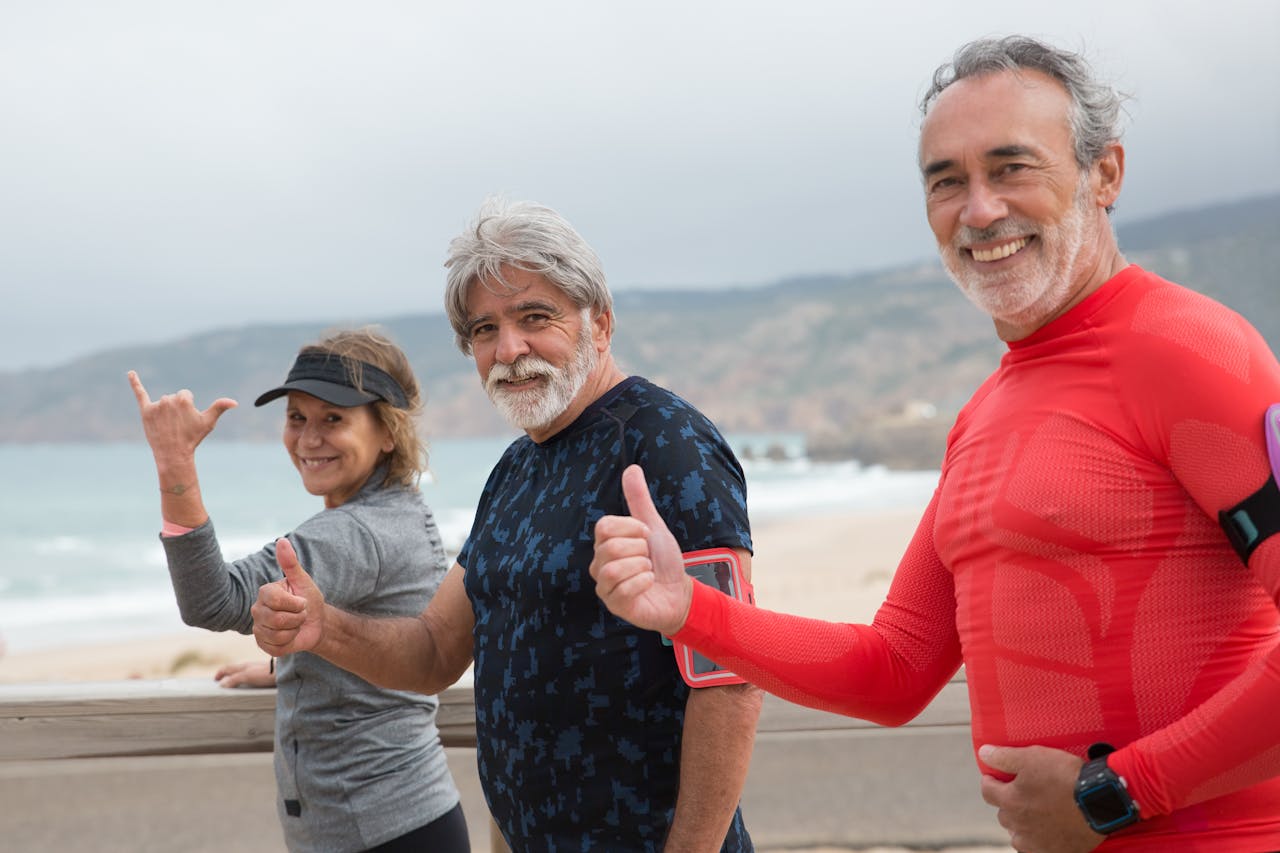
Your profile is doing one job: convincing a homeowner that you are the right person to trust with their home and animals. At any age, that comes down to honesty, specificity, and warmth.
If you have physical limitations, mention them in the context of what you can and can't handle. My stepdad's profile mentions his Parkinson's. It also shows a person with real reviews, real character, and a genuine approach to care. Homeowners who are a good fit respond positively. Homeowners who need someone to run after a young dog self-select out. That's the system working correctly.
Include photos of yourself with animals if you have them. Write about your experience with pets, even if it's informal. If you've looked after a neighbour's cat for a week or walked a friend's dog regularly for years, that counts. Be specific about what kinds of sits you're looking for and what your day-to-day availability looks like.
Our full guide to building a house sitting profile covers the details. If you want to use AI to help structure your profile, our AI profile writing guide is worth reading alongside it.
The Financial Case for Retirees
We've saved over €32,400 through house sitting. That number covers accommodation only. It doesn't include the meals we didn't pay for because we were cooking in a fully equipped kitchen rather than eating out every night, or the laundry costs we avoided because every sit comes with a washing machine.
For retirees on a fixed income, this matters. Accommodation is usually the biggest single travel expense. House sitting removes it entirely. If you're a person who wants to travel, even part of the year, you can stretch a modest budget into months of genuine international living. A winter in Portugal, a spring in rural France, a summer in the English countryside. These aren't fantasies. They're sits that are posted on TrustedHouseSitters and Nomador every week.
The cost of a platform membership is the main upfront investment. Our guide on how much house sitting costs breaks down current membership fees across the main platforms so you can work out where to start. The short version: annual membership on most platforms is less than one night in a mid-range hotel. For longer sits, the maths becomes very obvious very quickly.
A travel-friendly bank card also makes a real difference for international sits. We use N26 in Europe to avoid transaction fees. Revolut is another solid option. Both are worth setting up before your first international sit.
Which Platform to Start With
For international house sitting, TrustedHouseSitters is the largest platform with the widest range of listings. The verification system, review structure, and sheer volume of listings make it the best starting point for anyone planning sits outside their home country. Our full TrustedHouseSitters review covers everything in detail, and if you're ready to join, our TrustedHouseSitters discount code page has the current verified offer.
For sits in Australia specifically, Aussie House Sitters is where my mum and stepdad have built their review history. It's a strong domestic platform with an active listing base and a community that tends to value experience and reliability over flashy profiles.
Nomador is the go-to for France and French-speaking Europe. HouseSitMatch and MindMyHouse are both solid options for broader international coverage. Our comparison of the best platforms for international house sitting covers how they stack up against each other.
The Video Call: Don't Skip It
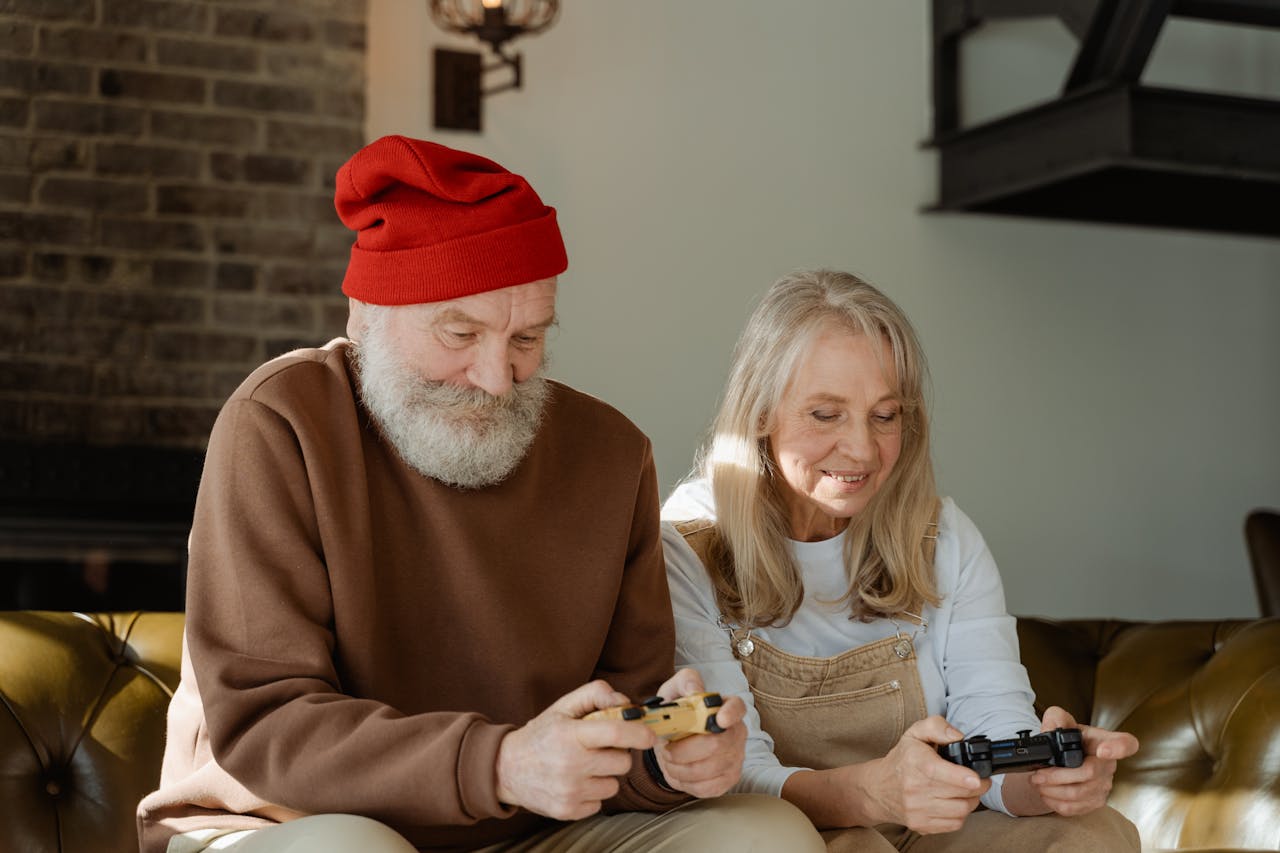
Caro and I always do a video call before accepting a sit. It's one of the most useful parts of the whole process. You get to see the space, meet the animals, and get a real sense of whether the homeowners are people you'd feel comfortable living around. We've turned down sits after a video call because something felt off, and we've accepted sits we weren't sure about because the call changed our minds.
For senior sitters, the video call is also a natural moment to address anything that might be a concern on either side. If a homeowner has a large, energetic dog, it's entirely reasonable for them to ask whether you're comfortable with that level of activity. It's not disrespectful; it's sensible. The call protects both parties. Our guide on house sitting video calls covers what to prepare and what to ask.
Long-Term Sits: What to Expect
One month in Lullin felt slightly long for us at the time, partly because we still had jobs and a home base to think about. Six months in Portugal will almost certainly have moments that test our patience too. That's the honest reality of extended sits. There will be days when you miss your own routine or want to move on.
What long-term sits offer in return is something short sits can't: genuine integration. You stop eating at tourist restaurants and start cooking with local produce. You find the walking routes that aren't in any guide. You become a regular somewhere. For retirees with the time and flexibility to stay put for a while, this is where house sitting moves from a travel hack into a genuine lifestyle. There's nothing quite like spending two or three months in a place and leaving feeling like you actually knew it.
For homeowners posting long-term sits, our experience is that they tend to prioritise stability and reliability above almost everything else. A calm, honest profile with good reviews and a clear welcome message will consistently outperform a younger, flashier application with less substance behind it. For more on what makes applications work, our AI application guide is a useful reference.
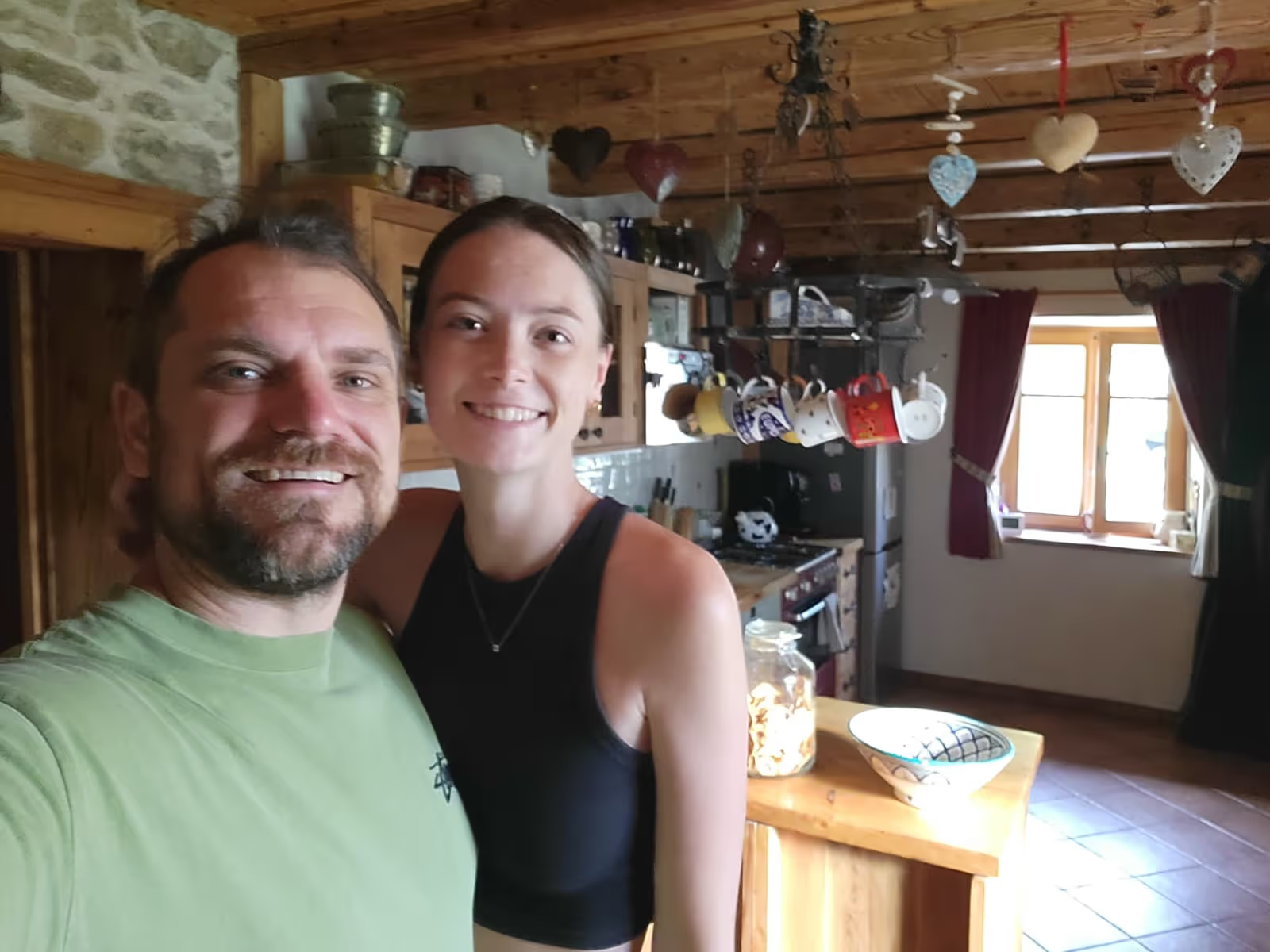
Konrad & Caro 🐾🚐
DM us @housesittersguide if you have questions — we answer everyone!
FAQ
Is house sitting suitable for seniors with health conditions?
Yes, depending on the sit. My stepdad is 70 and has Parkinson's. He and my mum are open about it in their profile on Aussie House Sitters and still get the sits they want. The key is that homeowners read the profile and self-select based on their own needs. A homeowner with two independent cats doesn't need their sitter to be able to sprint. A homeowner with a boisterous young Labrador does. Honest profiles match people to the right sits rather than creating awkward surprises on arrival day.
What kinds of house sits are best for older or less mobile sitters?
Cats, small dogs, and low-maintenance properties are the natural fit. Outdoor cats especially tend to be very independent. Sits with chickens or other small animals are similarly low-impact. Look for ground-floor properties or apartments, sits near town centres where you don't need a car for daily essentials, and listings that mention a calm or quiet pet. Longer sits in one location also suit a slower pace better than a rapid series of short stays.
How much can seniors actually save through house sitting?
Accommodation is almost always the largest travel cost, and house sitting removes it entirely. We've documented over €32,400 in savings across our sits. For retirees travelling on a fixed income, even a few months of sits per year can make international travel genuinely affordable. Add in the full kitchen (no restaurant bills), the washing machine, and the Wi-Fi, and the savings extend well beyond just the accommodation itself.
Do I need prior experience to get started as a senior house sitter?
No, but you do need to build trust early. Start with shorter, local sits to earn your first reviews. A strong house sitting profile that is honest, warm, and specific about your experience with animals will get you selected even without a long track record. References from friends or neighbours you've helped with pet care are a good substitute for formal reviews while you're getting started.
Should I do a video call before accepting a sit?
Yes, always. We do it before every sit. It lets you see the property, meet the animals, and get a genuine feel for the homeowners before committing. It also gives both sides a chance to ask questions they might not want to put in writing. For senior sitters especially, the call is a natural moment to discuss the physical requirements of the sit openly. Our video call guide covers what to prepare and what questions are worth asking.
Are long-term sits better for retirees than short ones?
It depends on what you're looking for. Short sits are lower commitment and easier to trial if you're new to house sitting. Long sits, a month or more, suit retirees who want to genuinely settle into a place, shop at local markets, learn a few words of the language, and feel like a temporary local rather than a passing guest. Our upcoming six-month sit in Portugal is exactly that kind of opportunity. The trade-off is that longer sits require more flexibility and a bigger upfront commitment to a single location.