Most people overthink application messages. They spend 30 minutes crafting the perfect paragraph, agonizing over every word, and still get ignored.
The reality is simpler: homeowners aren't looking for Shakespeare. They want to know you're serious, trustworthy, and actually read their listing.
We don't use AI for our application messages. We have a refined template that generates responses within 12-48 hours, usually asking to schedule a call. That template took time to develop, but now it takes us 5 minutes to customize per application.
This guide shows you how to use AI to create your own effective template, then customize it efficiently for each sit. The goal isn't perfection. It's getting homeowners to check your profile and schedule a video call.
Why Templates Work Better Than Custom Messages
When we started house sitting in June 2023, I wrote unique messages for every application. Spent 20-30 minutes per message. Got mediocre results.
Then we realized something: the message's job isn't to tell our life story. It's to demonstrate we're serious applicants who read the listing and qualify for the sit.
Once we developed a solid template structure, our response rate improved dramatically. Now we customize the core elements (names, specific requirements) and leave the proven parts alone.
The entire application process takes 5 minutes:
Read the listing carefully (2 minutes)
Copy template and swap names/pets (1 minute)
Add 1-2 sentences addressing specific requirements (2 minutes)
Send
That efficiency matters when you're applying to multiple sits. You can't spend an hour per application.

The Problem with Most Application Messages
After reviewing others applications like Trusted House Sitters and Nomador, the pattern is clear.
Most messages focus on what the applicant wants:
"We've always dreamed of visiting Switzerland! This would be an amazing opportunity to explore the Alps while experiencing local culture. We love traveling and meeting new people."
Everything in that message is about the applicant's vacation desires. Nothing addresses the homeowner's concerns.
Compare that to this approach:
"We'd love to look after Max and Luna while you're away. Konrad has experience with large dogs (he looked after a 70kg St. Bernard previously), so we're comfortable managing strong pullers on walks. We work remotely, which means we're home all day for company and supervision."
The second version immediately addresses capability (can handle large dogs), availability (home all day), and focuses on the pets by name.
This reframing is what separates applications that get responses from those that get ignored.
What Makes Messages Convert
Our current template structure has generated over 15 sits with only one instance where a homeowner didn't even read the message (we suspect they forgot about the listing).
The response we typically get is: "You're exactly what we were looking for. When can we call?"
The template works because it answers the homeowner's questions in order of importance:
1. Are you addressing me personally? Use their names and their pets' names in the first sentence. This proves you read the listing rather than mass-applying.
2. Why should I trust you? Platform tenure and review count. "We joined Trusted House Sitters 2.5 years ago and have 15 five-star reviews."
3. Do you actually like animals? Specific personality detail, not generic claims. "Caro stops at every passing dog to pet them and talk in high-pitched animal voice. Sometimes I have to rescue the animals from her."
4. Are you qualified? Relevant credentials framed as benefits. "Konrad ran a hostel in Iceland, so he understands property care and cleanliness standards."
5. Will you be available and present? Work situation framed as pet care advantage. "We work remotely and Caro is a teacher, so we'd be home most days with your pets."
6. What's next? Clear call to action. "We'd love to chat to see if we're a good match."
Every section serves a purpose. Nothing is filler.
The Interview-Style AI Prompt
Rather than asking AI to "write a house sitting application," use this interview system to build your personalized template.
The prompt asks questions one at a time, gathers your specific details, then constructs a message using your information. This ensures every template is unique because everyone's background is different.
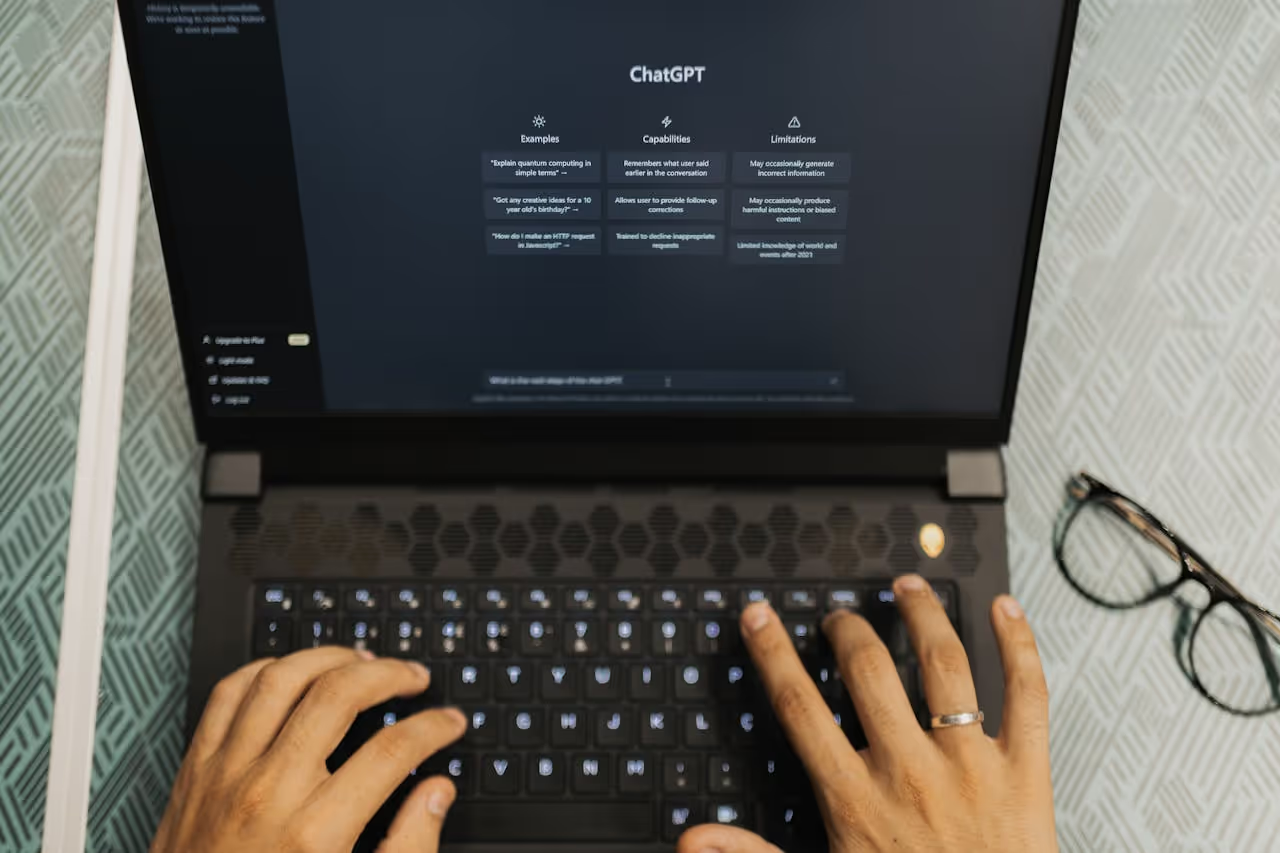
Copy this into ChatGPT or Claude:
PROMPT:
You are helping me create a house sitting application template that I'll customize for each listing. Ask me questions ONE AT A TIME and wait for my response before continuing.
Ask these questions in order:
What are your names? (If applying as a couple, both names. If solo, just yours.)How long have you been a member of your primary house sitting platform? (e.g., "2 years on Trusted House Sitters")How many reviews do you have and what rating? (e.g., "15 five-star reviews" or "new member with strong references")What's ONE specific personality quirk or habit that shows you genuinely love animals? Be specific and slightly funny if possible. (e.g., "I stop strangers to ask if I can pet their dog" or "My phone storage is 90% cat photos")What's your current work situation and how does it benefit pet care? (e.g., "work remotely so home all day" or "retired with flexible schedule")If applying as a couple: What does your partner do and what's their relevant background?What's ONE specific credential or experience that demonstrates you're responsible with property? (e.g., "owned a home for 10 years" or "managed a hotel" or "worked on farms")What's your current travel/living situation? (e.g., "campervanning through Europe" or "based in [city] with flexible schedule")Do you have any specific animal handling experience worth mentioning? (e.g., "looked after a 70kg St. Bernard" or "administered insulin to diabetic cats")
After I answer all questions, create a house sitting application template with this structure:
STRUCTURE:
Friendly greeting addressing "[HOST NAMES]"Brief thanks for the opportunityExpress interest in looking after "[PET NAMES]" and meeting themPlatform background (how long, why joined, reviews)Personality quirk about loving animalsCredentials and work situation framed as benefitsCurrent situation/availabilitySuggestion for a call to discuss fitWarm closing with sign-off
TONE:
Professional but warm and friendlyGenuine and personable, not corporateFocus on benefits to the homeowner, not your travel desiresDemonstrates capability through specifics, not vague claimsConcise (200-250 words maximum)
IMPORTANT:
Use placeholders for customizable parts: [HOST NAMES], [PET NAMES], [SPECIFIC REQUIREMENT]Keep emoji use minimal (1-2 maximum)Do not invent details I didn't provideMake it sound conversational, not scripted

How to Use the Template Effectively
Once you have your template, customization takes 5 minutes per application:
Step 1: Replace placeholders (1 minute)
[HOST NAMES] becomes "John and Sarah"
[PET NAMES] becomes "Max and Luna"
Step 2: Add specific requirement mention (2 minutes)
If they mention large dogs, add: "Konrad has experience with large breeds including a 70kg St. Bernard, so we're comfortable managing strong dogs on walks."
If they mention medication routines, add: "We've administered insulin injections to diabetic cats previously, so we're comfortable with medical care routines."
If they mention garden maintenance, add: "Konrad has farm work experience and is handy with property maintenance tasks."
Step 3: Update your current situation if needed (1 minute)
If you've gained reviews since last application: "We now have 18 five-star reviews"
If your travel situation changed: "We're currently campervanning through France"
Step 4: Send (1 minute)
Read once for errors, then submit.
The customization shows you read their listing carefully. The template structure ensures you hit all key trust points.
What NOT to Customize
Keep these parts of your template consistent:
Your personality quirk. Don't change this to match each listing. Authenticity matters more than perfect alignment. If you genuinely stop to pet every dog, say that every time. Don't pretend you love cats if you don't.
Your credentials. State them the same way each time. Consistency across applications reinforces authenticity.
Your tone. Don't write casually for rural sits and formally for luxury sits. Professional-but-warm works universally.
We use the same core message whether applying for house sitting opportunities in Switzerland or local sits nearby. The tone stays consistent. Only names and specific requirements change.
Handling Zero Reviews
If you're trying to get house sits without prior experience, modify the review section in your template:
Instead of: "We have 15 five-star reviews"
Use: "We're new to the platform but have cared for pets privately for [X years]. Happy to provide references from pet owners and neighbors who can vouch for our reliability."
The rest of the template works identically. Your personality quirk, credentials, and work situation still demonstrate trustworthiness even without platform reviews.
Common Customization Mistakes
Mistake 1: Over-customizing
Don't rewrite your entire message for each application. You're wasting time and introducing inconsistency. Only customize names, pets, and specific requirements.
Mistake 2: Generic requirement mentions
Bad: "We noticed you have dogs and we love dogs."
Good: "Konrad has experience with large breeds including St. Bernards and Great Danes, so we're comfortable managing strong dogs."
Specific experience beats vague enthusiasm.
Mistake 3: Apologizing for being on a platform
Don't write: "We know there are many applicants, but we hope you'll consider us."
This sounds desperate and undermines confidence. Just state your qualifications clearly.
Mistake 4: Writing a novel
Messages over 300 words get skimmed or ignored. Homeowners are reviewing dozens of applications. Concise and specific beats long and generic.
Mistake 5: Forgetting the call to action
Always end with: "We'd love to schedule a call to discuss if we're a good fit" or similar. Make the next step obvious.
Platform-Specific Adjustments
The core template works across all platforms, but minor tweaks help:
Trusted House Sitters: Mention your platform tenure and reviews prominently. This is the most competitive platform, so social proof matters.
Nomador: European homeowners often appreciate mentioning specific European travel experience or language skills if relevant.
Aussie House Sitters: Australian homeowners value laid-back authenticity. The personality quirk section can be slightly more casual here.
Kiwi House Sitting: Similar to Australia. Mentioning outdoor experience or comfort with rural settings helps for New Zealand sits.
House Sitters Canada: Canadian homeowners appreciate politeness and clear communication. Emphasize reliability and responsiveness.
Mind my house: Smaller platform with more direct communication. You can be slightly more personal since there's less competition.
For guidance on other platforms, see Trusted House Sitters alternatives to find sits without paying huge fees.
Measuring Message Effectiveness
You'll know your template works when:
Response rate exceeds 40%. If you're applying to sits you genuinely qualify for and getting responses less than 40% of the time, your message needs work.
Responses come within 24-48 hours. Our messages typically get replies within this window. If you're waiting a week, something's wrong.
Responses ask for a call immediately. When homeowners reply with "When can we schedule a call?" without asking additional questions, your message answered their concerns effectively.
You get "you're exactly what we're looking for" responses. This specific phrase appears frequently in our responses. It means the message communicated fit clearly.
If you're getting ignored consistently, the issue is likely:
Applying for sits you don't qualify for (wrong dates, insufficient experience)
Weak profile (they click through and aren't convinced)
Poor photos (they don't trust you visually)
Message is too generic or self-focused
Review our guides on creating winning house sitting profiles and enhancing profile pictures to strengthen the full package.
The Full Conversion Funnel
The application message is one step in a larger process:
Step 1: Message gets them to click your profile
Step 2: Profile provides credibility and detail
Step 3: Photos create emotional connection
Step 4: Video call confirms fit and seals the booking
Each step must work. A perfect message can't overcome a weak profile. A strong profile can't compensate for terrible photos.
For preparing the video call stage, read our guide on house sitting video calls.
When to Update Your Template
Update your template when major life changes occur:
Review count increases significantly. Update from "5 reviews" to "15 reviews" when you hit milestones.
Living situation changes. When we transitioned from living in a Bochum flat to full-time van life in November 2025, we added a sentence about flexibility and mobility.
Work situation changes. If you transition from employed to remote work, emphasize the new availability advantage.
You gain new relevant experience. If you complete a sit with challenging animal care (diabetic pet, aggressive dog, exotic animals), mention it.
Don't update constantly. Only when something material changes that affects your appeal as a sitter.
Why Efficiency Matters
You cannot spend an hour crafting perfect messages for every application.
If a sit has 40+ applicants and you're competing against people using efficient templates, your beautifully crafted custom message arrives hours later. Homeowners often review applications in order received.
Speed matters, but only if quality is already high.
That's why the template approach works: develop quality once, then apply it efficiently at scale.
We've applied for countless sits using this method. The 5-minute customization is fast enough to apply same-day when good listings appear, but thorough enough to demonstrate we read the listing carefully.
The Authenticity Question
Some people worry that using a template or AI assistance is "fake."
Here's the reality: the love we have for animals is real. The experience we bring is real. Our credentials are real.
The template just communicates that value clearly and consistently.
Homeowners don't want creative writing. They want to know you're qualified, available, and trustworthy. The template ensures you communicate those facts every time without forgetting key details.
We've been invited back to multiple sits repeatedly. Homeowners chose us based on the template message, then confirmed that decision when they met us in person. The template got us through the door. Our actual capability kept us there.
Additional Credibility Signals
Beyond the core template, consider adding:
Social media verification. If you have relevant Instagram or blog content showing animal interactions or travel, mention it: "You can see photos from previous sits on Instagram at [handle]."
I mention Spirit Farm Iceland in our messages. Homeowners who look it up see verification of my hostel management background. It's optional, but it adds credibility for those who check.
Professional background. If you have hospitality, veterinary, property management, or teaching experience, mention it specifically. These backgrounds signal relevant skills.
References available. "Happy to provide references from previous homeowners" shows confidence and transparency.
Don't overdo these. One or two credibility signals beyond your core message is enough.
Final Thoughts
The perfect application message doesn't exist. Effective application messages share common patterns:
Address homeowners and pets by name
Demonstrate you read the listing
Frame your background as benefits to them
Show genuine animal enthusiasm through specifics
State clear availability
Suggest the next step
Use the AI interview prompt to build your template incorporating these patterns with your unique details. Then customize efficiently for each application.
We developed our template over two years through trial and refinement. You can use AI to create a similarly effective template in 30 minutes by answering the interview questions thoroughly.
The template takes 5 minutes to customize per application. That efficiency lets you apply to more sits without sacrificing quality.
Focus on getting homeowners to check your profile and schedule a call. That's the message's only job. Everything else happens in subsequent steps.
Konrad & Caro 🐾🚐
DM us @housesittersguide if you have questions.

Which specific AI platforms produce the most natural-sounding application tones?
While ChatGPT is excellent for structure, we find that Claude often produces the most realistic and human-sounding writing, making it ideal for heartfelt applications.
What common AI errors must applicants catch during the proofreading phase?
You must watch out for an over-usage of emojis and hyphens. AI often adds too many, so make sure to go over the text and remove them to keep it professional.
How should the prompt be adjusted for ultra-competitive listings versus rural sits?
The core message can remain, but you should adjust specific variables for each house. Change the names of owners and pets, and explicitly mention your experience with the specific breeds listed to stand out.
Does this AI strategy work equally well on platforms other than Trusted Housesitters?
Absolutely. You can simply remove the "Trusted Housesitters" reference from the prompt and replace it with your preferred house sitting platform; the psychology of the message remains the same.
How should the prompt be modified for first-time sitters with zero platform reviews?
We recommend keeping the prompt exactly how it is. Focus on proofreading to ensure it makes sense, but rely on the strong structure to convey professionalism even without platform reviews.