Breadcrumbs: Home > House Sitting Guide > House Sitting Profile
📊 QUICK FACTS:
What actually gets you selected: Your first message, not your profile
Profile photos: Genuine, bright, smiling — professional is not required
Photo tool: Snapseed (free, iOS and Android) lifts most poor-quality images
AI for applications: Use it to polish your voice, not replace it
The 10-review shift: Double digits signal you are invested, not just experimenting
Welcome guides: As a homeowner, more detail is always better. As a sitter, WhatsApp works fine.
There is a version of house sitting profile advice that tells you to spend hours polishing your bio, selecting the perfect headshot, and crafting a carefully worded introduction paragraph. That advice is not wrong. It is just incomplete.
After 3 years, 15+ sits across 9 countries, and €32,400 in documented accommodation savings, here is what we have actually learned: the profile is the library. The first message you send is the librarian who convinces someone to open the book. A homeowner who receives a generic, copy-pasted application will never read your profile no matter how good it is. And a homeowner who receives a genuine, specific, warm first message will often confirm you before they have finished reading it.
This guide covers everything: the profile itself, how to write applications that actually work, how to use AI without sounding like a robot, how to fix your photos without a camera upgrade, and what a genuinely useful homeowner welcome guide looks like from the other side of the door.

Part One: The First Message
Why This Matters More Than Your Profile
When a homeowner posts a listing, they receive applications from multiple sitters. Most of those applications open with something like: "We would love to sit for you and have always wanted to visit your area." That sentence tells the homeowner nothing useful. It tells them you want a holiday. It says nothing about their dog, their home, or why you specifically are the right person to look after both.
Your first message has one job: to make the homeowner feel that you read their listing, that you care about their animals specifically, and that you are a calm, reliable person they could hand their keys to. Everything else comes second.
What a Real Application Looks Like
When we applied for our current Athens sit, looking after a French bulldog and two cats, we did not open with our review count or our travel history. We opened with their animals by name. We acknowledged the generosity of the exchange. Caro introduced herself as the kind of person who stops for every dog and cat she passes on the street, which is completely true and immediately paints a picture. Konrad mentioned his background running a homestay in Iceland, which speaks directly to understanding how a home runs. We mentioned we were driving through Greece right now. Specific, current, relevant.
The structure behind that message is repeatable for anyone:
Start with them, not you. Address the homeowner by name and mention the pets by name in the first two sentences. It proves you read the listing rather than sending a mass application.
Lead with what you offer, not what you want. The homeowner does not care that you have always wanted to visit their country. They care whether their cat will be fed correctly and whether their house will still be standing when they return. Frame everything around what you bring to their specific situation.
Be specific about relevant experience. When we applied for a sit involving two large dogs, one of the owners' concerns was whether we could handle big animals. Konrad has looked after a 75kg Saint Bernard during a Workaway placement, an animal with a head roughly the same size as his and a weight that would have pulled Caro off her feet if it decided to run. Caro and I, together looked after a Great Dane in Sydney over New Year's. Those details answer the homeowner's concern directly. We did not say "we are experienced with large dogs." We told them about specific animals we had managed.
Show your lifestyle without overselling it. Mentioning that Konrad works remotely and Caro was a primary school teacher meant the homeowner understood we would be home during the day, present with the animals, not out from 9 to 6. That is reassuring information delivered without being stated as a selling point.
End with an invitation, not a demand. "We would love to have a chat to see if we would be a good match" is warmer and less presumptuous than "We look forward to your confirmation."
The difference between a generic message and one that works is easier to see side by side than to describe in the abstract.
Avoid this:
"Hi, we are Konrad and Caro. We love cats and are looking for a place in Athens. We are very tidy and would love to stay in your home. Please let us know!"
That message is about you. It tells the homeowner you want a place to stay. It mentions their animals as a category, not individuals. It gives them no reason to click through to your profile.
Do this instead:
"Hi <name> and <name>! We are currently driving through Greece and your Frenchie (we are suckers for those ears) and two cats immediately caught our eye. We are a remote-working couple which means we are home most of the day for scratches and head-boops. Caro is the kind of person who stops for every dog and cat she passes on the street. Konrad used to run a guesthouse in Iceland so understands how a home should be looked after. We would love to have a chat and see if we are a good match!"
Same two people, same sit, completely different message. The second one is about their animals first, explains why being home all day matters for the pets specifically, and closes with an invitation rather than an expectation.
Use AI to Sharpen Your Voice, Not Replace It
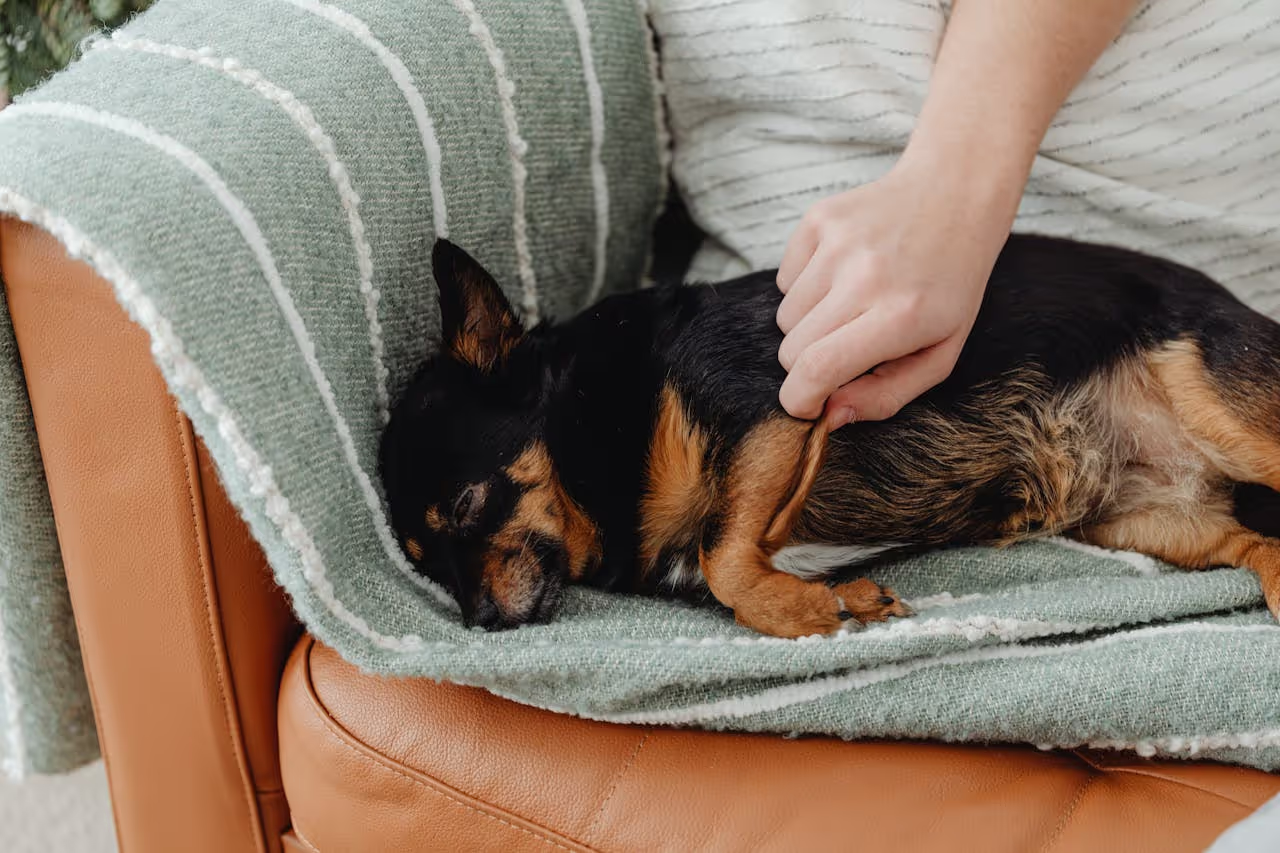
We recommend using AI to help craft your application message, but the order matters. Do not ask AI to write your message from scratch. That produces something that sounds like it could have been sent by anyone, which defeats the entire purpose.
Instead: write down the genuine facts first. The pets you have cared for, what you do for work, why this specific sit appeals to you, anything about the listing that caught your attention. Then feed that into an AI tool with a clear instruction to shape it into a warm, personal, concise message that leads with the homeowner's benefit rather than your own.
Our full step-by-step AI prompting guide for house sitting applications is at Use Ai for your welcome message. It includes the exact prompt structure we use and how to adapt it sit by sit. If you want a profile written from scratch, Use AI for house sitting profiles covers that separately.
The rule in both cases: AI polishes your voice. It does not invent your experience.
Part Two: Building the Profile Itself
Once your message has worked and the homeowner clicks through to your profile, the profile's job is to confirm what your message already suggested. It is evidence, not introduction. Every section should be doing one of two things: building trust or answering an unspoken concern.
Your Profile Photos: The Visual Handshake
We have looked at a lot of sitter profiles, and the most common mistake is not having bad photos. It is having dark, blurry, or stiffly posed photos that give the homeowner no sense of who you actually are.
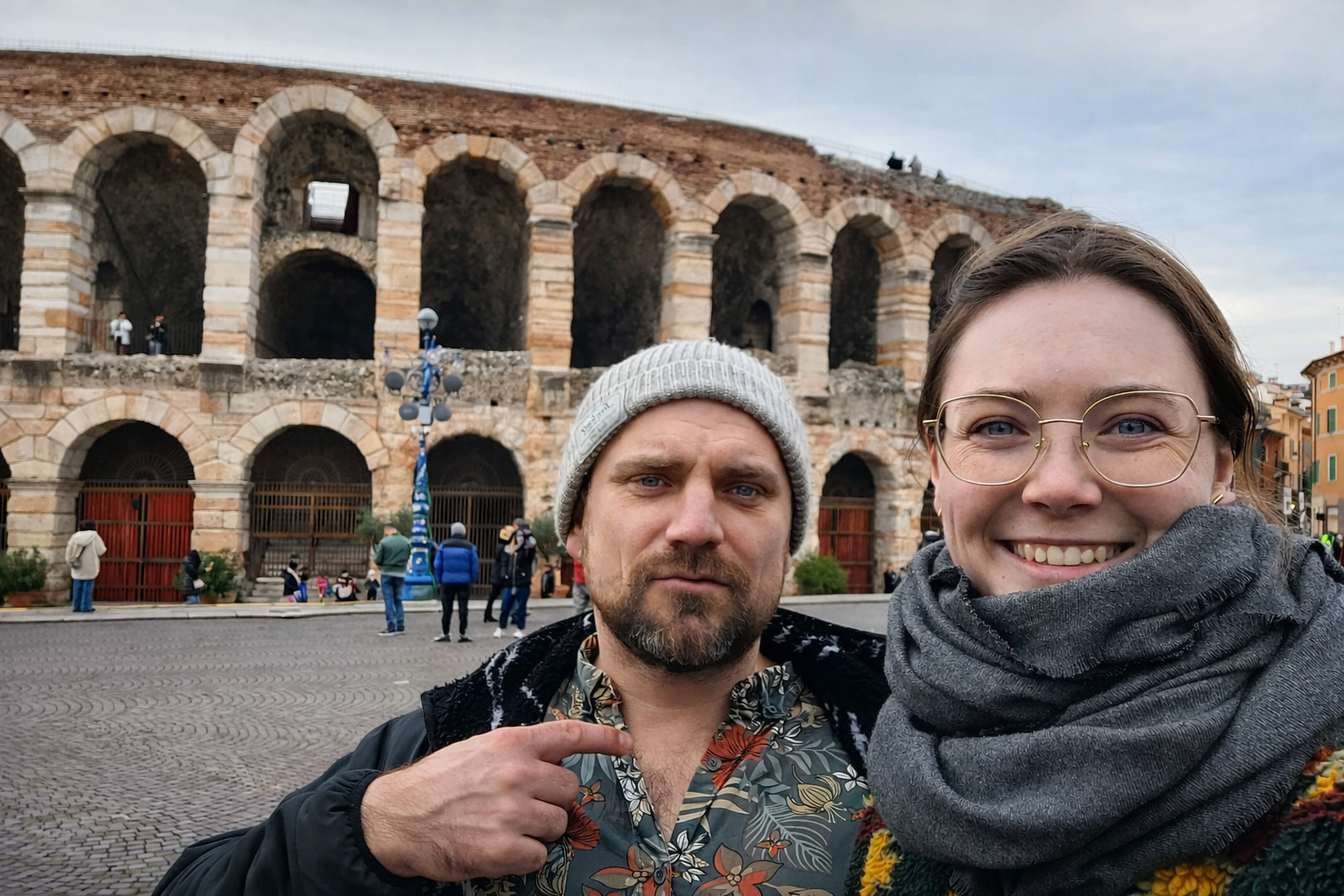
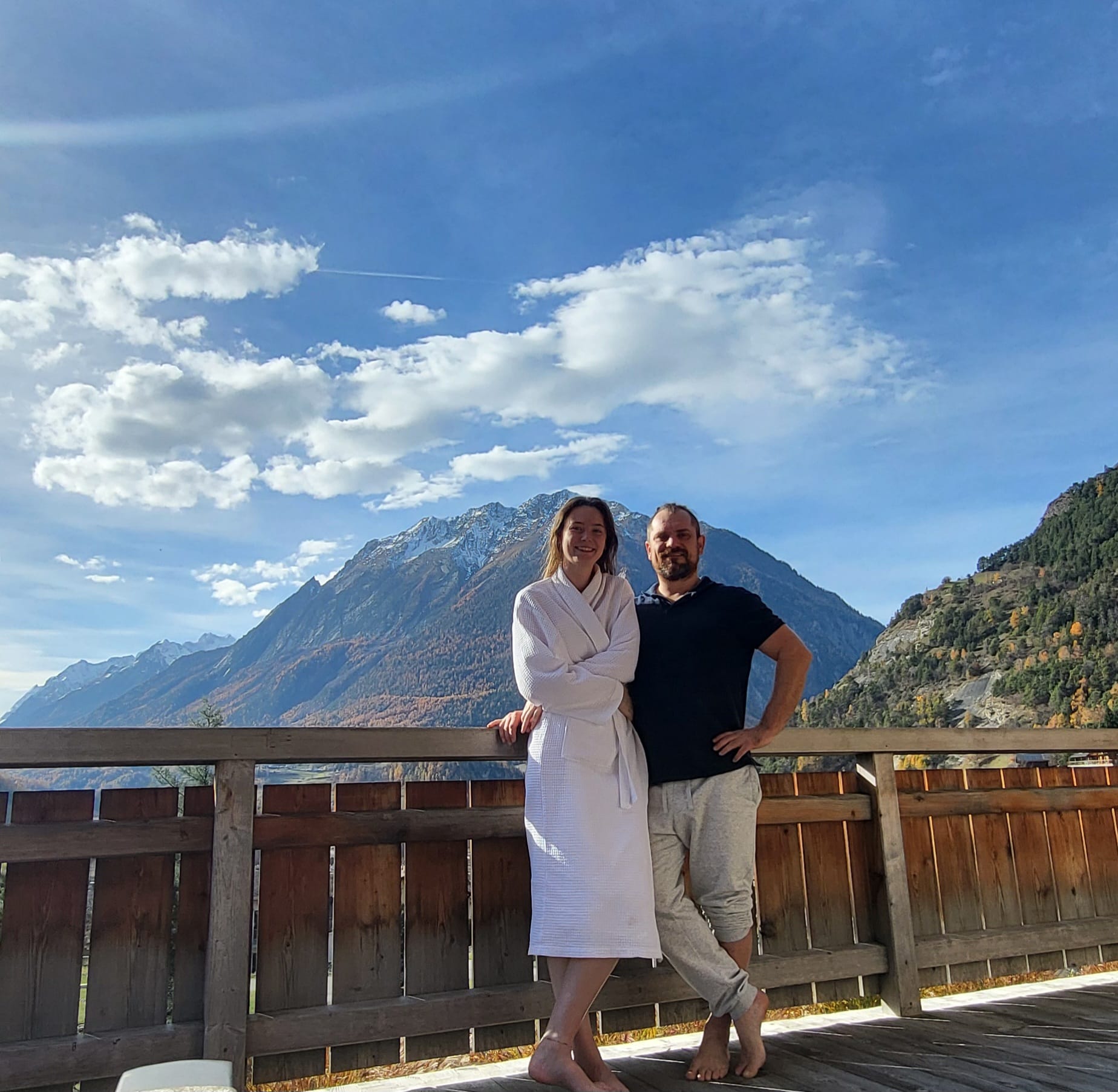
You do not need professional photography. Our profile photos are travel shots and candid moments with animals. They are bright, they are smiling, and they look like us. That is the entire standard: genuine, clear, and warm.
What works: photos of you with animals, any animals. A neighbour's dog, a friend's cat, a pet you cared for on a previous sit. Action and affection read better than posed standing shots. A photo of you on the floor with a dog in your lap communicates more in two seconds than three paragraphs of bio text.
What to fix: if your photos are dark, slightly out of focus, or taken in poor conditions, do not discard them if they are otherwise genuine. Use Snapseed, a free app on both iOS and Android, to lift the brightness, sharpen slightly, and adjust the contrast. It takes two minutes and the difference on a small profile thumbnail is significant. You are not chasing magazine quality. You are chasing clear and warm over murky and forgettable.
The three edits that fix most sitter photos:
Brightness and Exposure. Most indoor pet photos are too dark. Lifting the exposure slightly is the single highest-impact change you can make. If a homeowner cannot clearly see your face or the animal you are with, the photo is working against you.
Saturation and Warmth. A slightly warmer, more saturated image feels inviting rather than clinical. You are not going for a heavy Instagram filter. You are adjusting the mood from "passport photo" to "person I would trust with my home." A small nudge on the warmth slider is usually enough.
Crop. Remove background clutter before anything else. A pile of laundry in the corner, a cluttered kitchen bench, an unmade bed visible behind you: all of these pull the homeowner's eye away from you and the animal. Crop tight enough that the focus stays on the sitter-pet bond. This single edit does more for a photo than any filter.
One specific thing we have noticed across both homeowner and sitter profiles: the photos that perform worst are ones taken indoors in low light or with a cluttered background. If you have the option to retake rather than edit, do it outside on an overcast day. Flat natural light is more forgiving than any filter.
Your Bio: Specific, Honest, Brief
The most common bio mistake is the opposite of the photo mistake: too much text, not enough specificity. A bio that says "we love animals and are very clean and reliable" is doing nothing. Every applicant says the same. The homeowner has no way to distinguish that from a hundred other profiles.
Write what is actually true in specific terms.
Instead of "we are experienced with dogs," write the breeds and situations. Instead of "we keep a tidy home," mention the farmhouse in Cortona that the homeowners came back to cleaner than they left it. Instead of "we work remotely," mention what that actually means for the animals during the day: you are present, you are home, the pets are not alone for eight hours.
Structure your bio to move from who you are to what you bring to a sit to what kind of homeowner you work best with. Keep it to three or four paragraphs. Homeowners are reading multiple profiles. Concise and specific beats comprehensive and vague every time.
If your lifestyle is a genuine asset, name it. When we moved into the campervan full time in November 2025, we updated our profile to reflect it. For homeowners, a couple who lives on the road and chooses house sitting deliberately, rather than as a one-time holiday experiment, signals a different level of commitment and experience.
References When You Have No Reviews
Every sitter starts at zero reviews. This is the hardest part of the early profile and the most important to solve.
References from non-sitting sources are genuinely useful here. A landlord who can speak to your reliability as a tenant. A previous employer who can speak to your responsibility. A neighbour or friend who has seen how you look after their animals. Any reference is better than none. It shows you have people in your life willing to put their name behind your character, which is exactly what a homeowner is trying to assess.
As you complete sits, these character references get replaced by verified reviews from homeowners, which are the strongest signal on the platform. Two or three local, short sits are the fastest route to that first handful of reviews, and local sits are less competitive than international ones. You can use them to learn the rhythm of house sitting and build the record that makes international applications much easier.
We cover the full picture of what verified reviews actually look like and why they matter in our guide to verified review systems.
Identity Verification and Profile Completion
Complete every field on your profile and get identity verified. The verification badge signals you are a serious applicant, not a casual browser. In the early days before you have reviews, it can be the detail that tips a borderline decision in your favour. It is a small additional step that pays back in trust signals.
When you check your profile completion percentage on THS, treat anything under 100% as something to fix. Incomplete profiles read as incomplete commitment.

Part Three: The 10-Review Turning Point
Something shifts around your tenth review, and it is worth knowing about before you get there.
Our tenth sit was in Leysin, Switzerland. The homeowners showed us around the house and within fifteen minutes we were sitting down to a meal with wine, talking about our previous sits and their travels, completely at ease. It felt less like a handover and more like a dinner with friends who happened to also own the house we were about to look after.
We have noticed, anecdotally, that the more reviews you have, the warmer homeowners are from the moment you arrive. Not that earlier homeowners were unfriendly. But there is a difference between how a homeowner treats a sitter with two reviews and how they treat one with fifteen. By the double digits, you are no longer someone dipping their toes in. You are someone with a track record, and homeowners feel it. The dynamic shifts. Dinner invitations, small gifts at the end of a sit, being treated more like a trusted guest than a service provider.
We cannot say this is universal. Different homeowners have different styles. But the observation holds across our experience: reviews are not just social proof for the algorithm. They change how people treat you in person.
This is one more reason to do the early local sits even if they feel unglamorous. You are not just building a review count. You are building toward a different kind of relationship with every homeowner from your tenth sit onward.
Part Four: The Homeowner Welcome Guide
This section is for homeowners reading this article, or for sitters who want to understand what a genuinely useful handover looks like from the other side.
We have been inside a lot of homes. The sits where everything ran smoothly without us needing to message the homeowners constantly were the ones with thorough welcome guides. The sits where we were sending messages about where the rubbish goes, which day the bins are collected, and how to reset the Wi-Fi were the ones without them.
Our best example was Cortona, Italy. The homeowners left us a digital welcome guide that covered everything: the pets' feeding schedules and routines, which shops to use nearby, where the local markets were and on which days, how the heating worked, emergency contacts, the nearest vet, which day rubbish went out, and local recommendations for walks and restaurants. We consulted it constantly for the first two days and almost never needed to message the homeowners about basic things after that. They could genuinely disconnect and enjoy their time away knowing we had what we needed.
A good welcome guide does not need to be elaborate. It needs to be complete. The test is simple: if a capable adult arrived at your home having never been there before, what would they need to know to run it for two weeks without calling you? Write that down.
As a sitter, our approach is different. We do not create a formal welcome document for homeowners. Our profile handles the introduction, the video call handles the expectations, and everything else happens on WhatsApp as questions come up. For the kind of trust-based exchange that house sitting represents, a formal welcome document as a sitter can feel overly transactional. The WhatsApp approach keeps things warm and human while still being responsive and thorough.
That said, every homeowner is different. If a homeowner asks for something in writing before a sit, provide it. Adapt to what they need, not to a fixed format.
Putting It All Together
The profile guide that no one gives you in full: start with a first message that is specific to this homeowner and these animals, use your genuine experience as the raw material and AI to sharpen the delivery, make sure your photos are bright and genuine even if they are not professional, write a bio that is specific rather than comprehensive, get verified, get your first local reviews as fast as possible, and treat the welcome guide you receive as a homeowner as the gold standard for how a good sit starts.
For anyone just joining TrustedHouseSitters, our discount code page has the current verified offer. Our TrustedHouseSitters review covers the full platform and which plan makes sense at which stage.
Konrad & Caro 🐾🚐
DM us @housesittersguide if you have questions — we answer everyone!
FAQ
How long should my profile bio actually be?
Three to four paragraphs. Concise and specific beats comprehensive and vague. Homeowners are reading multiple profiles. If your bio requires scrolling to find the relevant detail, it is too long. Lead with pet experience, follow with home philosophy, close with your lifestyle if it is a genuine asset.
Is it okay to use AI to write my house sitting application?
Yes, with one rule: write the genuine content first. List your real experience, the specific animals you have cared for, what you noticed about this particular listing, and why you are a good match. Then use AI to shape that into a warm, concise message. Our full AI application guide covers the exact prompt structure. AI polishes your voice. It does not invent your experience.
Do my profile photos need to be professional?
No. Genuine, bright, and smiling outperforms professional and stiff. The fastest improvement for most profiles is not a photoshoot — it is running existing photos through Snapseed, a free app on iOS and Android, to lift the brightness and sharpen slightly. Two minutes per photo. The difference on a small profile thumbnail is significant.
How do I get my first reviews with no house sitting experience?
Apply for short, local sits first. They are less competitive than international ones and perfect for building the first two or three reviews that make longer sits accessible. Use character references from a landlord, employer, or anyone who can speak to your reliability until those first verified reviews come in. Any reference is better than none.
Does the number of reviews actually change how homeowners treat you?
In our experience, yes. Around your tenth review something shifts. Homeowners who can see a long track record treat you with a different level of ease and warmth from the moment you arrive. The double digits signal investment, not experimentation. This is one of the less discussed reasons to do the early local sits: you are building toward a different quality of relationship with every homeowner, not just a higher ranking in search results.
As a homeowner, what should my welcome guide include?
Everything a capable adult would need to run your home for the duration of the sit without calling you. Pet feeding schedules and routines, vet contact details, Wi-Fi details, how heating and appliances work, rubbish collection days, nearby shops and markets, local recommendations, and emergency contacts. The sits that run smoothly are invariably the ones with thorough welcome guides. The ones that generate constant messages are the ones without them.
As a sitter, should I create a welcome document for homeowners?
We do not. Our profile handles the introduction, the video call handles expectations, and everything else happens on WhatsApp. For the kind of trust-based exchange house sitting represents, a formal document as a sitter can feel overly transactional. Keep it warm, human, and responsive. If a homeowner asks for something in writing, provide it. Otherwise, a WhatsApp conversation works well for both sides.