

Home > Blog > What to Ask a Homeowner Before You House Sit
Quick Facts
| Do you need to ask all of these? | No — a good in-person welcome tour covers most of them naturally |
| Two worth confirming before you arrive | Exact arrival and departure times, and total animal count |
| The question that changed after Kefalonia | "How many animals in total, including any outdoor ones?" |
| Best welcome guide we have received | Manosque, France — chapters, walking route maps, local markets, wifi details, places to visit, emergency contacts |
| Our campervan advantage | Flexibility on dates is one of our strongest selling points with homeowners |
On our early sits, I asked almost nothing. The excitement of being chosen, the eagerness to seem easy-going: dates, a pet name, an address. That felt like enough.
And mostly, those sits went fine.
After 17 sits across 11 countries, we have had great experiences without asking most of these questions upfront. That is because a good in-person welcome tour will naturally cover most of what you need to know. If the homeowner is present when you arrive, questions come up as they come up. That is often more natural than working through a list on a video call.
That said, having these questions in mind makes you a more prepared sitter. Some are worth raising before you confirm. Others are fine to leave for the welcome tour. A small handful are worth asking early because the answer might change whether you take the sit at all.
Think of what follows as a reference. Pick the ones that matter for your situation, ask them when it feels right, and let the rest come up naturally.
One important disclaimer: you do not need to ask all of these. As you do more sits, you will quickly develop a sense for which questions are relevant to each specific situation. A short urban sit with one cat in a city centre needs a different set of questions than a month-long rural sit with multiple animals and a property to maintain. Experience teaches you to read the listing, the homeowner, and the welcome guide, and to fill in the gaps that actually matter for that sit. The checklist below is a complete reference, not a script.

The Video Call Is a Vibe Check, Not a Questionnaire
The first video call is not the time to work through a list. It is a chance for both sides to see whether the personalities match, whether the sit feels right, and whether there is a natural ease to the conversation.
We start with something easy: where they are travelling to, what the animals are like by name and personality. People relax when you are curious about their trip rather than running through a form. If the conversation flows naturally, it will touch on most of the important things without effort.
The more specific questions come later, once the homeowner has indicated they want to move forward and before either party confirms on the platform. That is the moment to fill in any gaps not covered naturally on the call. Our video call guide covers how we structure both the call itself and the follow-up conversation.
The table below covers the kinds of topics that come up naturally in a good first call. None of them need to be asked in sequence or treated as a checklist. They are conversation starters that help both sides relax and build a sense of who they are talking to. Most will come up on their own if the call flows well.
| Topic | Why it comes up naturally |
|---|---|
| Where are you travelling to? | Opens the conversation positively and gets them talking about something they are excited about |
| What are you most looking forward to about the trip? | Builds rapport and confirms they are actually planning to go, not vague about it |
| What are the travel dates? | Comes up early and confirms both sides are aligned before anything more detailed is discussed |
| Tell us about your pets | Every homeowner wants to talk about their animals — this one rarely needs prompting |
| Are there any quirks about the pets we should know about? | Surfaces the information that rarely makes it into listings: fears, behaviours, routines that matter |
| What do the pets love most? | Relaxed question that reveals personality and gives sitters something to work with |
| Do you have any questions for us? | Shows you are professional and gives the homeowner a chance to ask what matters to them |
| Our experience with pets | Not a question but something to share naturally — relevant experience builds confidence on both sides |
| Is there anything great to see or do in the area? | Homeowners enjoy sharing local knowledge and it signals that you plan to enjoy the location, not just manage the sit |
| What is the weather usually like during those dates? | Practical for packing and planning, and an easy light topic |
| Do you have family nearby the property? | Useful context for knowing who might visit or be available as a local contact |
Dates, Logistics, and Handover
Arrival and departure times are worth confirming before you get there. TrustedHouseSitters now shows times on the listing, but it is always worth a direct check to confirm they are correct and whether there is any flexibility.
Since we travel by campervan, we mention in our application that we are flexible on timing and can adjust to the homeowner's schedule. It has become one of our strongest selling points. Homeowners have asked us to arrive a day early and stay a few days later, which suits us well. A day or two either end is rarely a problem. A significant shift with little notice is worth raising with THS support and keeping in writing.
In-person handovers are by far the best option. You meet the animals while the owners are still present, questions come up naturally, and you pick up the small details that never make it into a welcome guide. If the handover is remote, asking for a video walkthrough in advance is entirely reasonable.
One end-of-sit question worth confirming: would they prefer us to wash the bed sheets and towels before we leave, or strip the bed and leave everything in the laundry basket? Some homeowners arrive days later and would rather load the washing themselves. Freshly washed linen sitting in a warm house for several days, particularly in summer, can lose its freshness before they get home. Our cleaning and etiquette guide covers the end-of-sit standard for different sit lengths.
For longer sits, it is worth asking whether there is a neighbour or local contact who can be reached if the homeowner is unreachable and something needs attention. Knowing a local contact exists makes a real difference when the homeowner is mid-flight and something needs an immediate response.
Questions About Pets and Routines
We do not work through a formal animal checklist on the video call. But if anything in the conversation hints at outdoor animals, neighbourhood feeders, or animals that "occasionally visit," we dig deeper. That instinct comes from experience.
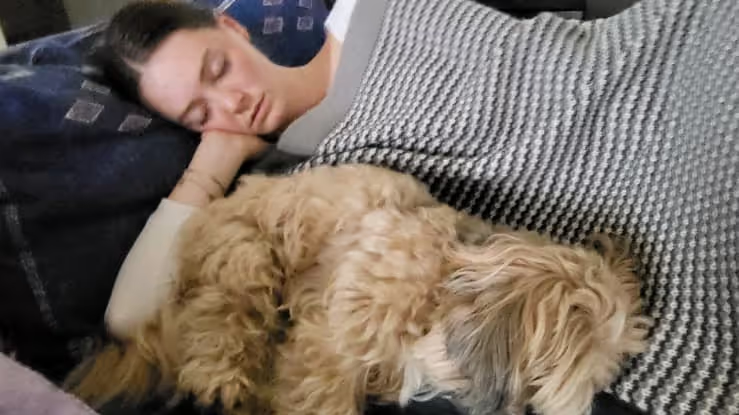
In Kefalonia, the listing mentioned one dog and one cat. We arrived to nine cats. Nine undisclosed cats with fleas. Every time Caro and I wanted to sit on the balcony, we were surrounded. Every trip down the stairs was a trip hazard. They are cute individually. In large numbers, after a while, they wear you down.
My dad's place in Cyprus put that into full context. He used to have 13 cats in the house and would feed another 20 neighbourhood cats every day. I helped look after the house. The feeding alone is one thing. The other thing is that you cannot go outside without being followed. You cannot sit in the garden, walk to the car, or come back through the front door without a crowd of animals appearing. For some people that is wonderful. For me, after a few days, it was overwhelming.
The lesson is not to avoid sits with cats. It is to know what you are walking into. A homeowner who feeds neighbourhood animals is not doing anything wrong. But that is a very different sit from one with two house cats and a walk schedule. Knowing the real picture before you confirm means you can decide whether it suits you. We ask the total animal count, including outdoor and occasional visitors, if there may be more animals in the listing than originally specified. Most homeowners answer immediately and specifically: one dog, two cats, and some cats from next door who occasionally come through the garden but are not our responsibility. Thirty seconds. Good homeowners do not hesitate at it.
The pet questions beyond the count are usually answered in the welcome guide if the homeowner has prepared a thorough one. Feeding amounts and times, medication schedules, walking routines, behavioural quirks: a well-prepared guide covers all of this without you needing to ask.
The best welcome guide we have received is from our current sit in Manosque, in the south of France. It is organised into chapters. There are maps of walking routes. A section on local markets covering which days each runs and what to expect at them. A list of places to visit and things to do in the area. Full wifi details, emergency contacts, and complete animal routines. Everything we could need is written down before we need to ask. We have not had to message the homeowners once since they left regarding things that are in the guide. They are on holiday and we are looking after their home. That is how it is supposed to work, and a thorough welcome guide is what makes it possible.
Our sit in Cortona was similar in spirit: every animal's routine detailed, restaurant recommendations with dietary variations noted, emergency contacts at the front. Two sits, two countries, the same takeaway: a homeowner who has thought about the welcome guide has thought about the sit.
For sits where no advance guide exists, the questions worth confirming before you accept are: feeding schedule and quantities, medication and how to administer it, maximum hours the animals can be left alone, any behavioural quirks or triggers, and the vet's name and contact with written confirmation that you are authorised to seek treatment if needed. Our how to prepare for a house sitter guide covers what a thorough welcome guide should contain.
Access, Security, and Cameras
Who else has a key to the property? A cleaner, a gardener, a family member, a neighbour? This is worth knowing before you arrive, particularly for longer sits. A cleaner who arrives unannounced mid-morning is not a problem if you knew to expect them. It is a jarring experience if you did not.
Are there any cameras on the property, and will internal cameras be switched off for the duration of the sit? TrustedHouseSitters' Terms of Service require homeowners to disclose any recording devices, and THS policy is that internal cameras must be switched off to give sitters privacy. Not merely pointed out. Switched off. External cameras for property security can remain active. Indoor cameras in living spaces and bedrooms must be off. This is worth confirming directly before you arrive.
Smart doorbells such as Ring are fine and should remain active for security. Any device recording the interior of the home, including pet cameras, should be discussed and agreed before you arrive. If monitoring the animals during your absence is important to the homeowner, agree on an arrangement both sides are comfortable with before the sit is confirmed.
It is also worth asking about smart speakers and AI assistants such as Alexa or Google Home. These are not cameras, but some sitters prefer to have them muted or unplugged during the sit for privacy reasons. Confirming this upfront prevents any accidental eavesdropping concern and takes thirty seconds to resolve. Most homeowners are happy to leave them off.

House Rules and Expectations
Are any rooms or areas off-limits? It is normal for a homeowner to have a locked office or cupboard they do not want accessed. Knowing this before arrival means there are no awkward moments when you find a locked door and do not know whether it is a fault or a boundary.
What is the position on visitors? TrustedHouseSitters now allows homeowners to specify in their listing whether sitters may have visitors. If it is not specified in the listing, ask. We occasionally have family or friends who want to stop by for a coffee during a sit. We always ask first. A clear answer either way is more useful than ambiguity.
Is there any ongoing garden or maintenance work the homeowner expects during the sit? Any task not in the original listing and not discussed during the video call is not part of the arrangement. Our guide on house sitting and unpaid labour covers the line between reasonable care and tasks that should have been disclosed from the start.
Wifi, Practicalities, and Property Quirks
Wifi speed matters for remote workers, and "good wifi" means different things to different people. Asking for the actual speed in advance avoids arriving for a three-week remote working sit and discovering the connection will not reliably support video calls. If working remotely is a significant part of your plan, ask this question directly before you confirm.
Every property has its quirks: a tap that needs two turns to close, a door that needs lifting to lock, a heating sequence that is not obvious, a boiler with a specific restart step. These are things no homeowner thinks to put in writing because they have become invisible through routine. The welcome tour is usually the right moment for these details to surface. If the handover is remote, asking for a video walkthrough covering anything non-obvious about the property is entirely reasonable.
If you are arriving in your own vehicle and the property has an EV charger, ask about it before you arrive. Two questions worth confirming: is the charger available for the sitter to use, and how should the electricity cost be reimbursed? In 2026 this is a standard practical detail, not an unusual request. We travel in our VW T4 which is not electric, but for sitters arriving in an EV this question is as important as the wifi password. Leaving it unresolved creates the same ambiguity as not discussing fuel for a loaned petrol car.
The Dealbreaker Questions
A small number of questions are worth asking early because the answer might change whether you take the sit at all. These are not for the first warm video call. They are for before confirming.
How many animals are there in total, including outdoor animals? Do any of them have medical conditions, behavioural issues, or specific needs not in the listing? Is the homeowner reachable throughout the sit or will they be in a location with limited connectivity? Is the property accessible to public transport, or is a car actually necessary?
If a car is included in the listing, our car use guide covers what to confirm in writing before the sit starts, including the insurance and fuel questions most often left unresolved until too late.
The Complete Pre-Sit Question Checklist
| Category | Questions to confirm | Best time to ask |
|---|---|---|
| Dates and logistics | Exact arrival and departure times; in-person or remote handover; key return process | Before confirming |
| Animals | Total animal count including outdoor animals; feeding schedule; maximum hours alone | Before confirming |
| Medical | Vet name and contact; authorisation for emergency treatment; ongoing medication | Before confirming or at handover |
| Access | Who else has a key; expected visitors such as cleaners, gardeners, or family | Before arriving |
| Cameras | Any cameras on property; internal cameras switched off per THS ToS | Before confirming |
| House rules | Off-limits rooms; visitor policy; any garden or maintenance tasks | Video call or handover |
| Practicalities | Wifi speed; property quirks and non-obvious appliances; bin day | Welcome guide or handover |
| End of sit | Wash sheets or leave in basket; where to leave keys | Before departure day |
Conclusion
Most questions answer themselves at a good handover. The ones that do not, asked clearly at the right moment, are what protect both you and the homeowner from the small misunderstandings that occasionally turn into larger ones.
After 17 sits, the questions we ask consistently are the animal count, the handover timing, and the camera confirmation. Everything else comes up when it comes up, and a homeowner who is well-prepared and communicative will usually surface it themselves.
Build your profile on TrustedHouseSitters using our 25% discount, or through Nomador for France and French-speaking Europe.
DM us @housesittersguide on Instagram if you have questions about what to ask before a sit. We answer everyone.

Frequently Asked Questions
What should I ask a homeowner before a house sit?
The three questions worth asking every time: total animal count including outdoor animals, exact arrival and departure times, and whether internal cameras will be switched off. Most other details are covered in a good welcome guide or come up naturally at the handover. The checklist above covers all categories with timing advice for each.
When is the right time to ask questions about a house sit?
Not all at once on the first video call. The initial call is a vibe check. Logistical and confirmation questions fit better once both sides are interested and before confirming on the platform. Details about quirks and routines come up most naturally at the in-person handover.
Is it rude to ask about cameras?
No. It is a legitimate and important question. TrustedHouseSitters' Terms of Service require homeowners to disclose cameras and policy requires internal cameras to be switched off during the sit. Asking about this directly is professional, not invasive. A homeowner uncomfortable with the question is telling you something worth knowing before you arrive.
What if the homeowner did not mention something important in the listing?
Ask directly before confirming. If the animal count, access arrangements, or any required tasks were not in the listing, raise them before you confirm on the platform. If something significant surfaces after confirmation that was not disclosed, contact THS support with documentation. Our conflict resolution guide covers what the platform can do when material information was withheld.






Responses
What are your thoughts on this post?