Breadcrumbs: Home > House Sitting Guide > What to Pack for a House Sit
Article updated on: February 2026
Some links in this article are affiliate links. If you sign up through them, we earn a small commission at no extra cost to you. This helps us keep the site running and create more free content for the house sitting community. We only recommend platforms we have personally used.
📊 QUICK FACTS:
Clothes: Pack for a week maximum. Every house sit we have done had a washing machine.
The one item most people forget: A GaN multi-port charger. One small unit replaces your laptop brick, phone charger, and powerboard combined.
Pet packing: Poop bags to start. No food, no treats until you know the animal's diet. If you have a slip lead you trust, bring it. Keep it in the bag until you have assessed the pet.
The welcome gift: A bottle of wine or chocolates. Around 5 to 10 euros. Always appreciated, never expected.
First impression: Have one clean, presentable outfit for meeting the homeowners. It matters.
The rule: If you packed it and never touched it last time, leave it behind this time.
I went through an 80L backpack phase. Carried everything just in case. Most of it stayed at the bottom of the bag the entire trip and never got used. Over the years I got that down to a 24L backpack, and honestly it is a better way to travel. More freedom, less stress, and nothing you do not actually need.
House sitting makes packing even simpler. You are not going to a hotel. You are stepping into a fully equipped home with a kitchen, a bathroom, a washing machine, and usually a dryer. There is nothing you need to prepare for that you cannot either use from the house or pick up locally if you forgot it.
This guide covers what Caro and I actually pack, what we have learned to leave behind, and the few things actually worth thinking about before you arrive.

The Washing Machine Changes Everything
Every sit we have done has had a washing machine. That one fact cuts your packing in half.
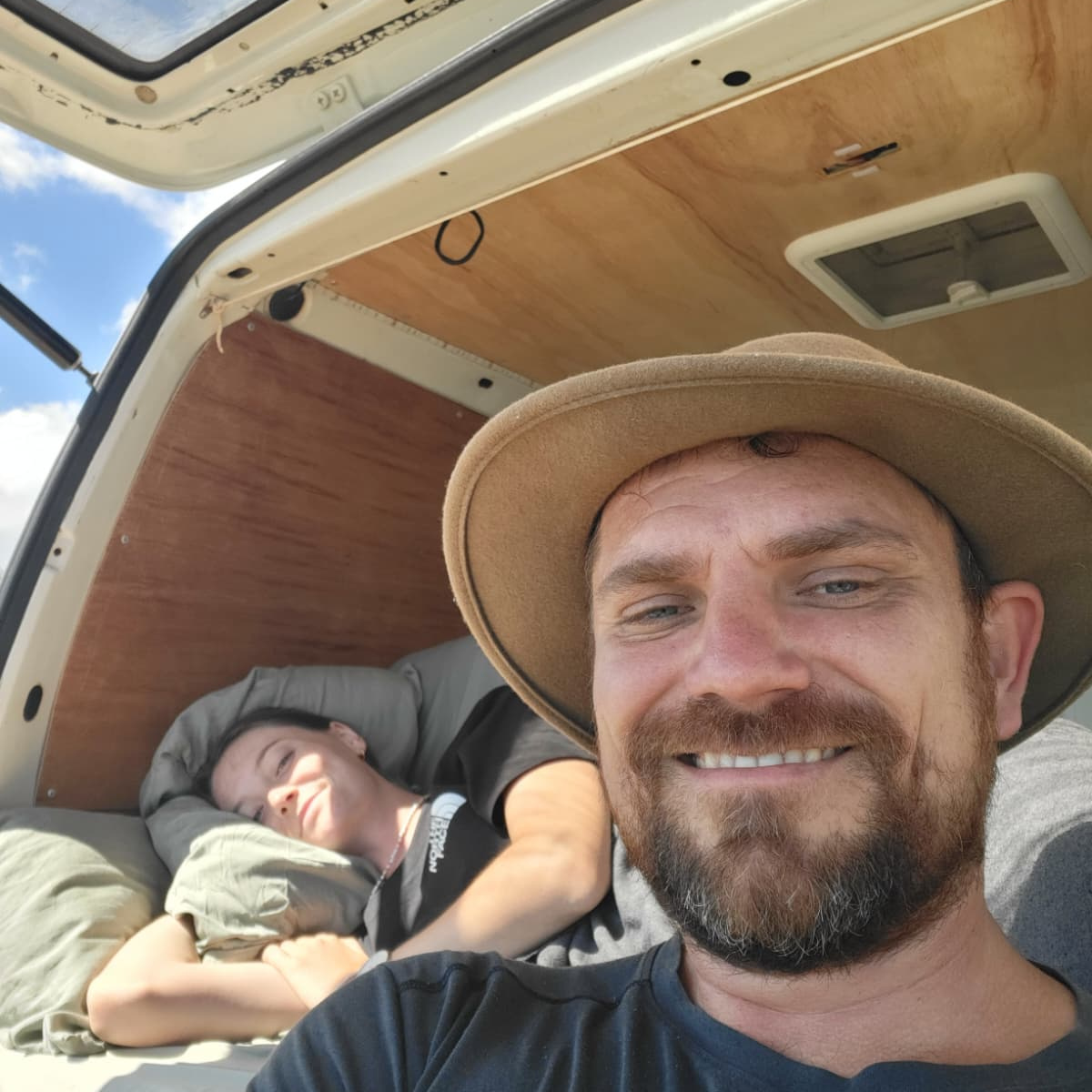
Before Caro and I were living out of the van, we travelled to sits in a VW Golf with a very minimalist approach. Enough clothes for a week. One or two nicer pieces for going out to dinner. That was it. You run a load of laundry every few days and everything stays clean. There is no need to carry two weeks of clothing for a two week sit.
A useful way to think about it: pack like you are going to stay at a friend's house for a week. You would not drag a 25kg suitcase to a friend's place. You would bring what you actually wear. The same logic applies here.
For sits that cross seasons or climates, add a versatile layer or two. A rain jacket that packs small. A warm fleece. Swimwear if the listing mentions a pool. Otherwise, the rotation stays the same: a week's worth of what you actually wear day to day.
For longer sits, washing becomes part of the routine rather than a workaround. You are living there. Treat it like home.
What Caro and I Actually Pack
Clothing
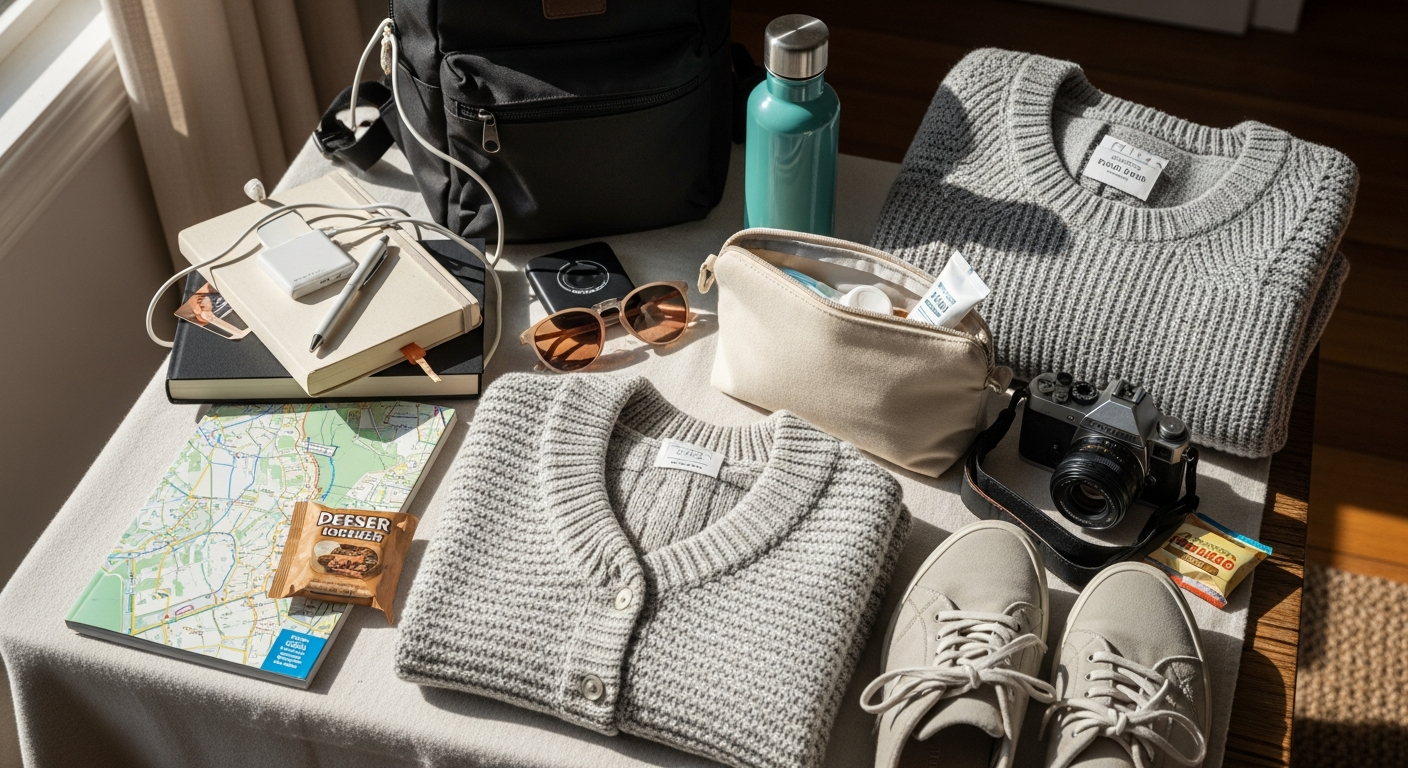
A week of everyday clothes. Socks, underwear, a few shirts, a pair of pants or shorts depending on the climate, a jumper. One presentable outfit for meeting the homeowners or going out for dinner. Nothing too complicated.
The presentable outfit is worth mentioning separately. First impressions matter when you meet a homeowner face to face. Clean clothes, decent shoes, looking like you made an effort. It does not need to be formal. Tidy and put-together is the target.
If you are travelling internationally or doing back-to-back sits, a packable rain jacket is worth its weight. Everything else can be adjusted on the fly.
Toiletries
Your non-negotiables: toothbrush, toothpaste, your specific shampoo or face wash, skincare, feminine hygiene products if you need them. The house has a bathroom. It does not have your specific brand.
If you are packing full-sized bottles, you are paying for luggage you do not need. Decant. It takes five minutes, saves you a kilo, and you are going to a house with a bathroom, not a campsite.
Electronics
This is where most people overpack and then also under-prepare. Forget the laptop brick, forget the separate phone charger, forget the powerboard. In 2026 a single 65W or 100W GaN multi-port charger handles all of it. The size of a deck of cards, three or four USB-C ports, and it replaces everything else. It is the one electronics upgrade that actually makes packing lighter.
For international sits, you still need a power adapter for the destination country. Plug the GaN charger into the adapter and you are done.
Medications and Prescriptions
If you take regular medication, sort this out before you travel internationally. Get your doctor to provide a prescription with the generic name of the medication, not just the brand name, as the brand name may not exist in another country. In some cases the name changes entirely. If you run out during a sit, you may need to see a local doctor to get a new prescription, and that process is much smoother when you can show what you were taking.
The Welcome Gift
Caro and I always bring a bottle of wine. We go for a Bio white wine, something that looks a bit more considered, usually 5 to 10 euros. Most people like white wine, and the Bio label gives it a slightly more deliberate feel without spending a lot. Chocolates work just as well, and for some homeowners might actually be the better call.
If you are not sure about either, a third option that works well: a quality artisan candle or a small set of reusable local produce bags. Both are practical, neither requires you to guess someone's dietary preferences, and in a community where environmental awareness matters to a lot of homeowners, it lands well.
It is not a large gesture. Homeowners never expect it. But it consistently sets the right tone for the start of a sit, and it costs very little relative to the accommodation you are receiving. We have never brought a gift that was not appreciated.

If You Are Working Remotely During the Sit
A lot of house sitters are digital nomads. The checklist above covers the lifestyle basics, but if you are working 6 to 8 hours a day out of the home, a few extra things make the difference between a productive sit and one that feels like a chore.
Travel mouse. Working all day on a laptop trackpad is a fast way to end up with wrist pain and bad output. A small Bluetooth mouse weighs almost nothing and changes the experience entirely.
Noise-cancelling headphones. Open-plan homes, barking dogs, traffic outside. If you are on calls or need to focus, earbuds with decent noise cancellation earn their weight.
HDMI cable or USB-C dongle. Many houses have a television or a monitor. Plugging your laptop into a larger screen for a long working day is worth ten minutes of setup. Bring a dongle if your laptop does not have full-size HDMI. You will not regret it when you arrive to find a 55-inch screen in the living room.
For managing longer and more complex remote sits, the long-term house sitting guide covers how to structure your time when the sit is both home and office.
The Sitter's Toolkit: Two Items Worth Adding
Headlamp. If you are doing rural sits (and some of the best sits are in the countryside), walking a dog at 11pm with your phone light is not good enough. It is not just about seeing the path. On unlit rural roads, a headlamp is what makes you visible to cars. Both hands stay free, the dog stays on lead, and drivers can see you from a distance. A small, high-lumen headlamp costs around 15 euros and has saved us more than once in the Italian countryside and in rural Greece.
In many instances, you will find that the house owners have a torch specifically for this situation.
Multi-tool or Swiss Army knife. The item you forget until you need it. A stubborn package, a loose screw on a pet's crate, a wine bottle without an opener in the drawer. A multi-tool handles all of it and fits in a side pocket. Pack one and you will use it on almost every sit.
Be mindful though with air travel. A small swiss army knife may be confiscated if you take it on board with you in carry on etc. Only bring one with you if you have checked in baggage.
The Digital Carry-On
Packing in 2026 is not just physical. There are a handful of digital things worth sorting before you arrive, and they are easy to forget until you are standing at the front door needing them.
Download the smart home apps before you leave. A lot of homes now use Nest thermostats, Ring doorbells, August smart locks, or similar systems. If the homeowner sends you access and you arrive to find a 50MB app download on a slow rural connection, you are off to a bad start. Ask during the video call or handover what apps the home uses or read over the welcome guide before hand, download them before you travel, and set up access in advance.
Ask about pet tracking devices. Many homeowners with dogs use GPS trackers like Tractive, or have AirTags on their pet's collar. If so, ask them to share live tracking access with you before they leave. If the dog slips its lead on day one and you do not have tracking access, you are relying on luck. This takes two minutes to set up and is worth asking about directly.
Download offline maps for the area. Before you travel, download the region in Google Maps or Maps.me for offline use. If you arrive in a rural sit with patchy signal and need to find the nearest vet, pharmacy, or emergency service, offline maps are the difference between a manageable situation and a stressful one. Takes three minutes and costs nothing.
Do not bring pet food, treats, or toys before you have spoken with the homeowner. Pets can have allergies, specific dietary needs, a vet-prescribed feeding routine. Turning up with your own treats and using them without checking first is an easy mistake to avoid.
If you are an experienced sitter and you have a slip lead you trust or a specific toy that works well with anxious dogs, bring it. Keep it in your bag until you have assessed the animal and the homeowner has left. Some tools are worth having. The point is not to arrive and deploy them before you know what the pet actually needs.
Ask during the welcome tour: what can the animal eat, what can it not eat, and what is the daily routine. Once you know that, you can make informed calls during the sit. Our guide on how to look after dogs during a house sit covers the full routine in more detail.
What Not to Pack
Bulky kitchen items. Every house sit we have done had salt, pepper, oil, and enough basics to cook with. We do a small grocery shop on arrival for fresh produce and things like pasta. The kitchen is already equipped. You do not need to bring your own.
Pet food or treats. Covered above. Wait until you know what the animal's dietary situation is.
Clothes you have not worn in the last month. If you packed it last time and it sat at the bottom of the bag, it is not coming on this trip. The just-in-case mentality is what turns a 24L backpack into an 80L one.
Full-sized toiletry bottles. Decant into travel sizes. The house has a bathroom. You are not going camping.
Packing for International Sits vs. Domestic Sits
The core list does not change much. The main additions for international travel:
A power adapter for the destination country
A 65W or 100W GaN multi-port charger (replaces all your individual chargers)
Prescription documentation with the generic drug name, dosage, and doctor's contact
A physical copy of travel insurance details and emergency contacts
One thing that is easy to overlook: download offline maps for the destination before you leave. Google Maps and Maps.me both allow offline downloads by region. If you arrive at a sit in a rural area with no signal and need to find the nearest vet or pharmacy, you will be very glad you did this before boarding the flight. It takes three minutes and costs nothing.
For domestic sits by car, you have more flexibility. You can leave non-essentials in the car and only bring what you need into the house. That is exactly how we operate with the van. Flying does not give you that buffer, so the packing call needs to be more deliberate before you leave.
If you are doing multiple international sits back to back, a one-bag approach with a week's rotation and a strict laundry routine is the most sustainable way to travel. More on how that kind of longer-term sit planning works in our long-term house sitting guide.
The Minimalist vs. The Overpacker
Most packing guides tell you to bring more. This one does the opposite. Here is where the difference actually shows up:
| Item | The Overpacker | The Konrad and Caro Approach |
|---|---|---|
| Clothing | Two weeks of gear, packed for every scenario | One week rotation. The washing machine handles the rest. |
| Kitchen | Spices, gadgets, favourite pan | Small grocery shop on arrival. The kitchen is already equipped. |
| Pet gear | Food, bowls, a bed, toys | Poop bags. Ask the homeowner about everything else. |
| Electronics | Multiple separate chargers and a powerboard | One GaN multi-port charger. Replaces all of it. |
| Documents | Printed everything | One physical backup. Everything else on the phone with offline access. |
The philosophy is the same across all of it. You are moving into a home, not a bare room. The home already has most of what you need. Pack for what the home cannot provide.
The Complete House Sit Packing Checklist
Click here for our interactive packing list.
Clothing
Everyday clothes for 5 to 7 days (shirts, pants/shorts, underwear, socks)
One presentable outfit for meeting homeowners or going out
Layers appropriate for the climate (rain jacket, fleece, or swimwear as needed)
Comfortable walking shoes
Toiletries
Toothbrush and toothpaste
Shampoo, conditioner, face wash (travel size only. Decant.)
Any skincare you use daily
Feminine hygiene products if needed
Razor, deodorant
Documents and Admin
Passport or ID
Travel insurance details (physical copy)
Prescription documentation for any regular medication (generic name, dosage, doctor's contact)
Emergency contacts written down separately from your phone
Offline maps downloaded for the destination region
Digital Carry-On
Smart home apps downloaded and access confirmed (Nest, Ring, August, etc.)
Pet GPS tracking access shared by homeowner (Tractive, AirTag)
Offline maps downloaded for the sit area
Electronics
GaN multi-port charger (65W or 100W. Replaces all separate chargers)
Power adapter for the destination country (international sits)
Laptop if working remotely
Travel mouse (if working remotely)
Noise-cancelling headphones (if working remotely or in open-plan homes)
HDMI cable or USB-C dongle (optional but useful)
The Sitter's Toolkit
Poop bags
Headlamp (essential for rural sits and evening dog walks)
Multi-tool or Swiss Army knife
Slip lead (if experienced. Keep in bag until you have assessed the pet)
The Welcome Gift
A bottle of wine or chocolates
Konrad & Caro 🐾🚐
DM us @housesittersguide if you have questions. We answer everyone!
FAQ
Do I need to bring my own towels and bedding?
No. Every sit we have done had towels and bedding provided. Pack as if you are staying at a friend's place, not a hostel. If you have any doubt, check with the homeowner before you travel.
How much luggage is too much for a house sit?
If you cannot comfortably carry everything yourself in one go, you have probably packed too much. A carry-on and a personal bag is the sweet spot for sits up to a few weeks. The washing machine handles the rest.
Should I bring food for the first few days?
We recommend doing a small grocery shop when you arrive. It gets you out into the local area, and most homeowners leave basic staples anyway. Some leave more than that. We arrived in Cortona to find fresh local olives waiting on the counter as a welcome. You cannot plan for that but it is a good reason not to over-pack food before you even know what is in the kitchen.
What one item do most sitters forget?
A GaN multi-port charger. Everyone packs their individual chargers and then realises they have four devices and one plug. A 65W or 100W GaN charger is the size of a deck of cards and replaces your laptop brick, phone charger, and anything else in one unit. It is the one upgrade that actually makes your bag lighter.
Should I bring a gift for the homeowner?
Yes, and it does not need to be expensive. A bottle of wine or some chocolates works. We usually spend 5 to 10 euros on a decent Bio white wine. It is a small gesture that consistently makes a good impression, and it costs almost nothing relative to what you are receiving in return.
What should I pack for the pets?
Poop bags, and that is it for the first day. Do not bring pet food or treats before you know the animal's dietary situation. Ask during the welcome tour what the pet can and cannot eat, then decide from there. For more on daily pet care routines, see our guide to looking after dogs during a house sit.