Breadcrumbs: Home > House Sitting Guide > How to Prepare for a House Sitter
Article updated on: February 2026
Some links in this article are affiliate links. If you sign up through them, we earn a small commission at no extra cost to you. This helps us keep the site running and create more free content for the house sitting community. We only recommend platforms we have personally used.
📊 Quick Facts
Single biggest factor in a great sit: Whether the homeowner is present for the handover
Best medication setup we have experienced: Cortona. Daily pill boxes, morning and evening, larger pills cut in half in the original packaging
Most memorable welcome gesture: Fresh olives in Cortona, local wine in Cries and Leysin
The appliance rule: Do not explain how a washing machine works. Explain the high-end sound system with custom labels
Locked rooms: Always the right call. A locked door protects both sides
After 15+ sits across 9 countries, Caro and I have seen what preparation looks like from every angle. We have walked into homes where everything was in place and left feeling like we had been trusted with something genuinely special. We have also arrived at sits where the owners had already left, the house needed attention, and we were piecing together the animal routine from a message thread.
The difference is almost always preparation. And more specifically, it is almost always whether the homeowner was there when we arrived.
This guide is written from the sitter's side. Not what you think sitters want, but what we have actually experienced across a wide range of sits and homeowners. None of it is complicated. Most of it takes very little time. And getting it right means you can leave for your trip knowing your home and your animals are genuinely in good hands. If you are still choosing a platform, our TrustedHouseSitters review covers what the platform offers homeowners in detail.

The Most Important Thing: Be There for the Handover
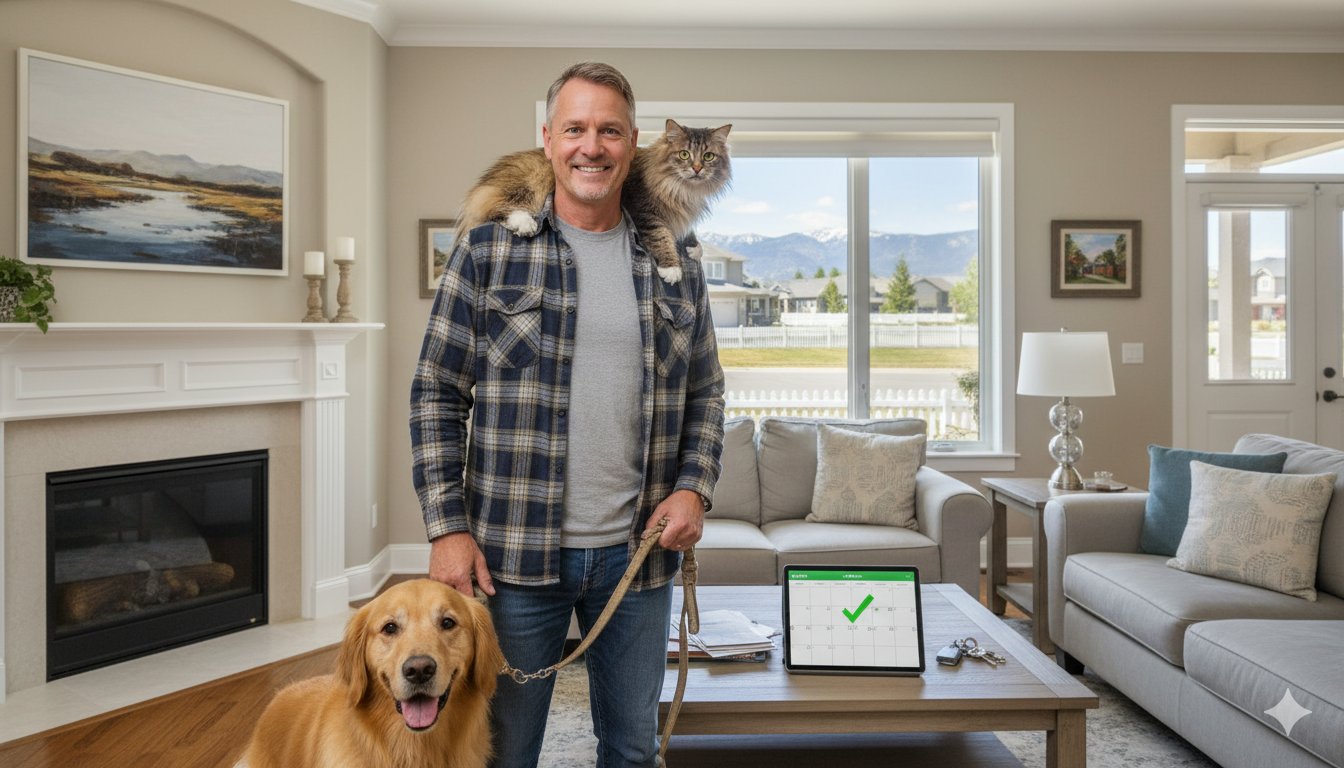
Every sit where the homeowner was present when we arrived has been excellent. Not coincidentally excellent. Consistently, noticeably better than the sits where we let ourselves in with a code and found our way around alone.
An in-person handover achieves things a Welcome Guide simply cannot:
Animal association. Your pet sees you trust this stranger. That transfers directly. A cat that watched you greet us warmly will approach us within hours. A cat that met us in an empty house may hide for two days.
Tactile learning. Testing the fiddly key in the lock while you watch, seeing exactly which cupboard the lead hangs in, understanding the garden gate latch. These things take thirty seconds in person and three messages remotely.
Vibe assurance. The handover removes the "stranger in my bed" anxiety on both sides. By the time you leave, we are people who have met, not a profile you accepted on a platform.
Of the sits where the owners were not present on arrival, we found them to be noticeably less clean on average. The pattern has held across our experience. A homeowner who is there for the handover is also a homeowner who has prepared properly.
If you can, consider starting the sit a day early. We have had this happen several times and it produced some of our most memorable experiences. You spend an evening together, share a meal, talk about things beyond the house sit. By the time you leave the next morning, we are not strangers in your home. We are people you have cooked with. Those sits run the most smoothly because the foundation of trust is already built.
If your travel schedule does not allow for an in-person handover, a thorough Welcome Guide and a video walkthrough before you leave are the next best option. But if you can be there, be there. For a deeper look at how the initial house sitting video call shapes the whole relationship before anyone arrives, see our dedicated guide.
The Welcome Guide: Good vs. Bad
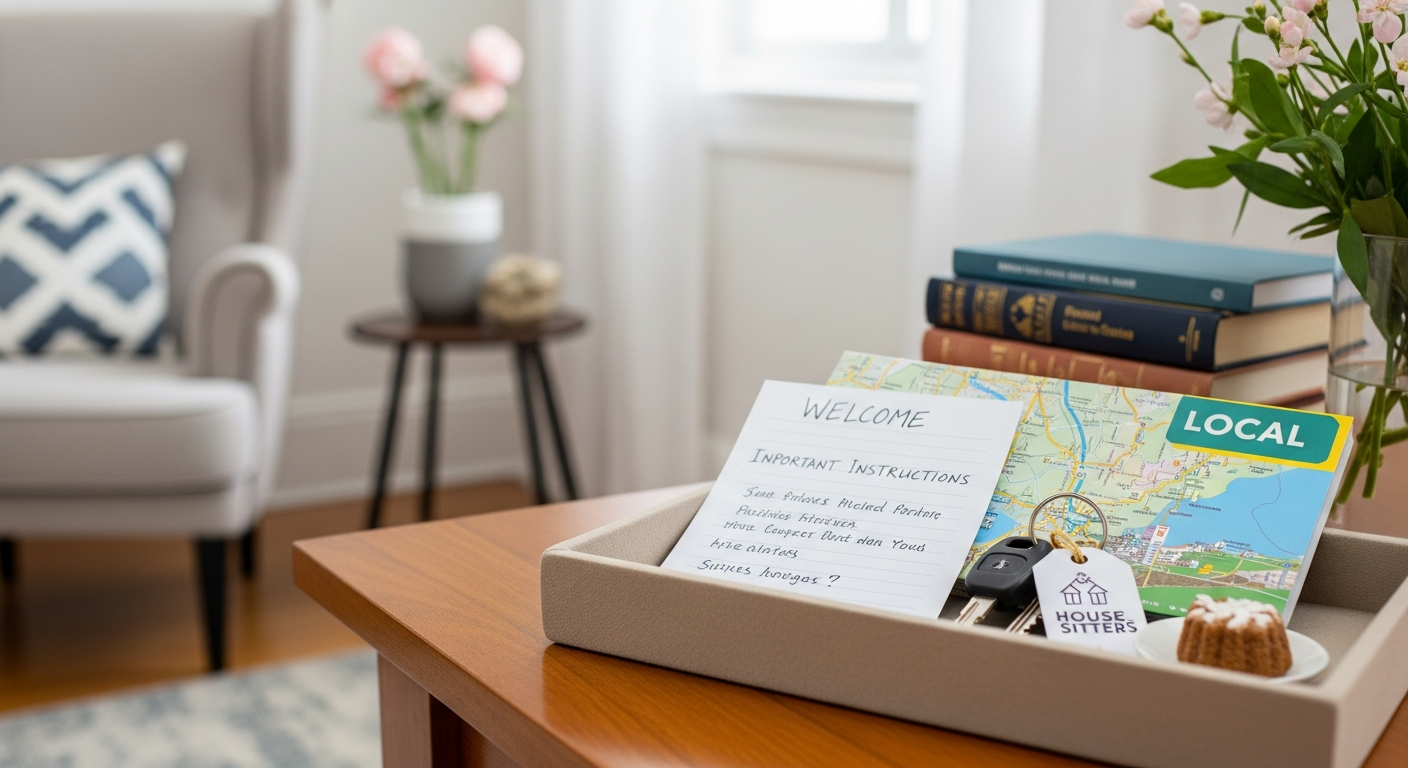
The Welcome Guide is the first place we look when a question comes up during a sit. A good one means we can handle almost anything without messaging you on your holiday. A thin one means you will be fielding questions from a beach chair. To understand exactly what sitters are hoping to find in a guide, see our article on what to ask a homeowner before a house sit — it covers the same ground from the sitter's perspective.
| Good Welcome Guide | Bad Welcome Guide |
|---|---|
| Emergency contacts at the top: yours, neighbour, vet, local services | Only a personal number, no vet details |
| Wi-Fi password, clear and prominent | Wi-Fi mentioned, password not included |
| Exact feeding times and amounts for each animal | "Feed twice a day, she'll let you know" |
| Medication schedule with dosages and timing | Medication bag left with no instructions |
| Behavioural notes: reactive to dogs, hides in thunder, always comes back | No personality context |
| Bin days, recycling sorting, mail instructions | Nothing on household logistics |
| Alarm code with step-by-step arming instructions | Code listed, no explanation of the process |
| Water shut-off valve location, electrical breaker box location | No emergency home information |
| Any unusual appliances explained or labelled | Full instructions for the washing machine and dishwasher |
What belongs in the guide and what does not:
Include things the sitter genuinely cannot be expected to know: your specific animals, your specific routines, your specific home. Emergency contacts at the top every time, the vet's details, Wi-Fi, bin days, alarm codes. Sitters arriving from abroad will not know the local equivalent of emergency numbers and will not think to look it up until they need it urgently.
Do not include instructions for how to use a standard washing machine, oven, or dishwasher. House sitters have appliances. Explaining them wastes space and reads as patronising.
Do include where the water shut-off valve is and where the electrical breaker box is. In 2026, homes are more complex than they were. If a pipe bursts or a circuit trips, knowing how to cut the water or reset the power is the most useful "appliance" instruction you can leave. That information belongs in every guide, regardless of how simple or modern the home is.
Medication and Emergency Pet Care Instructions
The best medication setup we have ever experienced was in Cortona. The dog was on a multi-medication routine, and when we arrived the homeowners had pre-portioned every dose into labelled daily containers: one for the morning, one for the evening. Larger pills had been cut in half and left in the original packaging so we could verify what we were giving.
There was no guesswork. No possibility of a double dose or a missed one. We spent zero time worrying about whether we had it right and more time actually with the dog.
Not every sit requires this level of preparation. But if your pet is on a complex medication schedule, pre-portioning removes a genuine source of stress for the sitter and makes it significantly less likely your animal receives the wrong amount. That is better for everyone, and most of all for the pet.
Leave a signed emergency authorization letter, and consider calling the vet in advance.
Under the 2026 THS terms and conditions (clauses 5.3.5 and 5.3.6), sitters are required to pay veterinary expenses upfront and request reimbursement from the homeowner afterwards. In practice, this means a sitter may need to cover potentially significant costs out of their own pocket during an emergency, then wait to be paid back. For some sitters that is a manageable arrangement. For others it creates real financial stress at an already difficult moment.
The signed letter removes one layer of that friction. Leave it on the counter where the sitter can find it immediately: "I, [Your Name], authorize [Sitter Name] to seek medical treatment for [Pet Name] up to [Amount] in my absence." Vets in many countries will not treat an animal without owner authorization, and reaching you mid-flight or across time zones is not always possible.
Even better than the letter: call the vet before you leave. Let them know the dates of the sit, the sitter's name, and that you authorize treatment in your absence up to an agreed amount. A vet who is already expecting the sitter will act faster and with less hesitation than one receiving an emergency call from an unknown person holding a handwritten note. It takes ten minutes and could genuinely save your pet's life. For more on what happens if something goes wrong during a sit and how platforms handle it, see our house sitting conflict resolution guide.
Creating a Welcoming Space: The Minimum Standard
We do not expect much. The sits where we arrived to homes that needed attention on arrival were all remote handovers. We dealt with it without complaint, but it added work to the first day that could easily have been avoided. A home that is clearly ready for us sets a tone that carries through to how we care for the space.
The minimum standard for a sitter-ready home:
Bed made with fresh linen. A mattress protector is appreciated but not required
Clean towels in the bathroom and a cleared counter space for toiletries
Top shelf of the fridge cleared and available
Empty drawer or section of the wardrobe for the sitter's clothes
Empty bedside table drawer
Basic pantry staples: salt, pepper, oil, washing liquid, dish soap, surface spray, spare toilet paper
The welcome gesture is never expected and always remembered. We bring a bottle of wine or something small when we arrive at a sit because it is a simple way to say we are glad to be there. Homeowners who do the same leave a lasting impression. In Cortona, we arrived to fresh local olives. In Cries and Leysin, there was local wine waiting. In most sits, homeowners leave us free use of whatever is in the fridge and the pantry. Our rule is that we eat anything that might go off during the sit and replace any staples we finish before we leave. Having basics available on the first night while we are still finding our feet in a new area makes a real difference.
The House Tour
The walk-through on arrival is where the guide comes to life. Show us the animals' spots, the garden, the bins, the things that are easier to demonstrate than describe. This is also the moment to mention anything that is off-limits.
Locked rooms are entirely reasonable and we expect them. Several homeowners have asked us not to enter a room and locked it before they left. We have no issue with this at all. Homeowners have private papers, personal belongings, things they simply do not want strangers near. A locked door protects both sides: it protects the homeowner's belongings and it protects the sitter from any accusation of mishandling something they were never supposed to access. If you have valuables or private spaces, locking them is the cleanest solution and requires no awkward conversation.
If your home has any genuinely unusual appliances, a quick demo or a label goes a long way. In Cries, the homeowners had a high-end sound system that was not immediately intuitive. They had labelled the relevant buttons with small stickers. It sounds like a small thing but it removed a source of confusion entirely. We never had to contact them about it, never had to search through the guide. The labels were there, the system worked, and we moved on. That kind of thoughtful preparation is what makes a sit run smoothly from day one.
For a full picture of what sitters are expected to handle around the home, including cleaning standards and etiquette on short and long sits, see our house sitting cleaning and etiquette guide.
Who Else Is Coming: Third-Party Transparency
Being clear about anyone else who will access the property during the sit is one of the most important things a homeowner can do, both for the sitter's comfort and to protect your own platform membership.
| Third Party Type | Allowed? | The 2026 Rule |
|---|---|---|
| Cleaners / Gardeners | Yes | Must be disclosed with specific days and times in the listing |
| Friends / Family | Maybe | Allowed only if the sitter is notified and consents in advance |
| Airbnb Guests | No | Not allowed in the same living space. Must be disclosed if in a completely separate unit |
| Homeowners | No | Homeowners must vacate for the entire duration of the sit |
Service providers: If you have a regular cleaner, gardener, or pool technician, note the exact days and times they are expected in the Welcome Guide and mention them during the handover. An unexpected person with a key arriving mid-sit is not a crisis, but it is startling. A quick note removes that entirely.
Friends and family with key access: If a neighbour has a spare key "just in case," let the sitter know. Most sitters are entirely fine with a neighbour popping in to say hello. What nobody wants is a key turning in the lock at 10pm with no warning.
Neighbours: If you have a relationship with your neighbours, a heads up that a sitter is coming is a simple courtesy that avoids any concern about unfamiliar faces coming and going. If you do not have regular contact with your neighbours, there is no need to introduce yourself specifically for this purpose.
Undisclosed third parties are a growing issue in 2026. If you are renting out a portion of your property, such as a guest house, basement, or separate suite, during the sit, this must be disclosed in your listing and agreed with the sitter before confirmation. Having an unknown person living on the same property as a sitter who was not told about it is a serious breach of trust and, in many cases, a breach of platform terms. Transparency here protects your membership and protects the sitter's safety. For more on how house sitters handle visitors and guests from their side, see our dedicated guide.
2026 Tech and Security: What Has Changed
Modern homes come with more connected systems than ever, and a little preparation around these avoids headaches for both sides.
Guest Wi-Fi over main network. Rather than handing over your main Wi-Fi password, set up a guest network before the sitter arrives. This gives the sitter a clean, reliable connection while keeping your smart home devices, security cameras, and primary data on a separate network. Most routers have a guest network option in the settings. It takes ten minutes to set up and is good practice regardless of how well you know the sitter.
Smart locks. If your home uses a smart lock such as an August or Yale system, create a temporary access code for the sitter rather than sharing your permanent one. That code can be deactivated after the sit ends without changing anything else. Note the process in the Welcome Guide so the sitter knows how it works on arrival.
Security cameras. Per TrustedHouseSitters terms, all internal cameras must be physically disabled before the sit begins. External cameras and doorbell cameras are permitted but must be disclosed in the listing. Disable any internal cameras before you leave and note in the guide that you have done so. Sitters notice these things and undisclosed cameras are one of the fastest ways to lose a five-star review. For a full breakdown of camera rights and what sitters can do if they find an undisclosed camera, see our house sitting safety guide.
EV chargers. If your home has an EV charger and the sitter has an electric vehicle, a quick note on whether they are welcome to use it avoids any ambiguity. If it is not for sitter use, say so in the guide.
Communication During the Sit
Agree on a rhythm before you leave. Some homeowners want a daily update with a photo. Others are happy with every few days. We always ask this upfront so we can match the preference rather than guess. For most sits, a photo of the animals a few times a week and a message if anything needs attention is the natural rhythm. The photos matter more than homeowners sometimes realise: seeing your pet relaxed and content in a picture is a different kind of reassurance than a text saying everything is fine.
One spare key kept with a trusted neighbour or in a lockbox is worth setting up before you go. Getting locked out of a house you do not know, in an area you are still finding your bearings in, is a genuinely stressful situation that a spare key resolves completely.
I (Konrad) have ingrained a strategy in my head where I physically hold the keys in my hand before locking the house. Especially in Europe, many homes come with an automatically locking front door, so having a system like this can save plenty of unnecessary stress.
The Homeowner's Preparation Checklist
Before you confirm the sit:
Welcome Guide written and shared with the sitter in advance
Medication instructions confirmed and ideally pre-portioned
Emergency authorization letter written and left on the counter
Vet details and emergency contacts included in the guide
Any service providers notified and scheduled dates noted in the guide
Third-party access disclosed: anyone with a key or on the property
Neighbours informed if you have that relationship
Before you leave:
House clean and ready for the sitter's arrival
Fresh linen on the bed, clean towels in the bathroom
Top shelf of fridge cleared, drawer and wardrobe space available
Fridge and pantry basics available for the first few days
Any private or off-limits areas locked
Labels on anything genuinely unusual
Water shut-off valve and breaker box locations noted in the guide
Guest Wi-Fi set up separately from main network
Smart lock temporary code created if applicable
Internal cameras disabled, noted in the guide
Spare key arranged with a neighbour or in a lockbox
Alarm codes confirmed and written in the guide
Communication rhythm agreed
At the handover:
Be there if at all possible
Walk through the house, the garden, the animal routine in person
Let the animals meet the sitter while you are present
Answer questions as they come up naturally
Consider starting the sit a day early to share a meal and ease the transition
Konrad and Caro 🐾🚐
DM us @housesittersguide if you have questions — we answer everyone!

FAQ
Why does it matter whether the homeowner is there for the handover?
Every sit where the homeowner was present when we arrived has been excellent. An in-person handover covers things a guide cannot: the animals see that you trust the sitter, questions come up naturally, and the relationship starts on a personal footing rather than a logistical one. If your schedule allows it, being there is the single most valuable thing you can do to set up a successful sit. For more on what sitters are looking for before and during a sit, see our guide on what house sitters usually do.
What should the Welcome Guide definitely include?
Emergency contacts at the top, the vet's details, Wi-Fi, bin days, alarm codes, and a full animal routine with feeding amounts, medication schedules, and any behavioural notes worth knowing. Keep it focused on things the sitter cannot be expected to know: your specific home, your specific animals. Leave out instructions for standard appliances unless they are genuinely unusual.
How should I handle medication and emergency vet authorization?
Write clear instructions with exact dosages and times. If your pet is on a complex schedule, pre-portioning doses into labelled daily containers removes all guesswork. The best setup we have seen was in Cortona: daily boxes for morning and evening, with larger pills already cut in half in the original packaging.
Under the 2026 THS terms (clauses 5.3.5 and 5.3.6), sitters are required to pay vet costs upfront and request reimbursement afterwards. To reduce the burden on the sitter in an emergency, leave a signed letter on the counter authorizing the sitter to seek treatment up to a specified amount in your absence. Even better: call the vet before you leave, give them the sitter's name, and confirm you authorize treatment. A vet who already knows the situation will act far faster than one receiving an emergency call from a stranger with a handwritten note.Should I set up a guest Wi-Fi network?
Yes, if your router supports it. A guest network gives the sitter a reliable connection while keeping your smart home devices and primary data on a separate network. It takes ten minutes to set up and is good practice for any visitor to your home, not just sitters.
Is it okay to lock rooms or areas of the house?
Completely. Locked rooms protect your belongings and protect the sitter from any ambiguity. It is a cleaner solution than asking verbally and hoping it is remembered. If you have valuables, private papers, or spaces you simply prefer to keep to yourself, locking them before you leave is the right approach.
Do I need to leave food for the sitter?
You do not need to, but it is always appreciated. Having basic pantry staples and a few items in the fridge for the first few days makes the arrival much easier. Sitters are still finding their bearings in a new area on day one: knowing where the nearest supermarket is takes time. Anything that might go off during the sit, leave with free use. Most experienced sitters will replace any staples they finish before they leave.
Should I tell my neighbours a sitter is coming?
If you have a relationship with your neighbours, yes. A quick heads up means no one is alarmed by a new face coming and going. If you do not have regular contact with your neighbours, there is no need to introduce yourself specifically for this purpose. Only inform the people who would otherwise notice and wonder.
How do I know if I am choosing a good sitter?
Reviews, a complete profile, and how they communicate during the application process are the strongest signals. For a full breakdown of warning signs to watch for, see our guide on what are red flags in a pet sitter.