Last Updated: February 18, 2026 Breadcrumbs: Home > House Sitting Guide > House Sitter Definition
📊 QUICK FACTS: What Is a House Sitter?
Dictionary definition: "A person who resides in a homeowner's residence for an agreed-upon time"
Real definition: A trusted individual/couple who temporarily takes full responsibility for someone's home and pets while they're away
What you actually do: Care for pets, maintain home security, keep house looking lived-in, handle minor issues
Not the same as: Pet sitter (drop-in visits only), tenant (no lease, no rent), house guest (you're responsible, not relaxing)
The exchange: Free accommodation for pet care + home stewardship
Who does it: Digital nomads, retirees, travelers, anyone wanting to live in new places affordably
Our experience: 15+ sits across Europe, from 5 days to 5 months
Last Updated: February 18, 2026. Written from our current house sit in Athens, Greece.
The phrase "house sitter" is searched online hundreds of thousands of times every single month. Yet most people get it completely wrong. They think it's just feeding a cat in exchange for a free couch to crash on.
That's not house sitting. That's pet sitting with benefits.
After dozens of sits across Europe (from a 5-month solo stint in rural France to our current gig in Athens with a farting French bulldog), we've learned the real definition is written not in dictionaries, but in unspoken agreements and shared responsibilities.

My First House Sit: 5 Months in France
My first house sit was in Montanel, France. I wasn't with Caro yet. I was solo, barely spoke French, and completely mind blown by the opportunity to live in another country for 5 months and really experience the French way of life.
This wasn't "staying at someone's place." This was becoming a temporary local. Shopping at the village market. Learning which baker made the best baguettes. Understanding the rhythm of a French household.
That's when I realized: house sitting isn't about the house. It's about stepping into someone else's life and maintaining it exactly as they left it.
The Dictionary Definition (And Why It's Useless)
If you ask Google for the house sitter definition, you'll get something sterile: "a person who resides in a homeowner's residence for an agreed-upon time."
Technically true. Completely useless.
That's like defining a marriage as "a legally recognized social contract." It strips away everything that actually matters.
Here's what the definition should say: A house sitter is someone a homeowner trusts enough to hand over the keys to their home and the care of their pets, often having never met them in person.
That's the real definition. Everything else is just logistics.
When Caro Discovered House Sitting in Bochum
By the time I brought Caro to her first house sit in Bochum, Germany (June 2023), I had already done the France sit and a Sydney poodle sit 500 meters from the bridge. I knew how it worked.
But for Caro, it was a completely foreign concept. Someone was just... giving us their home for a few weeks? With their cats? For free?
She was nervous at first. It seemed too strange. Too generous. What if something went wrong?
Then we met Michelle, the homeowner. She showed us around, introduced us to her two cats, and left for her trip. And that was it. We were in charge.
Within a day, Caro was hooked. She loves scrolling TrustedHouseSitters now, finding new sits, planning our next destinations. That first Bochum sit turned her into a house sitting addict.
Her words after that sit: "It's like a game of life swap, and you're in charge of how you want to live."

You're Not a Guest, You're the Guardian
Here's the core difference most people miss: you are not a guest. You are the homeowner's proxy.
When you're a guest, someone else handles the problems. The toilet clogs? You tell the host. The dog seems off? Not your call.
When you're a house sitter, you ARE the homeowner. The problems are yours to solve.
Example: Our Kefalonia sit. We turned on the water heating and the fuses melted. Not just tripped. Melted.
We immediately turned off all the fuses in the house and informed the homeowners. They organized an electrician to come replace them. Crisis handled.
That's the job. You don't panic and call the homeowner at 2 AM for every little thing. You assess, act, and communicate.
The Moment You Realize It's Your Responsibility
For me, having traveled and volunteered in many places over the years, I get comfortable in a new home very quickly. The moment I get the keys, it takes me a few minutes to settle in. I'll pull out my Nintendo Switch and play some games on the couch. Caro will turn on Netflix and snuggle with the pets.
The more house sits you do, the easier it is to fall into the mindset: this is our house now, and we look after it.
But for new sitters, there's usually a moment where it clicks. For Caro, it was in Bochum when one of Michelle's cats developed a swelling foot while Michelle was away.
We discussed it with the 24/7 vet online and with the homeowner. Turned out to be a bug bite. Nothing serious. But in that moment, Caro realized: we're not just staying here. We're responsible for these animals' wellbeing.
That's when you stop being a guest and become a guardian.
What You Actually Do (Beyond Feeding Pets)
The sterile definition says you "reside in a homeowner's residence." Here's what that actually means in practice:
Pet care: Not just food and water. You learn their quirks. You maintain their routine. You notice if something seems off. At our Linz, Austria sit (July 2023, a beautiful mansion 20 minutes straight uphill from town center), we looked after a cat named Boris and a dog named Chilli. Boris liked go on multiday walks, Chilli needed to walk a lot because she was super active and would otherwise stay up at night. You learn these things.
Home security: Keep the house looking lived-in. Lights on and off. Blinds open during the day, closed at night. Mail collected. It's about making potential burglars think someone's home.
Minor household issues: Things break. Fuses melt. Toilets clog. You handle it or coordinate with the homeowner to get it fixed.
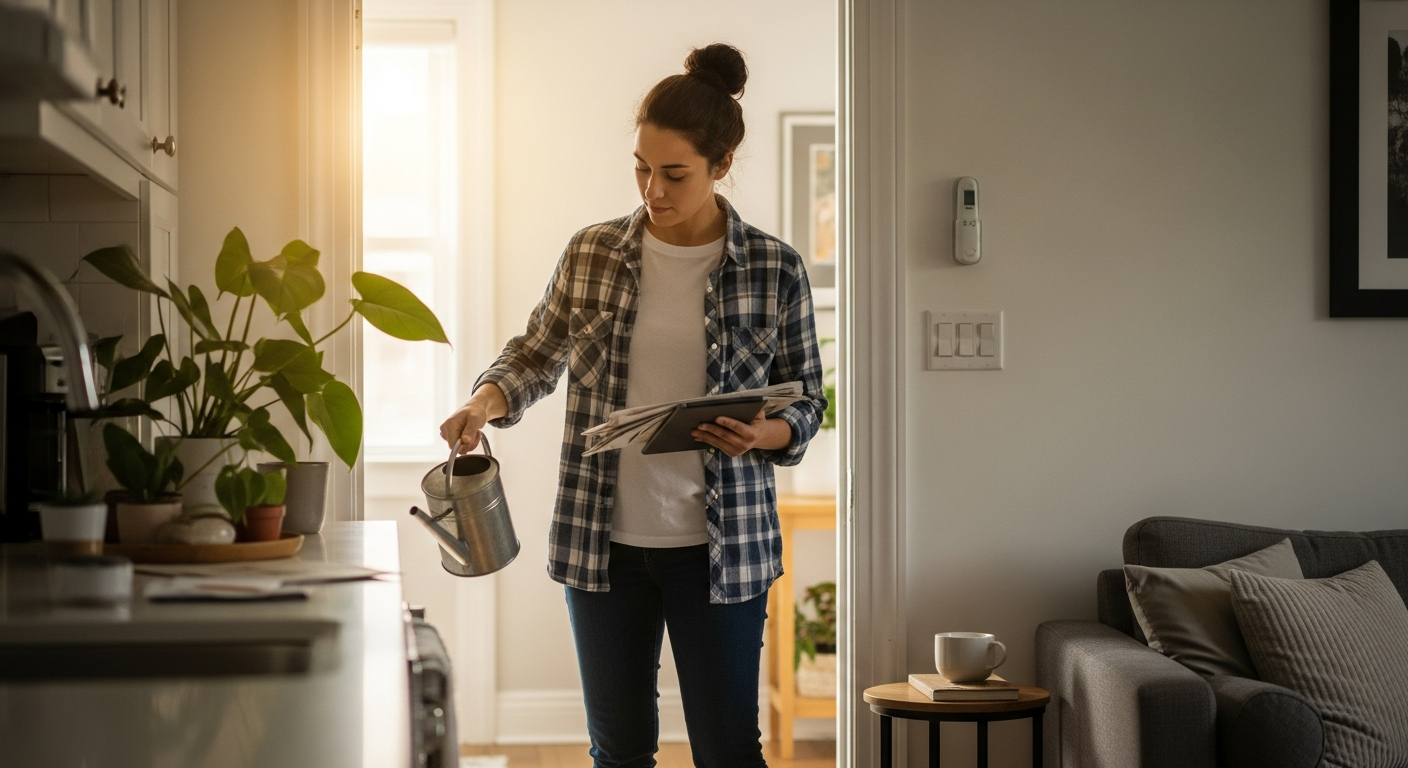
Maintaining routines: Water the plants. Take out the bins on collection day. Keep the place tidy. It's the little things that make a homeowner return to a house that feels exactly as they left it.
For a full breakdown of responsibilities, our guide on what house sitters usually do covers the details.

The Trust That Makes It Work
At one of our sits, the homeowner left money in a drawer and specifically pointed it out to us during the handover. "Just in case something goes wrong," she said.
That's trust. Not just leaving money, but telling us it's there. She knew we weren't going to take it. She knew we'd only use it if we absolutely needed to solve a problem while she was away.
That moment stuck with me. House sitting works because both parties are betting on each other's integrity. The homeowner bets you'll care for their home and pets. You bet they've been honest about the workload and the house's condition.
It's why platforms with verified reviews matter so much. Trust scales when there's accountability.
Our Typical Morning (The Actual Reality)
People ask what house sitting is actually like day-to-day. Here's our routine:
Caro wakes up first. I'm a night owl and work better in the evenings, so mornings are hers. She'll take care of the pets (food, water, let the dog out or walk if needed).
I wake up around 9 AM. We have coffee and breakfast together. Then we either go visit local attractions or work on our laptops. Right now in Athens, that means exploring neighborhoods we'd never see as tourists, finding the local markets, discovering the coffee shops Greeks actually use (not the tourist traps).
Evenings, I work on this website while Caro creates digital products for teachers. Pets get their evening routine (dinner, walk, playtime). We cook our roasted vegetables or whatever we picked up at the market. Then it's just... living.
That's house sitting. It's not glamorous. It's just life, but in someone else's home, in a new city, with different pets every few weeks.
What House Sitting Is NOT
Let me be clear about what this isn't:
Not a vacation: You have responsibilities. Pets need care. The house needs attention. You can't just leave for three days and "see how the pet does."
Not a tenant situation: You don't have tenant rights. There's no lease. You can't refuse to leave when the homeowner returns. It's a temporary service arrangement.
Not the same as pet sitting: Pet sitters do drop-in visits. House sitters live in the home 24/7. Completely different level of responsibility and commitment.
Not paid work (usually): Some sits offer payment, but most operate on pure exchange: free accommodation for pet care and home security. Our cost breakdown explains the economics.
From Cortona to Athens: Why We Keep Doing This
We stayed in Cortona, Italy (well, at least we were looking up at the historic city of Cortona from our garden). Two labradors. Our first house sit in Italy. We ate way too much pizza.
We stayed in Linz, Austria in a mansion in the hills. Twenty-minute walk straight uphill from the town center. A cat and a dog.
Right now, we're in Athens with a French bulldog who farts directly at my face while I write this, and 2 cats. The sit was meant to be 5 days but got extended to 7 because we're flexible with our campervan schedule.
Every sit is different. Different city, different pets, different routine. But the core is always the same: someone trusted us with what matters most to them, and we made sure they could travel with complete peace of mind.
That's the real house sitter definition. Everything else is just details.
Konrad & Caro 🐾🚐
DM us @housesittersguide if you have questions – we answer everyone!

Frequently Asked Questions
Is a house sitter considered a tenant?
No, a house sitter is not a tenant. They don't have tenancy rights because there's typically no formal lease agreement or rent exchanged. It's a temporary service arrangement, often formalized by a house sitting agreement that outlines responsibilities, not a rental contract.
We've done 15+ sits across Europe and have never had a lease or paid rent. That's not how platforms like TrustedHouseSitters work.What's the main difference between a house sitter and a pet sitter?
A pet sitter might only visit for short periods to feed and walk animals. A house sitter lives in the home 24/7, providing constant presence and care for both the pets and the property.
When that cat's foot swelled up in Bochum, we were there to notice it immediately and handle it. A pet sitter coming twice a day might have missed it for 12 hours.Does a house sitter pay for utilities?
Generally, no. For short-term sits, homeowners typically cover all utility costs like water, electricity, and WiFi. This should be clarified during the video call beforehand, but it's standard practice for the homeowner to bear these costs as part of the exchange.
We've never paid utilities across any of our sits.What legal documents are recommended for a house sitting arrangement?
A comprehensive house sitting agreement is highly recommended. It should outline dates, responsibilities for pets and the home, emergency contact information, rules for visitors, and clarification on expenses. Some also use a vet release form to authorize emergency medical care for pets.
The Bochum cat foot incident would have been more complicated without clear vet authorization discussed upfront.Can house sitting be a full-time job?
Yes. For many digital nomads and long-term travelers, house sitting becomes a full-time lifestyle. By chaining sits together, you eliminate accommodation costs, allowing you to travel affordably.
We travel in a campervan and fill gaps between sits with van life. When we have sits lined up back-to-back (like when we went from Linz to Cortona), it's entirely free accommodation for months.What happens if something goes seriously wrong during a sit?
You contact the homeowner immediately and work together to solve it. When our fuses melted in Kefalonia, we called the homeowners, explained what happened, and they organized an electrician. Most homeowners appreciate sitters who communicate problems quickly rather than trying to hide them.
The worst thing you can do is panic and not tell anyone. Problems happen. Homeowners know that. Communication is everything.
Related Guides
The Best International House Sitting Platforms: Where to find legitimate sits
How Much Does House Sitting Cost: Complete breakdown of expenses
House Sitting Video Call Guide: How to clarify expectations before the sit
Our TrustedHouseSitters Review: The platform we use most
House Sitting Europe: Our experiences across the continent
What Not to Do When House Sitting: Common mistakes
Can House Sitters Have Visitors?: Understanding boundaries and rules