

Home > Blog > When Not to Apologise During a House Sit
Quick Facts
| Quick Facts | |
|---|---|
| Pre-existing issues | State what you found and what you are doing — not your fault, no apology needed |
| Following instructions exactly | Report what happened factually — the outcome was not your decision |
| "Sorry that happened to you" | An expression of sympathy, not an admission of fault — perfectly fine |
| "Sorry, that was my fault" | An admission that insurers can use to assign liability — avoid in writing |
| For homeowners | A brief acknowledgment is enough for things outside your control — no need to over-apologise either |
Not everything that goes wrong during a house sit is your fault, and apologising for things outside your control does more harm than good. It takes on responsibility that was never yours, it can complicate insurance claims if something more serious is involved, and it trains everyone — including you — to treat normal occurrences as personal failures. This article is about the other half of communication during a sit: when to stay factual, when "sorry that happened" is appropriate, and when an apology should not appear in writing at all.
Our previous article on apologising well covers what to say when something genuinely is your responsibility. This one covers everything else — the pre-existing problems, the things that happen despite following instructions exactly, and the situations where an apology in writing could actually create a problem later.
If you are interested in getting into house sitting, our book Travel More for Less puts the whole process in one place: clear, step by step guidance from your first questions to your first confirmed sit, and the reviews that open the door to the next one.

Pre-Existing Issues Are Not Yours to Apologise For
The clearest example of this from our own experience was a sit in Portugal involving a dog with serious undisclosed behavioural issues. The listing did not mention it. There was no welcome guide. We arrived to a dog that was lunging at us during resource guarding episodes in bed.
When we communicated this to the homeowner, we did not apologise. There was nothing to apologise for. We described what we were observing factually — the dog was resource guarding, and the behaviour included lunging, not just the mild wariness that "a bit food possessive" might suggest. We explained what we were doing about it: keeping the dog outside during high-risk moments, playing music at night to reduce its stress and overreaction. We laid out the situation and our response to it, calmly and completely.
At first, the homeowner apologised. That was an appropriate response — this was, after all, information she should have provided and had not. But partway through the sit, the dynamic shifted, and the conversation became uncomfortable in a way that never fully resolved. We were relieved when the sit ended on schedule. It is one of the few sits we would not repeat.
The lesson here is not about that specific homeowner. It is about the principle. If you arrive to find something that was not disclosed, a pet behaviour, a broken appliance, a maintenance issue, anything that existed before you walked through the door, your job is to report it factually and manage it well. An apology in this situation, even a small one, subtly repositions the situation as something you are responsible for fixing emotionally as well as practically. You are not. State what you found. State what you are doing. That is the complete message.
Following Instructions Exactly and Something Going Wrong Anyway
The Kefalonia fuse situation is the cleanest example of this. We followed the homeowner's instructions for the heating and boiler exactly as given. At some point, we smelled something melting, and then the lights went out. The fuses had blown.
Our message to the homeowner described what happened, in sequence: we had the heater on, we turned on the boiler as instructed, we noticed a smell, then the power went. We took a photo of the fuse box and sent it immediately. From there, we worked out the next steps together, finding an electrician, getting it fixed, sorting out reimbursement to us.
At no point did the message contain an apology. It did not need one. We had done exactly what we were told to do, in the order we were told to do it, and the outcome was the result of the home's electrical setup, not anything we did wrong. A factual sequence of events, supported by a photo, gave the homeowner everything they needed to understand the situation and respond constructively. Adding "I'm so sorry this happened" would have implied a level of responsibility that was never ours, for an outcome that was, if anything, predictable given the instructions we had been given.
This distinction matters more than it might seem. A message that says "I followed your instructions and the fuses blew, here's a photo" puts the situation accurately in context. A message that says "I'm so sorry, I think I did something wrong with the heater" creates a false impression that can be hard to walk back later, even if it was never intended that way.
What Homeowners Should and Should Not Apologise For
This dynamic runs in both directions, and it is worth addressing directly because most discussions of house sitting etiquette focus entirely on the sitter's obligations.
A house sit is a dynamic relationship. Neither party can predict everything that might happen. Fuses blow. Pets develop sudden health issues. Wifi drops out. A delivery arrives that nobody was expecting. None of these things are anyone's fault, and a homeowner who finds out about one of these issues while traveling does not need to apologise extensively for something they had no way to foresee or control.
Where it becomes different is when the issue stems from something the homeowner could have controlled, an undisclosed pet behaviour, a maintenance problem they knew about and did not mention, a listing that misrepresented what the sit actually involved. In those cases, an apology is genuinely appropriate, because there was a choice involved, even if that choice was an oversight rather than something deliberate.
The proportionate response from a homeowner, in either case, is something like: "Sorry that happened, here's what I can offer to help." That single sentence does the work. It acknowledges the situation without turning into a lengthy apology that the sitter then has to respond to and manage. Constantly apologising, for a homeowner just as much as for a sitter, does not actually help. It just adds an emotional layer to a situation that would resolve more smoothly with practical information.
The Legal Dimension: Why "Sorry, That Was My Fault" Matters in Writing
A quick caveat before going further: Caro and I are not lawyers, and this is not legal advice. The points below reflect general patterns in how insurers and platforms approach fault and liability, based on publicly available terms and conditions and general legal information. If you are dealing with a situation involving significant damage, a serious dispute, or anything where the financial stakes are high, get advice from a qualified professional in your jurisdiction rather than relying on a house sitting blog.
This is the part of the conversation that rarely gets discussed in house sitting circles, and it is worth taking seriously.
Platform protection plans, where they exist, are built around fault. TrustedHouseSitters' Home and Contents Plan requires the homeowner to exhaust their own insurer first, and that insurer will be assessing who was responsible for the damage before paying out anything. Nomador's terms are even more explicit. Their travel cancellation reimbursement terms state plainly that Nomador reserves the right to pursue legal action and recoup costs from the party responsible if false or incomplete information is provided — and more broadly, insurers operate on the principle that an admitted fault is a fault they can act on.
A written message that says "sorry, that was my fault" is, in the eyes of an insurer reviewing a claim later, an admission. It does not matter that it was meant kindly, in the moment, as a way of smoothing over an awkward situation. If a homeowner later files a claim for something connected to that incident, the insurer assessing it may use that message as evidence of where responsibility lies, even for something relatively minor that escalates into a larger claim later for unrelated reasons.
This does not mean you should never acknowledge a situation. There is an important and well-established distinction between an expression of sympathy and an admission of fault. "I'm sorry that happened to you" acknowledges that something difficult occurred without claiming responsibility for causing it. "I'm sorry, that was my fault" does the opposite. The first de-escalates. The second creates a record.
In practice, this means: if something happens that genuinely was your fault, you left a door open, you forgot to do something you were asked to do, own that clearly and directly, because that is accurate and the right thing to do. But if something happens that was not your fault, or where fault is unclear, do not reach for "sorry, my fault" as a way of smoothing the moment over. State what happened. Offer to help. Let fault, if it needs to be determined at all, be established through the actual facts rather than through a kind but inaccurate phrase typed in the moment.

| Situation | What happened | Apologise? | What to say instead |
|---|---|---|---|
| Pre-existing issue not disclosed | Undisclosed pet behaviour, broken appliance found on arrival | No | "Just letting you know we found [X]. Here's what we're doing about it." |
| Followed instructions, something went wrong | Fuses blew after following the heating instructions exactly | No | "We did [X] as instructed, then noticed [Y]. Photo attached." |
| You genuinely caused the issue | A glass slipped and broke while putting dishes away | Yes — briefly | "A glass broke — happy to replace it, can you send a link?" |
| Bad weather or wear and tear | A fence panel blew down overnight, a lightbulb failed | No, from either side | "Storm took down part of the fence, sending a photo for when you're back." |
| Homeowner's undisclosed issue caused a problem | Listing did not mention a pet's medical condition that then required vet care | Homeowner: yes, briefly | "Sorry that happened — here's what I can do to help." |
| Something happened that is nobody's fault | A pet's pre-existing condition flares up unexpectedly | No, from either side | "Wanted to flag that [X] happened, we've done [Y], let us know if you'd like us to do anything else." |
| Reflexive "sorry" with no issue at all | Sending a routine update or asking a normal question | Drop it | Just send the update or question without "sorry" attached |
| Genuine fault, in writing | You forgot to do something you were specifically asked to do | Yes — directly | "We forgot to [X] — apologies, we'll make sure it's done by [time]." |
The "Sorry" Reflex
Many people say sorry constantly, as a verbal habit rather than a meaningful statement. Announcing good news with "sorry to bother you, but the dog had a great walk today." Asking a reasonable question with "sorry, quick question." This is a normal social reflex, it is used to soften interactions and reduce friction, but it is worth noticing how often it appears in messages where nothing has gone wrong at all.
The issue is not that this reflex is bad. It is that overusing it dilutes the word, and in situations where something has actually happened, an automatic "sorry" can slip into a message about something that was never your responsibility.
If you are someone who says sorry reflexively, it is worth building a small pause into how you write messages during a sit. Before sending anything that includes "sorry," ask whether you are expressing sympathy for something that happened, or whether you are accepting responsibility for something.
If it is the former, "sorry that happened" or simply describing the situation works fine. If it is the latter, make sure that is actually accurate before it goes in writing.
How to Communicate Things That Are Nobody's Fault
The cleanest category is the one where genuinely nobody is responsible. Bad weather damages something outside. A pet's pre-existing health condition flares up on its own. An appliance fails from ordinary wear and tear, unrelated to anything either party did.
In these situations, the right tone is calm, factual, and free of apology from either side. "The storm last night brought down part of the fence, sending a photo so you have it for whenever you're back" requires no apology from the sitter, who did nothing to cause it, and no apology from the homeowner, who could not have prevented it.
"Sorry that happened" from the homeowner is a kind thing to say and is appropriate as an expression of sympathy, but nobody needs to take on responsibility for something that was simply circumstance.
The pattern that works across all of these scenarios is the same: stay factual, stay calm, and let the facts of the situation determine what happens next, rather than letting an apology, accurate or not, set the tone before the facts are even on the table.
Conclusion
Apologising well matters, and so does knowing when not to. A pre-existing issue you did not cause, an outcome that resulted from following instructions exactly, a piece of bad luck that affects nobody's plans but everyone's day, none of these need an apology from the person reporting them. What they need is a clear, factual account and, where relevant, an offer of help.
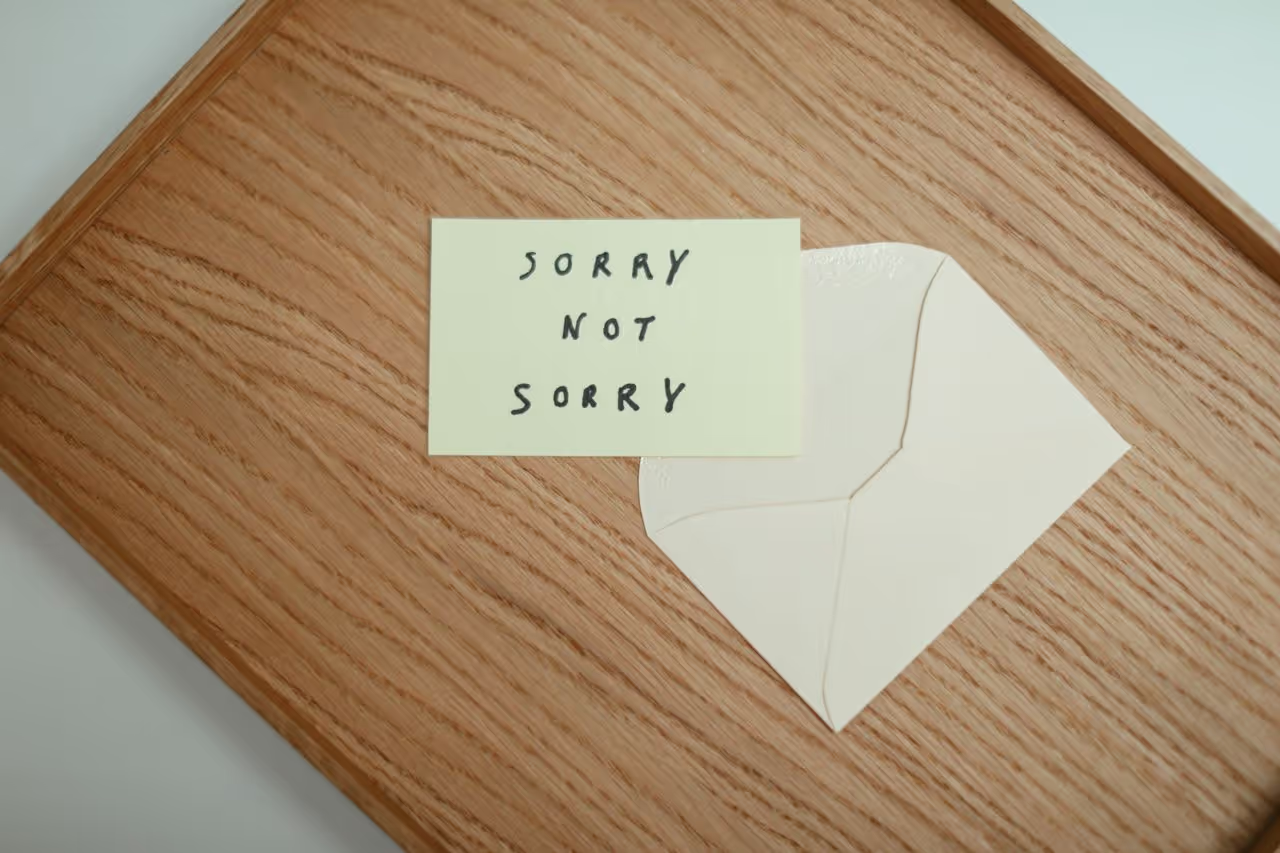
"Sorry that happened to you" is a kind and appropriate thing to say when something difficult occurs, regardless of who is involved. "Sorry, that was my fault" should be reserved for situations where it is actually true, because in writing, it can mean more than you intend it to.
Caro and I have completed 20 house sits across 12 countries, driven 19,000km in Australia and 24,000km in our 1998 VW T4, and saved over $26,500 in accommodation costs. If you have a question about communicating well during a difficult moment, send us a message on Instagram — we read every DM.

Frequently Asked Questions
Should I apologise if I find a problem that already existed when I arrived at a sit?
No. If you arrive to find an undisclosed issue — a pet behaviour, a broken appliance, anything that predates your arrival — describe what you found and what you are doing about it. An apology in this situation implies a level of responsibility that is not yours and can shift the dynamic of the sit in an unhelpful direction.
What should I say if something goes wrong even though I followed the homeowner's instructions exactly?
Describe the sequence of events factually, with evidence if possible. State what you did, what you noticed, and what happened as a result. A photo helps. There is no need to apologise for an outcome that resulted from doing exactly what you were asked to do — the facts speak for themselves and give the homeowner what they need to respond constructively.
Can saying sorry in a message actually cause legal problems?
It can, particularly if the message says or implies "that was my fault." Insurance providers, including Nomador, explicitly reserve the right to pursue the party responsible for costs they reimburse. An apology that admits fault in writing can be used as evidence of where responsibility lies if a claim is made later, even for something that seems minor at the time. An expression of sympathy — "sorry that happened to you" — does not carry the same risk, because it does not claim responsibility for causing the situation.
Do homeowners need to apologise for things that go wrong while they are away?
Only for things within their control. Bad weather, a sudden pet health issue, or normal wear and tear are nobody's fault and do not require an apology, though a brief acknowledgment is a kind gesture. If the issue stems from something the homeowner knew about and did not disclose, a short, genuine apology — paired with an offer of help — is appropriate and sufficient. Lengthy apologies in either direction tend to add an emotional burden rather than resolve anything.
How do I stop saying sorry reflexively in messages during a sit?
Pause before sending any message that includes the word, and ask what it is actually doing. If it is expressing sympathy for something that happened — to a pet, to the homeowner, to the situation generally — that is fine and often appropriate. If it is accepting responsibility for something, make sure that is accurate first. Reflexive apologies for neutral updates or reasonable questions can be removed entirely without losing any warmth from the message.
What is the difference between "sorry that happened" and "sorry, that was my fault"?
One expresses sympathy, the other admits responsibility. "Sorry that happened to you" acknowledges a difficult situation without claiming you caused it — it is a normal, kind, de-escalating thing to say regardless of who is involved. "Sorry, that was my fault" is a specific claim about responsibility and should only be used when it is genuinely true, because in writing it can be treated as an admission with consequences beyond the conversation it appears in.


Responses
What are your thoughts on this post?