

Home > Blog > Pet Runs Away During a House Sit
Quick Facts
| Most pets are found within | 24 hours, within a mile of where they went missing |
| Most effective recovery method | Physical search in the immediate area. not chasing |
| Do not chase | Running after a dog can make it flee further and become fearful |
| First contact | Homeowner. immediately, even mid-search |
| Microchip | Passive ID only. not a GPS tracker. Get the number from the vet passport before the sit |
| Key tool | Local Facebook groups, Nextdoor, and country-specific lost pet services |
| Adrenaline is useful, strategy is better | A methodical search beats a panicked sprint |
Do not chase: an escaping dog runs further when pursued. Secure every exit, call the pet's name calmly, and ring the homeowner immediately. Most are found within a mile and 24 hours. Keep the lead on before the door opens.
This is the scenario most house sitters dread more than any other. It happened to me: not on a house sit but on a dog walk in Bochum, Germany, when a dog slipped past me the moment I opened the front door.
I did not even close the door before I gave chase. What followed was two hours of sprinting through a forest, up and down hills, without water. Adrenaline is a remarkable thing. The dog eventually hid in a bush and was found by the homeowner, who left work early. Both of us were shaken. Neither of us forgot it.
If you are interested in getting into house sitting, our book Travel More for Less puts the whole process in one place: clear, step by step guidance from your first questions to your first confirmed sit, and the reviews that open the door to the next one.
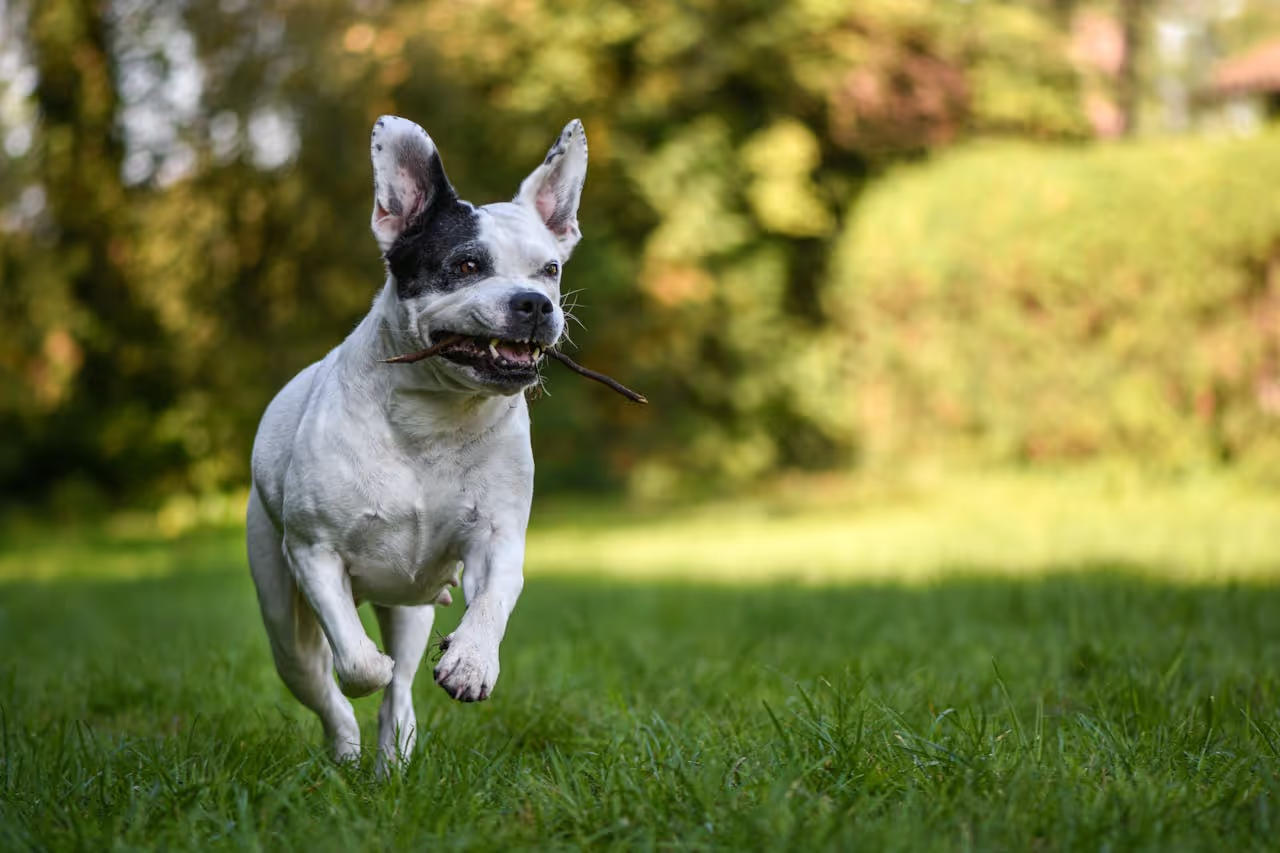
The First Five Minutes
Stop and think before you run. The instinct to sprint after an escaping animal is natural and almost always counterproductive. A dog that sees you chasing it will typically run further and faster. It may become frightened and distrustful, making it less likely to return or come to you when called. The research and the community experience are consistent on this: chasing a lost dog makes the situation worse.
What to do instead, in order:
Secure any open doors, gates, or entry points at the property immediately. A second animal cannot follow the first one if all exits are closed. I failed to do this in Bochum. I ran without closing the front door, which could have led to a far worse outcome.
Stay calm. Call the pet's name in a quiet, upbeat tone rather than shouting. Panicked or frustrated calling can signal to the animal that it is in trouble, which makes it less likely to return. Stand still and let the animal orient toward you rather than running from you.
Move to a position where the animal can see you from a distance. Sit or crouch low. A smaller, non-threatening posture invites approach. Some experienced trackers recommend sitting down and pretending to eat something, which triggers a dog's curiosity and food motivation.
If the animal has moved out of sight, note the direction it was last seen travelling and begin a methodical search outward from that point. Most lost pets are found within a mile of where they disappeared. Search nearest first.
What Not to Do
Do not chase at full speed. The animal will outpace you and the pursuit signals threat.
Do not call the animal's name repeatedly in a frustrated or urgent tone. It reads as anger.
Do not assume it has gone far. Most pets, particularly cats, are found very close to where they escaped: hiding under cars, behind fences, in neighbouring gardens.
Do not wait to notify the homeowner. The longer you delay telling them, the less time they have to help, and the more the situation looks like it was being concealed. Call them while you are still actively searching, not after.
Do not post on social media before telling the homeowner. Our what to do if the homeowner stops responding guide covers what to do if you cannot reach them. The homeowner should not find out their pet is missing from a Facebook post.
Calling the Homeowner
Call the homeowner as soon as the immediate threat is secured: the property is closed and the search has begun. Do not wait until the pet is found. Do not wait until you have a better update. Call now.
The homeowner may know things you do not: favourite hiding spots, how the animal responds when scared, whether it is food-motivated, whether a neighbour knows the animal. In Bochum, the homeowner's presence was ultimately what found the dog. the animal recognised them and came out of hiding. An unfamiliar person running toward a scared dog produces a very different response.
The contact chain from that point is: homeowner first, emergency contact if the homeowner cannot be reached, then the local rescue services and platform. Our pet emergency guide covers the full escalation chain for situations where the homeowner is unreachable.

Searching Effectively
A methodical search in expanding circles from the last known location outperforms a panicked sprint in one direction. The majority of lost dogs are found within a mile and within 24 hours, but that window requires active, organised searching.
Enlist help immediately. Post in local Facebook community groups and Nextdoor with a clear photo, the pet's name, when and where it went missing, and a contact number. These channels are consistently among the most effective tools for lost pet recovery. One THS forum sitter found a lost Shiba Inu partly through a local Facebook post: reports of sightings started coming in within minutes.
Alert neighbours directly. Knock on doors, ask people in the street. Someone working in their garden or a regular dog walker may have seen the animal. People who know the area and see animals regularly are more useful than any app.
Contact local vets and animal shelters immediately. If someone finds the animal and takes it to a vet, the microchip can be scanned and the homeowner contacted. Most pets are found within 24 hours of going missing, and animal shelters are a common first stop for people who find a stray. Calling them as early as possible means they know to look for your specific animal.
Leave food and familiar items with the animal's scent at the place it escaped from. Our guide to leaving pets during a sit covers how animals respond when left in an unfamiliar environment. A scared animal will often return to a familiar location during quiet hours, particularly at night. Leave the homeowner's worn clothing, a familiar blanket, and food. Return to check the spot regularly, especially at dawn and dusk when animals are most active.
Understanding Microchips: What They Can and Cannot Do
A microchip is not a GPS tracker. It cannot tell you where the animal is. What it does is provide a permanent ID that can be retrieved when the animal is scanned at a vet, shelter, or animal control facility. The moment someone takes the lost animal to any of these locations, the chip is scanned, the homeowner's contact details are retrieved, and the homeowner is contacted.
For this to work, two things must be true: the chip must be registered, and the homeowner's contact details must be current. A chip with an outdated phone number is almost useless. When accepting a sit, ask for the pet's vet passport or medical documents. Our no welcome guide article covers what to confirm at handover when written materials are missing. These typically contain the microchip number and confirm it is registered. Knowing the microchip number means you can report it immediately to lost pet databases if the animal goes missing, and it means any vet or shelter that finds the animal can scan it and trace the owner.
Microchips use radio frequency technology and do not require batteries. They last the lifetime of the pet and cannot be removed accidentally. A chip that is registered and has current owner details is one of the most reliable tools for reuniting a lost pet with its owner.
Where to Report a Lost Pet by Country
The reporting process varies significantly by country. The table below covers the main channels for each region. Contact all of them, not just one.
| Country | Official channel | Best online resource | Notes |
|---|---|---|---|
| United Kingdom | Local council dog warden service (gov.uk/check-council-missing-dog) | Animal Search UK, Doglost.co.uk | All dogs must be microchipped by law; contact local RSPCA |
| United States | Local animal control and county shelter | Petco Love Lost (petcolove.org), PetFBI (petfbi.org), PawBoost | Report to the nearest shelter in person if possible |
| Australia | Local council rangers or pound | RSPCA state branch (e.g. rspcavic.org for Victoria), PetRescue | Microchipping mandatory; contact local vet to scan |
| France | ICAD national database (i-cad.fr) | PA perdus (perdu-de-vue.fr), 30 Millions d'Amis foundation | All pets microchipped or tattooed by law |
| Switzerland | ANIS national database (anis.ch) | Tierheime.ch, Fondation FOUR PAWS | Microchipping mandatory; contact local Tierheim |
| New Zealand | Local council animal control | SPCA (spca.nz), NZ Lost Pets (nzlostpets.co.nz) | Contact council within 24 hours of finding a stray |
| Canada | Local municipal animal control or SPCA | BC SPCA (bcspca.ca), Kijiji Lost and Found | Varies by province; contact local humane society |
For every country, post on local Facebook groups and Nextdoor simultaneously with the official report. Surveys of pet owners who have found their lost pets note that social media connections are among the most likely means of reunion. The official channels catch animals that are brought in. Social media catches animals that are spotted but not yet contained.
Prevention: What Changed After Bochum
The Bochum incident happened because I opened the front door without having the dog on a lead. That was a dog walk, not a house sit. But the lesson applies equally to any situation where you are responsible for an animal.
The changes I made after that day:
The dog is always on the lead before any door is opened. Not after the door is open. Before. The lead goes on inside the property, then the door opens. This single habit prevents the vast majority of door-bolt escapes.
On any sit of up to two weeks, the dog stays on the lead for all outdoor time regardless of what the homeowner has said about off-lead being fine. Two weeks is not enough time to be confident about a dog's behaviour in all situations, and a dog that bolts off-lead in an unfamiliar environment is a crisis that a lead prevents entirely. Our reactive dog guide covers this principle in detail.
At the start of every sit, I get the vet passport details which contain the microchip number. Not because I expect to need it, but because having it ready is the difference between being able to report the animal immediately and spending twenty minutes trying to find the number while already stressed.
Conclusion
A pet running away during a house sit is one of the highest-anxiety situations a sitter can face. The two-hour sprint through the Bochum forest was one of the most physically and emotionally draining experiences I have had looking after someone else's animal. The dog came home. The homeowner forgave it. Both of us learned something.
The habits that prevent it: lead on before the door opens, always. The response that works if it does happen: do not chase, call the homeowner immediately, search systematically in expanding circles, alert local Facebook groups and shelters simultaneously, use the microchip number to report to the official database.
Most pets are found. Most are found quickly. The sitter who responds immediately, involves the homeowner, and uses the community channels available has the best possible chance of a reunion.
Join TrustedHouseSitters with 25% off and read our guide on what to ask a homeowner before a sit. Ask for the microchip number and the vet passport before the homeowner leaves.
DM us @housesittersguide on Instagram. We answer everyone.

Frequently Asked Questions
What should I do immediately if a pet runs away during a house sit?
Do not chase. Secure all exits at the property, call the pet's name calmly, and notify the homeowner immediately. Most pets are found within a mile and within 24 hours. Begin a methodical search outward from where the animal was last seen, post in local Facebook groups and Nextdoor, and contact local vets and animal shelters. See the country-by-country reporting table above.
Should I chase a dog that has run away?
No. Chasing a dog that has escaped typically makes the situation worse. A dog that sees you running toward it will often run faster and further, may become frightened, and will be harder to approach. Move calmly, call in an upbeat tone, crouch low, and let the animal orient toward you rather than fleeing from you.
Does a microchip help find a lost pet?
Yes, but only if the animal is taken to a vet or shelter to be scanned. A microchip is not a GPS tracker. It is a passive ID that provides the homeowner's contact details when scanned. Ask for the microchip number at the start of every sit so you can report it to national databases immediately if the animal goes missing. Missing dogs with microchips are 15% more likely to be reunited with their owners.
How do I prevent a pet from escaping during a house sit?
Lead on before the door opens, every single time. For any sit of up to two weeks, keep dogs on the lead for all outdoor time regardless of the homeowner's instructions about off-lead being fine. You do not know the animal well enough in a short sit to be confident about its behaviour in all situations. A lead prevents door-bolt escapes entirely.


Responses
What are your thoughts on this post?