

Home > Blog > What House Sitters Wish Homeowners Knew
Quick Facts
| Quick Facts | |
|---|---|
| Based on | 20 house sits across 12 countries over 3 years |
| Most common gap | What's in the listing vs what's actually in the house |
| Easiest fix | A welcome guide written with the mindset: what would the sitter need to never contact me? |
| Best welcome guide we received | Manosque, France: walking maps, bin schedules, more detail than we needed |
| This article is | Information, not a complaint. A companion article covering what homeowners wish sitters knew is coming |
The sits that run themselves and the ones that do not are separated by information, not personality. Write an honest listing, disclose anything currently wrong, and send the welcome guide early. Stick to agreed dates, turn off indoor cameras, and never ask sitters to pay utilities.
The difference between a sit that runs itself and a sit that generates twenty messages in the first two days almost always comes down to one thing: how much accurate information was available before the sitter walked through the door. Across 20 sits in 12 countries, Caro and I have experienced both ends of that spectrum. This article is a practical breakdown of what we wish every homeowner understood, with the specific examples behind each point and the fixes that cost nothing but change everything.
Before anything else: thank you. To every homeowner who has ever opened their front door to a stranger from the internet, handed over the keys, and trusted them with their home and their pets, you have created something extraordinary. Caro and I have been doing this for three years and the experiences we have had, the animals we have loved, the homes we have lived in, the friendships we have built, exist because homeowners like you decided to be generous with your space and your trust. That generosity is the reason this lifestyle works, and we are grateful for it every single time we walk into a new home. What follows is written in that spirit. Not as criticism, but as information from someone who wants every sit to go as well as the best ones we have had.
This article is not a list of complaints. It is information gathered from three years of house sitting, community forums, and conversations with other sitters. Every issue listed below appears regularly in TrustedHouseSitters community discussions and can be resolved easily once a homeowner is aware of it. A companion article covering what homeowners wish sitters knew, drawing on our experience as consistent five star sitters, will follow.
Caro and I have been house sitting for three years, on and off since our first sit in Bochum in June 2023, and full-time since November 2025.
We are currently over a month into a six-month sit in Portugal, looking after one cat and four chickens. If you are a homeowner considering TrustedHouseSitters, a 25% discount on membership is available here. For the full platform comparison, the house sitting sites guide covers what each platform offers.
The Listing Is the First Promise You Make
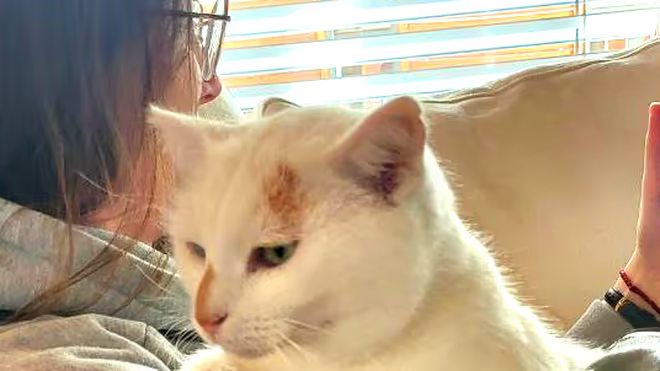
The listing is the first thing a sitter reads, and it's the document they use to decide whether to apply. If the listing doesn't match reality, the sitter discovers that on day one, in the first hour, sometimes in the first ten minutes.
We arrived at a sit in Kefalonia that listed one cat. There were nine. Eight were neighbourhood strays that had been fed on the property daily for years and treated the home as their territory. They pushed through windows, fought at doors, and created a completely different experience from what "one cat" suggests. The dog at that sit was genuinely one of the best animals we've looked after on any trip. But the gap between what we expected and what we found meant the first day was spent recalibrating rather than settling in.
Nobody is suggesting that a listing needs to be a legal document. But the information in it should be close enough to reality that a sitter reading it on day one would recognise the home they're standing in. One cat versus nine is not a minor rounding error. Neither is "occasional watering" when the welcome guide reveals a full garden requiring daily attention.
A dog described as "loves company" that actually has severe separation anxiety and cannot be left alone for twenty minutes is a different sit than the one the sitter agreed to.
The fix costs nothing and actually improves your applicant pool. Write the listing as if the sitter is going to compare it to what they find. The honest listing might attract fewer applications, but it attracts the right ones. The people who apply knowing the full picture are the people who are prepared for it. The homeowner misrepresentation article covers what sitters are advised to do when the gap is serious.
Disclose Anything That's Currently an Issue
Things happen with animals. They get fleas, they injure themselves, they develop new behaviours. None of that is a reason not to list your home. It is a reason to mention it before your sitter arrives.
At the same Kefalonia sit, we found the home was not as clean as we expected. The kitchen table had crumbs on it, the floor hadn't been swept, and it was sticky underfoot. After a quick tidy up to make the space liveable, we sat down and felt something on our legs. Fleas. From the dog, jumping onto us. We messaged the homeowners straight away. They organised someone to come with flea treatment, which was appreciated. But the treatment takes around two weeks to fully work, and because the dog was also interacting with the outdoor cats, the fleas didn't go anywhere. We dealt with them every day for the full two weeks.
Fleas don't appear the moment someone drives to the airport. If a dog has fleas when the homeowner is still home, the homeowner almost certainly knows. A single sentence would have changed the whole experience of arriving: "the dog has had fleas recently, we're treating it, you might still notice some." That sentence changes nothing about the practical situation. The fleas are still there. The treatment still takes two weeks. But surprise versus heads-up is the entire difference between frustration and preparation.
This applies equally to anything else that's an active situation. A leaking tap, a temperamental boiler, a pet that's been off its food, a pet with a medical condition. If it's true while you're still in the house, it'll be true after you leave, and your sitter will find it. Telling them first just means they arrive prepared rather than blindsided.

Tell Us About Injuries, Even Recent Ones
At a sit in Switzerland, we arrived to learn the dog had jumped a fence a few days earlier and hurt its leg. It was visibly limping. The homeowners told us on arrival.
We monitored the dog throughout the two weeks. It seemed to be improving gradually but never stopped limping entirely. After the sit, the homeowners took the dog to the vet and it turned out to be a chipped bone. During the sit, we adjusted. We'd planned a longer mountain walk and instead we did gentle daily walks around the block, then used the extra time for our own day trips exploring the area on foot.
None of this was a problem. The sit was still enjoyable and the adjustment was minor. It worked because we knew from the first minute. Compare that to the flea situation, where we didn't know, and the difference is obvious. Same category of issue, completely different experience based on whether we were told. Our vet care costs guide covers what to do if a health situation escalates beyond what was expected.
The Welcome Guide Is the Most Important Document You'll Write
The best welcome guide we've received was at our Manosque sit in the south of France. It was exceptional. Detailed walking routes with actual maps. Bin schedules with pickup days and locations. Feeding routines written out clearly. Emergency contacts, quirks about the home, recommendations for local shops and restaurants. It had more information than we strictly needed for the ten days we were there, and that excess was exactly what made it so good. We never had to send a single message asking about something basic. The sit ran itself from hour one.
The worst experience was the opposite: a sit where no welcome guide existed at all, the listing was vague, and the pet had undisclosed behavioural issues that we discovered on our own. We spent the first few days piecing together basic information from observation and messages. Every question we sent, no matter how small, was an interruption to the homeowner's trip and a small erosion of the confidence that should have been established before we arrived.
The mindset that produces a good welcome guide is this: if I was not to be interrupted during my entire holiday, what information would the sitter need to handle everything without contacting me?
That question, taken seriously, produces a guide that covers everything. In Cortona, we weren't sure about the rubbish schedule. The guide had it: which bins, which days, where they went. A small detail, but a German couple arriving in Italy wouldn't know it. An Australian couple arriving in Switzerland wouldn't either.
Every country handles recycling, heating, appliances, and water differently. The welcome guide is where all of that lives. Our guide on what to do when there is no welcome guide covers the sitter's side of this, and the how to prepare for a house sitter guide is the homeowner's practical companion.

| What to include in the welcome guide | Why it matters |
|---|---|
| Pet feeding routine with exact quantities and times | Prevents the sitter guessing or messaging to confirm |
| Walking route suggestions with maps if possible | Saves sitters researching routes and worrying about where to go |
| Vet name, number, and address | Critical for emergencies, should not require a message to obtain |
| Pet quirks and behaviours, including anything negative | Prepares the sitter for reality rather than discovering it live |
| Bin and recycling schedule with locations | Different in every country, every council, every street |
| Heating and hot water instructions | Boilers, thermostats, and heating systems vary wildly between homes |
| Wifi password and any connectivity issues | The first thing most sitters look for on arrival |
| Emergency contacts: plumber, electrician, neighbour | Covers the situations where you don't want to be the only option |
| Quirks of the home: tricky locks, sensitive alarms, fuse box location | Prevents a 2am panic when something unexpected happens |
| Local supermarket, pharmacy, hospital | Basic orientation for someone who has never been to your area |
| Appliance instructions for anything non-obvious | Coffee machines, washing machines, dishwashers all have different logic |
| Nearest petrol station, parking notes, toll information | Relevant if the sitter has a vehicle or is traveling by campervan |
| What to do in an actual emergency with the pet | A clear plan, not a conversation at 3am. The pet emergency guide covers this f rom the sitter's side |
| Anything currently wrong with the home or pet | One sentence now saves ten messages later |
Send the Welcome Guide Early
Timing matters almost as much as content. A welcome guide that arrives the night before departure, or worse, after the homeowner has already left, is a guide that was written in a rush. Rushed guides cover the basics and miss the details.
A guide written calmly, weeks before the sit, includes "by the way, the dog has had fleas recently" because there was time to think about what a new person in your home would actually need. It includes the bin schedule because you looked it up rather than assuming everyone knows. It includes the boiler sequence because you remembered that thing you do with the switch that visitors always get wrong.
The moment you confirm a sitter through the video call, send the welcome guide. You can prepare the welcome guides before even creating the listing. send it early, add as you think of things, and let the house sitter know exactly what is needed about the house sit as soon as possible.
Personally if the listing matches the welcome guide with all the information, then I know what I am to expect from the house sit and I get excited the closer the house sit is to begin, which is a huge bonus because Caro and I will bring that positive energy to the house sit.
The houses without the welcome guide, feels like the home owner is hiding something, and in our experience that is exactly what has happened till now.

Please Stick to the Agreed Dates
Sitters plan their lives around the dates of a sit. Their travel, their work schedule, their next sit, and their rest time are all built around the dates that were confirmed. When a homeowner returns early, even by a day, it disrupts that planning.
At a previous sit in Portugal, the homeowner came back partway through the trip, stayed for a night, then left again. It wasn't catastrophic, there were two separate living spaces on the property, so the practical overlap was manageable. But the dynamic shifted the moment she returned. The dog's behaviour changed. Caro and I instinctively felt we should stay in our space rather than move freely around the property. The ease of the sit, the feeling of being trusted to manage independently, evaporated.
When she was about to leave for her second trip, we asked when to expect her back. She then asked if it would be okay to return a day earlier than originally planned. We agreed, but by that point, after a difficult start with the dog's undisclosed resource guarding and a strained relationship with the homeowner, we were counting down to the end rather than dreading it.
The issue is not that unexpected things happen. They do, and most sitters understand that. The issue is the feeling that the dates, which both parties agreed to, are treated as flexible by the homeowner but fixed for the sitter. The sitter has organised their life around those two weeks. The homeowner cutting that short, even slightly, has a knock-on effect on the sitter's plans and their ability to relax during the final days.
If you genuinely need to return early, communicate as soon as you know. Not the day before. Not on arrival. The moment the possibility arises, let your sitter know so they can adjust. Our guide on what to do when a homeowner returns early covers the sitter's side of this situation in detail.
Please Don't Share the Space
This connects to the early return point but is worth stating separately because it comes up often enough in community discussions to be its own issue.
When a sitter confirms a two-week sit, they're mentally prepared for two weeks of managing the home and pets independently. They are not prepared to share the space with the homeowner for part of that period. Cohabiting with someone you've met through a platform, in their home, with their pets, while trying to maintain the same professional standard, is an entirely different experience from managing the home alone.
It is uncomfortable in a way that is difficult to articulate to someone who hasn't experienced it. You feel like you should be more present but also less visible. You can't fully relax, because it's no longer your temporary space, it's someone else's home that you happen to still be in. It feels like walking on eggshells, even when the homeowner is being perfectly friendly.
To be clear, having the homeowner around for the first day or two of a sit, and maybe the last day, can be genuinely lovely. That overlap gives both parties a chance to do the handover properly, walk through the home together, meet the pets with the owner present, and build the kind of rapport that makes the rest of the sit more comfortable. The same goes for the return. A shared meal, a quick catch-up, a relaxed handover back, all of that is part of what makes house sitting feel human rather than transactional.
What is not okay is springing a change on the sitter as they arrive. If you are planning to leave a week later than the dates you confirmed, and the sitter only finds out when they walk through the door, that is a significant breach of the agreement both parties made. The same applies to coming back several days early without warning. In both cases, the sitter has planned everything around the confirmed dates. Their travel, their work schedule, their next sit, their rest time.
The underlying discomfort when a homeowner returns early is something most sitters find hard to articulate but feel immediately. You think to yourself: so why am I here now? The sit is effectively over. The homeowner is back, the pets are back in their owner's care, and the sitter is suddenly a guest in someone else's home with no clear role.
For Caro and me, traveling in the campervan, we're more flexible. We can leave and park nearby without major disruption. For sitters who have traveled from another country, booked flights around those dates, or have no accommodation arranged for the gap, an early return creates a genuine logistical problem on top of the emotional discomfort.
Most sitters will not make a fuss about it. We understand it's your home and we don't want to get in the way of your life. In most cases we'll simply accept that you're coming back earlier and adjust as best we can. But please understand that the flexibility you're seeing from the sitter in that moment is not the same as it being fine. It's someone being polite about something that has genuinely disrupted their plans.
If your plans change and you need to be home during part of the sit, tell the sitter immediately and discuss honestly whether the arrangement still works. If the change is significant enough that the sitter would no longer be comfortable continuing, give them an easy exit. Our cancellation guide covers how sitters can end a sit early if the situation warrants it.
This Is an Equal Exchange, Not Employment
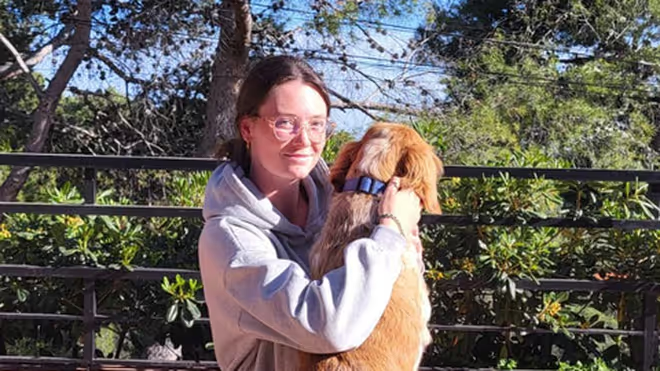
House sitting on platforms like TrustedHouseSitters, Nomador, and Aussie House Sitters is built on a specific principle: free pet care in exchange for free accommodation. No money changes hands. It is stated clearly on every platform, in every set of terms, on every listing page.
That means asking a sitter to contribute to utilities is not appropriate. Before Caro joined me on this trip, I was offered a solo five-month sit in Montanel, France where the homeowner demanded €500 per month for utilities one week before I was due to arrive. That is not a free exchange. That is a rental arrangement with free labour attached.
It contradicts the fundamental premise of house sitting and does not belong on any platform that advertises itself as a free exchange. Our utilities and hidden costs guide covers what is and isn't appropriate to expect a sitter to pay for.
On the positive side, some homeowners understand this dynamic completely and go beyond it in the best possible way. In Valencia, in Bochum, and at our current Portugal sit, homeowners left money for pet emergencies and extra pet food.
Not for us personally. For the pets and the home. That gesture communicates something powerful: I trust you, I understand you shouldn't have to spend your own money on my home, and I've thought about what you might need while I'm away. It is the opposite of asking for utility contributions, and it's a reflection of homeowners who truly understand what makes the exchange valuable for both sides.
If what you need goes beyond a fair free exchange, consider paying a professional sitter or exploring Rover. There's nothing wrong with that. But a free platform is not the place for paid expectations. The difference between house sitting and unpaid labour covers this in detail.
Treat Us Like Friends, Not Employees
The language a homeowner uses in messages and instructions sets the entire tone of the sit. "Could you please make sure to..." reads differently from "Can you do the usual evening walk and feed, the guide has the details." One sounds like a task assignment. The other sounds like a friend asking for a favour.
Sitters are not contractors. We don't file timesheets. We don't need to report back with a formal update every morning unless you've agreed on a specific communication rhythm that both parties are comfortable with. We are people who have voluntarily entered into an arrangement that benefits both sides, and the relationship works best when both parties treat it that way.
If you wouldn't use a certain phrase with a friend who was looking after your home, don't use it with a sitter. "Make sure you" is a directive for an employee. "Feel free to" is an invitation for a guest. The distinction feels small in writing and feels enormous when you're the person reading it at 8am in someone else's kitchen.
This also applies to the welcome guide. A guide written in a warm, informational tone lands very differently from one written as a list of instructions. Both contain the same information. One makes the sitter feel welcomed. The other makes them feel managed. Our article on what house sitters can and can't change clarifies the scope of a sitter's responsibilities, which can also help homeowners calibrate expectations.
Turn Off the Indoor Cameras
Outdoor cameras make sense. Monitoring the perimeter of your property, keeping an eye on deliveries, deterring theft, all completely reasonable and most sitters have no issue with them whatsoever.
Indoor cameras are different. A camera inside the home, even if it's normally used for pet monitoring, becomes a camera pointed at the sitter when someone is living there. That is an invasion of privacy, regardless of intent. Sitters are walking around in their pyjamas, cooking meals, having private conversations, and simply existing in a space they were invited to treat as their temporary home. An active indoor camera changes all of that.
If you have indoor cameras, disclose them in the listing, turn them off before the sitter arrives, and confirm in the welcome guide that they are off. If you need indoor pet monitoring for the sit to work, discuss it openly during the video call and agree on exactly which cameras are active, where they point, and what they're recording. Our hidden cameras and house sitting rights guide covers the full legal and ethical picture from both sides.
Leave Space for the Sitter to Actually Live
Two things that make a surprising difference to how a sitter feels on arrival: fridge space and cupboard space.
Sitters arrive with their own food, their own toiletries, and their own belongings. If the fridge is completely full and every cupboard is packed, the sitter is living out of bags and suitcases for two weeks. It doesn't feel like a temporary home. It feels like staying in someone else's space where you're only tolerated.
Before you leave, clear some fridge space. Even one or two shelves. Empty a cupboard or a few drawers where the sitter can put their things away properly. If there's food you don't mind them using, mention it in the welcome guide or label it. These are small gestures that take five minutes and completely change how the first day feels.
Some homeowners go further and leave food or a welcome gift for arriving sitters. The homeowners in Cortona left us a bowl of vegetable soup. It was one of the nicest arrivals we've had. You don't have to do that, but the thought behind it, preparing the space as if a guest is arriving, is the mindset that produces the best sits.
Clean the House Before You Leave
This one is simple and appears in almost every community forum discussion about difficult sits.
Sitters arrive after travelling. Often hours of driving, or a flight, or both. The first thing they do is try to make the space feel like somewhere they can live comfortably. If the home is clean, that process takes ten minutes of unpacking. If the home is not clean, it takes an hour of cleaning before unpacking even starts.
You are inviting someone into your home. Someone who is going to look after your pets, water your plants, collect your mail, and treat your space with care. Starting that arrangement with a clean home signals that you value the exchange and the person providing it. Starting it with a dirty floor signals the opposite, even if that was never the intention.
A basic clean before departure, floors swept, surfaces wiped, kitchen clear, bathroom presentable, costs thirty minutes and sets the tone for the entire sit. Our cleaning guide covers what sitters are expected to do during and at the end of a sit. The homeowner's side of that is simpler: just leave the home clean when you go.
Communicate Problems Directly, Not in the Review
If something frustrates you during a sit, say it. Send a message, make a call, have the conversation. Do not save it for the review.
A sitter who finds out from a two-star review that the homeowner was unhappy about something that was never raised during the sit has no opportunity to fix it, explain it, or learn from it. The review becomes the first and only communication about a problem that could have been resolved in a five-minute conversation.
Sitters are adults. Homeowners are adults. Uncomfortable conversations are uncomfortable for about five minutes. A bad review lasts permanently on a profile. If something is bothering you, whether it's how the pet is being cared for, how the house looks, or how the communication feels, raise it when it's happening, not after the sitter has left and the review window opens.
The TrustedHouseSitters blind review system ensures both parties submit before either can read the other's review, which prevents retaliatory responses. But even with that protection, a review that raises an issue for the first time is a missed opportunity for resolution. The conflict resolution guide covers how to escalate something that can't be resolved between the two parties directly.

How Reviews Actually Work From the Sitter's Side
After the Kefalonia sit, fleas, nine cats instead of one, a dirty kitchen, we left a five star review.
Not because everything was perfect, but because the overall experience was genuinely fun, the dog was wonderful, and we felt a fair review was more useful than a punitive one. What we did include was the factual detail: the cat numbers, the cleanliness on arrival, the fleas. Anyone reading the review before applying for that sit would have the information we wish we'd had.
We've done this at other sits too. A sit can have real issues and still earn five stars if the overall experience was positive and the issues are the kind that one sentence in a listing or welcome guide would fix. The review becomes the place where that sentence lives for the next person.
What this means for homeowners is that a five star review isn't necessarily a clean bill of health. Read the text, not just the stars. The detail in there is often the most useful, actionable feedback you'll receive, and it's usually offered with more generosity than the situation deserved. When a sitter mentions something specific in a positive review, that's information worth acting on. Update the listing. Update the guide. The next sitter benefits, and so does your next review. Our guide on what to do when a homeowner doesn't leave a review covers the other side of the review dynamic.
GPS Trackers and Monitoring Done Well
At our previous Portugal sit in Tavera, the dog had a GPS tracker connected to an app. The homeowner could see the dog's location on her phone, and so could we through the same app. The dog was free to run around the property and surrounding area, which suited its energy level and the layout of the land.
We received alerts when the dog went beyond certain boundaries and could call it back when needed. The homeowner never once messaged us about the dog's movements. Not to ask where it was, not to comment on the data from the app, not to check whether something she noticed on the screen was a concern. The tracker existed as a shared safety tool and stayed in that role throughout the sit.
This is pet tracking done properly. It gave the dog more freedom, gave us practical peace of mind, and gave the homeowner the ability to check whenever she wanted without turning that checking into a conversation. Alerts for genuine issues, silence otherwise.
Document the House on Arrival and Departure
This is practical advice that applies regardless of how well a sit goes. Take a video walkthrough of the entire house when you arrive, and take another one when you leave.
We do this on every sit, and the reason is not that we expect problems. It's that you can never predict how a dynamic might change over the course of a sit. Our Tavera experience is the example: a sit that started with an undisclosed dog behaviour issue and ended with a homeowner relationship that became strained despite our best efforts. In situations like that, having a documented record of how you found the home and how you left it protects both parties from misunderstandings.
This advice is for sitters and homeowners equally. A homeowner who films the state of the home before leaving has the same protection. If there's ever a dispute about whether something was damaged or moved, the video settles it without emotion. The property damage guide covers how to handle situations where something does go wrong, and documented evidence makes every part of that process smoother.

What Homeowners Get Right Most of the Time
This article has focused on the issues because those are the points with specific, actionable fixes. But the honest picture is that most of our 20 sits have been straightforward, comfortable, and genuinely wonderful.
The homeowners in Cortona left us a bowl of vegetable soup. The Manosque welcome guide had walking maps. The Bochum homeowner invited us back for a second sit when we returned from Australia, and that repeat relationship has become a genuine friendship. In Switzerland, we've gone back to visit homeowners for a barbecue long after the sit ended. The current Portugal homeowners sent us photos of the property before we arrived, communicated at a natural pace, and left emergency money for the pets without being asked.
Arriving to a home where money has been left for pet food and vet emergencies, money that isn't for us personally but that the homeowner trusted us to manage, communicates something that no welcome guide sentence can fully capture. It says: I understand the value of what a good house sitter brings, and I don't expect you to spend your own money looking after my home.
That understanding, from both sides, is what makes house sitting work at its best. It's what makes the pets happier than they'd be in boarding. It's what makes the homeowner genuinely relax on holiday. It's what makes the sitter treat the home with the care they'd give their own. And it costs nothing beyond honesty, preparation, and the willingness to treat the other person as a friend rather than a transaction.
| Issue | What Sitters Experience | What Would Fix It |
|---|---|---|
| Listing doesn't match reality | More pets, more mess, more responsibility than described | Write the listing to match what's actually true on day one |
| Pre-existing issues not disclosed | Fleas, injuries, behavioural problems discovered on arrival | One sentence in the welcome guide about anything currently going on |
| Welcome guide late or missing | Sitter asking basic questions that should already be answered | Send the guide as soon as the sitter is confirmed |
| House not cleaned before handover | Sitter spends first hours cleaning instead of settling in | A basic clean before you leave: 30 minutes, huge impact |
| Homeowner returns early | Sitter's plans disrupted, shared space creates tension | Communicate immediately, stick to dates where possible |
| Sharing the space during a sit | Sitter can't fully relax, feels like walking on eggshells | If plans change, discuss openly and offer the sitter an easy exit |
| Utility contributions requested | Contradicts the equal exchange principle of every platform | Do not ask. If you need income from the arrangement, consider Airbnb |
| Employee tone in messages | Sitter feels managed rather than welcomed | Use language you'd use with a friend, not an employee |
| Indoor cameras left on | Invasion of privacy in a space the sitter was invited to live in | Disclose all cameras, turn off indoor ones, confirm in the welcome guide |
| No fridge or cupboard space | Sitter lives out of bags for two weeks | Clear a shelf and a cupboard before you leave |
| Frustrations saved for the review | Sitter can't address something they didn't know was a problem | Communicate during the sit, not after it |
| Tracker used for surveillance | Sitter feels monitored rather than supported | Set alerts for real problems only, stay silent otherwise |
Conclusion
The sits that run themselves and the sits that generate friction are almost always separated by one thing: information. Not personality, not effort, not how nice someone is. Information. Was the listing accurate? Was the welcome guide thorough and early? Was the current state of the home and pet communicated honestly? Were the cameras off? Was there space in the fridge?
Every homeowner can get this right. Most already do. For the ones reading this who want to make sure they're in that group: write honestly, prepare thoroughly, leave the home clean, and treat the person arriving at your door the way you'd treat a friend who's doing you a significant favour. Because that is exactly what they are.
Caro and I have completed 20 house sits across 12 countries, driven 19,000km in Australia and 24,000km in our 1998 VW T4, and saved over $26,500 in accommodation costs over three years of house sitting. If you have questions about any of this, send us a message on Instagram, we read every DM.

Frequently Asked Questions
What do house sitters wish homeowners would disclose before arrival?
Anything that's currently an issue, no matter how minor it seems. Fleas, an injured pet, a temperamental appliance, ongoing maintenance problems. If it's true while you're still in the house, it'll still be true after you leave. A single sentence of disclosure changes the entire experience of arrival, even if it doesn't change the situation itself.
When should I send the welcome guide to my house sitter?
As soon as you have confirmed the sitter, not the night before you leave. A guide written weeks in advance tends to include the small, important details that a rushed guide misses. The best guide we ever received, at our Manosque sit, had walking maps, bin schedules, and more detail than we strictly needed. We never sent a single question during that entire sit.
Is it okay to return home early during a house sit?
It happens, and most sitters understand that life is unpredictable. The key is communication. Tell the sitter as soon as you know, not the day before. And recognise that sharing the space, even briefly, changes the dynamic of the sit in ways that are uncomfortable for the person who planned their time around having the home to themselves.
Should I ask my house sitter to contribute to utilities?
No. House sitting on all major platforms is an equal exchange: free pet care for free accommodation. Asking for utility contributions contradicts that principle. If the cost of hosting a sitter is a concern, the arrangement may not be the right fit, and a paid service like Rover or Airbnb may be more appropriate.
Should I turn off indoor cameras before a house sitter arrives?
Yes. Outdoor cameras are reasonable and most sitters have no issue with them. Indoor cameras in spaces where the sitter will be living are an invasion of privacy. Disclose all cameras in the listing, turn off indoor ones before the sitter arrives, and confirm they are off in the welcome guide.
Why might a sitter give five stars even if something went wrong?
Because the overall experience can still be genuinely positive, and most sitters prefer offering constructive information rather than a punitive score. The factual detail in a five star review is often the most useful feedback a homeowner will receive. Read the text, not just the stars, and treat specific mentions of issues as actionable information for updating your listing.
Should I leave money for the house sitter?
Not as payment. But leaving money specifically for pet emergencies, extra food, or unexpected costs related to the home shows your sitter that you understand the exchange and that you don't expect them to spend their own money looking after your property. It is one of the most appreciated gestures in the house sitting community.


Responses
What are your thoughts on this post?