

Home > Blog > What House Sitters Can and Can't Change
Quick Facts
| Category | Rule |
|---|---|
| Diet and food portions | Follow exactly — never change without asking |
| Medication | Follow exactly — no exceptions |
| Vet decisions | Never the sitter's call — always contact the owner first |
| Off-limits areas | Respect them — they exist for a reason |
| Walk duration | Use judgement — if the dog wants more, give more |
| Sleep arrangements | Follow what is asked, but respond to what the animal actually does |
| Treats beyond the list | Ask first, or skip — an upset stomach is not worth it |
| Your interaction style | Completely yours to set — this is where you bring real value |
Treat the welcome guide as a floor, not a ceiling. Never change diet, medication or off-limits rules without asking first. Walk length, bedtime arrangements and how you interact with the animal are yours to judge: read the animal, not just the schedule.
If you are interested in getting into house sitting, our book Travel More for Less puts the whole process in one place: clear, step by step guidance from your first questions to your first confirmed sit, and the reviews that open the door to the next one.
This article maps the spectrum from things you should never change without asking, to things where your own judgement is not just acceptable but truly better for the animal.
The Spectrum: Three Tiers
Not all instructions carry the same weight. Some exist because the animal's health depends on exact compliance. Some are loose frameworks that were never meant to be followed rigidly. And some parts of the sit the welcome guide does not even cover, because the homeowner never thought to address them.
The clearest way to think about it: how much does deviating from the instruction affect the animal's health or the homeowner's trust? Diet and medication affect health directly. Walk length does not. Your interaction style with the animal does not appear in any welcome guide at all.

Tier One: Never Change Without Asking
Diet and Feeding Instructions
Follow them exactly. Every time, no exceptions, no matter what you think of them personally.
We have been given instructions ranging from opening a bag of raw meat, to mixing three specific types of wet food. We have had cats where the feeding regime was truly elaborate: refrigerated food, left to warm, weighed, combined in a specific order. It is easy to think "surely the cat would prefer something simpler." But the homeowner has almost certainly spent time, money, and advice from a vet to arrive at whatever is in that welcome guide. Our job is to maintain it, not to improve on it.
There is also a practical reason. We are typically at a sit for two weeks. That is not long enough to safely transition an animal to a new diet. Changing what a cat or dog eats, even briefly, can cause digestive upset, changes in stool, reduced appetite, and stress for an animal that is already adjusting to new people. The homeowner comes back to a sick animal and no clear explanation for why. That is not a situation anyone wants.
One lesson we learned early came from Switzerland. We brought high-quality dried meat treats for a dog, thinking it would be a nice gesture. When we arrived, the kitchen was stocked with very specific treats already, and the dog was on a strict raw meat diet. Any extra protein from us on top of that could have caused a stomach problem. From that sit onwards, Caro and I stopped bringing gifts for the pets entirely. A bottle of wine for the homeowner is always the right call. A treat for the animal is not ours to decide.
Medication
If a pet is on medication, the timing and dose in the welcome guide are not suggestions. Miss a dose, give it at the wrong time, or administer it incorrectly and the consequences can be serious. If the instructions are unclear, contact the homeowner immediately before the sit starts. Not on the day you cannot work out the dosage.
Our pet emergency guide covers what to do if you cannot reach the owner and something goes wrong. For medication, that guide is your backstop. The welcome guide is your primary source. Both matter.
Off-Limits Areas
If a room is off-limits, keep it off-limits. These rules almost always exist for a reason that the homeowner may not have fully explained. A bedroom with fragile furniture, a study with items they do not want disturbed, a garden area with a damaged fence the dog could get through. Respecting off-limits areas is part of the trust that makes the exchange work, and violating them is one of the fastest ways to damage your review and your relationship with the homeowner. Our guide to avoiding common house sitting mistakes covers this alongside other boundary questions.
Tier Two: Use Judgement With Common Sense
Walk Duration and Intensity
The welcome guide might say "20 minutes once a day." But if you are out with a dog who is clearly energised, wanting to keep going, and showing no signs of fatigue, giving them an extra ten minutes is not a violation of the instructions. It is responsive care.
In Manosque, we were told the dog needed a walk every few days for around 20 minutes. We ended up walking her daily, often for 30 to 50 minutes. She was clearly happy with this, and the homeowners were delighted when they came back. There is a difference between ignoring instructions and truly reading the animal in front of you. If a dog's energy and behaviour tells you something, respond to it.
The reverse also applies. If a dog is older, recovering from an injury, or showing signs of joint stiffness, cutting a long walk short is the right call regardless of what the guide says. You are the one there. You can see what the welcome guide cannot anticipate.
Separation Anxiety You Were Not Warned About
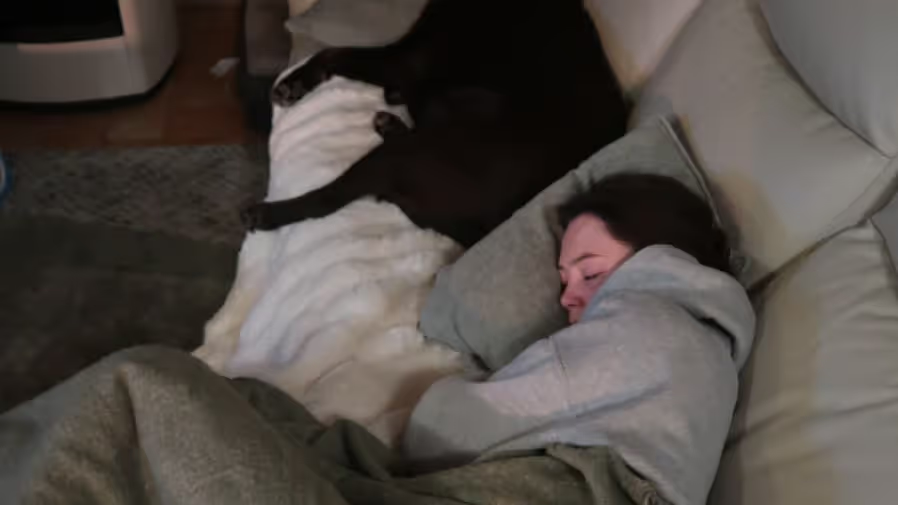
In Manosque, the homeowners mentioned during the handover that the dog was very attached to people. We interpreted this as friendly. Over the first few days we noticed she would get up in the middle of the night, stare into the distance for a few minutes, then pace. We thought it was a quirk. When we left for the shops one day and came back after an hour, we heard her yelping from inside the house. We also noticed her shivering on the couch next to us when it was warm. That was the moment we understood what was actually happening.
We did not contact the homeowners to raise it formally. We sent a photo of the dog following us around with the caption "we have a shadow." They replied: "hope it's not too much of an issue." For us, it was not. We were working from home most of the time, so she had someone around almost constantly. The situation worked out naturally without any drama.
The lesson is that separation anxiety often only becomes visible under the conditions of the sit. The homeowner may not have flagged it because they are never away long enough to see it. When you encounter it, the right response is to adjust your routine where you can, communicate lightly with the homeowner so they are aware, and not catastrophise. It is a behaviour pattern, not an emergency.
Bedtime and Sleep Arrangements
If the welcome guide says the dog sleeps in the kitchen but by night three the dog has quietly adopted a spot at the end of your bed, settled and calm, use your judgement. If the animal is comfortable and not causing any disruption, the arrangement works. If the homeowner specified the kitchen for a reason (crate training, or the dog chews furniture when stressed) that is different, and you should stick to the instruction.
Read the animal and read the instruction together. Most welcome guides are written from the homeowner's normal routine, which may not perfectly account for how an animal behaves when their person is gone.

Tier Three: Yours to Set Completely
How You Interact With the Animal
The welcome guide does not tell you how to greet a cat in the morning, which games you play with a dog in the garden, or how much time you spend sitting quietly with an anxious animal. This entire dimension of the sit is yours.
In Lullin, France, we looked after two outdoor cats named Piton and Muscaton for a month. The welcome guide was practical and efficient: refill food in the morning, clean the litter box when used, give them attention from time to time. The cats had their own rhythm entirely independent of us. Some days they wanted attention; others they disappeared for hours. We responded to them, and the sit was effortless because of it. The welcome guide set the minimum. What we actually gave them was ours to decide.
This is where experienced sitters bring real value. Learning an animal's communication style, building trust over the first few days, noticing when they are off-colour before it becomes a problem. None of this is in any welcome guide. It is the quiet, unremarkable work of actually caring about the animal in front of you.
When and How You Give Attention
Some animals want contact constantly. Others are independent and prefer to approach on their own terms. You will learn which you are dealing with within a day or two. Following the animal's lead on this is not deviating from instructions. It is responsive care.
The one constraint: make sure the animal is still getting the minimum the guide specifies. If the welcome guide says two play sessions a day and the cat has shown no interest, try different approaches before concluding the cat just does not want it. Some animals need warming up.
The Honest Personal View on Pet Diet
We have noticed a clear pattern across sits. Dogs on raw meat diets have visibly healthier coats, more consistent energy, and a wet, shiny nose that is noticeably different from dogs on kibble. This is not subtle. An animal nutritionist confirmed to us that raw food is truly better for most dogs and cats. Kibble is dominant because it is convenient, storable, and affordable. Not because it is the best option nutritionally.
But we are at a sit for two weeks. It is not our place to redirect a feeding regime the homeowner has settled on after their own research, vet advice, and budget considerations. If a homeowner is curious and asks our opinion, we will share it. Otherwise, the diet is theirs to set and ours to maintain. Suggesting changes to a pet's diet unsolicited is overstepping, even when we believe the change would help.
A Summary Table
| Situation | Our approach |
|---|---|
| Food type or brand specified | Follow exactly |
| Portion amounts given | Follow exactly |
| Medication schedule | Follow exactly — clarify anything unclear before the sit |
| Off-limits rooms or areas | Respect always |
| Walk duration seems short for a lively dog | Extend it — responsive care |
| Undisclosed separation anxiety | Adapt routine, communicate lightly with homeowner |
| Sleep location not working for the animal | Use judgement, adjust if no clear reason not to |
| Treats beyond what is listed | Ask first or skip entirely |
| How much time you spend with the animal | Your call entirely |
| Your play style and interaction approach | Your call entirely |
| Sharing opinions on diet or training | Only if the homeowner asks |
Conclusion
The instructions in a welcome guide are the floor, not the ceiling. Follow the ones that affect the animal's health and the homeowner's trust completely. Use your own judgement where the situation calls for it: when a dog's behaviour tells you something the instructions did not anticipate, or when a cat's actual preferences differ from the routine on paper. And bring your full self to the parts of the sit that no guide covers: how you connect with the animal, how you read their mood, and how you respond to what they actually need.
The sitters who do this consistently are the ones who get five-star reviews, return invitations, and animals who are visibly settled when the homeowner comes home.
Join TrustedHouseSitters with 25% off and read our guide to what to ask a homeowner before the sit. Getting the welcome guide right before you arrive is what makes the decisions on the ground easier.
DM us @housesittersguide on Instagram with questions about a specific situation. We answer everyone.

Frequently Asked Questions
Can a house sitter change a pet's diet?
No. Follow the feeding instructions exactly. The homeowner has set that diet for reasons that may include vet advice, known allergies, or digestive sensitivities. Changing a pet's food, even briefly, can cause digestive upset and discomfort. If the instructions seem unclear or you have concerns, contact the homeowner before the sit starts, not during it.
What should I do if a pet has separation anxiety I was not warned about?
Adjust your routine where you can and communicate lightly with the homeowner. Separation anxiety is often invisible until the homeowner is gone. You may be the first person to observe it clearly. You do not need to raise it as a crisis. A casual message with context is usually enough. If it is severe and affecting your ability to leave the property at all, that is worth a more direct conversation. Our day trip guide covers how to manage time away when a pet has high attachment.
Is it okay to give treats not mentioned in the welcome guide?
Ask first, or skip them entirely. Many pets are on specific diets where any extra food causes digestive issues. Even well-intentioned high-quality treats can upset the balance of a carefully managed feeding plan. If you want to do something kind for the animal, extra play time and attention costs nothing and carries no risk.
Can I extend a dog's walk beyond what the instructions say?
Yes, within reason, if the dog clearly has more energy and is comfortable. Responsive care means reading the animal in front of you, not just executing a schedule. If a dog is elderly, recovering from injury, or has specific exercise restrictions mentioned in the guide, stick to what is specified. For healthy, energetic dogs, a longer walk is almost always welcome.


Responses
What are your thoughts on this post?