

Home > Blog > Weather Responsibilities During a House Sit
Quick Facts
| Most common weather task | Garden watering — daily in summer, often the most time-intensive responsibility |
| Most overlooked in welcome guides | Snow clearance laws and storm shutter operation |
| Our most dramatic weather event | A small cyclone in Kefalonia — close the shutters, done |
| Portugal watering time | 30-50 minutes per day before setting up automatic irrigation |
| Best solution for garden watering | Automatic irrigation system — reliable, time-saving, and better for the plants |
| Common sense caveat | What seems obvious to one person is not obvious to another — detail everything |
| When in doubt | Ask in the pre-sit video call rather than guessing on arrival |
Weather duties are location-specific: daily watering in a Portuguese summer, closing storm shutters before a Kefalonia cyclone, and snow clearance in Switzerland, Germany and Austria, where the occupant is legally liable, often by 7am. We spent 30 to 50 minutes a day watering in Portugal before fitting automatic irrigation.
Weather responsibilities are among the most location-specific and season-specific aspects of any house sit. A summer sit in southern Portugal involves daily garden watering. A winter sit in Switzerland may involve snow clearance laws. A coastal sit in Greece could see a cyclone roll through in January. A sit in a French farmhouse might require managing storm shutters you have never encountered before.
If you are interested in getting into house sitting, our book Travel More for Less puts the whole process in one place: clear, step by step guidance from your first questions to your first confirmed sit, and the reviews that open the door to the next one.
Use our 25% discount when joining. Our welcome guide article and what to ask a homeowner guide cover pre-sit preparation in full.
Garden Watering: The Most Common Weather Responsibility
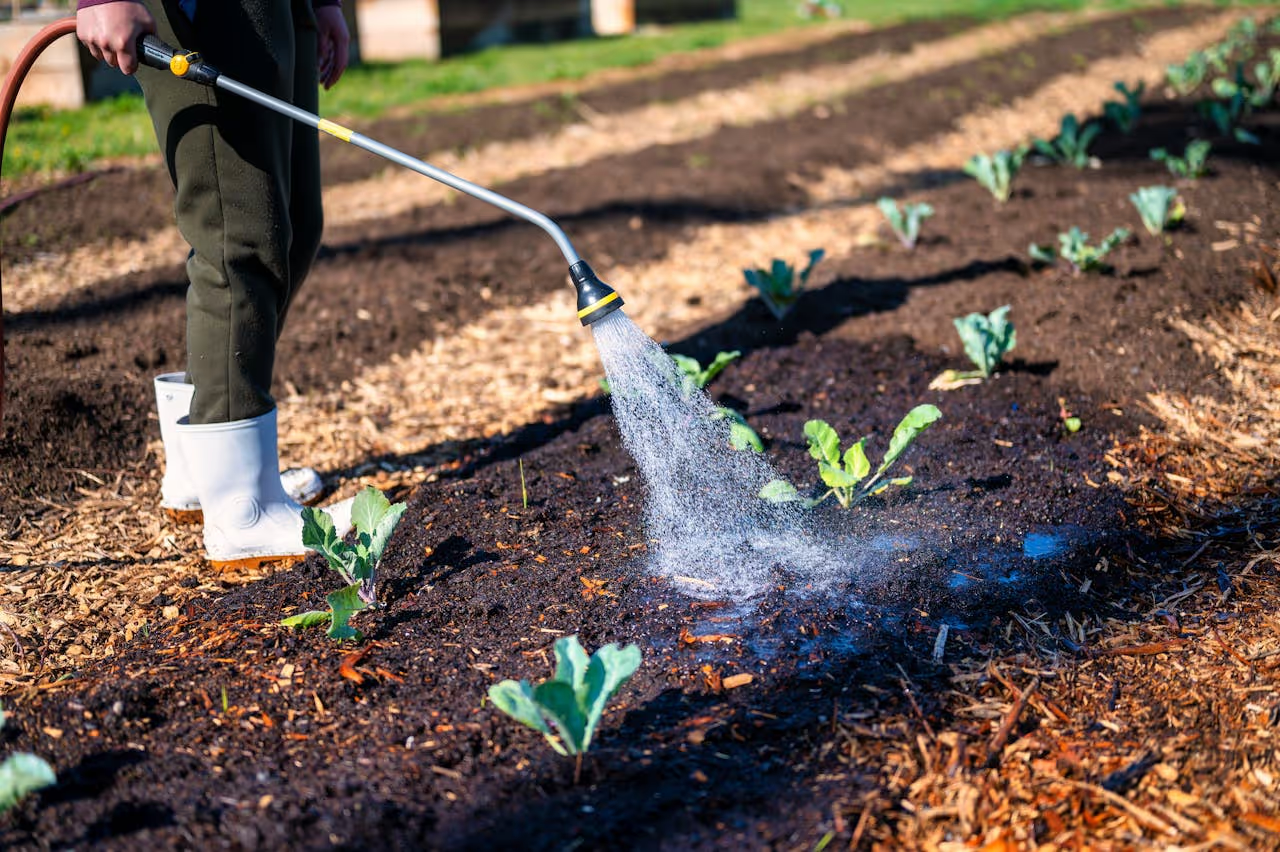
Garden watering is the weather-related responsibility most sitters will encounter, particularly on longer summer sits. On our current six-month sit in Portugal, the garden is a meaningful daily commitment. We were spending 30 to 50 minutes per day watering before setting up automatic irrigation.
The automatic irrigation system is the best solution available for any homeowner who plans to be away during growing season. Once configured, it runs on a timer at set intervals without any sitter involvement. The plants receive consistent water. The sitter's morning is not structured around the garden. The homeowner can travel with confidence that the garden will not suffer if the sitter has a busy day.
We set up the automatic watering early in the Portugal sit and it has made a significant difference to the daily routine. The timer runs in the morning and again in the afternoon. The two ideal windows for watering in a hot climate.
Why timing matters in heat. Watering at the hottest part of the day is counterproductive for two reasons. Water droplets on leaves can intensify the sun's effect and contribute to leaf burn, and in extreme heat the water evaporates too quickly to reach the root system effectively. Morning and late afternoon watering allows the soil to absorb moisture before the heat peaks, and the plant has access to water through the warmest hours. I learned this working as a city landscaper for the council in Australia, where managing plants through extreme heat was a daily operational consideration. If you notice plants wilting more than usual during a heatwave, increase the watering frequency. Wilting during the hottest part of the day is normal, but wilting in the morning is a sign of stress that warrants extra water.
For sitters managing a garden without automatic irrigation, confirm the watering schedule in the pre-sit video call. Which areas, how much, how often, and whether any plants have specific needs. A homeowner who has spent years learning their garden's preferences will have that knowledge in their head. Without the video call or a detailed welcome guide, it stays there.
Storm Responsibilities: Shutters, Cushions, and Outdoor Furniture
Most storm-related tasks on a house sit are minor and take very little time. The key is knowing they exist before the storm arrives rather than during it.
Storm shutters. Many properties across southern Europe, particularly in France, Spain, Portugal, Italy, and Greece, have wooden or metal shutters on the windows. These serve both sun management and storm protection functions. On our Kefalonia sit, a small cyclone moved through the island. The relevant task was to close the shutters before it arrived. Which prevented them from banging throughout the night and potentially causing damage. This took five minutes.
The same principle applies to any property with operable shutters in a storm-prone region. If the welcome guide does not specify the shutter protocol, ask in the walk through: when should the shutters be closed, how do they latch, and is there a specific order or set of windows where it matters most?
Outdoor cushions and furniture. This is one of the most common weather responsibilities and one that does come up in listings and welcome guides regularly. Most homeowners ask sitters to bring cushions inside or into a storage box if rain is forecast. This is a two-minute task and protects cushions that can cost hundreds of pounds to replace if saturated and left to mould. If a homeowner has outdoor furniture with cushions and does not address this in the welcome guide, it is worth asking proactively. If you are on a sit and significant rain is forecast and no instruction exists, bringing the cushions in is the common sense choice. Our what house sitters can and cannot change guide covers where sitter initiative is appropriate.
Securing outdoor furniture and equipment. In high winds, lightweight garden furniture, parasols, and decorative items can become projectiles. If a storm warning is issued for the area during a sit and the homeowner has outdoor furniture that could blow, securing it. Moving chairs against the wall, taking down parasol canopies, bringing in loose items. Is the kind of initiative that prevents expensive damage. This falls under reasonable property care. If in doubt, message the homeowner for guidance.
Snow and Winter Responsibilities
Snow-related responsibilities vary dramatically by location. In some countries they carry legal weight that sitters should know about.
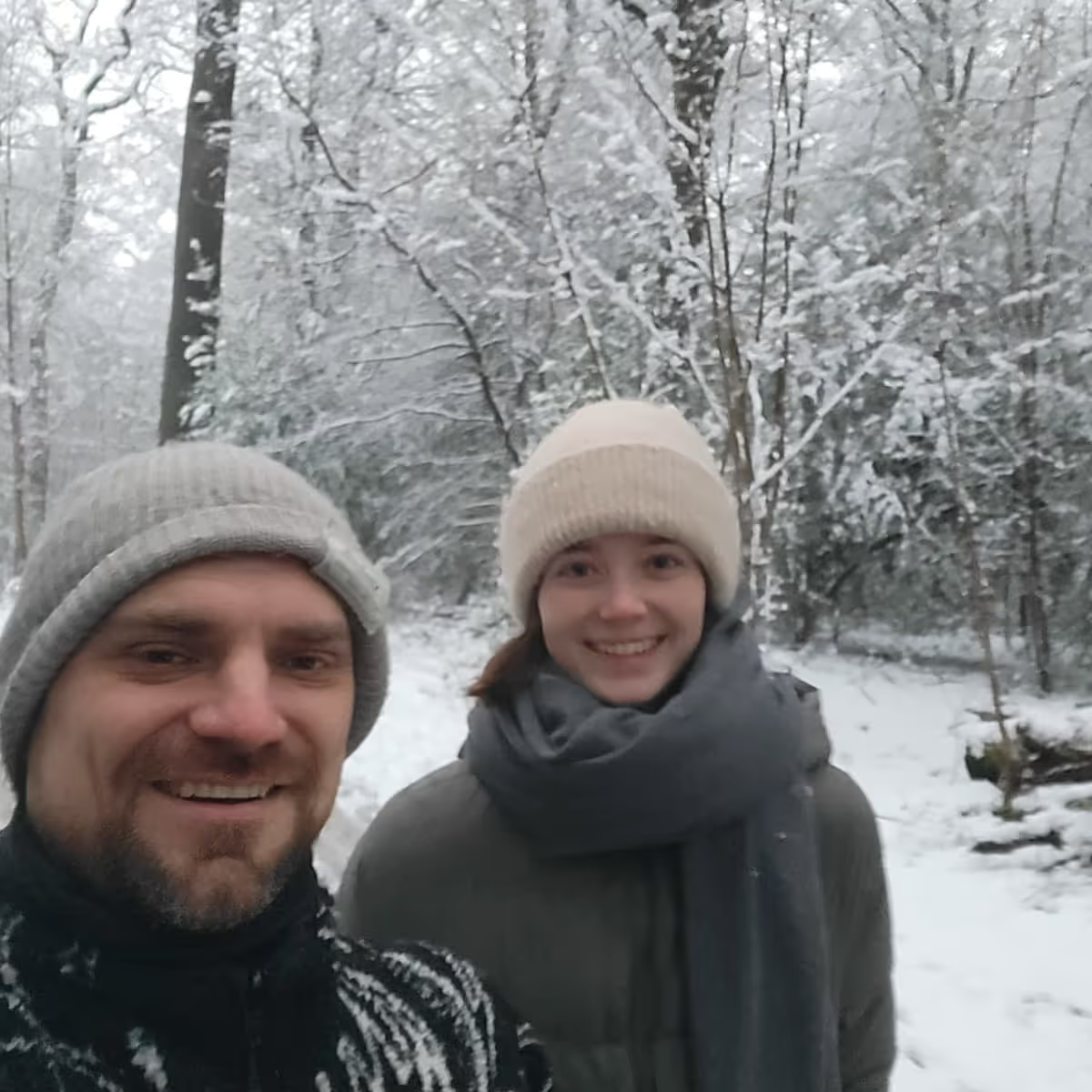
Snow clearance laws. In Switzerland, Germany, Austria, and several other European countries, the occupant of a property is legally responsible for clearing snow and ice from the pavement in front of the home before a specified time in the morning. Often 7am. In Switzerland, the welcome guide for one of our sits specifically stated this obligation. The reasoning is clear: if someone trips on ice outside a property and the occupant has not fulfilled their legal clearance duty, liability can attach to the occupant.
A sitter in residence during a snowy period is, for the purposes of this legal obligation, the occupant. This is exactly the kind of country-specific detail that belongs prominently in the welcome guide. If you are sitting a property in a northern European country during winter, ask explicitly about snow clearance responsibilities in the video call.
Managing a pellet stove or solid fuel heating. In Cortona, Italy, the house was heated by a pellet chimney. An automatic pellet-burning stove that kept the property warm without manual intervention. Our responsibility was to refill the pellet hopper every three to four days with a 15kg bag of pellets, and to clean out any ash buildup. The task took about ten minutes and the system ran smoothly throughout the sit.
Pellet stoves, log burners, and other solid fuel systems are common in rural European properties, particularly in colder months. If a sit includes one, the welcome guide should specify the refill schedule, where the fuel is stored, the ash removal process, and what to do if the system gives an error. Ask during the video call if any of this is missing. A heating system that runs out of fuel during a cold week is avoidable with the right preparation.
Frozen pipes. In extreme cold, particularly in older properties or in regions that do not typically experience hard frosts, pipes can freeze and potentially burst. If a sit is in a cold region and the homeowner has any older plumbing, ask whether the property has frost protection measures and what to do if you suspect a pipe has frozen. Knowing where the water stopcock is. The valve that turns off the water supply to the property. Is relevant in any property during cold weather.
Extreme Heat and Animal Welfare
High temperatures affect animals significantly and managing heat during a sit requires attention to each animal's needs.
Cats generally self-manage in heat. They find the coolest spot in the house and stay there. Our Portugal cat spends the hottest part of the day on the couch inside, away from direct sun. Ensure the property has accessible cool indoor areas and that water is consistently available and refreshed frequently. In extreme heat, cats drink more. An empty water bowl in a heatwave is a health risk.
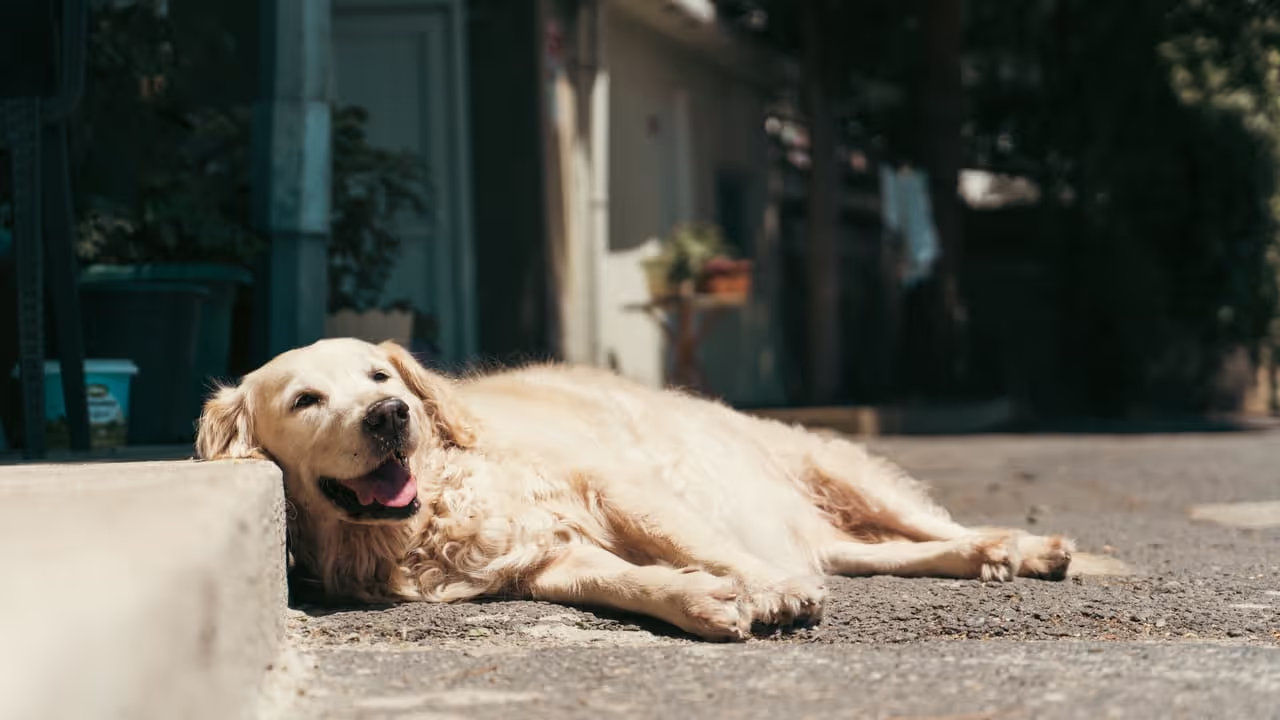
Dogs cannot regulate their temperature as efficiently as humans. They need access to shade outdoors, fresh water at all times, and should not be walked during the hottest hours of the day. Walks during peak summer heat should be moved to early morning and evening. Pavement temperature in full sun can burn paw pads. If you cannot hold your hand on the pavement for seven seconds, it is too hot to walk a dog on it. Our separation anxiety dog guide and reactive dog guide cover other sit-specific dog management considerations.
Chickens need constant access to water in heat. More than in temperate conditions. Shade is essential. Our Portugal chickens have tree cover and a well-shaded area of the garden available throughout the day. A chicken showing laboured breathing with its beak open, called panting, is showing heat stress. Additional water, shade, and if necessary, dampening the ground around them helps.
Gardens in heat. Plants wilt in the afternoon during a heatwave even with adequate watering. This is normal water conservation behaviour. The indicator that additional water is needed is wilting in the morning, before temperatures rise. If morning wilting is persistent, water more frequently or for longer in the early sessions.
The Common Sense Problem
Common sense is not universal. This is one of the most important practical lessons I encountered working on a council safety committee in Australia, where I spent months writing safe operating procedures for tasks that seemed intuitively obvious. Including how to use a shovel correctly. Those documents were comprehensive to the point of seeming absurd, but the point was not the shovel. The point was that every step written down was one fewer way something could go wrong that the council could be held responsible for.
The same principle applies to house sitting welcome guides. What seems obvious to a homeowner who has lived in the property through multiple storms and summers is not obvious to a sitter arriving for the first time. A sentence about bringing cushions in before rain costs the homeowner thirty seconds to write. Without it, a sitter from a dry climate who has never thought about outdoor cushion management may leave them outside through a three-day downpour.
The more detailed the welcome guide, the less likely something weather-related will go wrong. A section covering seasonal expectations. Garden watering schedule, storm shutter operation, snow clearance responsibilities if applicable, heating system management. Gives sitters a clear picture of what to expect and the opportunity to ask questions or cancel if the responsibilities are beyond what they are comfortable with. A sitter who knows what they are getting into is always better than one who discovers it on arrival.
For homeowners looking to minimise weather-related sit complications, the most practical investment is an automatic irrigation system. It takes the most time-intensive summer weather task off the sitter's plate entirely, and the plants receive better care than any manual watering schedule is likely to provide. Our guide on what homeowners should include in listings covers how to set accurate expectations from the outset.
Join TrustedHouseSitters with 25% off and DM us @housesittersguide on Instagram. We answer everyone.

Frequently Asked Questions
What weather responsibilities should I expect during a house sit?
It depends entirely on the season and location, which is why the welcome guide and pre-sit video call matter. Common responsibilities include daily garden watering in summer, managing storm shutters before bad weather, bringing outdoor cushions inside when rain is forecast, and in winter locations, potentially snow clearance from the path in front of the property. Confirm all weather-related tasks in the pre-sit video call, especially for sits during seasonal extremes.
Am I legally responsible for clearing snow during a house sit?
In some European countries, yes. The occupant of a property has a legal obligation to clear snow and ice from the pavement by a set time each morning. This applies in Switzerland, Germany, Austria, and several other countries. If you are sitting a property during winter in any of these regions, ask the homeowner about this responsibility explicitly. It should be in the welcome guide. Not knowing about it does not remove the obligation.
How should I manage garden watering during a hot weather house sit?
Water in the morning and late afternoon, not during the hottest part of the day. Watering at peak heat causes faster evaporation and can contribute to leaf burn through water droplets on foliage. If plants are wilting in the morning before temperatures rise, they need more water. Afternoon wilting in extreme heat is normal and does not necessarily indicate insufficient watering. If the property has automatic irrigation, set it up early in the sit to ensure consistency.
What should I do if a storm is forecast during a house sit and I have no instructions?
Use common sense for obvious tasks and message the homeowner for anything uncertain. Bringing outdoor cushions inside, closing storm shutters, and securing lightweight garden furniture are all reasonable protective actions a sitter can take without specific instruction. For anything involving significant effort, uncertain operation, or potential for further damage if done incorrectly, contact the homeowner for guidance before acting.
How do I manage animals during extreme heat on a house sit?
Ensure constant access to fresh water, shade, and cool indoor spaces. For dogs, move walks to early morning and evening and check pavement temperature before walking. If you cannot hold your hand on the surface for seven seconds, it is too hot for paw pads. Cats self-regulate but need accessible cool indoor areas and frequently refreshed water. Chickens need shade and increased water supply. Monitor for signs of heat stress in all animals: panting with an open beak, lethargy, and reluctance to move are warning signals.


Responses
What are your thoughts on this post?