

Home > Blog > Walking a Dog Safely in an Unfamiliar Area
Quick Facts
| Quick Facts | |
|---|---|
| Leash policy | On leash for the first two weeks minimum. For sits under two weeks, the dog stays on the leash the entire sit. |
| Best source for routes | The welcome guide or a walkthrough with the homeowner before they leave |
| Gold standard | Manosque: the welcome guide included a detailed map of recommended walks |
| What to carry | Phone, poop bags, treats. Water for walks over 45 minutes. |
| Biggest risk | Other dogs, not your own. You cannot control what approaches you. |
| Our experience | Walked dogs across 12 countries, one incident: a French Bulldog charged and bit a Great Dane we were sitting |
In Lane Cove, Sydney, I was walking a Great Dane through a local park on a regular morning walk. From across the park, a French Bulldog broke away from its walker and charged directly at us. By the time I realised what was happening, the dog was already close. I grabbed the Great Dane and pulled it up, but the French Bulldog bit it on the leg and drew blood. It happened in seconds. I took the walker's details, photographed the wound, and sent everything to the homeowner immediately. The homeowner was grateful for the transparency and the documentation. The walker, it turned out, was also a house sitter.
That incident taught me something I carry into every sit: the biggest risk on a dog walk is not the dog you are holding. It is the one you cannot see yet. In an unfamiliar area, with a dog you have only just met, you do not know the local stray population, the off-leash culture, the traffic patterns, or which corners have aggressive dogs behind fences. The first walk of every sit is the one where you know the least and the stakes are highest.
If you are interested in getting into house sitting, our book Travel More for Less puts the whole process in one place: clear, step by step guidance from your first questions to your first confirmed sit, and the reviews that open the door to the next one.
Get the Route Before You Go Out
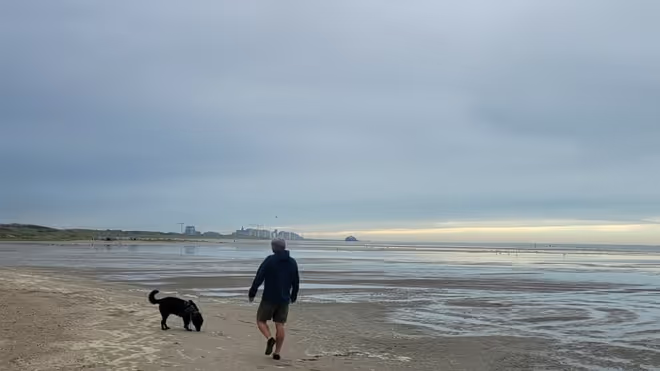
The single most useful thing a homeowner can do for a dog-sitting sitter is show them where to walk before they leave.
Some homeowners walk the route with you on the first day, pointing out where the dog usually goes, where it is let off the leash, where it tends to pull, and which houses have barking dogs behind fences. This is the best version. You see the route in person, the dog is with you, and the homeowner can point out things a written description would miss.
Other homeowners describe the route verbally during the handover. This works but details can get lost, especially if you are also absorbing the feeding schedule, the house alarm code, and the location of the spare keys at the same time. If the route is described verbally, write it down that evening before you forget the specifics.
The gold standard, from our experience, was in Manosque. The welcome guide included a detailed drawn map of the recommended walks, with distances, landmarks, and notes about where to be careful. I used that map on every single walk during the sit. It removed all the guesswork and let me focus on the dog rather than figuring out where I was going.
If the homeowner does not offer route information and the welcome guide does not include it, ask. A simple message during the video call or at the handover: "Could you show me or describe the routes you usually take for walks?" gives you the information you need without anyone having to think about it too hard.
The First Walk: Keep It Short and Controlled
The first walk with a dog at a new sit is not the walk where you explore the area or test the dog's limits. It is the walk where you learn how the dog behaves on a leash with you specifically, in this specific environment.
Until I know a dog, I always keep it on a leash and close to me. Not pulling-distance close, but close enough that if it decides to lunge at another dog, a cyclist, a cat, or anything else, I have physical control before the situation develops. This takes no time to do and saves an enormous amount of potential problems. The dog stays safe, it starts no issue with other dogs, and I do not have to contact the homeowner with bad news on day one.
Even if the homeowner says the dog is fine off-leash, I keep it on the leash for the first two weeks. The homeowner's relationship with the dog is different from mine. The dog responds to them differently. It may have perfect recall with its owner and completely ignore a stranger who has been in its life for a few days. I am not willing to test that assumption until I have spent enough time with the dog to genuinely know how it responds to me.
For sits under two weeks, the dog stays on the leash for the entire sit. Two weeks is simply not enough time to know a dog well enough to trust it off-leash in an area I am still learning myself. The dog does not care whether it is on or off the leash. It cares about getting outside, sniffing, exploring, and doing the things dogs need to do. All of that happens perfectly well on a leash. A leash does not limit the dog's experience of the walk. It limits the risk of something going wrong that did not need to happen.
On longer sits, once I have spent at least two weeks with the dog and I have a genuine understanding of its behaviour, its triggers, its recall, and its comfort level with me, I will consider letting it off in areas the homeowner has specifically recommended. If anything still feels uncertain at that point, the leash stays on. There is no rush and no downside to being cautious.
Handling Other Dogs
The Lane Cove incident is the reason I take other dogs seriously on every walk.
You cannot control what approaches you. A dog behind a fence that starts barking can trigger a reaction in the dog you are walking. An off-leash dog in a park can charge without warning. A dog tied up outside a shop can snap as you walk past. None of these are situations you created, but all of them are situations you need to manage, with a dog that you have known for less than a week.
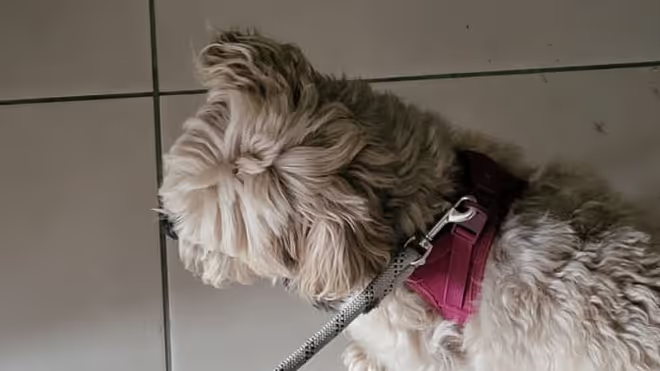
When I see another dog approaching, or when I see a dog that is off-leash at a distance, I shorten the leash and bring the dog closer to me. This is not about fear. It is about control. A short leash gives me the ability to redirect the dog, step between it and an approaching animal, or change direction quickly. A long leash, or worse a retractable leash, gives the dog room to lunge before I can react.
From what I have learned across our sits and from researching dog behaviour for this article, these are the signals worth knowing. We are not animal behaviourists, and a dog can shift between these states quickly, so when in doubt, shorten the leash and move away.
| Body Language | What the Dog Is Likely Feeling | What to Do |
|---|---|---|
| Friendly approach: Loose, wiggly body. Tail wagging broadly and low or mid-height. Relaxed open mouth, almost like a smile. Ears in a natural position. May do a play bow (front end down, back end up). Approaches in a curve rather than head-on. | Relaxed and social. Wants to greet and possibly play. | Allow a brief, supervised sniff if your dog seems comfortable. Keep the leash short enough to separate them quickly if the energy changes. |
| Curious but cautious: Slow approach with body slightly low. Ears forward. Tail held still or wagging slowly. Sniffing the air. May pause and assess before coming closer. | Interested but unsure. Gathering information before deciding. | Stay calm and still. Let the dog approach at its own pace. Do not force an interaction. If your dog seems tense, move away gently. |
| Fearful or anxious: Body low or crouched. Tail tucked between legs. Ears flat against the head. Lip licking, yawning, or whale eye (whites of eyes showing). May try to back away or hide behind the walker. | Scared. A fearful dog that feels cornered can bite defensively. | Create distance immediately. Do not approach or allow your dog to approach. A scared dog is unpredictable and may snap if it feels trapped. |
| Stiff and ready to react: Body rigid and upright. Weight shifted forward onto front legs. Tail high and stiff, possibly vibrating rather than wagging. Hard stare locked onto your dog. Mouth closed tight. Hackles raised along the back. | Aroused and on edge. This dog is deciding whether to escalate. | Shorten your leash, step between the dogs if possible, and move away calmly. Do not make sudden movements or shout. Avoid direct eye contact with the approaching dog. |
| Aggressive charge: Fast, direct approach, head-on rather than curved. Body stiff and low or lunging forward. Barking, growling, or snarling with teeth visible. Ears pinned forward or flat. No play signals. | Intent on confrontation. This is not a greeting. | Put your body between the dogs if safe to do so. Keep your dog close. Do not run. Stand your ground, stay calm, and back away slowly once the dog pauses. If contact happens, document everything immediately. |
| Stalking or predatory: Very still, low body, intense fixed stare. Moving slowly and deliberately toward your dog. No vocalisation. Weight coiled, ready to spring. | Predatory focus. More common in dogs with high prey drive approaching small dogs. | Move away immediately. Do not wait to see what happens. Pick up a small dog if you can do so safely. Create as much distance as possible as quickly as possible. |
A wagging tail does not always mean a friendly dog. A stiff, high, fast wag is very different from a loose, broad, relaxed one. The overall body posture matters more than any single signal. If something feels wrong about an approaching dog, trust that feeling and create distance before you need to.
If another dog does approach and the interaction seems friendly, I let it happen briefly while keeping the leash short. If the approaching dog seems aggressive or the dog I am walking seems uncomfortable, I move away. No greeting is worth a bite incident that you then have to report to the homeowner and potentially to platform support.
After the Great Dane was bitten, I took the other walker's contact details and photographed the wound immediately. Those details went to the homeowner the same day along with a full account of what happened. The homeowner appreciated the transparency. If I had not documented it, the conversation would have been much harder. Carry your phone on every walk. If something happens, document it in the moment rather than trying to reconstruct it from memory later.
What to Carry on Every Walk
The kit is simple and should be in your pocket before you leave the house.
Phone: For communication, navigation if you get turned around in an unfamiliar area, and documentation if anything goes wrong. If you are in a country where you do not speak the language well, having a translation app accessible is worth thinking about before you need it.
Poop bags: Non-negotiable in every country. Pick up after the dog, every time, everywhere. This is basic courtesy and in many places it is the law.
Treats: Useful for recall practice, for redirecting the dog's attention if something triggers it, and for rewarding good behaviour during the early walks when you are building the relationship. Keep them in a pocket that is easy to reach quickly.
Water: For walks over 45 minutes, or on hot days regardless of distance. A collapsible bowl or a bottle you can pour from is enough. On standard daily walks of 30 to 45 minutes, as most homeowners request, water is usually not necessary unless the weather is particularly warm.
You do not need a complicated kit. Phone, bags, treats. That covers 95% of situations. For the other 5%, having the homeowner's number and the local vet's number saved in your phone before the first walk is the preparation that matters most.
Scouting the Area
On the first day of a sit, before the first walk if possible, spend ten minutes looking at the immediate surroundings on a map. Google Maps or any mapping app will show you parks, green spaces, main roads, and the general layout of the neighbourhood. This gives you a basic sense of where you are going before you step outside with a dog that is pulling you in a direction you have never been.
If the homeowner has given you a route, trace it on the map so you know the landmarks and turns. If they have not, identify the nearest green space and the quietest route to get there. Avoid main roads for the first walk if possible, particularly if you do not yet know how the dog reacts to heavy traffic.
As the sit progresses, you will naturally discover the routes that work best, the quiet streets, the parks where other dogs are well-managed, the paths with good footing and interesting smells that keep the dog engaged. By the third or fourth walk, you will have your own preferred routes that may or may not match the homeowner's suggestions. Both are fine, as long as the dog is getting the exercise and stimulation it needs.
Dog Walking Culture Across Different Countries
From what I have learned walking dogs across 12 countries, the basics are similar everywhere. Pick up after the dog. Keep it under control in public. Be aware of traffic. Be respectful of other walkers and their animals.
The differences tend to be in the details rather than the fundamentals. Some countries have stricter leash laws than others. In Switzerland, for example, leash requirements can vary by canton and even by municipality, and the rules are enforced more consistently than in many other European countries. In rural Portugal, where we are currently sitting, the dog culture is more relaxed and loose dogs in villages are common, which means being more alert on walks about what might approach from a side street.
In cities, the rules are generally clearer and more consistent. In rural areas, the rules exist but enforcement is more variable, and local customs around dog management may not match what you are used to at home. The practical takeaway: observe how other local dog walkers behave in the area for the first day or two before making assumptions about what is normal.
When to Change or Skip a Walk
There are days when the walk should be shorter than usual or skipped entirely, and recognising those days is part of looking after the dog properly.
Extreme heat is the most common reason to adjust. In Portugal in summer, the midday heat makes walking dangerous for the dog's paws on hot pavement and for overheating. Early morning and late evening walks are safer. If the homeowner's usual schedule includes a midday walk, use your judgment about whether the temperature makes it safe and adjust accordingly.
Heavy rain, storms, or other severe weather may also warrant a shorter walk or a delayed one. Most dogs will cope fine with a brief toilet break in the garden and a longer walk once conditions improve.
If the dog seems unwell, limping, lethargic, or reluctant to walk, do not force it. A dog that normally charges to the door and suddenly does not want to go is telling you something. Note the behaviour, monitor it, and contact the homeowner or the vet if it continues. Our pet emergency guide covers when to escalate.
Conclusion
Walking a dog in an unfamiliar area is one of the most routine things you will do during a sit, and one of the things most worth getting right from day one. Get the route from the homeowner before they leave. Keep the dog on a leash and close until you know how it behaves with you. Shorten the leash around other dogs. Carry your phone, bags, and treats on every walk. And document anything that happens, because a photo taken in the moment is worth more than any explanation after the fact.
The Lane Cove incident happened in seconds and could not have been prevented. What I could control was how I responded: documenting the wound, taking the other walker's details, and communicating everything to the homeowner immediately. That transparency turned a bad moment into a managed one, and the homeowner trusted us more for how we handled it, not less.
Caro and I have completed 20 house sits across 12 countries, driven 19,000km in Australia and 24,000km in our 1998 VW T4, and saved over $26,500 in accommodation costs over three years of house sitting. If you have questions about walking a dog during a sit, send us a message on Instagram, we read every DM.

Frequently Asked Questions
How do I find out where to walk the dog at a new sit?
Ask the homeowner during the handover or the video call. Some will walk the route with you on day one. Others describe it verbally or include it in the welcome guide. The best welcome guide we received included a drawn map of recommended walks with distances and notes. If the homeowner does not volunteer this information, ask directly.
Should I let the dog off the leash during a house sit?
Not for at least the first two weeks. For sits under two weeks, the dog should stay on the leash the entire time. Two weeks is not enough to genuinely know a dog's recall, triggers, and behaviour around other animals. The dog can still sniff, explore, and do everything it needs to do on a leash. Keeping it leashed eliminates the risk of it running off, getting into a confrontation with another dog, or ignoring your recall in an unfamiliar area.
What should I do if another dog approaches aggressively?
Shorten the leash and bring your dog close to you. Step between the dogs if needed. Move away calmly. Do not shout or panic as this can escalate the situation. If a bite occurs, document the wound with photos, take the other walker's contact details, and inform the homeowner immediately.
What should I carry on a dog walk during a house sit?
Phone, poop bags, and treats at minimum. Add water for walks over 45 minutes or in hot weather. Have the homeowner's phone number and the local vet's number saved before your first walk.
How do I handle hot weather walks during a house sit?
Walk early in the morning and late in the evening when temperatures are lower. Test the pavement with your hand before walking: if it is too hot for your palm, it is too hot for the dog's paws. A midday walk in extreme heat can be replaced with a brief toilet break in the garden.
Are dog walking rules different in other countries?
The basics are similar everywhere: pick up after the dog, keep it under control, be aware of traffic. The differences are in the details, particularly leash laws and enforcement, which vary by country and sometimes by region within a country. Observe how local dog walkers behave in the area for the first day or two before making assumptions about what is normal.


Responses
What are your thoughts on this post?