

Home > Blog > How to Cook Well When Living in a Van Between House Sits
Quick Facts
| Most important purchase | A 40-litre compressor fridge costing about €100. Buy it first. |
| Battery cost of cooking | A steak on the induction burner uses about 10% of the battery. |
| How often to shop | Every two to three days, because the fridge is small. |
| Biggest van cooking problem | Steam, plus washing up without a running water tap. |
| Best country for organic | France, closely followed by Italy, for organic and biodynamic food. |
| Do you need an oven? | No: one pan, one pot and a kettle cover most meals. |
The most important piece of kitchen equipment in a van is a fridge. A 40-litre compressor fridge means you can buy in larger quantities, keep protein and vegetables fresh for several days, and cook proper meals rather than assembling whatever stays unrefrigerated. After that, a smart kettle, a good induction stove, one pan, and one pot covers almost everything. The cooking in the van is simpler than most people expect — and on the hard nights, the best meal is often a pizza from the place across the road.
I want to be direct about something before getting into the practical guide: van cooking in Europe in winter looks different from van cooking in Australia. In Australia, Caro and I had a gas cooker, pleasant weather, and a pull-out deck at the back of the van where we could cook properly with good light and space. We made breakfast pizzas on small wheat wraps with tomato, mushrooms, cheese, and an egg. We cooked pasta and spaghetti bolognese. We ate outside by the beach.
In European winter, it gets dark early, the weather does not encourage outdoor cooking, and everything is done inside a space where you cannot stand up. The steam from cooking coats the windows. The washing up requires water you do not have running freely. Some nights, the most honest answer is to find a good sandwich, grab takeaway from somewhere nearby, or. Like the night in San Marino at the top free campground after a two-kettle bucket shower with a small scorpion in attendance. Accept that the pizza from the restaurant across from the petrol station is going to be the best possible decision.
This article is the honest version of van cooking. Based on 19,000km in the VW T4 through more than twenty countries, here is what actually works.
Our campervan setup guide covers the full build. This article covers what you cook in it.
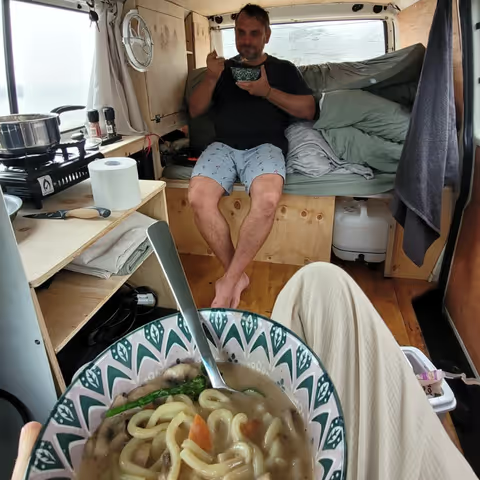
The Equipment: What You Actually Need
The fridge. The single most important investment in a van kitchen. Ours is a 40-litre compressor fridge and it changes everything. With a fridge you can buy in reasonable quantities. A few days of vegetables, a piece of meat, a block of cheese. Rather than shopping for individual portions that cost significantly more. Without a fridge, everything either stays dry and shelf-stable, or it gets eaten today. With a fridge, you cook like a normal person rather than managing a constant rotation of perishables.
If you are planning van life, buy the fridge and a proper battery system to run it before you buy anything else. A fridge costs approximately €100 and a decent battery pack a few hundred more. It is the single modification that upgrades the food quality of the entire trip.
The smart kettle. Ours maintains temperature. 70, 80, 90, or 100 degrees Celsius (158, 176, 194, or 212°F). The kettle reaches boiling temperature and then holds the target temperature with minimal energy draw. This makes it practical for coffee throughout the day, for hot water bottles on cold nights, and for boiling eggs without using the induction stove. Soft-boiled eggs in a kettle require no pan, no hob, and almost no cleanup.
The induction stove. We have one induction burner rather than a two-burner gas setup. The tradeoff is energy versus fuel availability. Induction draws significantly from the battery (approximately 10% for a good steak), but gas requires carrying canisters and managing availability across different countries. With our solar and battery setup, induction is manageable for meals that matter. For quick heating the kettle handles most things.
One pan, one pot, good knives. Our plates, pan, and pot came from Decathlon. Metal, practical, stack neatly. One good frying pan for steak, eggs, and anything that needs searing. One pot for pasta, rice, or anything that needs simmering. That is enough.
What We Actually Cook
Steak is the meal we return to when we want to eat properly. Salt, pepper, butter, one pan, and a good piece of meat. The Greek salad with feta alongside it covers the vegetables. The full meal takes twenty minutes and uses about 10% of the battery. It is not an everyday meal but it is the one that reminds you that van cooking can produce something truly satisfying.
Pasta. Spaghetti with whatever sauce works from what is in the fridge. Is the reliable second option. Pasta is cheap, stores without refrigeration, cooks in one pot, and adapts to almost any combination of vegetables and protein. It is the default meal when the day has been long and the options feel limited.
Salads and wraps are the most frequent option. A Greek salad or a simple chopped salad with whatever the fridge contains, or a wrap with cheese, vegetables, and something from the pantry. No cooking, minimal cleanup, quick enough for any situation.
The no-cooking option should not be understated. In Europe, a good baguette with local cheese and something from a market produces a meal that requires no equipment at all. France in particular is extraordinary for this. The bread, the cheese, the charcuterie from local shops is of a quality that makes cooking feel redundant. In these moments the van kitchen's best feature is its lack of imposing obligation.
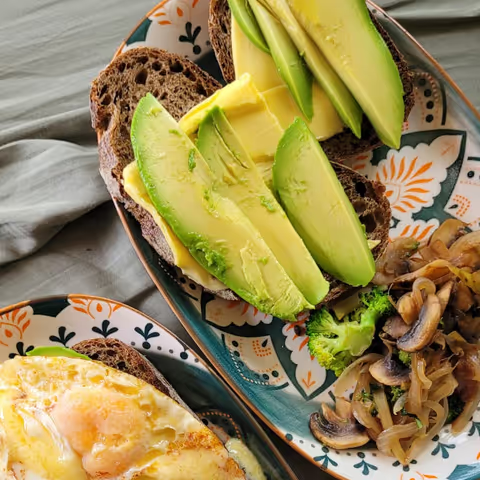
The Shopping Approach
The core principle is shop for two to three days at a time, not for a week. A small fridge fills fast and fresh food in it means fresh food in your meals. The dry pantry. Pasta, rice, olive oil, canned tomatoes, spices. Covers the gaps.
One observation from driving through more than twenty countries: the fresh produce is more similar than most food-focused travel content suggests. Peppers, cucumber, tomatoes, onions, mushrooms, broccoli, courgette, potatoes. These are available in essentially every country we drove through. The local markets are wonderful for their atmosphere and the quality of what they sell. The range, especially in smaller cities, is not dramatically different from what you would find at home.
The genuine difference is in the prepared and processed food, the bread, the dairy, and the quality of organic produce. France is the best country we encountered for organic and biodynamic food. Italy is excellent. In other countries the bio option is harder to find and more limited in range.
On organic food specifically: Caro and I eat organic where we can. The cost is higher in the short term. The argument for it is nutritional density. Commercially farmed produce has measurably lower nutrient content than it did fifty years ago, and organic and biodynamic growing methods partially address this. The clearest experiment in my experience is wine. Standard wine produces a hangover. Organic wine without sulfates, consumed in the same quantity, generally does not. The liquid looks identical. Something is different.

The Van Cooking Realities No One Mentions
Sitting down to cook. Our T4 has a low ceiling. All cooking happens from a seated position, which affects everything. The angle at which you use a pan, how you reach across the worktop, how much space your elbows have. It is manageable but it is different from cooking standing up, and it takes adjustment.
Steam. Cooking inside a closed van with any heat source. Induction or gas. Generates significant steam. Every window has to be open. If you cook with oil and forget the ventilation, the interior of the van smells of oil for two days. Open everything before you start and leave it open until the steam has cleared.
Washing up. There is no running water tap in our van. Washing up means water from a container, a small basin, and working in a very limited space. This is the strongest practical argument for one-pot or one-pan meals. Every additional piece of equipment is additional washing up in an environment where washing up is an inconvenience rather than a routine.
The best solution to the washing up problem is to cook less and buy more. Europe has excellent fast food and takeaway at every price point. A good baguette from a bakery and a cheese from the market requires washing nothing. A warm pizza from a local place on a cold night is, in our experience, better than almost anything we would cook in the van. The San Marino pizza arrived while the van was warming up and we were still recovering from the cold shower. It was one of the best meals of the trip.
Cooking as Local Experience
The most satisfying van cooking moments are the ones connected to where you are. In Portugal, sardines and tomatoes. In Italy, pasta with basil from a market. In France, the cheese and bread combination that the country produces at a quality no other country matches in our experience.
The van kitchen's limitation. Small fridge, no oven, one burner, no running water. Is also a forcing function toward local, seasonal, and fresh ingredients, because those are the things that need minimal processing to taste good. A fresh tomato from a Portuguese market, olive oil, salt, and good bread does not require a kitchen. It requires proximity to the place that made the ingredients.
This is the philosophical upside of van cooking that the research gets right: the constraint pushes you toward the food that actually defines where you are. You cook like a local not out of intention but out of necessity, and the result is a better experience of the places you are traveling through.
Our best countries for van life and house sitting guide covers which countries offer the best combination of food quality and house sitting opportunity. Our campervan travel between house sits guide covers the broader gap-period logistics.
Join TrustedHouseSitters with 25% off. DM us @housesittersguide on Instagram. We answer everyone.

The Quick Reference: Van Meals That Actually Work
| Meal | What you need | Time | Notes |
|---|---|---|---|
| Steak with Greek salad | Good steak, feta, tomato, cucumber, olive oil | 20 min | Uses ~10% battery on induction. Worth it. |
| Spaghetti bolognese | Pasta, tinned tomatoes, mince or lentils, garlic | 25 min | One pot, fills the van with steam. Open windows. |
| Kettle eggs | Eggs, kettle at 90°C | 12-15 min | Soft-boiled with zero cleanup. Keep the eggs. |
| Greek salad with bread | Feta, tomato, cucumber, pepper, olive oil, bread | 5 min | No cooking. Excellent with good bread. |
| Wrap or sandwich | Wrap/bread, cheese, vegetables, protein | 5 min | The most honest van meal. No cleanup. |
| Local pizza or takeaway | €8-12 from the place across the road | 0 min | The correct answer on difficult nights. |
Frequently Asked Questions
What is the most important piece of equipment in a van kitchen?
A compressor fridge. With a fridge you can buy in reasonable quantities and keep fresh food for several days. Without one, you are either eating shelf-stable food or shopping daily for individual portions at higher cost. A 40-litre fridge costs approximately €100. Buy it before anything else.
Is it realistic to eat well in a van?
Yes, with adjusted expectations. Eating well in a van means eating simply and freshly, not recreating a home kitchen. One-pan meals, fresh salads, local bread and cheese, and occasional takeaway cover the full range of what is needed. The constraint pushes you toward fresh, local food that is often better than the elaborate cooking you might do at home.
What is the biggest practical challenge of van cooking?
Ventilation and washing up. Steam from any heat source accumulates quickly in a small enclosed space. Open everything before cooking and leave it open. Washing up without running water is an inconvenience that argues strongly for one-pot meals and the occasional decision to buy rather than cook.
How do you manage organic food while traveling in a van?
France and Italy are the best countries for organic produce in Europe. In other countries the range is more limited. The cost is higher than standard food but the nutritional density argument. And the practical experiment of organic versus standard wine. Supports the investment. Buy organic where it is available and practical, and accept standard quality where it is not.


Responses
What are your thoughts on this post?