

Home > Blog > Utility and Appliance Failures During a House Sit
Quick Facts
| First response to any utility failure | Safety first, then document, then contact the homeowner |
| Who pays for repairs | The homeowner — unless you directly caused the damage |
| If you break something | See our dedicated damaging property guide |
| WiFi backup that actually works | Mobile hotspot — we carry 400GB of 5G data for exactly this |
| Most critical missing welcome guide info | What cannot be run simultaneously on the electrical system |
| Best appliance instruction we received | Numbered stickers on a Swiss audio system — 1, 2, 3 in sequence |
| Kefalonia lesson | Follow instructions exactly, document everything, and know when to call an electrician |
Utility failures are usually manageable: photograph the fuse box, reset a tripped breaker, and contact the homeowner before arranging a repair, because the cost is theirs unless you caused the fault. Our Kefalonia outage came from running a boiler and heater together. Repairs were reimbursed the same day.
Utility failures happen in every home. A circuit trips. The WiFi drops. The boiler needs a manual reset. The washing machine throws an error code. In your own home these are minor inconveniences. In someone else's home they carry a layer of anxiety. You are responsible for the property, you do not know every system intimately, and the homeowner is travelling and cannot fix it themselves.
If you are interested in getting into house sitting, our book Travel More for Less puts the whole process in one place: clear, step by step guidance from your first questions to your first confirmed sit, and the reviews that open the door to the next one.
For the separate question of accidentally breaking or damaging something, our damaging property during a house sit guide covers that in full. Use our 25% discount when joining THS.
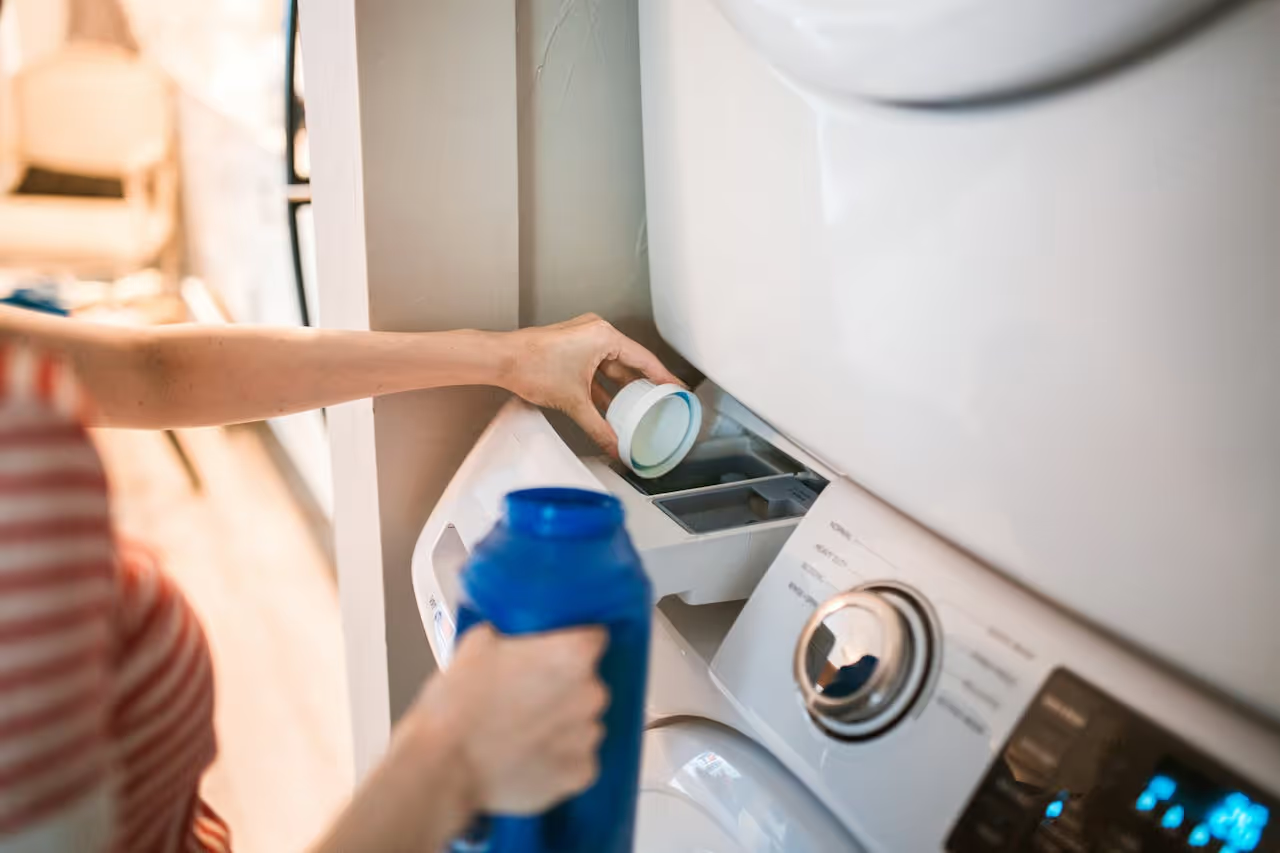
Power Outages: The Step-by-Step Response
A power outage during a sit can be caused by something as minor as a tripped breaker or as serious as a damaged electrical connection. The first moments matter.
Step 1. Safety. If there is a burning smell, treat it as an electrical fire risk. Move away from the area, take the animals with you, and call emergency services if the smell persists or if you see smoke. If there is no burning smell, proceed to the fuse box.
Step 2. Check the fuse box. In most homes a tripped breaker is the cause of a localised outage. Find the fuse box. Typically in a hallway cupboard, utility room, or garage. And look for any switch positioned differently from the others. Reset it by switching fully off and back on. If a fuse has visibly melted, burned, or shows physical damage, do not touch it. Photograph it and contact the homeowner.
Step 3. Document before you do anything else. Photograph the fuse box in its current state before resetting anything. This creates an accurate record of what you found and when. Our house sitting legal issues guide explains why contemporaneous documentation matters.
Step 4. Contact the homeowner. Send a clear message: what you were doing when the outage occurred, what you observed, and what the current state is. If you have already reset the breaker and power is restored, say so. If there is physical damage to the fuse box, send the photograph and ask how they want to proceed.
Step 5. Arrange repair only with the homeowner's instruction. In our Kefalonia sit, we paid the electrician upfront because restoring power was immediate and necessary. We confirmed this arrangement with the homeowner before the electrician arrived. In most situations, wait for the homeowner to direct the repair rather than incurring cost independently. The bill belongs to the homeowner unless you caused the fault. Being reimbursed promptly, as we were in Kefalonia, same day, is the expected outcome when a sitter pays upfront for an emergency repair.
The Kefalonia Electrical Failure
In Kefalonia we were told by the homeowner that we could run the boiler and the heater simultaneously without any issue. We followed these instructions. About forty minutes after switching on the boiler for a shower, the power failed across the whole property. I smelled melted plastic and went immediately to the fuse box, turned off every breaker, photographed the damage, and messaged the owners. They arranged an electrician. We paid upfront and were reimbursed the same day.
The electrician explained that the island of Kefalonia experiences regular minor seismic activity which, over time, loosens electrical cable connections. Under normal load the cables ran hotter than they should have. The combination of appliances we were running, while following the homeowner's explicit instructions, pushed the weakened system past what it could handle.
The lesson is worth repeating: if you are in any region known for seismic activity. Greece, Italy, Turkey, Japan. Treat older electrical infrastructure with caution. Do not assume that running appliances together is safe just because the homeowner says it is. If in doubt, run high-draw appliances one at a time. An oven, a tumble dryer, an electric heater, and a boiler running simultaneously draw significant current. In a home with any electrical fragility, that combination can cause real damage.
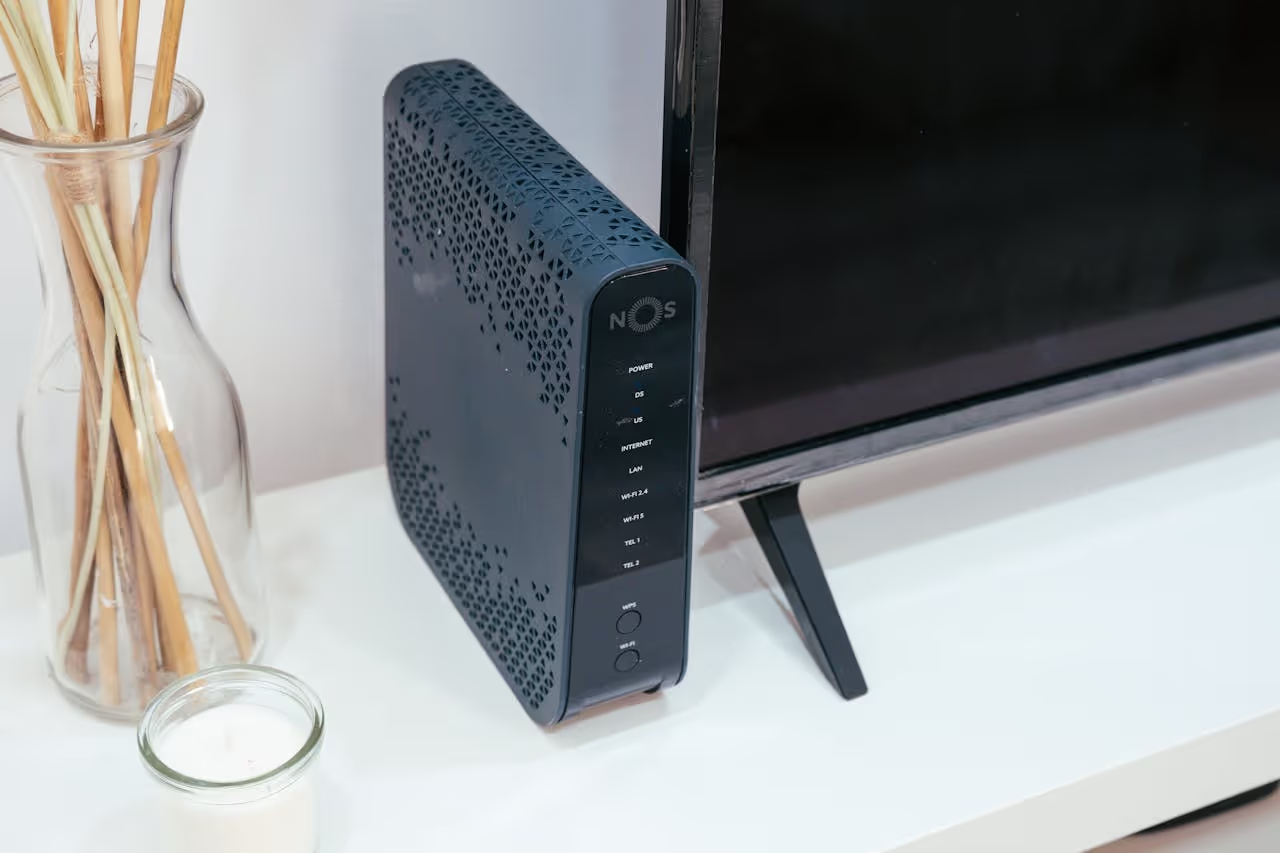
WiFi Failures: Prevention and Recovery
WiFi is the utility sitters who work remotely depend on most and the one that fails in the most varied ways.
In Portugal, we arrived to find the router still in its box with a SIM card next to it on the kitchen counter. The homeowner had intended to set it up before leaving. We did not set it up ourselves. We did not have the account credentials, the provider information, or the configuration settings. Instead we connected both laptops through our phone hotspots and ran everything through our own 400GB of 5G mobile data. The work day was uninterrupted.
In Manosque, the connection was reliable most of the time but dropped periodically. We had noticed during the pre-sit video call that the signal weakened when the owner walked onto the balcony. An early signal of what we should expect. When the connection dropped during working sessions we switched to mobile data until it restored. For what we needed it was sufficient.
The mobile hotspot is the most reliable WiFi contingency available and requires no action from the homeowner. If you work remotely during sits, maintaining a substantial data plan removes all dependency on the homeowner's connection quality. Our WiFi testing guide covers how to check connection speed and reliability before you confirm a sit, and our remote working guide covers managing a productive working day on any sit.
If a prolonged WiFi outage is not recoverable through the router restart (unplug, 30 seconds, plug in), contact the homeowner and ask whether there is a provider outage or an account issue they can resolve remotely.
Heating and Hot Water Failures
Heating and hot water systems vary significantly across countries and properties. In older European homes particularly, systems that seem simple often have quirks.
Solar water heaters are common in Greece and some parts of Spain and Portugal. They work by heating water using solar panels, but many require the homeowner to switch on an electric element at the fuse box for the first use, or when solar exposure has been insufficient. In Athens, Caro and I needed to switch on the solar heater at the fuse box and wait approximately thirty minutes for the water to heat. The welcome guide explained this clearly. Without that instruction, the lack of hot water would have been confusing.
Combi boilers in the UK and Ireland sometimes lose pressure and display a fault code rather than simply failing to heat. If the welcome guide includes pressure gauge information and how to repressurise the system, this is a simple fix. If it does not, contact the homeowner before attempting to adjust anything.
Wood burners and solid fuel heating sometimes feature as the primary or supplementary heat source in rural properties. Operating a wood burner safely requires specific knowledge about damper position, flue inspection, and ash management. If the property uses one and no instructions are provided, ask for them before the temperatures drop.
The principle across all heating systems: confirm the controls and any known quirks in the pre-sit video call before you need to use them. A boiler that cuts out on a cold night and a homeowner who is unreachable is an avoidable stress. Our what to ask a homeowner before a sit guide includes utilities as a standard section.
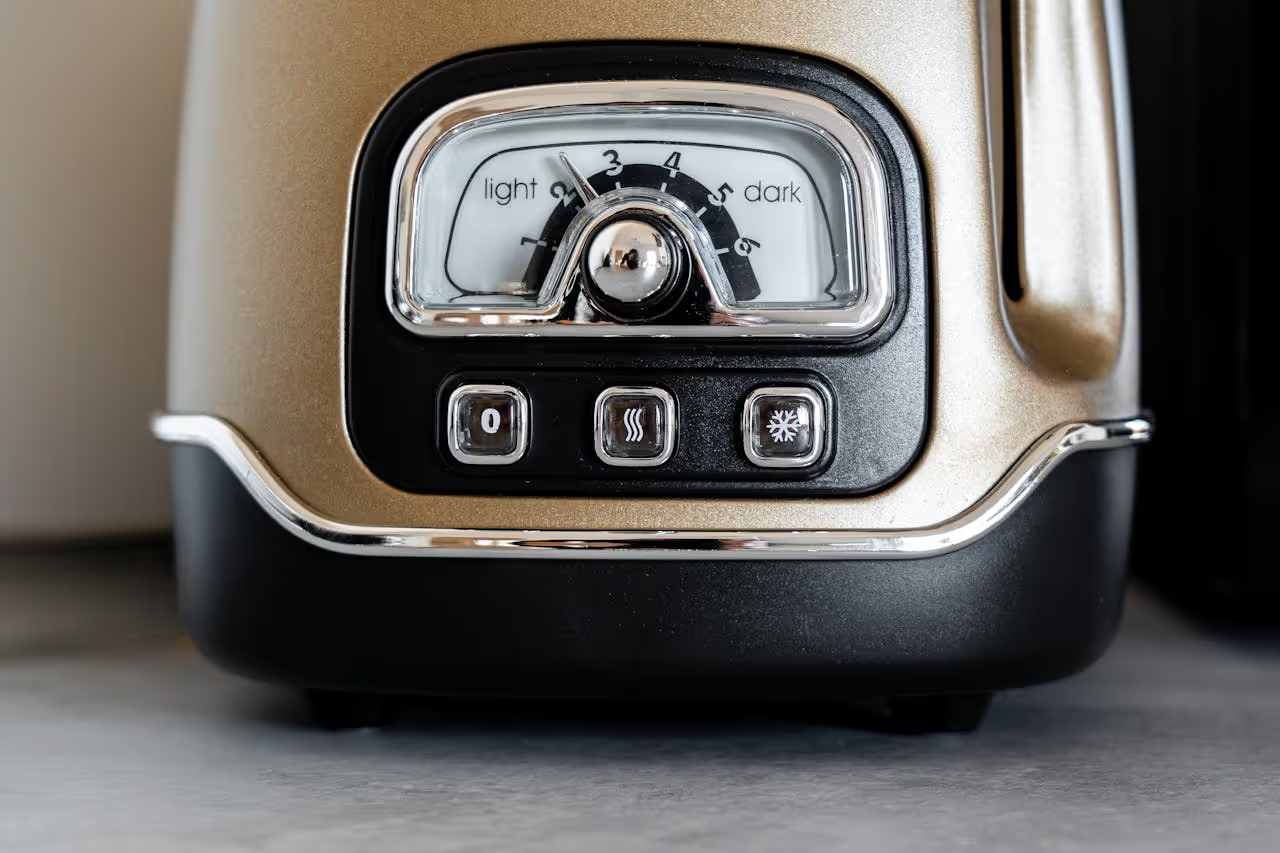
Appliance Quirks: The Welcome Guide Problem
Most appliance failures on a sit are not failures at all. They are unfamiliar systems that behave in ways the sitter does not recognise as normal.
The best appliance instruction Caro and I have received was in Cries, Switzerland. The homeowner had a high-end audio system that would have been intimidating to approach without guidance. He placed numbered stickers. 1, 2, 3. Directly on the buttons in the correct operating sequence. Three stickers. Thirty seconds to understand. The system worked perfectly throughout the sit and we used it daily.
This is the model for any appliance that deviates from standard operation. Not a paragraph of written description. A photograph in the welcome guide showing which buttons to press, or a physical label on the unit itself. Washing machines with non-obvious door latches. Dishwashers with specific programmes. Boilers with ignition sequences. Smart home systems with proprietary apps. All of these benefit from a photograph with arrows rather than a text description that requires interpretation.
For homeowners writing welcome guides: the time you invest in photographing your appliances once is time every future sitter saves. The welcome guide entry does not expire. Our full welcome guide article covers what a well-prepared guide looks like across all sections.
What the Welcome Guide Should Include for Utilities
The most consistently missing piece of information in welcome guides is electrical capacity. Specifically, which high-draw appliances cannot be run simultaneously. Ovens, electric heaters, boilers, tumble dryers, and air conditioning units all draw significant current. In older properties, running several simultaneously can trip breakers or, in cases like Kefalonia, cause more serious damage.
A complete utilities section in any welcome guide should cover:
The fuse box location and how to reset a tripped breaker. Which appliances must not be run at the same time. The water stopcock location in case of a leak. Boiler or heating controls and any steps required to get hot water. The WiFi network name and password. The name and contact number of a trusted local plumber and electrician. Any appliance with a specific operating sequence or known quirk.
These details cover the vast majority of situations a sitter will encounter and take about twenty minutes to compile once. Our cleaning and etiquette guide and checkout guide cover the other sections of a thorough handover.
When a Utility Fails and the Homeowner Cannot Be Reached
If you cannot reach the homeowner and the situation requires immediate action. No heat on a cold night, no water, a significant electrical fault. Use the emergency contact the homeowner has provided. Most welcome guides include a neighbour or family member who knows the property.
If no emergency contact exists, use the TrustedHouseSitters membership support line. Our what to do when a homeowner stops responding guide covers the escalation steps for situations where the homeowner is truly unreachable during an emergency. For any situation involving a pet health emergency compounded by an unreachable homeowner, our pet emergency guide covers the specific escalation for animals.
Document everything. The failure, the steps you took, the people you contacted, and the time of each action. A written record of a utility emergency that you managed competently and communicated thoroughly is the foundation of a five-star review even in a difficult sit.
Join TrustedHouseSitters with 25% off and DM us @housesittersguide on Instagram. We answer everyone.

Frequently Asked Questions
What should I do immediately if the power goes out during a house sit?
If there is a burning smell, leave the area with the pets and call emergency services. If there is no burning smell, locate the fuse box, photograph it before touching anything, and check for a tripped breaker. Contact the homeowner with a description of what happened and what you observed. Do not arrange an electrical repair without the homeowner's direction unless the situation is a safety emergency. The cost of any repair belongs to the homeowner, not the sitter.
Who is responsible for paying for repairs when something breaks on a house sit?
The homeowner is responsible for utility and appliance repairs, unless the sitter directly caused the damage. If a fault occurs while following the homeowner's own instructions. As happened in Kefalonia. The liability does not fall on the sitter. In urgent situations where you pay upfront, confirm the arrangement with the homeowner beforehand and establish clearly that reimbursement is expected. For accidental breakage, our damaging property guide covers the specific steps.
What should I do if the WiFi goes down during a house sit?
Use mobile data as a backup immediately, then troubleshoot. Try restarting the router. Unplug, wait 30 seconds, plug back in. If the connection does not restore, contact the homeowner and ask whether there is a provider outage or an account issue they can resolve remotely. For remote workers, carrying a personal mobile data allowance removes dependency on the homeowner's connection entirely. We carry 400GB of 5G data specifically for this situation.
What information about utilities should homeowners include in the welcome guide?
The single most important and most often missing detail is which high-draw appliances cannot be run simultaneously. Beyond this: fuse box location and how to reset a tripped breaker, boiler and heating controls, water stopcock location, WiFi credentials, and instructions with photographs for any appliance that operates non-obviously. A physical sticker or label on the appliance is more effective than a written description for complex equipment.
What do I do if the heating or hot water stops working?
Check the welcome guide for the specific system type before doing anything. Solar water heaters often require switching on a booster element at the fuse box. Combi boilers sometimes need repressurising. Underfloor heating systems may have zone controls that have been inadvertently adjusted. If the welcome guide does not cover the specific issue and you cannot reach the homeowner, use the emergency contact provided. Do not attempt to service or repair any heating system yourself.


Responses
What are your thoughts on this post?