

Home > Blog > Tipping Etiquette for House Sitters
Quick Facts
| Is tipping expected? | No — the exchange is designed so that it should not be necessary |
| Have we ever received a cash tip? | Never, across 20 sits in Europe and Australia |
| What homeowners give instead | Wine, fridge access, pantry staples, local restaurant recommendations, small consumable gifts |
| The currency that actually matters | A detailed five-star review — it opens more doors than any tip ever would |
| Platform rule | On TrustedHouseSitters and Nomador, no money should change hands for the sit itself |
| When the exchange tips over | Farm work, intensive medical care, or being unable to leave for more than a few hours — at that point, discuss pay, not gratuities |
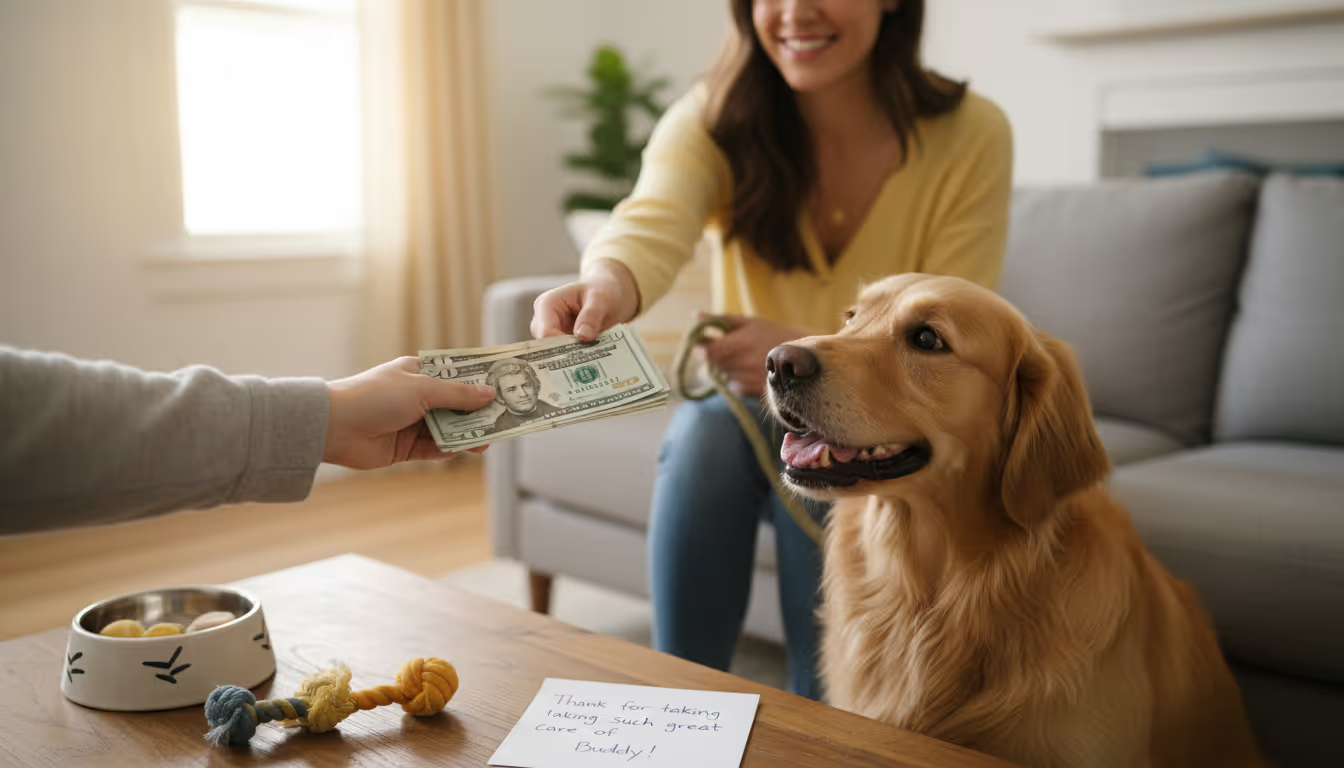
Tipping is not expected: we have never received cash across 20 sits. A detailed five-star review is worth far more than money, because it opens sits. Generosity here looks like fridge access and local recommendations, not an envelope.
I once posted a thread on Reddit asking a simple question: what is the best thing a homeowner has ever given you after a house sit? The replies came in for days. Ski lift tickets in Austria. Cases of wine. Small local gifts. One homeowner in the UK said his house was not a prize location, so after every month-long sit he gave the sitter a tip of £20 per day. Thirty days, £600. On top of that, boarding his dog would have cost him three times as much with nowhere near the same level of care. He did not consider the tip generosity. He considered it fair.
But that story stands out precisely because it is rare. Caro and I have never received a cash tip across 20 sits. We do not expect one.
This article covers what actually happens at the end of a sit, what counts as a reasonable exchange, and where the line is between house sitting and something that should be paid work.
House Sitting Is an Exchange, Not a Transaction
If you are interested in getting into house sitting, our book Travel More for Less puts the whole process in one place: clear, step by step guidance from your first questions to your first confirmed sit, and the reviews that open the door to the next one.
That is the theory. In practice, the value on both sides is rarely perfectly equal, and most homeowners know it. The difference between house sitting and unpaid labour matters here. For a good sit, the sitter gets free accommodation in a comfortable home with kitchen access, a washing machine, and space to live and work. The homeowner gets round-the-clock care for their pets, someone to take in the post, keep the lights on, and treat the property with respect. When both sides hold up their end, the exchange is fair and no tip is needed or expected.
What Homeowners Actually Give
Caro and I have never received cash after a sit. What we consistently receive instead is hospitality before we even arrive.
In Leysin and in Bochum, the homeowners told us to help ourselves to whatever was in the fridge. That is the most common form of generosity in house sitting: not an envelope at the end, but a well-stocked kitchen at the start.
Our approach to food: we use perishables that would otherwise go off during the sit. Opened cheeses, cold cuts, eggs. Things that would not survive until the homeowner returns. We replenish anything we finish from the staples: olive oil, coffee, butter. We do not go through the freezer or eat things that are clearly being kept for something. If anything is unclear, we message the homeowner. Most respond with "of course, use whatever you like." Our food etiquette guide covers the full fridge handover from both perspectives.
For wine, we bring a bottle on arrival. Bio white wine, around €8 to €10, and it rarely fails as an opening gesture. In many cases homeowners reciprocate, either leaving a bottle for us or telling us to help ourselves. It sets a tone of mutual generosity from the first hour.
One note for homeowners thinking about what to leave: we travel minimalist. A physical gift that needs to go in a bag is sometimes more logistical than it is pleasant. The most practical gifts are consumable or digital. A local restaurant voucher, a food delivery credit, or a written note with three specific restaurant recommendations in the area is more useful to a travelling sitter than something they have to carry out. Think about what the sitter can use during the sit, not what they will need to fit in their bag on the way home.
The Currency That Actually Matters
If I had to choose between a cash tip and a detailed five-star review, I would take the review every single time.
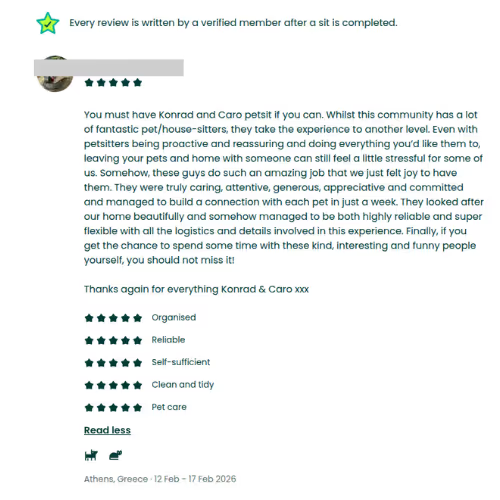
A good review on house sitting platforms does not just make you feel appreciated. It opens sits that would otherwise be out of reach. Homeowners with mountain chalets, Sicilian farmhouses, or Athens apartments with terrace views do not pick from applications at random. They read profiles. They look at reviews. They want to see that previous homeowners trusted you, found you easy to communicate with, and came back to a home and animals in good condition.
A fifty-euro tip is spent once. A review that says "we came back to a spotless home and two very happy dogs" keeps working for years.
If you are building your profile, prioritise the review. Ask for it if you need to. Most homeowners intend to leave one and simply forget. A polite message the day after they return, thanking them for the sit and mentioning that a review when they have a moment would mean a lot, is not pushy. It is professional. Our verified reviews guide covers how the review systems work across platforms.
Christmas Sits and Holiday Weekends
I did my first solo sit over Christmas in Ostuni, southern Italy. Just me, four cats, and a fireplace. It was one of the most peaceful Christmases I can remember.
Should I have received extra compensation for sitting over a holiday? The question does not really have a universal answer. If the homeowner offered it, I would have received it with gratitude. If they did not, I would not have expected it. I chose that sit. I knew the dates. I was happy to be there.
The relevant question is whether holiday and weekend sits attract more competition than standard sits. In my experience, somewhat yes. Christmas and New Year sits are in high demand from sitters who want to be somewhere particular for the holiday, and homeowners posting those dates sometimes have strong applicants to choose from. If you are applying for a high-demand holiday sit, your application and your existing review record matter more, not less.
What homeowners occasionally offer for holiday sits is a small gesture on the day itself: a Christmas message, something left in the fridge for a festive meal, occasionally a gift. None of this is expected. All of it is appreciated.
When a Tip Is Not Enough
There is a category of sit where neither a tip nor a five-star review is the right currency. That is a sit that has crossed into paid work.
Farm sits with horses, sheep, and daily physical labour. Medical care for a seriously ill animal requiring multiple daily treatments, specialist monitoring, and restricted movement. A property so large that the maintenance requirements leave no time for anything else. A sit where the sitter cannot leave the property for more than an hour or two because the animal's needs are that demanding.
These are not house sits. They are jobs that have been framed as house sitting to avoid paying someone. If you find yourself in one of these arrangements, the conversation to have is about fair payment for the work being done, not about whether you might receive a tip at the end. Our unpaid labour guide covers how to recognise these arrangements and what to do about them.
Tipping Culture by Region
The tipping question is culturally contextual. In the US, the expectation of a tip for services is embedded deeply enough that some American homeowners feel uncomfortable not offering one. In most of Europe, tipping is less standard and most homeowners would not think to offer cash at all.
| Region | Tipping expectation | What typically happens instead |
|---|---|---|
| United States | Moderate — some homeowners offer a tip | Cash gesture, gift cards, or fridge stocked with local produce |
| United Kingdom | Low — tipping is not the norm | Bottle of wine, local food, or a warm written card |
| Australia | Low — tipping is uncommon | Food and drink left in the fridge, local recommendations |
| Continental Europe | Very low — not expected | Pantry access, a welcome meal, wine on arrival |
| France (Nomador sits) | Very low | Local food gifts, wine, restaurant recommendations |
The most consistent pattern across all regions is that generous homeowners express it through hospitality and food rather than cash. The cash tip story from the UK Reddit thread is memorable precisely because it is unusual. Most homeowners show appreciation in other ways, and most experienced sitters have come to prefer it that way.
The Reverse Tip: What Sitters Can Do
The wine on arrival is the most common sitter gesture, but it is not the only one. Small things that make homeowners' returns easier are often more appreciated than they expect.
Stripping the bed and leaving sheets folded, or remaking it with clean linen if the homeowner has specified that in the welcome guide. Buying fresh milk and basic groceries so they do not come home to an empty fridge after a long journey. Leaving a handwritten note with a couple of specific observations about how the pets did, what they enjoyed, and anything that might be useful for future sitters. These cost very little and are remembered.
The one that takes the most effort but lands the strongest: a detailed, specific review of the homeowner. "Left an exceptionally clear welcome guide. Both cats were well and clearly loved. The home was comfortable and perfectly set up for a longer stay." Homeowners read these. They share them. They invite back the sitters who wrote them.
Conclusion
Tipping in house sitting exists in a small number of cases and is a gesture of appreciation rather than a standard expectation. The exchange model is built to make cash tips unnecessary, and for most sits where both sides hold up their end of the arrangement, that is exactly how it feels.
What homeowners can give that matters most: fridge access, honest local recommendations, and a detailed review. What sitters can give that matters most: the same.
Start building your review history through TrustedHouseSitters using our 25% discount, or through Nomador for France and Europe.
DM us @housesittersguide on Instagram if you have questions about house sitting etiquette. We answer everyone.

Frequently Asked Questions
Should homeowners tip house sitters?
Tipping is not expected and is not the norm in house sitting. The exchange is designed so that neither side needs to offer money beyond the arrangement itself: accommodation for care. Generous homeowners typically show appreciation through hospitality (fridge access, wine, local recommendations) rather than cash. A detailed five-star review is more valuable to an experienced sitter than a cash tip.
Have you ever received a cash tip as a house sitter?
No. Across 20 sits in Europe and Australia, Caro and I have never received a cash tip. We have received wine, pantry access, restaurant recommendations, and a standing invitation to return, all of which we value more than cash. The Reddit story of £20/day for a month-long sit is the exception, not the rule.
What is the best gift a homeowner can give a house sitter?
A detailed five-star review, followed by fridge access and local recommendations. For a travelling sitter, consumable gifts (food, wine, restaurant vouchers) are more practical than physical items that need to go in a bag. A note with three specific local restaurant recommendations costs nothing and is used every time.
Is it appropriate to ask for extra payment for a Christmas or holiday sit?
No. House sitting on platforms like TrustedHouseSitters is an exchange arrangement and no money should change hands for the sit itself. If you accept a holiday sit, you accepted it knowing the dates. Some homeowners leave a small gesture on the day itself; none of that is expected or owed.
When does house sitting become something that should be paid?
When the responsibilities cross from care into labour: farm work, daily intensive medical treatment for a seriously ill animal, or a sit that leaves you unable to leave the property for more than a couple of hours. At that point the arrangement should be discussed as paid work, not an exchange. Our unpaid labour guide covers how to recognise and respond to these situations.


Responses
What are your thoughts on this post?