

Breadcrumbs: Home > House Sitting Guide > Van Life and House Sitting
Quick Facts: Our Setup (March 2026)
| Our van | 1998 VW T4, short wheelbase, bought March 2025 |
| Monthly cost | €1,000 to €1,200 for two people |
| Distance covered | 14,000km since November 2025 across 12+ countries |
| Why owners pick us | We can shift dates because there is no flight to catch |
| Cheapest fuel | €1.29 a litre in Bulgaria, around €110 per 750km |
| Next confirmed sit | Six months in Portugal from May 2026 |
Van life plus house sitting gave us the movement of backpacking and the comfort of a cruise for €1,000 to €1,200 a month. Our 1998 VW T4 carried us 14,000km across 12+ countries since November 2025, with 15 five-star reviews and a six-month Portugal sit booked.
House sitting reviews: 15 five-star reviews on TrustedHouseSitters
Current location: North Macedonia, taking a short apartment break before continuing west
Years of travel experience: 11 years across backpacking, buses, cruises, luxury hotels, and now this
I am writing this from a rented apartment in North Macedonia. It costs €100 for the week. It has a kitchen, a washing machine, a bathroom, and an oven. Caro and I have been on the road for three weeks straight since our last house sit, driving through the Peloponnese, up through Greece, into Bulgaria, and now here. Towns, cities, and beaches had started to blur into one. We needed to stop.
So we cooked a roast dinner. We ran a proper washing cycle. We stood under a private shower for longer than was strictly necessary. Small things. But after three weeks in a van, they felt significant.
Here is what I noticed walking into the apartment: we already had almost everything we needed. We brought our own washing powder, our own cutting board, our own kitchen knife, and our own kettle because ours was cleaner than the one on the counter. Eleven years of travelling in every format possible has compressed into a van where we carry exactly what we need and nothing we do not. That is not something I could have said when I started.
Phase One: The 90L Backpack
I started travelling with a 90L pack on my back and a 30L daypack on my front. I crammed everything in: a powerboard, twenty pairs of socks, every contingency I could imagine. The total came to somewhere between 25 and 30kg. I carried it through Europe, hostel to hostel, convinced that having everything with me was freedom.
It was not freedom. It was an exhausting logistical problem. Every day started with the question of where to store the bags. Lockers at hostels, left luggage at train stations, dragging them up four flights of stairs because the lift was broken. The bags did not travel with me. I travelled around them.
Eventually I reduced down to a single 13kg carry-on. Drone, laptop, camera, enough clothes for a few days. Small enough to take anywhere, light enough to carry all day. If I did not like the hostel I picked it up and got on the next bus. No fees, no storage problem, no planning around the weight. That version of backpacking was actually free in a way the 90L version never was.
But it still had limits. You are always moving. You are always choosing between staying longer and catching the next connection. The small backpack solved the weight problem but not the pace problem.
Phase Two: Buses and Budget Travel
I value that phase. But budget travel has a hidden cost that nobody talks about: time. The cheap route always takes longer. The free hostel is forty minutes from the centre by two buses. The tradeoff is constant and it wears on you.

Phase Three: Luxury Hotels
The suite at Marina Bay Sands in Singapore is as impressive as it looks in every photograph. The infinity pool with the city below, the views, the service. Stunning, by any honest measure. I am glad I did it.
But after a few days I noticed something. I was in Singapore and I was not really in Singapore. I was in a beautifully designed room that could have been in Dubai or Miami or Tokyo and felt roughly the same. The city was a view from a window rather than somewhere I was inside of. The luxury was real. The connection to the place was not.
That is the pattern I found across five-star hotels and resorts. They are extraordinarily good at insulating you from the destination, which is exactly what some people want. It is not what I want from travel.
Phase Four: The Cruise
The Mediterranean cruise was a suite, proper food at every meal, a new port every morning. It is a good way to travel in one specific sense: variety with comfort. You get the hotel experience and a different city each day, and the nights on a ship full of people are excellent if you enjoy that atmosphere.
The honest verdict: I liked it, but it is a gilded cage. If a place moves you and you want more of it, the ship leaves anyway. The itinerary is fixed from the moment you board. You are a passenger in someone else's route plan. And it is expensive for what the actual experience delivers.
Phase Five: Campervanning and House Sitting
Three days ago, Caro and I crossed into Bulgaria in the T4. We drove around roughly a quarter of the country, found the parts worth stopping for, and left when we were ready. Nobody told us when to go. There was no departure time and no ship to miss if we stayed an extra day. When we had seen enough, we had a conversation about whether to cross into Romania or North Macedonia, and drove to North Macedonia.
That is freedom in a form that the 90L backpack, the cruise, and the Singapore suite were all reaching for in different ways without quite arriving at.
The campervan is the cruise ship you control. You move from destination to destination, sleep on board, and have your belongings with you. But the itinerary is yours. If the place is extraordinary, you stay. If it is not, you leave tomorrow. The van does not have a sailing schedule.
The small backpack gave me the ability to move without friction. The van gives me that at a scale that includes a bed, a fridge, a kitchen, and a workspace. I can pick up and go just as I could with 13kg on my back, but I am not sleeping in a hostel dorm or eating from a petrol station because my bag is full. Everything is with us, organised exactly how we want it.
The luxury comes from the house sits. After two or three weeks on the road, we pull into someone's home. Full kitchen, unlimited hot water, a washing machine, a proper workspace, a garden where the dog wants to be walked. We have stayed in Swiss chalets worth €1,100 a night, in Sydney apartments 500 metres from the Harbour Bridge, in a villa in the Valais with Mont Blanc visible from the bedroom. Every one of those sits cost us nothing beyond our platform subscription.
The more houses we see, the more I notice that the difference between a luxury property and a normal one is mainly size, location, and amenities. What they share is more important than what separates them: they are real homes, in real places, where we get to live rather than visit. A sit in Cortona puts you in a hilltop town in Tuscany cooking with local olive oil and vegetables from the garden. A hotel in Cortona puts you in a room with a view of it.
This combination takes the best version of every travel style I have ever tried and assembles them into something more than any single one of them. The movement and flexibility of backpacking. The daily variety and comfort of a cruise. The quality of accommodation that luxury travel offers. The connection to real places that none of those formats reliably delivered. And underneath all of it, €1,000 to €1,200 per month for two people across twelve countries.
How the Travel Styles Actually Compare
| Travel style | Flexibility | Comfort | Monthly cost (est.) | Connection to place |
|---|---|---|---|---|
| Backpacking | High | Low | €1,500 to €2,000 | Moderate |
| Cruising | None | High | €3,000+ | Low |
| Luxury hotels | Low | Elite | €5,000+ | Low |
| Van + house sitting | Complete | High | €1,100 | High |
The bottom row is our actual spend over five months across twelve countries. The flexibility column is the one that changes everything else: when you can leave whenever you choose, you never pay a premium to escape somewhere you do not want to be.
What Living in the Van Actually Looks Like
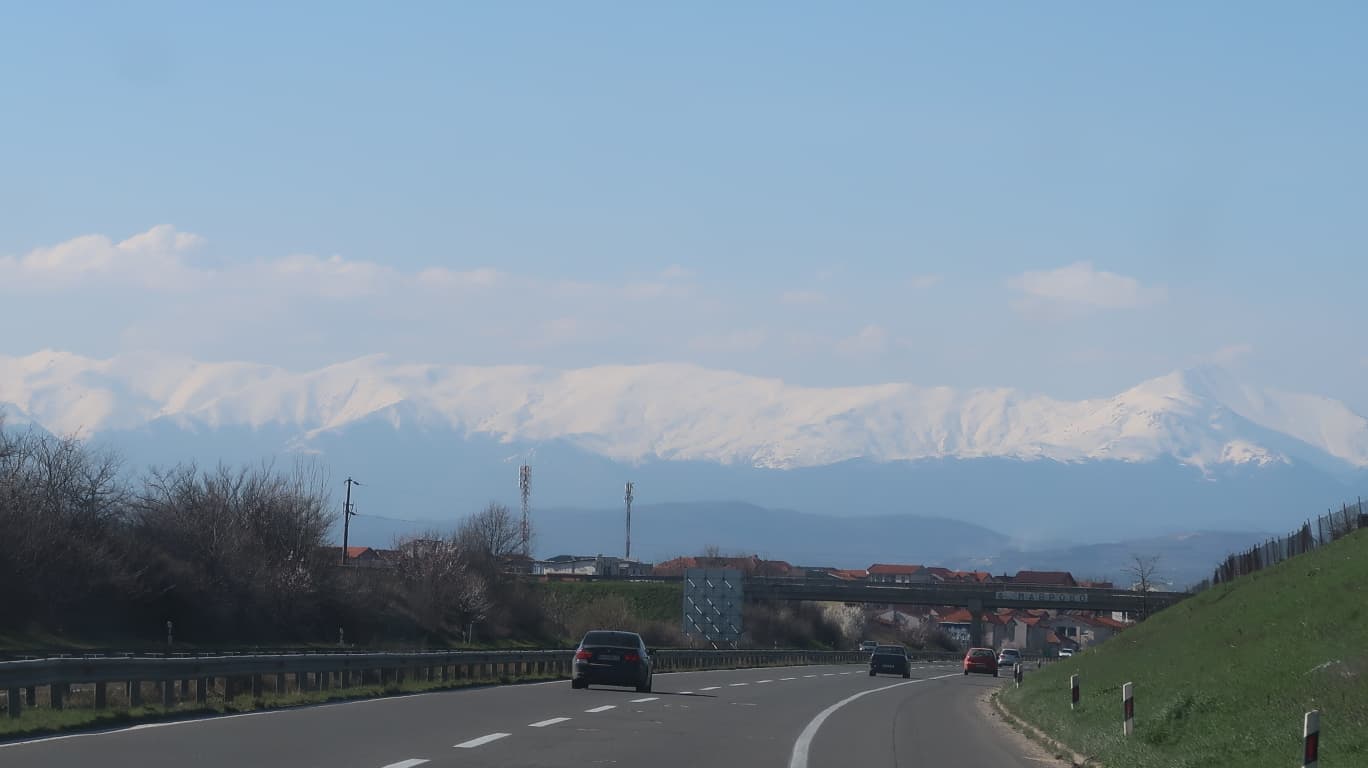
The T4 is a short wheelbase van with a 200 x 140cm fold-out bed, a 40-litre fridge, an induction stove, and storage built around 18 months of figuring out what we actually use. Caro and I both work online and we do it from inside the van when we are on the road, which requires some creativity with a short wheelbase. When we arrive at a house sit or an apartment like this one in North Macedonia, we find a corner, set up a workspace, and the change of setting does something useful: it resets the motivation. Working from a new location that is quiet and comfortable is different from working from a van seat. The sits are not just accommodation. For us they are also the office reset.
After three weeks of driving, the things you miss are not dramatic. Hot water that does not run out. A kitchen where you can cook something that takes more than twenty minutes. Clean clothes that smell like washing powder. The sit provides all of it, which is why we come out of every sit ready for the road again rather than relieved to be leaving.
What Homeowners Actually Want from Van Lifers
Three things come up consistently in how homeowners respond to our applications and in the reviews they leave afterwards.
| What they want | What van life signals | Real example |
|---|---|---|
| Flexibility on dates | You have no flights to miss | One owner returned a day early at 11pm; we stayed the night in our van and left in the morning |
| Self-sufficiency | You live without depending on others | No airport pickup needed, no logistics to arrange, no last-minute panics |
| Adaptability when plans change | You can absorb change without stress | Owners whose travel shifts know the home is still covered regardless |
Every application we have sent since making flexibility the centrepiece of our pitch has resulted in the homeowner either using that flexibility or thanking us for offering it. The van is not just accommodation between sits. It is the thing that makes you the most useful type of sitter on the platform.
The Flexibility That Wins Sits
We mention our van in every application, framed around what it means for the homeowner rather than for us.
Homeowners' travel plans change. Flights get rescheduled, departures shift earlier, arrivals move later. A sitter locked into a flight on a specific date cannot absorb those changes. A sitter parked outside in a van can stay an extra night, arrive a day early, or adjust at 11pm when the owner messages to say they are coming home tomorrow. That has happened to us. The review mentioned our adaptability specifically.
It removes a real layer of stress from travelling: homeowners know that if anything changes, their home and their pets are still covered regardless. Because of this, our sits keep improving. Fifteen five-star reviews, access to properties we could not afford to rent, and a six-month sit in Portugal confirmed for May.
If you want to understand the full application approach, our guide to landing luxury house sits covers the progression from first review to high-end property. The application formula is covered separately.
The Balkans: What the Route Looks Like Now
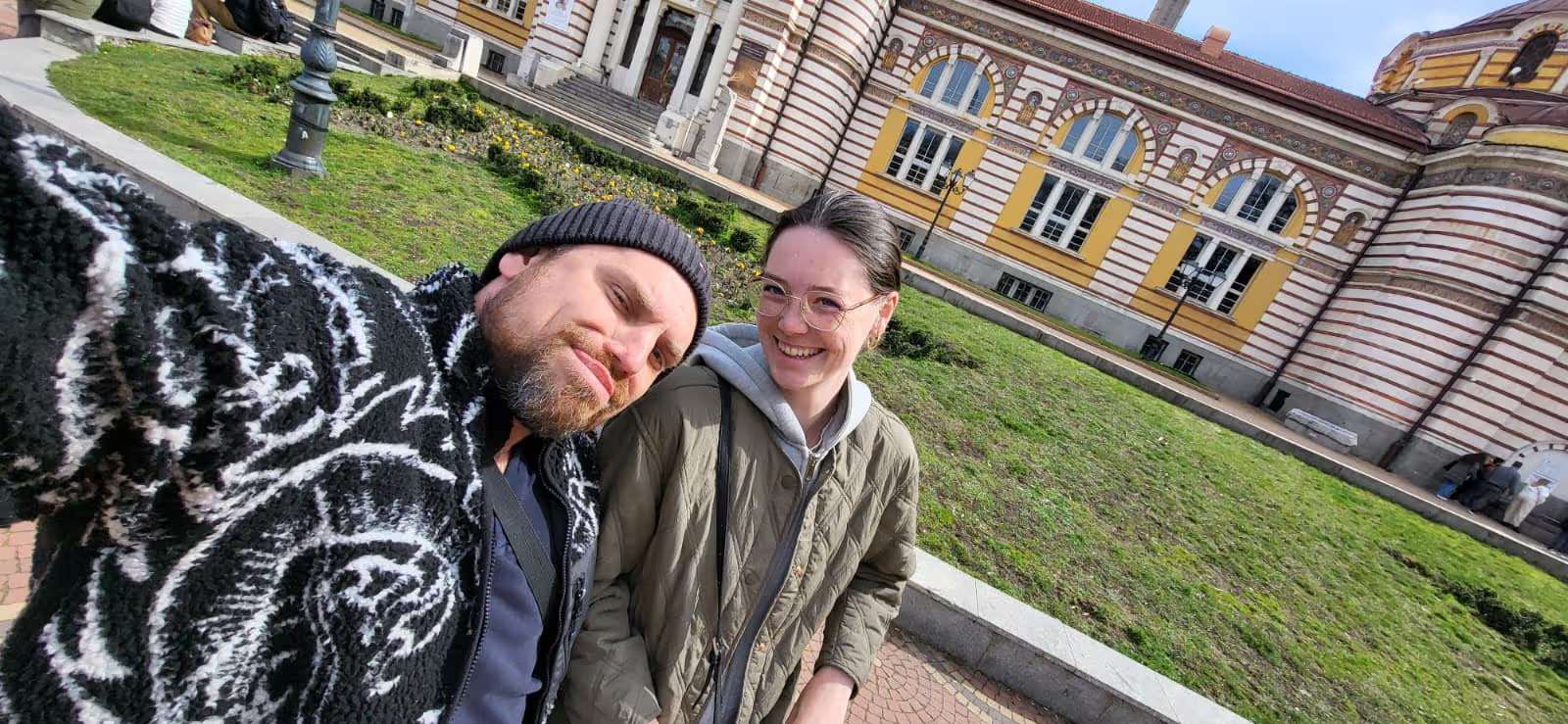
We are heading from North Macedonia toward Portugal, with 6,000km (approximately 3,730 miles) and around 60 days to cover it. That is 100km (62 miles) per day, which leaves room to slow down, find a sit or two, and not arrive exhausted. The time restraint is useful. Without it we would have spent three days in Sofia. With it, we walked 21,000 steps, ate Bulgarian food, and moved on.
The Balkans are an underexplored market for house sitting. TrustedHouseSitters has around 14 listings across the region. Nomador has none. MindMyHouse, at $29 per year, has 7 listings in areas most sitters would not look, which makes it exceptional value here specifically. A full breakdown of all platforms is in our international house sitting platforms guide.
One Schengen detail worth knowing: Bulgaria joined as a full member on 1 January 2025, so days there count toward your 90-day limit. North Macedonia and Albania are not Schengen members, which means time in either country does not count toward the clock at all.
2026 Schengen Reset: if you hold a non-EU passport and are managing a long European route before a confirmed sit in Portugal, Spain, or another Schengen country, routing through North Macedonia or Albania pauses your 90-day counter entirely. Caro and I hold European passports so the 90-day limit does not apply to us directly, but a large proportion of the sitters we hear from are from the US, UK, Australia, and Canada — and for them this is one of the few genuine visa advantages van lifers have over sitters who fly in on fixed dates. Six weeks of non-Schengen Balkans travel before a Portugal sit means arriving with a full 90-day allowance rather than a depleted one.
One practical note for van lifers crossing into North Macedonia: the country is not in the EU and still requires a Green Card as proof of valid car insurance at the border. Check that yours is in the van before you reach the crossing, not after.
Fuel in Bulgaria at €1.29 a litre means 750km costs around €110 in the T4. Cross into Greece or Italy and the same litre costs €1.80 or more. Filling up and stocking spare parts before crossing back into higher-cost countries is a routine part of how we manage the budget.
One practical change that makes Bulgaria easier to navigate in 2026: the country adopted the Euro on 1 January 2026, meaning no currency exchange, no conversion fees, and your standard European mobile plan works here without roaming charges. For van lifers coming from Greece or other Eurozone countries it is now a seamless transition in both payments and connectivity.
Which Platforms We Use and Where
For Europe, the UK, and North America: TrustedHouseSitters is the platform we use for 95% of our sits. If you are not on it yet, the TrustedHouseSitters discount code takes 25% off the first year. The booking fee applies to Basic and Standard members at $12 per confirmed sit; Premium removes it entirely.
For France specifically: Nomador has 627 French listings and is the stronger platform for that market. If your route includes France, subscribe to both rather than choosing between them.
For Australia: Aussie House Sitters has the volume that THS cannot match in that country. Our house sitting Australia guide covers how the platforms stack up.
For unexpected markets including Eastern Europe: MindMyHouse at $29 per year is the best value subscription in house sitting. Seven listings in the Balkans from a platform that costs less than a restaurant meal is coverage that pays for itself in a single sit.
Konrad and Caro
DM us @housesittersguide if you have questions, we answer everyone.
Frequently Asked Questions
Do you need a specific van for this lifestyle?
No, but simpler is better. The 1998 VW T4 is old enough that most repairs are approachable with video guides and basic tools. A newer, more complex van costs more when something goes wrong far from a specialist. Know your dimensions before booking city centre sits: short wheelbase parks significantly more easily than long wheelbase in dense European streets.
How do you plan sits around the route?
Two horizons. Anchor sits like the Portugal six-month go in months ahead and give the trip its direction. Last-minute sits get confirmed as close as three days before arrival. The van makes short-notice flexibility possible and that flexibility is what makes last-minute sits available to you in the first place.
What do you do if a sit gets cancelled en route?
Keep driving. With a van your home is with you regardless. Post updated availability on TrustedHouseSitters with your current location and flexibility noted. A sitter who can arrive within a few days on a fully flexible schedule is valuable to any homeowner who needs someone quickly.
How do you handle parking in dense cities?
Tell every homeowner during the video call that you are arriving by campervan, and ask about driveway access, height restrictions, and nearby alternatives. Have the conversation before arrival day, not on it.
What does the lifestyle actually cost?
€1,000 to €1,200 per month for two people, covering fuel, food, and incidentals across twelve countries. House sits replace accommodation entirely. Over five months from November 2025, total spend for both of us is approximately €5,000 to €6,000.
Does the van help with house sitting applications?
Yes, directly. Frame it as flexibility for the homeowner. Owners whose plans change need a sitter who can adapt. One owner returned a day early at 11pm and we stayed the night without issue. The review mentioned our adaptability. Lead with the van, do not hide it.
What do you bring in from the van when you arrive?
Laptops, cameras, and passports always come inside. Fridge contents come in to avoid waste. We keep presentable clothes in sealed boxes separate from road clothes so we arrive looking organised regardless of the previous few days. And a bottle of wine. Every sit, without exception.
How do you stay sane living in a small van for months?
The house sits are the answer to this question. Two to three weeks on the road, then ten days to two weeks in a home. The rhythm works because each part solves what the other creates. The van gives you freedom and movement. The sit gives you space, a kitchen, and the feeling of being somewhere rather than passing through it.


Responses
What are your thoughts on this post?