

Home > Blog > Separation Anxiety Dog House Sit
Quick Facts
| What is separation anxiety? | A stress response when a dog is separated from its bonded person or people |
| Signs to watch for | Pacing, howling when alone, shadowing you constantly, staring into the distance |
| Most effective management | Consistent routine. same feeding, walking, and waking times every day |
| Do not punish anxious behaviour | It increases fear and worsens the anxiety |
| Day trips with an anxious dog | Take the dog where possible; keep absences short when not |
| Desensitisation on a short sit | Not appropriate. stick to routine and consistent presence |
| When to tell the homeowner | If the anxiety is significantly affecting your sleep or ability to function |
The Manosque dog howled the moment we left and jumped into our van when we packed. Routine is the treatment: same feeding, walk and wake times every day, take the dog with you when you can. Skip desensitisation training on a two-week sit; it needs weeks to work.
The Manosque dog never left our side. Looking after dogs on house sits is one of the most rewarding parts of the lifestyle.
Our complete dog care guide covers the full picture of what good daily dog care looks like. She followed us from room to room, lay at our feet while we worked, and walked behind us through the house at all hours of the night.
When we sent the homeowner a message saying we had a shadow, she laughed and asked if we were managing. We were more than managing. It was one of the most affectionate, uncomplicated dogs we have looked after across 20 sits in 12 countries. The only time she made a sound was when we left the house. The moment we walked out, she howled. The moment we returned, silence.
When we eventually packed up the van to leave at the end of the sit, she jumped in and sat down. She did not want us to go.
This article covers separation anxiety from the perspective of a sitter, not a trainer or a behaviourist. The Manosque sit showed us what a well-managed anxious dog looks like and what makes the difference. We are not vets. If a dog's anxiety is severe or involves self-harm, contact the homeowner and vet immediately.
If you are interested in getting into house sitting, our book Travel More for Less puts the whole process in one place: clear, step by step guidance from your first questions to your first confirmed sit, and the reviews that open the door to the next one.
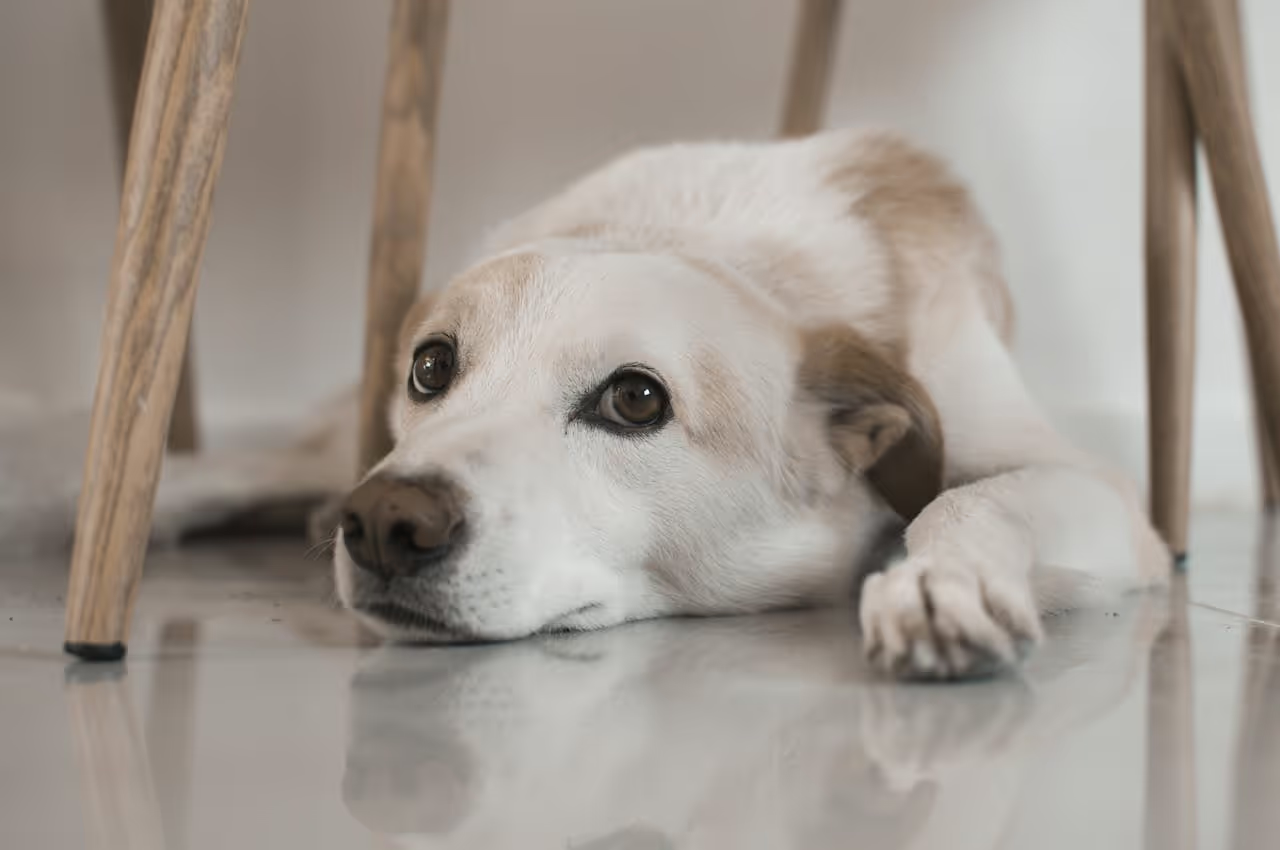
What Separation Anxiety Actually Looks Like
Separation anxiety is a stress response that activates when a dog is separated from its bonded person. For a house sit dog, that bonded person has just left for two weeks. The sitter arrives as a replacement presence. familiar enough to reduce the acute distress, but not the person the dog has been sleeping beside for three years.
The signs range from mild to severe, and many present before you have even left the house.
| Sign | What it looks like | Severity |
|---|---|---|
| Shadowing | Follows you room to room, cannot settle if you leave sight | Mild. normal for anxious dogs with a new sitter |
| Night restlessness | Pacing, standing and staring, repeatedly getting up | Mild to moderate. manageable with routine |
| Over-the-top greeting | Near-climbing you when you return from a short absence | Mild to moderate. indicates distress during absence |
| Howling or whining when alone | Vocalising the moment the door closes, stopping when you return | Moderate. document with a recording |
| Pacing and inability to settle | Circling, standing frozen, staring into space | Moderate. particularly evident at night |
| Destructive behaviour | Chewing, scratching doors or windows, destroying items | Serious. welfare concern, contact homeowner |
| Indoor accidents | Elimination from a house-trained dog | Serious. indicates panic not distress |
| Escape attempts | Throwing themselves at doors, windows, or fencing | Serious. risk of injury, act immediately |
| Self-harm | Excessive licking, scratching, biting at self | Serious. contact vet and homeowner now |
The Manosque dog showed the classic shadow pattern: she was beside us constantly, walked circles at night, and would stand still and stare into the distance with a kind of vacant alertness that was unsettling until we understood it. These are displacement behaviours. the dog is managing its own anxiety by staying close and scanning for threats. It is not aggression. It is not disobedience. It is a dog that needs to know where its people are at all times.
The more obvious signs appear when you leave. Excessive barking, whining or howling, destructive behaviour, pacing, trembling, indoor accidents, and attempts to escape are all documented responses to separation. The Manosque dog's response was howling. the moment the door closed, she called for us. The moment we returned, she went quiet. The behaviour was that precise, that reliable, and that clearly about us rather than about noise or boredom.
Understanding this distinction matters. A dog that barks at strangers on the street is reactive. see our reactive dog guide for that scenario. A dog that barks only when its person leaves is anxious. The approach is different because the cause is different.
Recognising the Signs Early
Most separation anxiety reveals itself on the first full day of a sit, often in the first hour after the homeowner leaves. The homeowner's presence had been suppressing the dog's distress. Once they are gone, the dog's behaviour shifts.
Watch for these signals in the first 24 to 48 hours:
Shadowing. the dog follows you from room to room, lies directly against your legs, and is visibly unsettled if you move out of sight even briefly. This is the first and most consistent sign.
Restlessness at night. pacing, getting up repeatedly, standing and staring. The Manosque dog did this throughout the first nights: up, down, circling, standing still, flopping down again. Not distressed enough to howl, but not settled either.
Over-the-top greeting on return. a dog that nearly climbs you when you come back from a 20-minute shop is a dog that experienced distress while you were gone. The intensity of the greeting corresponds to the intensity of the separation response.
Howling or whining when alone. the clearest and most obvious sign. If you can, record the dog while you are outside for ten minutes before a longer absence. What you hear on that recording tells you a great deal about what happens when you are gone for two hours.
Destructive behaviour and indoor accidents. these typically appear in more severe cases and indicate the dog has moved past distress into panic. If you return to a destroyed room or indoor elimination from a dog that is normally house-trained, that is a welfare concern that should be reported to the homeowner. Our guide to what to do when a homeowner misrepresents their listing covers your options when the situation differs from what you agreed to.
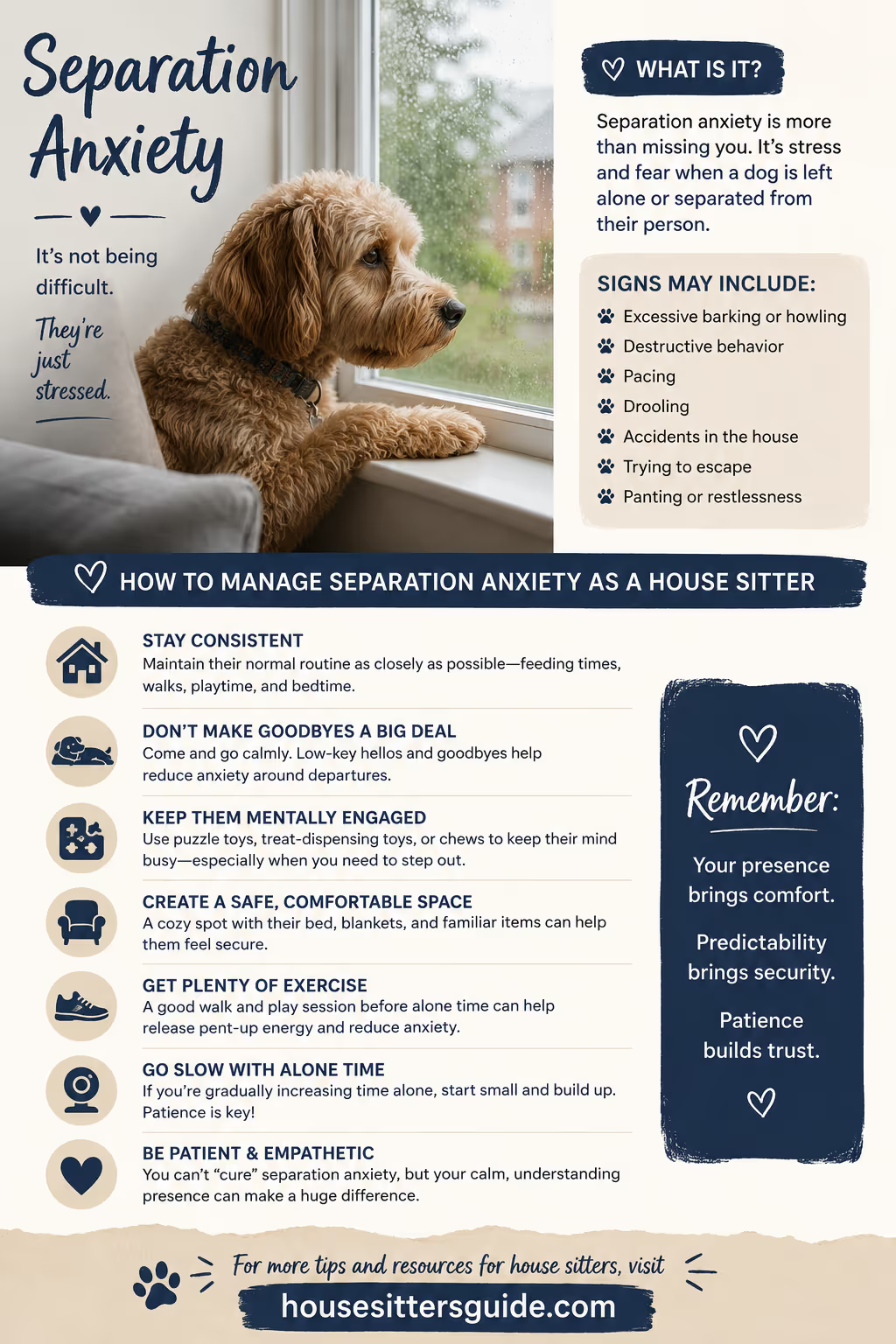
The Routine Is the Treatment
Structured routines and consistent training are key, often reducing anxiety levels significantly. For a house sitter managing a dog with separation anxiety, the practical version of this is simple: feed at the same time, walk at the same time, wake and settle at the same time, every day.
The Manosque dog had a fixed morning routine. a pee walk at roughly the same time each day, feeding at the same time, evening walks at the same time. Caro and I kept this consistent throughout the ten-day sit. The predictability gave the dog something to organise its day around. A dog that knows the walk happens at 7pm is less anxious at 6pm than one that has no idea when anything will happen.
This is not training in any formal sense. You are not attempting to modify the anxiety or desensitise the dog to separation. You are simply providing the environmental stability that anxious dogs rely on. Dogs find comfort in predictability. Consistent schedules can significantly reduce their stress levels. For a house sit of one to two weeks, maintaining the homeowner's established routine is the most impactful thing you can do.
Whatever schedule the homeowner uses: replicate it as closely as possible. Ask during the pre-sit video call what the daily routine looks like and stick to it. An anxious dog that arrives at a new routine will take longer to settle than one whose rhythm has been preserved.
Being the Pack
One of the most effective short-term management tools for a dog with separation anxiety is simply your consistent presence. You are not the homeowner, but you are a person and a person is what the dog needs.
In Manosque, we were five months into a continuous campervan trip across Europe. By that point in a long stretch of travel, the brain truly needs to stop. A house sit became our way of letting everything decompress. catching up on films, working from a stable space, cooking properly, letting the mind go quiet. We were not restless to go exploring. We were happy to stay, and the dog was the direct beneficiary of that.
She slept in the bed with us, flopped down each night in the most dramatic fashion, usually landing on Caro with an audible thud. She felt she was part of a pack, and as long as that was true the anxiety was minimal. She was not cured. But she was coped.
Not every sitter is in the same position. If you arrived at a sit specifically to explore a region, an anxious dog that howls when left alone creates a genuine tension between the animal's welfare and your own goals. Avoid leaving the dog alone beyond their current comfort threshold wherever possible. For a short sit, adjusting your expectations downward. Shorter outings, later returns, fewer all-day trips. is the realistic approach. Our day trip guide covers how to plan time away in a way that accounts for pet needs.
Taking the Dog With You
The simplest solution to separation anxiety is to not separate. Where the situation allows it, taking the dog with you removes the problem entirely.
In Manosque, we took the dog on the longer walks and outings. She handled these well. Calm on the lead, no barking at other dogs, happy to be alongside us. For a dog with separation anxiety, being included in an outing is significantly better than being left behind. The dog is with its pack, the anxiety is not triggered, and you get the walk you wanted.
This is not always possible. Not every restaurant or shop accepts dogs. Not every journey is dog-appropriate. But as a default: if the dog can come, bring it. The howling in an empty house is not a neutral outcome for the animal.
For day trips where the dog cannot come, keep the absence as short as feasible. Return before the dog has time to move from mild distress into genuine panic. Leave something with your scent on it. A worn jumper near the dog's bed creates a scent anchor that is more calming than a sterile environment.
What Not to Do
Do not punish the dog for anxious behaviour. Punishment can worsen separation anxiety by increasing your dog's fear and stress. A dog that howled while you were out and is now being scolded has no way to connect the punishment to the behaviour that triggered it. What it learns is that your returns are associated with negative experiences, which makes the anxiety worse.
Do not make departures dramatic. Long goodbyes, drawn-out farewells, and emotional exits raise the dog's arousal before you have even left. Leave calmly, without ceremony, and the transition is less jarring.
Do not ignore the signs if they escalate. Mild shadowing and howling during absences is manageable. A dog that is destroying the property, injuring itself attempting to escape, or showing signs of panic rather than distress is a dog whose situation has moved beyond standard management. That requires a conversation with the homeowner and potentially the vet.

Desensitisation: Only on Longer Sits
Behavioural research supports a technique called graduated exposure. Short departures that build up slowly over time so the dog learns that your absence is temporary and non-threatening. You leave the room for a moment and return before your dog has a chance to become anxious, building a strong foundation of the dog being comfortable.
This works. It is evidence-based and vet-endorsed. For a house sit of one to two weeks, it is not appropriate. The technique requires weeks of consistent practice to show results. Attempting it over ten days, then leaving, undoes whatever minimal progress was made and leaves the dog in a potentially worse state than when you arrived.
On a short sit, accept the anxiety as a feature of this particular dog's life that you are managing, not treating. Keep the routine, provide presence, limit unnecessary separations, and hand back a dog that has been well cared for. On a longer sit of a month or more, the gradual departure technique is worth attempting if the homeowner supports it. but always discuss with them first. Our what house sitters can and cannot change guide covers the boundaries of sitter intervention.
When to Tell the Homeowner
Tell the homeowner if the anxiety is affecting the dog's welfare or yours in a way that is significant.
| Situation | What to do |
|---|---|
| Mild shadowing, night restlessness, occasional howling | No action needed beyond routine management. this is normal adjustment |
| Howling consistently when left, over-the-top greetings, night pacing | Mention casually to homeowner: "She howls when we leave. is that normal?" |
| Behaviour was not disclosed in the listing | Message homeowner in writing immediately. creates a documented record |
| Destruction, indoor accidents, or sustained distress | Contact homeowner the same day. factually, with specifics |
| Sleep significantly disrupted for two or more nights | Contact homeowner and platform. this is affecting your ability to function |
| Dog injuring itself, panic-level escape attempts, self-harm | Contact homeowner immediately and vet if homeowner unreachable |
| Behaviour escalating despite all management attempts | Formally contact platform, request homeowner arrange alternative care |
| You no longer feel safe or able to continue | End the sit. document everything, notify homeowner and platform before leaving |
The Manosque homeowners knew their dog was clingy. They described it themselves, with affection. We confirmed it with our "shadow" messages. They appreciated the updates and it set an open tone for the sit.
If the anxiety manifests as destruction, indoor accidents, self-harm, or sustained distress that your presence cannot manage, contact the homeowner immediately and factually. They may know techniques that work specifically for their dog. A specific toy, a particular music playlist, a neighbour who can check in. They have lived with this animal and they have navigated it before.
Contact the vet if the behaviour deteriorates to the point of welfare concern and the homeowner cannot be reached. Our terminal illness pet guide covers the emotional weight of caring for a vulnerable animal, which overlaps with the experience of sitting a genuinely anxious dog long-term. Our pet emergency guide covers that escalation path.
For the record in the review: note the separation anxiety factually if it was not disclosed and affected your sit. Future sitters deserve to know. A brief note. "the dog has significant separation anxiety and does best with a sitter who can stay close to home". Is useful and not unkind to the homeowner.
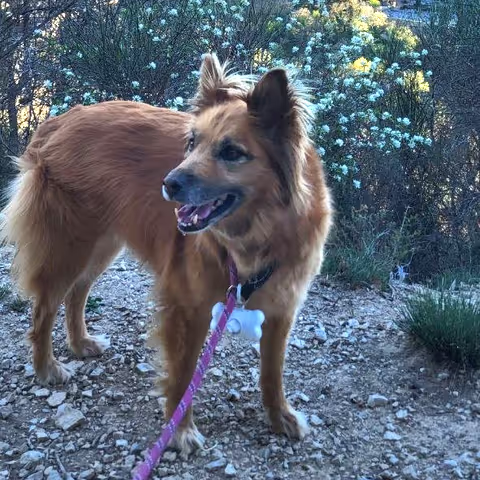
The Exchange Model: Being Honest With Yourself
This is the section most articles about separation anxiety skip. House sitting is an exchange. You provide free home and pet care. The homeowner provides free accommodation. Both parties get something meaningful from the arrangement. Neither party should be getting significantly less than they agreed to.
If a dog's separation anxiety is unmanageable to the point where it is affecting your sleep, your ability to work, or your basic daily function, that is a problem the homeowner has an obligation to address, not a burden you are required to absorb indefinitely. We had a sit in Portugal where a dog was sound sensitive, displayed resource guarding behaviour, and was at times aggressive. We knew our own abilities, we were confident we could manage it, and we stayed. But we were also fully within our rights to contact the platform, document the situation, and ask the homeowner to arrange alternative care if things had escalated beyond what we could safely handle.
The house sitting exchange does not include training someone else's dog unless you want to. It does not include losing a week of sleep so the homeowner can have a comfortable holiday while you deal with the consequences of an undisclosed behavioural issue. It does not mean working to improve the homeowner's life at the cost of your own wellbeing.
If an anxious dog's behaviour was not disclosed in the listing and it is clearly affecting your ability to function, the correct response is to document everything immediately, contact the homeowner in writing, and contact the platform to create a formal record.
What to film and when to film it:
Do the arrival walkthrough as soon as as possible when you have arrived at the property. Do it on arrival or when the house owners have left, while the state of the home and the animals is exactly as you found them. A timestamped phone video walking through every room, showing the animals' condition, the property's condition, and any details relevant to the listing takes five minutes and protects you if a dispute arises later. Our arrival walkthrough guide covers the departure documentation process. the same logic applies to arrival, and ideally you do both.
If the dog displays anxious or aggressive behaviour that was not disclosed, film that too. A thirty-second video of a dog howling the moment the door closes, or pacing at 2am, or guarding a space aggressively, is evidence that no written description can match. Send it to the homeowner and save a copy for yourself. If the situation escalates to a platform report, this footage is what turns an account into a documented case.
The platform exists partly for exactly these situations. A written record with the platform means that if the homeowner disputes your account later, there is a timestamp and evidence trail that protects you. It also means that if the same homeowner lists again with the same undisclosed behavioural issues, future sitters are more likely to be protected. Filing the report is not about making trouble. It is about protecting the community that the exchange model depends on.
Conclusion
The Manosque dog was one of our favourite sits. She was easy, affectionate, and uncomplicated. The separation anxiety was simply a fact about her that we managed by being present, keeping her routine, and taking her with us when we could. She jumped into the van when we left because she wanted us to stay.
Separation anxiety in a sit dog is manageable when you understand what it is, accept what it means for your schedule, and provide the consistency the dog needs. It is not a crisis. It is a dog telling you that its person matters to it and that you, for now, are close enough.
Read our leaving pets overnight guide and our day trip guide before any sit involving a dog the homeowner describes as clingy or velcro. The planning adjustments are small but they matter.
Join TrustedHouseSitters with 25% off and DM us @housesittersguide on Instagram with questions. We answer everyone.

Frequently Asked Questions
How do I know if a sit dog has separation anxiety?
Watch for shadowing (following you constantly), restlessness and pacing at night, howling or whining when you leave, and an intense greeting when you return. These behaviours indicate the dog is attached to your presence and distressed without it. The clearest test is to step outside for ten minutes and listen. or record the dog. What you hear tells you what happens when you are gone for two hours.
What is the most effective way to manage a dog with separation anxiety on a house sit?
Keep the established routine precisely. Feed, walk, and wake at the same times every day. Predictability is the primary management tool for anxious dogs. Consistent schedules can significantly reduce stress levels. structure gives the dog something to anticipate and reduces the ambient anxiety of not knowing what comes next. Be present where possible, take the dog with you on outings when you can, and keep separations short.
Should I try to train a dog with separation anxiety during a house sit?
On a short sit of one to two weeks, no. Desensitisation techniques require weeks of consistent practice to show results. Attempting them over ten days and then leaving can leave the dog in a worse state than when you arrived. Accept the anxiety as a feature you are managing rather than fixing. On a longer sit of a month or more, discuss with the homeowner before attempting any gradual departure training.
Should I tell the homeowner if the dog has separation anxiety?
Yes, especially if it was not disclosed. A factual update. "she howls when we leave and is calm when we are home". is useful information for the homeowner and sets a transparent tone. If the anxiety is severe enough to affect the dog's welfare or your ability to function, contact the homeowner immediately. Leave a note in the review so future sitters can prepare.


Responses
What are your thoughts on this post?