

Home > Blog > Saying Goodbye to Pets After a House Sit
Quick Facts
| Quick Facts | |
|---|---|
| Does it get easier? | Yes. Not because you care less, but because you learn to appreciate and let go |
| The hardest moment | Closing the door and seeing the pet on the other side of it |
| Do the pets notice? | Some do. Dogs especially. Some homeowners have told us the pet waited at the door after we left. |
| Does the connection end? | The contact usually does. The memory doesn't. |
| How Caro handles it | She cried in Luxembourg. She has gotten better at it. She still connects deeply with every animal. |
| How I handle it | I have moved so much in my life that transitions feel more natural to me. But I still think about specific pets years later. |
In Luxembourg, we had to close a glass door behind us as we left. The dog was on the other side of it, whimpering, pressing itself against the glass, trying to get through. Caro started crying. It was one of our earlier sits and she was not yet used to the goodbye. The dog was precious, absolutely lovely throughout the entire stay, and in that final moment the reality of what house sitting asks of you became very clear: you pour genuine care and affection into an animal for days or weeks, and then you close the door and drive away.
That moment in Luxembourg was the hardest goodbye we have had across 20 sits in 12 countries. It was not the last emotional one. But it was the one that taught us both something about what this lifestyle requires, beyond the cleaning and the routines and the five-star checkouts. It requires the ability to love something temporarily and let it go.
If you are interested in getting into house sitting, our book Travel More for Less puts the whole process in one place: clear, step by step guidance from your first questions to your first confirmed sit, and the reviews that open the door to the next one.
Two Different Ways of Handling It
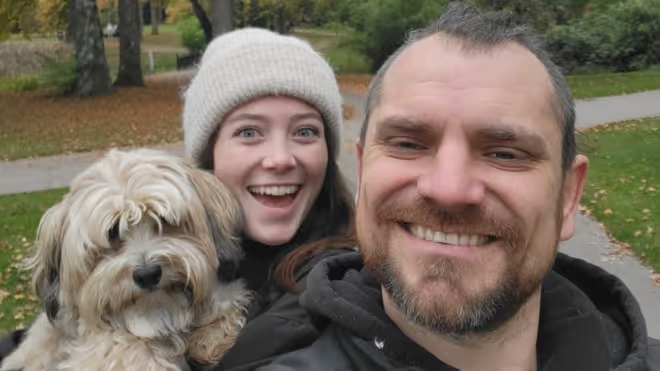
Caro and I experience the goodbyes differently, and I think that is worth saying because it means there is no single correct way to feel about this.
For me, leaving a sit does not feel particularly difficult. I have had a life where I was constantly moving, from country to country, house to house, long before house sitting started. Transitions are familiar. They are not something I resist or struggle with. When a sit ends, I appreciate what it was, I pack the van, and I move on. That is not coldness. It is just how my brain processes change after decades of it.
Caro is different. She has a big heart and she connects deeply with the animals during every sit. In Luxembourg, the goodbye through the glass door genuinely upset her. She cried. It was one of our first sits and she had not yet learned how to separate the affection she felt from the reality that the affection has an end date.
She has gotten much better at it over 20 sits. But getting better at it does not mean feeling less. At our current six-month sit in Portugal, Caro wakes up at 6am every morning, feeds the cat, and then lies on the couch. The cat joins her and gets scratches. That routine has been happening almost every single day for over a month. When this sit ends, that routine ends too. She knows that. It does not stop her from showing up at 6am every morning and being fully present for it.
That is the balance house sitting requires. Full presence during the sit, and the ability to let go when it is over.
The Pets That Waited at the Door
Some animals notice when you leave. Dogs especially.
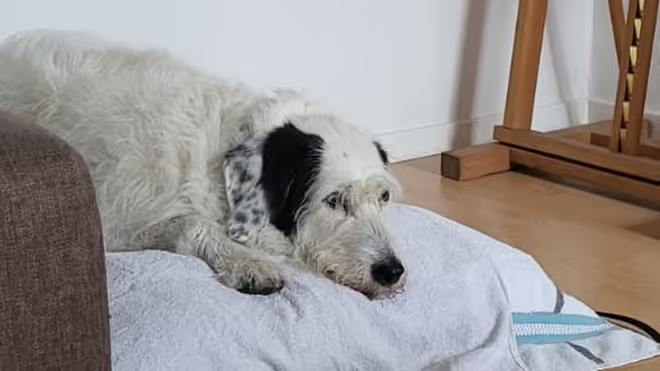
Almost ten years ago, I sat solo in Sydney over Christmas, looking after a toy poodle. When I left, the homeowners messaged me to say the dog had been lying in front of the guest bedroom door, waiting for me to come back.
The dog in Luxembourg whimpered at the glass door as we walked away.
In Manosque, the dog was attached to us throughout the 10-day sit and the goodbye had a weight to it that reflected how close the connection had become in a short time.
Not every pet reacts this way. The Labradors in Cortona were excited to see their owners return, which is exactly what a healthy, happy dog does. The cats on most of our sits barely registered our departure, which is exactly what a healthy, happy cat does. The reaction depends on the animal, its attachment style, and how long the sit lasted.
I do not usually ask homeowners how the pet reacted after we left. Part of me prefers not to know. The sit is over, the care was given, and what happens afterward belongs to the homeowner and their animal. Occasionally, the homeowner volunteers the information, and when they do, it is always bittersweet.
What We Actually Do on the Last Morning
The goodbye is not a dramatic event for us. It is woven into the checkout routine that we follow on every single sit.
The first thing we do when we get out of bed on the last morning is strip the sheets. For me, that is the meaningful transition. The bed you slept in is no longer yours. From that moment, the sit is ending and the process of leaving has begun.
We give the house a thorough clean. Kitchen surfaces, floors, bathroom. I take genuine pride in leaving a home cleaner than it was when we arrived. The cleaning process is not just courtesy. It is a form of closure. By the time the house looks like we were never there, the mental shift has already happened. We have moved from being residents to being guests who are on their way out.
We do the morning pet routine as normal. Feed, walk, whatever the day requires. The pets do not know this is the last morning. The cat gets the same breakfast. The dog gets the same walk. There is something grounding about that: the routine does not acknowledge the ending, even if you do.
We do the final video walkthrough. We lock up. We send a final message to the homeowner. And we drive away.
There is no dramatic farewell with the pets. No extended cuddle session designed to make us feel better about leaving. The routine is the routine, maintained to the very end. That consistency is, I think, one of the kinder things we can do for the animal. A normal last morning is less confusing for a pet than an emotionally charged one where the humans are behaving differently from every other morning of the sit.
The Contact Afterward
In most cases, the contact with the homeowner stops or fades naturally after we leave. We always send a follow-up message thanking them for the experience and letting them know we would love to hear how the pets are doing. Sometimes that starts an ongoing conversation. More often, it does not. Our homeowner friendship article covers the dynamics of which sit relationships continue and which ones don't.
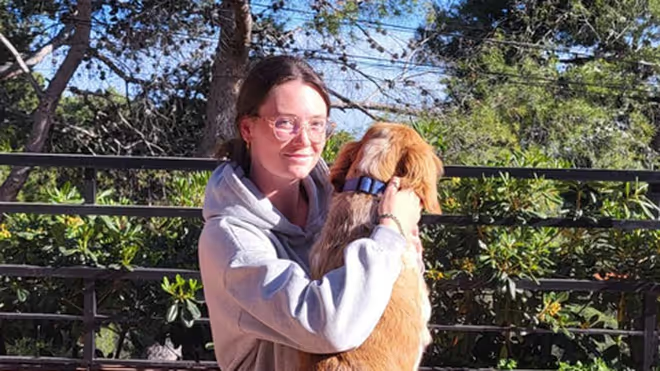
Caro recently came across a video on Instagram of a French Bulldog and sent it to the homeowner from the Athens sit. Not to stay in contact particularly. Just to say: we still remember your dog. That small gesture, months after the sit ended, is the kind of thing that keeps a connection alive without forcing it. The homeowner responded warmly. Nothing more was needed.
The memories persist regardless of whether the contact does. Every now and then, Caro and I look back through photos from previous sits and reminisce about specific pets, specific homes, specific mornings. The Luxembourg dog. The Athens French Bulldog. The Cortona Labrador who climbed three flights of stairs every night to sleep in our room. These animals are part of our story now, even though we will probably never see most of them again.
Does It Get Easier?
Yes. Not because you care less about the animals, but because you get better at appreciating what something was without needing it to continue.
This is a skill that house sitting develops whether you intend it to or not. After enough sits, after enough goodbyes, you learn to be fully present during the time you have with an animal and then let go when that time ends. The two are not in conflict. Caring deeply and letting go cleanly are not opposite things. They are the same skill applied at different moments.
Caro still gives every animal the same level of attention and affection that she gave the Luxembourg dog on our first sits. She still wakes up at 6am for the cat in Portugal. She still sends French Bulldog videos to homeowners months after the sit ended. What has changed is not the depth of connection but the ease with which she navigates the ending. The tears in Luxembourg were real and they reflected how much she cared. The absence of tears at later goodbyes does not mean she cares any less. It means she has learned that endings are part of the arrangement, and that the care she gave during the sit is not erased by the fact that it ends.
For me, the process has always been slightly easier because of how I grew up. But even I still think about specific animals from years ago. The poodle in Sydney. The dog in Luxembourg. The cat in our current Portugal sit that I already know I will miss in five months.
What This Teaches You
There is a broader lesson here that extends beyond house sitting, and I will keep it brief because the article is not meant to be a philosophy lecture.
At some stage in life, everyone has to let go of something they care about. A home, a relationship, a job, a pet. House sitting compresses that experience into a repeating cycle. Every few weeks, you build something, you enjoy it, and you release it. The more you do it, the more natural it becomes. Not easy. Natural.
That ability to appreciate something fully while knowing it is temporary is, I think, one of the genuine gifts of this lifestyle. It does not make the goodbye in Luxembourg feel good. But it makes the 6am mornings with the cat in Portugal feel more precious, because somewhere in the back of your mind you know this too will end, and that knowledge makes you show up for it more fully rather than less.
Conclusion
The hardest part of house sitting is not the cleaning, the travel, the unfamiliar kitchens, or the burnout from moving too fast. It is closing the door and seeing the animal on the other side of it, knowing that the connection you built is over and the pet does not understand why you left.
It gets easier. It never becomes nothing. And the fact that it still matters, that Caro still cries sometimes and I still think about a poodle from almost ten years ago, is not a weakness of the lifestyle. It is proof that what happens during a sit is real.
Caro and I have completed 20 house sits across 12 countries, driven 19,000km in Australia and 24,000km in our 1998 VW T4, and saved over $26,500 in accommodation costs over three years of house sitting. If you have questions about any part of this lifestyle, send us a message on Instagram, we read every DM.

Frequently Asked Questions
Is it hard to say goodbye to pets after a house sit?
It depends on the person and the animal. Caro connects deeply and the early goodbyes were genuinely emotional, including crying at one of our first sits. I find transitions easier because of how I grew up. It gets easier with experience, not because you care less, but because you learn to appreciate something fully while accepting it is temporary.
Do pets notice when a house sitter leaves?
Some do, especially dogs on longer sits. We have had homeowners tell us their dog waited at the door of the room where we slept. Other pets, particularly cats, show little visible reaction. The response depends on the individual animal, how long the sit was, and how strong the bond became during that time.
How do you stay in touch with pets after a house sit?
The contact usually fades naturally after the sit. We always send a follow-up thank you message and sometimes ask how the pets are doing. Occasionally something keeps the connection going, like Caro sending a French Bulldog video to the Athens homeowner months later. But we do not force ongoing contact. Some sit relationships become friendships and others do not, and both are fine.
Does saying goodbye get easier over time?
Yes. After 20 sits, the goodbye is still real but the emotional weight has shifted. You learn to be fully present during the sit and then let go when it ends, without those two things being in conflict. The care you give during the sit is not diminished by the fact that it has an end date.
Should I avoid bonding with pets to make the goodbye easier?
No. The bond is the point. A sitter who holds back emotionally to protect themselves from the goodbye will provide less attentive care and have a less meaningful experience. The better approach is to bond fully and trust that the goodbye, while it may be difficult, does not erase what the sit gave you and the pet.
What helps with the transition at the end of a sit?
A consistent checkout routine helps more than any emotional strategy. Strip the bed first thing, clean the house, do the final pet routine as normal, complete the video walkthrough, and leave. Keeping the last morning as close to a normal morning as possible is kinder to the pet and cleaner for you than an emotionally charged farewell.




Responses
What are your thoughts on this post?