

Home > Blog > Running Errands and Groceries During a House Sit
Quick Facts
| Sitter's food | Always the sitter's responsibility — no exceptions |
| Homeowner food in the fridge | Eat what will go off, replace what you used, leave everything else |
| Toilet paper and cleaning products | Homeowner provides basics; sitter replenishes on longer sits |
| Our Portugal sit | We replace toilet paper, washing liquid, dishwasher liquid as needed |
| The empty fridge | Not a problem — more space for our food |
| Errands beyond pet care | Happy to help if asked, not if assumed |
| The right question to ask yourself | Is this worth arguing about relative to free accommodation in a great home? |
Sitters buy their own food and an empty fridge is space, not an insult. On a short sit the homeowner supplies basics such as toilet paper and dish soap; on longer sits we replenish as we go, maybe €50 across six months. Errands come as questions, not instructions.
The house sitting exchange is accommodation in return for pet and home care. No money changes hands in either direction. Groceries, errands, and household consumables sit outside that exchange entirely. And most of the friction in this area comes from both parties assuming the other person's position rather than discussing it upfront.
If you are interested in getting into house sitting, our book Travel More for Less puts the whole process in one place: clear, step by step guidance from your first questions to your first confirmed sit, and the reviews that open the door to the next one.
Use our 25% discount when joining.
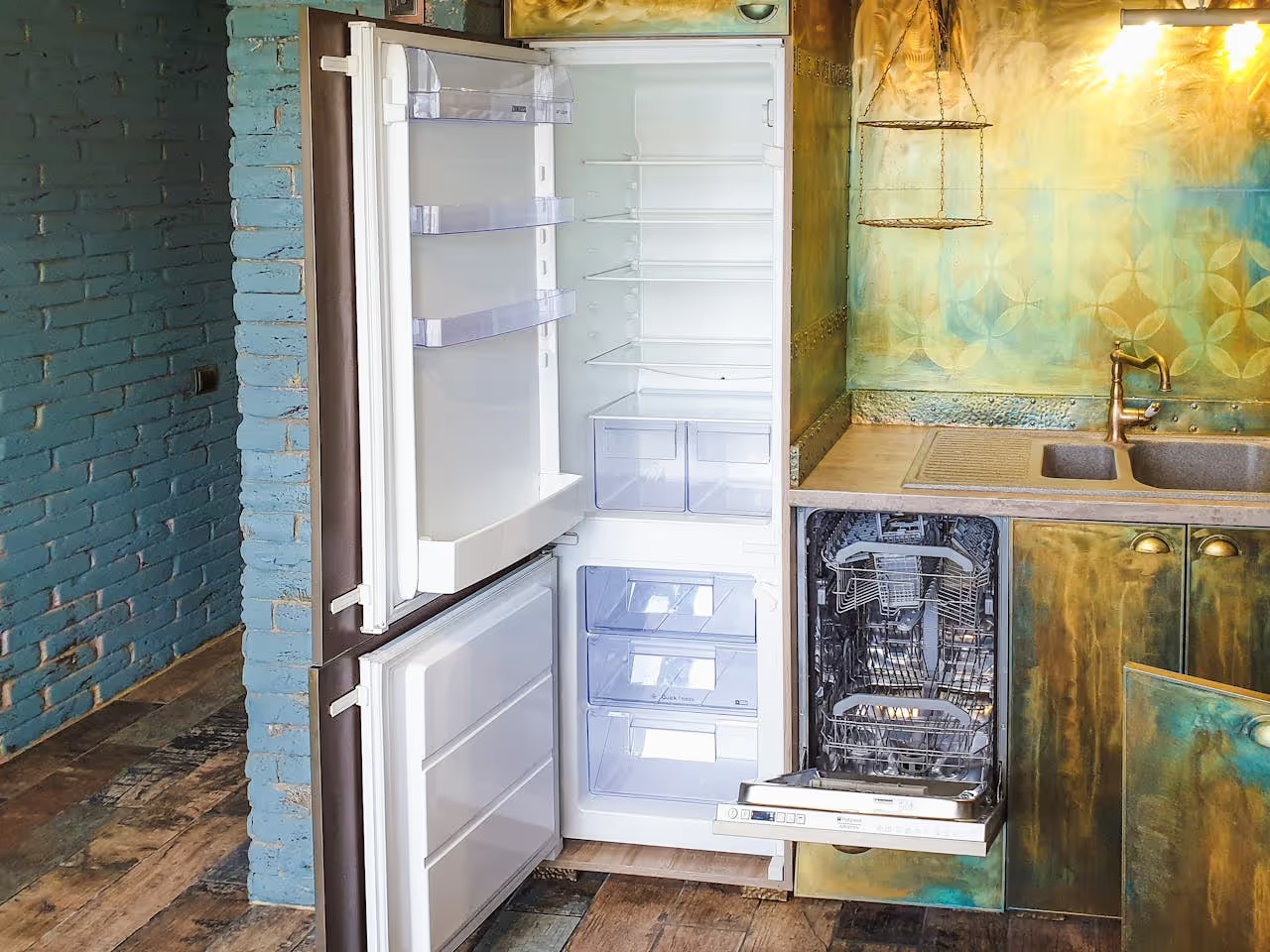
The Empty Fridge: Not the Problem People Think It Is
The community discussion about homeowners leaving an empty fridge for arriving sitters is one of the more persistent complaints in house sitting forums. Having arrived to empty fridges ourselves, I want to offer a different perspective.
An empty fridge is not unwelcoming. It is space. Caro and I eat organic food as much as possible. It would make no sense to expect a homeowner to stock up with our preferences before we arrive. We do not expect them to. What an empty fridge means in practice is that we can fill it with exactly what we want, in exactly the arrangement we want, without moving anyone else's things to make room.
The genuine problem is when the fridge is empty and also full. Stacked with the homeowner's food with no space for the sitter's groceries. That is a practical problem. An empty fridge is not.
A homeowner who leaves a small welcome item. A bottle of wine, a note with a local café recommendation, some coffee or tea. Has made a warm gesture that sets a positive tone for the sit. This is truly appreciated and the community data consistently shows it matters to sitters. But it is a gesture, not an obligation. The absence of it does not make a homeowner inconsiderate. Our welcome guide article covers what a well-prepared homeowner handover looks like.
The Food Rule: Simple and Non-Negotiable
Sitters buy their own food. This is the foundation and it does not require discussion.
The nuance is around what happens to the homeowner's food that is already in the kitchen. The approach that works: eat anything that will go off before the owners return, replace things you specifically used from the pantry (a jar of pasta sauce, a bottle of oil), and leave everything else exactly as it was.
If the homeowner says "help yourself to anything," interpret this conservatively. It means the condiments and cooking essentials, not the contents of the freezer. If you are uncertain about something specific. A bottle of wine, something in the back of the pantry. Ask before the sit rather than after. Our what house sitters can and cannot change guide covers the broader principle of respecting the household as you found it.
Household Consumables: The Toilet Paper Question
This is where the community generates heat disproportionate to the actual cost involved.
For short sits of a week or two, the homeowner should provide enough toilet paper, dish soap, cleaning products, and basic supplies to last. It makes no sense for a sitter staying a fortnight to purchase a multipack of toilet rolls. Arriving to no toilet paper. As happened on our resource-guarding dog sit in Portugal. Is not welcoming. We travel in the campervan and had our own, but a sitter arriving by plane without supplies would have had an immediate problem from the very first hour.
For longer sits. And we are three weeks into one right now. The dynamic changes. We replace toilet paper when we run out. We buy our own washing liquid. When the dishwasher soap runs low, we top it up. Not because we are obligated to. Because we are living in the home for six months and the cost of replenishing a bottle of soap is negligible relative to the value of six months of accommodation in a beautiful property.
Here is the honest calculation: over six months, consumables we replace cost perhaps €50. Arguing about that €50 in the context of six months of free accommodation would be the definition of missing the point. And beyond the money, I think about what the homeowner returns to. After six months, I want them to walk through the door and be able to immediately get on with their life. Not have to do an emergency run to the shops because the toilet paper ran out. That small thing communicates respect, and it compounds with everything else we have done. The garden is maintained, the pets are healthy, the house is clean. The toilet paper is full.
This is not a rule for every sitter in every sit. It is a personal approach built on a particular belief about how the exchange works at its best.

Errands: The Question Versus the Statement
The only errand we have been asked to do consistently across sits is collecting the mail and bringing it inside. Which we cover in the handling deliveries guide. Anything beyond that has not been asked of us, and the reason I think this is the case is that our homeowners truly understand the exchange.
If a homeowner did ask for something beyond the standard sit. Picking something up, dropping something off, doing a small favour. The framing is what matters. A question ("would you be able to...?") is very different from an instruction ("please do this while you are there"). A question allows an honest answer. An instruction assumes the task is part of the arrangement when it may not be.
We would have no issue with a reasonable ask framed as a question. The overwhelming majority of homeowners are reasonable people. The few who are not. The ones who treat a sitter as a combination pet carer and personal assistant. Are revealing something about their understanding of the exchange, and that usually shows up in other ways before the errand requests start.
Airport runs, shopping for the homeowner's return, driving people to appointments. These are not house sitting responsibilities. They are favours that require a question. If a homeowner asks and a sitter says no, that no should carry zero consequence for the review or the relationship. If it does, that is information worth having about the homeowner before confirming future sits.
When to Speak Up and When to Let It Go
The community debate about household consumables is disproportionate to the actual stakes in almost every case. A toilet paper roll is not worth a three-star review. A missing jar of dish soap is not worth a dispute with the platform.
The question to ask before escalating any consumables issue: is this sit successful on the things that actually matter? Are the pets healthy and happy? Is the house in good condition? Was the communication good? If yes to those questions, then a bottle of cleaning liquid that ran out does not warrant anything beyond replacing it and moving on.
If the consumables issue is symptomatic of a broader pattern. An owner who has consistently misrepresented the sit, who has added expectations at the last minute, who makes the sitter feel like an unpaid housekeeper. Then the issue is the pattern, not the toilet paper. Document that pattern and address it properly. Our misrepresented listing guide covers how to handle sits where the reality has diverged significantly from the listing.
The sitters who build long-term relationships with homeowners, who get invited back, who receive warm reviews and genuine appreciation, are not the ones who draw the line at every expense below ten pounds. They are the ones who invest a little beyond the minimum and find the relationship reflects that investment.
Caro and I have received five-star reviews on every sit. We have homeowners who have stayed in touch for years. We have been invited back multiple times. Some of that is the quality of pet care and house maintenance. Some of it is this approach. The extra bag of toilet rolls bought without calculating whether we had to.
Join TrustedHouseSitters with 25% off and DM us @housesittersguide on Instagram. We answer everyone.

Frequently Asked Questions
Who is responsible for groceries during a house sit?
The sitter buys their own food. Always. The homeowner provides food for the pets. Homeowners are not expected to stock the fridge for the sitter's meals, though a small welcome item is a warm gesture that sets a positive tone. An empty fridge is not an insult. It is space for the sitter's own food.
Should a homeowner provide toilet paper and cleaning products?
Yes, for a standard sit. Homeowners should leave basic consumables for the duration. For a week or two, it makes no sense for a sitter to purchase household basics. For longer sits of a month or more, sitters can reasonably expect to replenish items as they run out. Arriving to no toilet paper at all. Regardless of sit length. Is truly inconsiderate.
Can homeowners ask sitters to run errands?
Yes, if framed as a question rather than an expectation. Collecting mail, taking in a package, a small one-off favour. These are reasonable asks if the sitter is given the option to say no without consequence. Airport runs, shopping for the homeowner's return, and regular errands beyond pet and house care are not part of the house sitting exchange and should never be assumed.
What should I do if the pantry is full of the homeowner's food and there is no space for mine?
Mention it to the homeowner. It is usually an oversight. Ask them to clarify which shelves or fridge space is allocated for the sitter. If the welcome guide is silent on this, it is a good pre-sit question to add to the video call checklist. Our pre-sit video call guide covers what to confirm before arrival.
Is it worth leaving a negative review over missing household supplies?
Almost never. Unless it is part of a broader pattern of misrepresentation. A missing roll of toilet paper or an empty bottle of soap is not worth a star rating. The questions that determine a sit's review are: were the pets well cared for, was the house in good condition, and was communication good? If those are all yes, the consumables are a footnote.


Responses
What are your thoughts on this post?