

Home > Blog > Resource Guarding Dog House Sit
Quick Facts
| What is resource guarding? | A dog defending an object, space, or person it perceives as its own |
| Most common triggers | Bed, food bowl, favourite sofa spot, specific toys |
| First night risk | Guarding behaviour often appears on night one when routine is disrupted |
| Safe management: bed guarding | Leave the room, let the dog follow, close the door behind him |
| Sound reactivity | Separate issue, bark at anything from planes to phone audio |
| If undisclosed | Message the homeowner in writing, contact THS support, and use the report feature for a paper trail |
| Do not do | Try to physically remove a resource-guarding dog from a space |
| Our reactive dog walking guide covers on-lead aggression and public incidents |
This is the article that does not exist anywhere: what to do when a dog resource guards inside the home, what it means for your safety, how to document it, and when an undisclosed behaviour like this crosses a line that justifies ending the sit.
We are on our current six-month house sit in Portugal, but this article is about a different, earlier one, three months before this, that ended up being the most uncomfortable sit we've had.
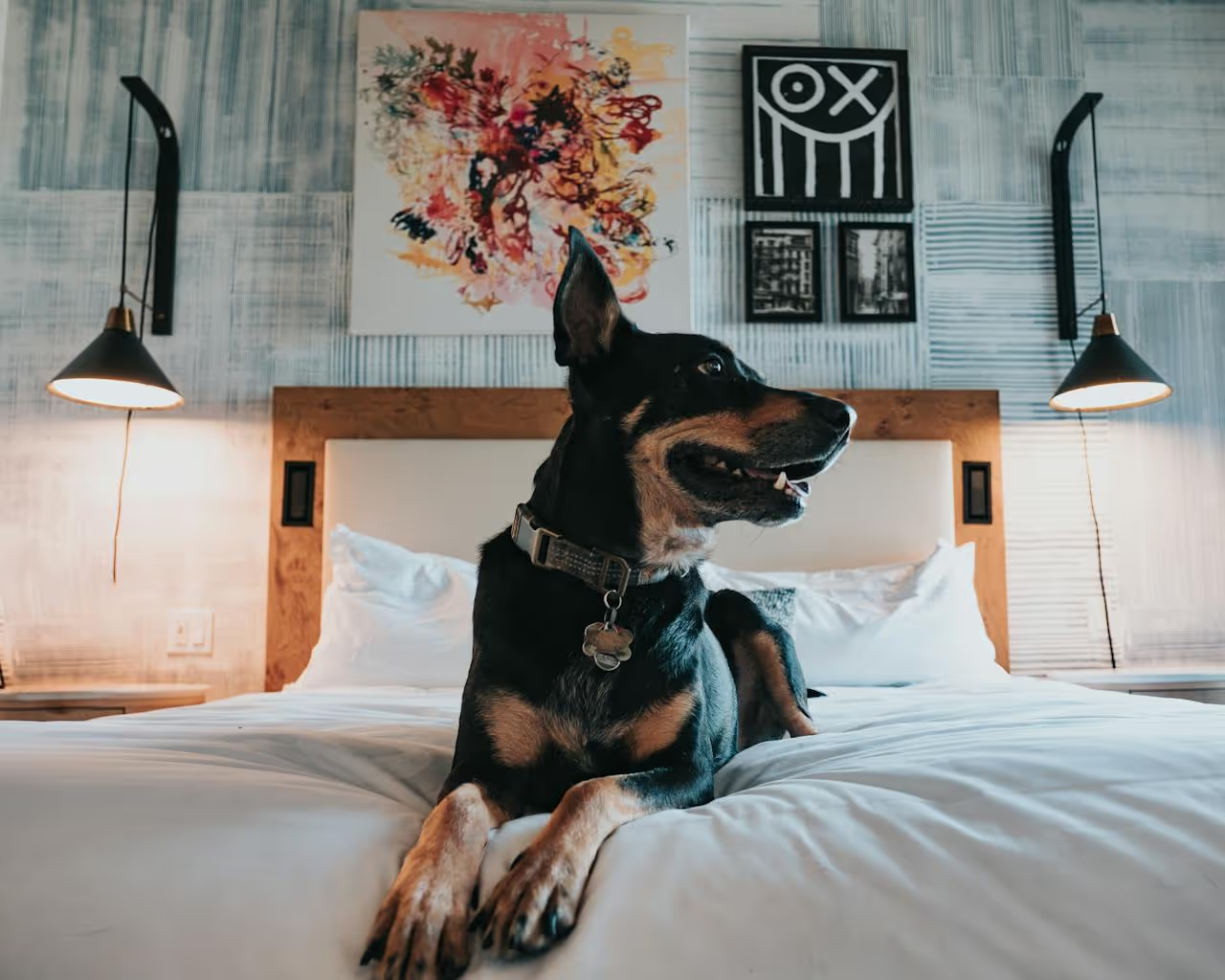
The dog was a sheepdog mix, around 20 to 30kg, one and a half years old, castrated, and in almost every respect a friendly and affectionate animal. Our first night, he jumped into the bed early. When I moved to get in beside him, he started growling. When he shifted from the foot of the bed toward our faces, I felt truly uneasy. Every time I moved, he growled and snapped.
We left the room. He followed. We closed the bedroom door with him on the outside and got what sleep we could before he woke us at 7am by barking.
If you are interested in getting into house sitting, our book Travel More for Less puts the whole process in one place: clear, step by step guidance from your first questions to your first confirmed sit, and the reviews that open the door to the next one.
Resource Guarding vs Reactive Aggression: Two Different Problems
Resource guarding and reactive aggression are both forms of dog aggression, but they have entirely different triggers and require different responses. Conflating them leads to the wrong approach.
Resource guarding happens when a dog believes it owns something (a space, an object, a person) and perceives you as a threat to that ownership. The bed is one of the most common triggers, particularly for young dogs who have been allowed to sleep in it. The dog is not hostile to you generally. It may be affectionate and playful in every other context. But the moment you enter the guarded resource, the threat response activates. Growling, snapping, and a hard stare are the warning sequence. The dog is communicating: this is mine, leave it.
Reactive barking is a different pattern. A dog that barks at planes, wind, sounds from your laptop, distant dogs, and any noise it detects is experiencing sound sensitivity or generalised arousal, not defending a specific object. The two coexisted in this dog.
Our reactive dog guide covers the on-lead, public-facing version of aggression: other dogs approaching, lunging on walks, managing a strong dog through busy environments. This article covers what happens inside the home, in the dark, when you are trying to sleep.
The First Night: What Actually Happened
This sit was meant to run eight days. It ended early, though not by our choice, more on that shortly.
The homeowner had mentioned during the handover that the dog preferred to sleep in the bed with us, and since the bed was large enough, we didn't anticipate a problem going in. What happened that first night is described above. He never made contact, but the intention of the behaviour was unmistakable.
At that point, getting him off the bed by force was not an option. Physically removing a resource-guarding dog from a space it is defending is the fastest route to a bite. The correct response, which we used, is to remove yourself rather than the dog.
We both got up and walked out of the bedroom. He followed immediately. We walked to the living room, closed the bedroom door behind us with him on the outside. The door trick works because the dog's motivation was to be with us, not to be in the bed specifically. Once we were in another room, the bed stopped being the contested resource.
The problem shifted: he barked throughout the night at every sound. We sent a message to the homeowner at 1am. She did not respond until 9am, and when she did, she told us to give him space and did not meaningfully acknowledge the behaviour. We also contacted TrustedHouseSitters support to create a documented record of the situation.

Why This Happens: Young Dogs and Learned Guarding
A one-and-a-half-year-old dog that has always slept in the bed has learned, through that experience, that the bed is its space. When a stranger gets into that space, the learned response is to defend it. This is not predatory aggression. It is a territorial behaviour that has been inadvertently reinforced by the homeowner over eighteen months.
Castration does not reliably reduce resource guarding. The behaviour is learned rather than hormone-driven, which means castration has minimal effect on it. A dog this age with this pattern has likely been doing it for a significant portion of its life.
The absence of a welcome guide made this a surprise. There was no listing disclosure of guarding behaviour and no written handover document, and questions about specific pet behaviour like this belong squarely in the pre-sit video call, not left to a verbal list at dinner.
The homeowner created a list during dinner which we went through verbally, and described the dog as "a little snappy at night," a description that did not remotely prepare us for what we actually experienced.
Verbal handovers miss the edge cases. A dog that has never guarded with the owner, because the owner is not a threat to the resource, may never have triggered the behaviour at home. The homeowner may not know it is a problem because they have never been the unfamiliar person trying to get into their own dog's bed. In our case, we don't think that was the full explanation, more on that below.
Managing Resource Guarding Inside the Home
The key principle: never try to remove a resource-guarding dog from the resource it is defending. You will get bitten. Work with the behaviour, not against it.
| Situation | What to do | What not to do |
|---|---|---|
| Dog growling on bed | Leave the room calmly, do not reach toward the dog | Grab collar, push dog off, yell |
| Dog won't leave resource voluntarily | Walk toward another room, most dogs follow their person | Stand your ground and escalate the confrontation |
| Once dog has followed you out | Close the door before the dog can re-enter | Chase the dog or try to block it in the room |
| Dog guarding food bowl | Feed in a separate room, do not approach while eating | Reach for the bowl or stand over the dog while eating |
| Dog guarding a toy | Trade with a high-value treat, "drop it" with reward | Pull the toy from the dog's mouth |
| General space guarding | Avoid the specific spot; create an alternative comfortable space | Force the dog off the sofa or out of its preferred area |
For the bed specifically, the practical solution for a house sit is to simply not contest it. Sleep elsewhere if the dog guards the bed. Establish a clear routine before lights out: dog out of the room, door closed, white noise or a fan to mask triggering sounds. The dog loses the resource temporarily but gains your company, which is usually sufficient.
Sound Reactivity: Managing the Barking
Sound reactivity is a separate issue from resource guarding but often coexists in young, energetic, or high-arousal dogs. A dog that barks at planes, wind, sounds from your phone or laptop, and distant dogs is not aggressive toward you. It is over-stimulated by the environment.
The short-term management strategies that tend to help:
White noise or a fan running throughout the night masks intermittent environmental sounds and reduces the number of triggering events. This is the single most effective overnight intervention.
Keep your own audio low, particularly phone and laptop speakers. A dog that is barking at the sound from your screen will stop if the screen is quieter or headphones are used.
Do not react to the barking. Attention, even negative attention, reinforces the behaviour. Silence and ignoring is the correct response for sound-reactive barking not directed at a threat.
Exercise before the barking window. A dog that has had a long walk and is physically tired is less aroused and less likely to react to ambient sounds. If the barking is primarily nocturnal, a long late-evening walk before bed is worth trying.
| Issue | Short-term management | What to avoid |
|---|---|---|
| Barking at sounds from devices | Use headphones; reduce speaker volume | Yelling at the dog to stop |
| Barking at ambient sounds overnight | White noise or a fan running | Engaging with the dog when it barks |
| Barking at distant dogs or planes | Do not react; let it pass | Opening the door or window to see what the dog heard |
| Barking at the closed bedroom door | White noise; ignore; it typically reduces over 20-30 minutes | Opening the door to check on the dog every time it barks |
Documentation: Why the 1am Message Matters
We sent a message to the homeowner at 1am. She responded at 9am. The response was minimal. We also contacted THS live support to document the situation, and if this happened today, we would additionally use TrustedHouseSitters' report feature, a relatively new addition to the platform that makes it straightforward to formally flag a homeowner or sitter as a safety concern, creating a clear paper trail attached to their account rather than something buried in a support chat log.
This paper trail matters for several reasons.
If the behaviour escalates during the sit, you have a timestamp record of when you first reported it. The homeowner cannot later claim she was not informed.
If you decide to cancel the sit, the documented communication supports your position that the behaviour was undisclosed, that you reported it promptly, and that the homeowner's response did not resolve the situation.
If THS reviews the homeowner's account, they have documented evidence of the behaviour and the response. A homeowner whose dog has a pattern of this behaviour and who does not disclose it to sitters creates a risk for every subsequent sitter who accepts that listing, exactly the kind of pattern our dispute resolution guide covers if it ever needs to go further than a direct conversation.
Using the report feature specifically, rather than relying only on a support chat, ensures this is logged against the account itself, not just in a conversation that may not be easy to retrieve later.
THS support via live chat may route you through an AI that cannot handle nuanced situations well. If you reach a dead end with the AI, follow up via email to membership services, and use the report feature directly, so the issue is logged in writing rather than lost in a chat thread.
The platform does have grounds to act here. THS terms require homeowners to disclose relevant pet behaviour, particularly anything that could affect sitter safety. A guarding dog that growls and snaps at sitters in bed is relevant information that belongs in the listing.
What Actually Happened Next
We stayed. It was, honestly, probably the worst sit we've had, but it resolved better than that first night suggested it would.
As we raised the severity of the behaviour with the homeowner over the following days, she grew increasingly frustrated, and her messages started to read as though we were somehow responsible for her own dog lunging at us and barking through the night. That was a genuinely uncomfortable dynamic to manage on top of the sleep deprivation.
She did offer us a dog trainer to consult, which we took her up on, and the trainer agreed with almost everything we were already doing. Playing soothing background sound on a loop through the night helped the dog settle and noticeably reduced the sound reactivity. Removing the dog from the bedroom entirely, rather than letting him back in once he'd settled, stopped the guarding cycle from restarting. We also separated the two dogs in the home, one in each part of the house, which reduced the overall arousal significantly.
The first three nights were close to sleepless. By the fourth, the dog had genuinely settled, sleeping through with the sound loop running, no barking, no guarding. If the sit had continued at that point, it would have been a good one. The frustrating part: whenever the homeowner had the dog back in her own care between our shifts, she'd let him back into the bedroom, which reset the guarding behaviour every time. She was, by her own account, working on the issue, but undoing that work herself the moment she had the dog again.
The homeowner returned early, cutting the already-short eight-day sit even shorter. We didn't ask her to. Given how the communication had gone, we were relieved rather than disappointed, and if you ever find yourself needing to formally end a sit yourself rather than waiting for a homeowner to return, our cancellation guide and our guide to recovering from a cancelled sit both cover the practical steps.
She left a five-star review, though a fairly bland, generic one, and we had to actively request it, since we suspect she would otherwise have skipped leaving one at all given how the relationship had soured. Once the sit ended, we didn't stay in contact.
Looking back, we think we handled the actual dog management well. What we'd do differently is the decision at the very start: if a homeowner has understated a dog's behaviour to this degree, that's worth treating as a serious problem on its own, separate from whether the behaviour itself turns out to be manageable.
We wouldn't take on a sit like this again under the same circumstances. If a homeowner has genuinely misrepresented a pet's temperament, our guide on what to do when a listing has been misrepresented covers exactly this pattern, and we'd apply it far more firmly next time, including being willing to walk away entirely rather than staying to manage a risk we were never accurately told about.
What a Welcome Guide Should Have Said
This situation is a direct result of an absent welcome guide. The homeowner created a verbal list at dinner. Verbal lists miss edge cases, particularly ones the homeowner has normalised, or in this case, understated.
A complete welcome guide for this dog would have included: dog sleeps in the bed with the owner, dog may guard the bed with unfamiliar people, suggested approach if guarding occurs, whether there is a dog bed in another room, and the sound reactivity note.
None of that was provided. It is worth raising this with the homeowner not as a complaint but as information: "We weren't sure what to expect with the bed. It would help future sitters to know about this in the welcome guide." That comment costs nothing and may result in the next sitter being better prepared.
Our no welcome guide article covers what to do when written handover materials are missing entirely and what questions to ask at the in-person handover to surface exactly this kind of issue before night one.

Why Honesty in the Listing Matters More Than Convenience
There's an important distinction worth drawing here. A homeowner who slightly undersells how much work a garden needs, or forgets to mention the cat is a fussy eater, is a normal, low-stakes gap that most sitters can absorb without much issue. This was not that.
The homeowner knew the dog was snappy. She even told us, only in person during the handover, that she herself placed pillows between her and the dog as a barrier when she slept with him. She also mentioned, again only in person, that the dog was going through what she called a "ghosting phase," informal owner language for a stretch where a dog seems to react, bark, or snap at seemingly nothing, often attributed to sounds, smells, or shadows the dog picks up on that a person can't. None of this was in the listing. None of it came up on a video call. Both of those would have been the right place for it, and both were skipped.
This isn't a minor omission. If that dog had made contact rather than just growling and snapping in warning, the injury to either of us could have been serious. A homeowner who knowingly withholds a real safety risk, specifically so a sitter accepts the sit and their holiday can go ahead as planned, is putting a real person at genuine physical risk for their own convenience. That's a different category of problem entirely from a listing that's simply a bit optimistic about the housework involved.
Our honest view: a homeowner who does this knowingly shouldn't be on the platform at all. Misrepresenting the property or the pet's routine is one thing. Concealing a known bite risk so a booking goes through is something else, and it's exactly the kind of pattern the report feature exists for, not just a bad review, a formal flag on the account.
Conclusion
Resource guarding is common in young dogs who have been allowed unrestricted access to high-value spaces like beds. It is manageable with the right approach, and we proved that to ourselves the hard way: leave the resource rather than contest it, remove the dog from the space entirely rather than letting it back in once settled, and use consistent non-engagement and soothing sound to bring down the overall arousal. By night four, ours was a completely different, genuinely pleasant dog to be around.
The failure here was disclosure, not dog behaviour. A dog described as "a little snappy" turned into one of the most uncomfortable first nights we've had, and that gap between what we were told and what we experienced is the real lesson, the same underlying issue covered in our broader house sitting legal issues guide and our general house sitting safety guide.
Message the homeowner. Contact the platform. Use the report feature to create a proper paper trail. And if a homeowner has genuinely misrepresented how serious a behaviour is, treat that as the real problem, separate from whether you can manage the behaviour itself. You are allowed to walk away, and next time, we would.
Caro and I have completed 20 house sits across 12 countries, driven 19,000km in Australia and 24,000km in our 1998 VW T4, and saved over $26,500 in accommodation costs over three years of house sitting. DM us @housesittersguide on Instagram if you are in a similar situation right now. We answer everyone.

Frequently Asked Questions
What should I do if a dog growls at me on the bed during a house sit?
Leave the room calmly without reaching toward the dog. Most resource-guarding dogs will follow you when you leave, which allows you to close the bedroom door behind them. Do not attempt to physically remove the dog from the bed. That is when bites happen. Our reactive dog guide covers other forms of aggression including on-lead incidents on walks.
What is resource guarding in dogs and is it dangerous?
Resource guarding is a dog defending a space, object, or person it perceives as its own. It ranges from mild (stiffening and hard stare) to serious (snapping and biting). A dog that growls on a bed is warning you. The behaviour is dangerous if you ignore that warning and escalate the confrontation. Managed correctly by removing yourself from the resource, the risk is low. Our dog body language table covers the warning sequence in detail.
Does THS cover incidents involving resource guarding?
The THS Third Party Liability plan on Standard and Premium covers injury caused to third parties by the pet due to sitter negligence. For the sitter's own safety, personal health or travel insurance applies. If the guarding behaviour was undisclosed, THS may review the homeowner's account. Contact Membership Services in writing, use the platform's report feature, and document the behaviour and the homeowner's response. See our insurance guide and pet injures another person guide.
Should I cancel a house sit because of resource guarding?
It depends on whether the behaviour is manageable and whether the homeowner was honest about it beforehand. In our own case, the dog genuinely settled within a few nights using consistent management, and the sit became manageable. What we'd weigh far more heavily now is whether the homeowner accurately described the behaviour upfront. Ours described a dog that lunged and snapped as merely "a little snappy." If a homeowner has significantly understated a safety issue, that's grounds to walk away regardless of whether the behaviour itself turns out to be manageable.


Responses
What are your thoughts on this post?