

Home > Blog > Remote Work Routine During House Sitting
Quick Facts
| Typical working day | Up at 6am for the cat, laptops by 8am, stop 4 to 6pm. |
| First week productivity | Expect about a week of adjustment, not 48 hours. |
| Biggest productivity lever | Sleep quality first, then one focused project, not five. |
| Days off? | One full day weekly, non-negotiable. They take Mondays. |
| Articles per day | Three high-quality articles a day, down from thirty poor ones. |
| Best sit length | Two months minimum, six if possible, for real focus. |
The most productive working setup available to a remote worker is a long house sit in a comfortable home. The animals structure the day, the accommodation cost is zero, and without the pressure of planning the next stage of a trip, the mental space for focused work opens up in a way that shorter sits and conventional travel cannot produce. The key is one project at a time, one protected day off per week, and enough sleep to actually function. Everything else follows.
I am writing this from inside the Portugal sit. Six months, one cat, four chickens, a garden, and as of three weeks in the most consistently productive working period of the entire trip. Caro is on the couch with her headphones in, building out her teaching resource platform. I am at the desk, writing this article.
If you are interested in getting into house sitting, our book Travel More for Less puts the whole process in one place: clear, step by step guidance from your first questions to your first confirmed sit, and the reviews that open the door to the next one.
The Daily Rhythm: What a Good Working Day Looks Like
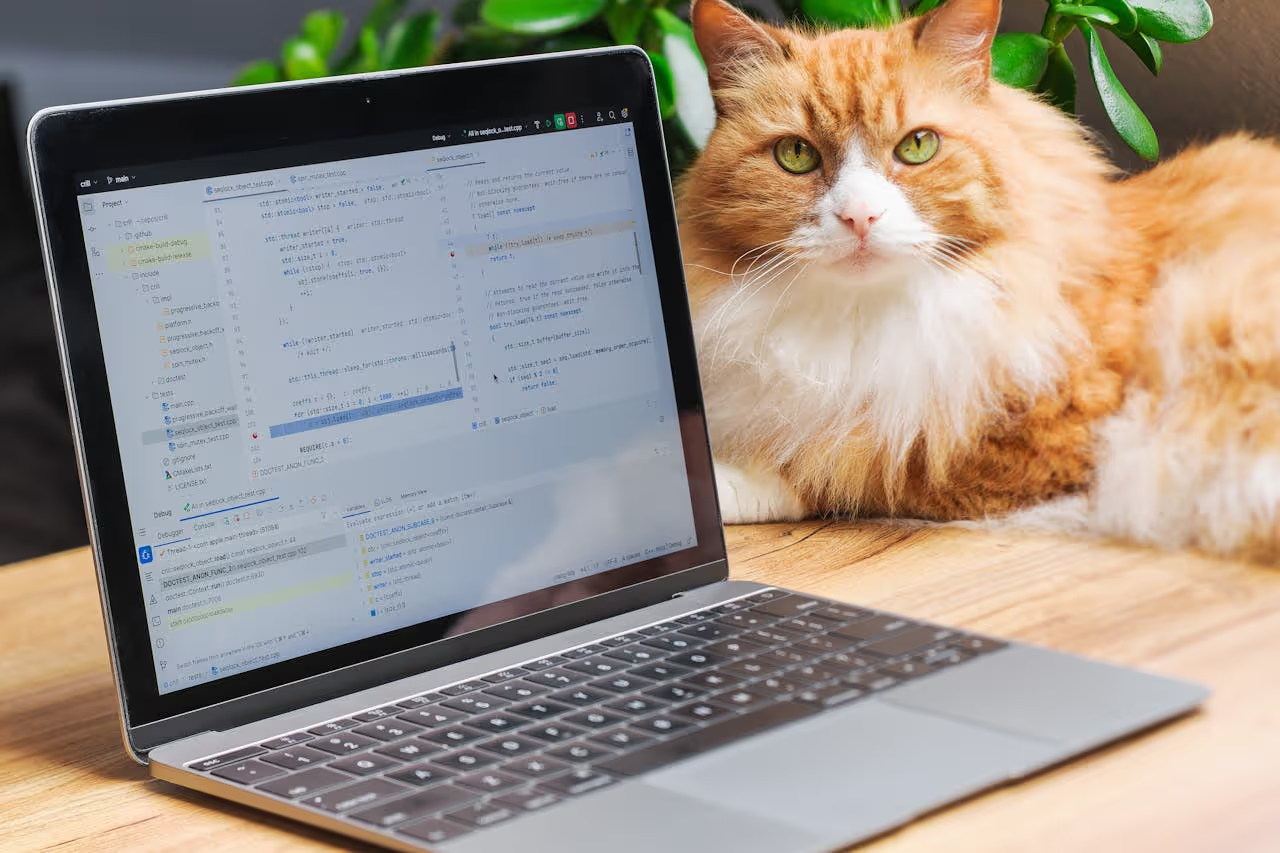
The day starts when the cat decides it does. Somewhere between 4:30am and 6am there is scratching at the bedroom door, which we have learned to sleep through until approximately 6am when the first feeding happens regardless. By 6:30 the animals are fed, Caro is journalling, and I am in thirty minutes of meditation. By 8am both laptops are open.
From 8am to approximately 4-6pm, we work. Research, article writing, Pinterest, digital products. Lunch happens somewhere in the middle. The chickens get their midday feed. The cat sleeps. At around 4-6pm the laptops close. Evening is cooking, the cat's final feeding, the chickens settled for the night, dinner, and sleep by 10pm.
This is not a remarkable schedule. It is a normal working day inside an unusual arrangement. The animals create the natural anchors that structure the day without requiring any decision-making about when to start or stop. That predictability is what makes it work.
The First Week: Plan for the Adjustment
The research describes a 48-hour productivity dead zone when arriving at a new sit. In my experience, it is closer to a week. The first days involve adjusting not just to the space. Where the light is, where the desk goes, how the kitchen works. But to the sleep. It takes longer to fall asleep in a new environment. The quality of the first few nights is rarely as good as what follows. Lower sleep quality produces lower output quality, regardless of discipline or intention.
The practical conclusion: do not expect full productivity in the first week of any sit. Plan for it. Schedule lower-stakes work. Research, administrative tasks, responding to emails. In the first few days, and keep the deep, demanding work for after the adjustment period has passed. Fighting the settling-in period produces frustration and lower-quality work. Accepting it and planning around it produces a better outcome with less effort.
After the first week, something resets. The motivation returns in a cleaner form. Not the anxious productivity of trying to justify the sit, but the settled focus of someone who knows what the next month looks like and has time to do the work properly.

The One Project Rule
I used to try to build five things simultaneously. The result was burnout. Spreading across too many projects, adding too little quality to any of them. I have now reduced it to one primary thing: housesittersguide.com. Articles, Pinterest, emails, the site structure. That is the business. Learning German is the fun project that does not count as work.
This matters for remote work inside a house sit because the sit provides time. More time than most people have for creative and productive work. The temptation is to fill that time with multiple projects. The reality is that more projects means less depth in each one, and depth is what produces compounding results.
I used to write thirty articles a day. They were low quality and ranked poorly. Now I write three a day. The quality is significantly higher. Average time on page from Google traffic is 1 minute 40 seconds per article, which tells me people are reading rather than bouncing. This is a compounding dynamic: higher quality produces better engagement, better engagement produces better rankings, better rankings produce more readers, more readers reinforce the investment in quality. You cannot achieve this by spreading yourself across multiple things simultaneously.
Pick one project. Get good at it. When you are comfortable, introduce the next thing. Not before. Our save $10,000 house sitting guide covers the financial model that makes this kind of focused work period possible.
| Time | What happens |
|---|---|
| 6-6:30am | Cat fed, slow morning start |
| 7-8am | Caro journals, Konrad meditates 30 minutes |
| 8am | Laptops open. Work begins. |
| Midday | Lunch, chickens and cat fed |
| 4-6pm | Laptops close. Chickens and cat fed. |
| Evening | Cooking, dinner, personal time |
| 10pm | Sleep |
| Monday | No laptops. Day off. Non-negotiable. |
Working in the Same Space as Your Partner
Caro and I work in the same room, on different things, with headphones. She prefers the couch. I work at the desk. Both of us are heads-down for most of the working day. When one of us has a question, we ask it briefly. If the other is mid-thought, the answer is "give me two minutes" and then the conversation happens. This is not a complex system. It is just communication and mutual respect for concentration.
The practical setup: headphones signal focus, not availability. Questions are held rather than asked the moment they arrive. Neither of us treats the other as a sounding board while actively working. The conversations happen during lunch, during the afternoon walk, in the evenings. Not during the working blocks.
For couples or sitters who work remotely together, this dynamic is worth discussing explicitly before the first long sit. The assumption that sharing a home naturally accommodates shared working is not always correct. Make the structure explicit, even if it is simple. Our solo vs couple house sitting guide covers the broader dynamic.

Sleep Over Schedule
The most useful thing I can tell a remote worker house sitter about productivity is this: prioritise sleep over schedule.
If I force myself up at 6am feeling exhausted and start working, the quality of what I produce is lower than if I sleep until 8am, wake fully rested, and work for four hours that feel focused and purposeful. More hours of mediocre output does not compound into a good article. Two hours of sharp, rested thinking does.
The scheduled morning routine is a default, not an obligation. On days where the body is telling you something different, listen to it. The work will catch up. Sleep deprivation does not. This is especially relevant in the first week of a sit, during times of additional stress, and during any period where the previous night's sleep was poor for reasons outside your control. A cat scratching at the door, an early chicken announcement, an unfamiliar noise from the garden.
Get enough sleep. The routine follows from that, not the other way around.
The Guilt Question
Working remotely inside a beautiful house sit produces a specific guilt that people who have not experienced it do not expect. The internal voice that says you should be exploring, or spending more time with the animals, or doing anything other than sitting at a laptop in a place most people only visit on holiday.
The reframe that works: the work is what makes the lifestyle possible. Without the income the work produces, the sit is a one-off experience rather than a sustainable model. Working from a house sit in Portugal is not a failure to appreciate the sit. It is the mechanism that allows Portugal to be one of many sits rather than a single expensive holiday.
For the animal guilt specifically: watch the animals for a week. You will quickly discover how much time they actually want from you versus how much you imagine they need. The cat in Portugal wants food at 6am, food at midday, food at 6pm, and occasional pats on its own terms. Most of the day it sleeps. The dogs in Cortona went for their morning walk, ate, slept until they felt like attention, received it briefly, and returned to their space. Pets have routines and autonomous lives. Respect them and you will feel much less like you are withholding something.
One non-negotiable helps enormously: one full day off per week. No laptops, no work, no exceptions. Caro and I take Mondays. A full day of exploring, being lazy, and doing whatever sounds enjoyable. Knowing that day is coming and protected makes the working days easier to sustain. Our slow travel article covers how this rhythm changes the experience of a long sit.

What Makes the Long Sit Different
The question I have been asked about why this six-month sit has been the most productive period of the trip has a simple answer: I do not have to think about anything except the present.
For the first time in a long time, there is no next stage of the journey to plan, no travel logistics to manage, no anxiety about where we are sleeping in three weeks. The mental space that planning and uncertainty occupies has been freed up entirely. I told my sister and mother that I cannot remember the last time I felt this specific kind of presence. The ability to focus on the things that give me joy without a background calculation about what comes next.
This is what a long sit provides that a short sit cannot. The short sit is travel with a work element. The long sit is a working life in an interesting place. The difference is not just logistical. It is psychological. Our plan a year-long house sitting adventure guide and house sitting for remote workers guide cover the structural approach.
If you have never given yourself an extended period. Two months minimum, six if you can manage it. In a place you do not have to leave, with animals that give your day shape, and work that matters to you, I would recommend it more strongly than anything else in this article.
Weekly Planning Over Daily Targets
This routine works for me. It will not work identically for everyone. The animals, the sit length, the type of work, the partnership dynamic. All of these vary. What matters is having a plan at the start of each week rather than arriving at each day without one.
For Caro and me, Monday morning is the planning session. We review what we managed to get done in the previous week. If we hit everything we set out to do, we add more for the coming week. If we fell short, we adjust the plan until it fits what is actually achievable. The plan is loose. We work between 8am and 6pm and finish when the work is done, not when the clock says so. Some days are finished by 2pm. Other days run longer. Every day is different.
Planning week by week also changes how you read your results. Online metrics. Traffic, rankings, engagement. Go up some days and down others. If you check them daily and react to every dip, the work becomes a constant recovery session. Checking weekly or monthly is where you start to see the real pattern. The compounding effect of consistent quality work over months is not visible day by day. It is visible over time, and planning in weekly cycles keeps your attention on the right timeframe.
This matters especially for remote workers who are not running their own projects but working a salaried job. The animal schedule, the sit length, the time zone overlap with your team. These all need to be factored into a weekly plan that is realistic about the specific sit you are in, not a generic schedule you carry from one sit to the next.
Join TrustedHouseSitters with 25% off. DM us @housesittersguide on Instagram. We answer everyone.

Frequently Asked Questions
How do you stay productive when you move between house sits regularly?
Expect the first week of any new sit to be an adjustment period and plan lower-stakes work for those days. Deep focus work recovers within a week once sleep stabilises and the environment feels familiar. Build your routine around the animals' natural schedule rather than imposing a schedule that ignores it.
What is the most important thing for remote work productivity inside a house sit?
Sleep quality, followed by a single focused project. More sleep produces better output per hour than more hours of tired working. One project pursued with real depth produces more compounding results than five projects spread thin. Everything else. The routine, the workspace setup, the day structure. Follows from those two foundations.
How do you balance work and enjoying the sit location?
One full day off per week, non-negotiable. The working days are sustainable precisely because the day off is protected. Trying to work every day without rest does not produce more output. It erodes the quality and motivation that makes the other six days worth anything.
Does working in the same space as a partner cause problems?
Not with explicit communication about focus signals. Headphones signal concentration, not availability. Questions are held briefly rather than asked mid-thought. Brief interruptions are fine; sustained interruptions fragment the working day in ways that are hard to recover from. Discuss the structure before the sit, even if the structure itself is simple.


Responses
What are your thoughts on this post?