

Home > Blog > Reactive Dog During a House Sit
Quick Facts
| Reactivity vs aggression | Most reactive dogs are fear- or excitement-based — not dangerous by intent |
| THS policy | Dogs with a history of attacks or aggression should not be listed (clauses 5.2.4 and 5.2.11) |
| Key rule on walks | Always keep the dog on the lead — even if the owner says it is fine off-lead |
| Physical reality | Know your own strength before accepting a large, energetic dog |
| First walks | Go together as a pair for the first few — observe before taking turns solo |
| Behaviour vs owner present | Animals often behave differently with their owners — you will not know until they leave |
| Training during a sit | Avoid introducing new commands on a short sit — it can confuse the dog |
| When to contact the owner | If the behaviour is a genuine safety concern, message immediately |
Most dogs sitters call aggressive are actually reactive: fear-driven, with warning signs you can learn to read. Shorten the lead before a trigger appears and keep it on for the whole sit, even if the owner says off-lead is fine. Your role is management, not training.
If you are interested in getting into house sitting, our book Travel More for Less puts the whole process in one place: clear, step by step guidance from your first questions to your first confirmed sit, and the reviews that open the door to the next one.
This article covers what reactivity actually looks like in practice, how to read the signs before a situation escalates, what to do on walks, and when the behaviour crosses from manageable to something the owner needs to know about. If you have not yet confirmed the sit, our video call guide covers exactly how to raise behavioural questions with the homeowner before you commit.
Reactivity vs Aggression: Understanding the Difference
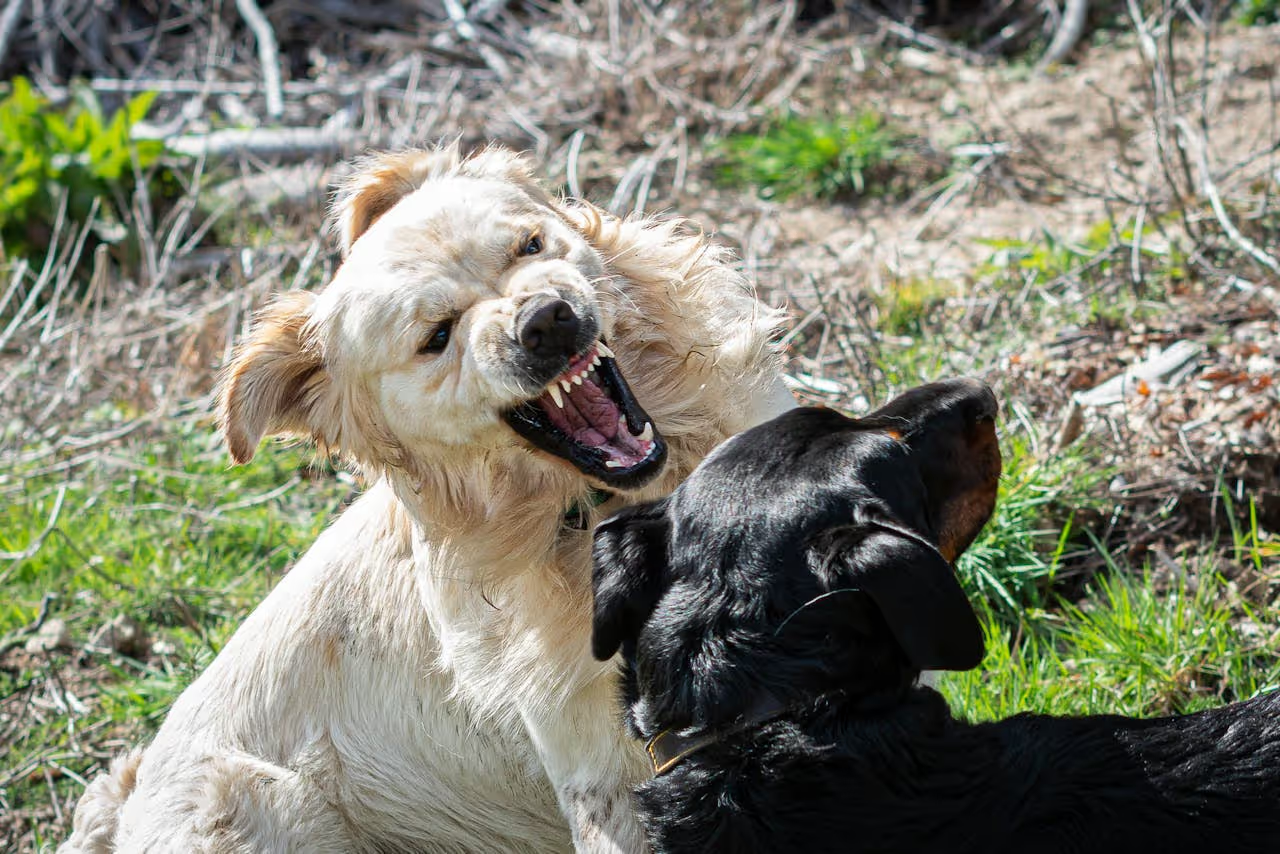
Most dogs that house sitters describe as aggressive are actually reactive. The distinction matters.
A reactive dog overreacts to specific triggers: other dogs, strangers, cyclists, loud sounds, cars. The reaction typically looks dramatic: barking, lunging, raised hackles, pulling hard on the lead. The underlying cause is usually fear, frustration, or overstimulation rather than genuine predatory intent. Most reactive dogs would retreat if given the option. They are not hunting. They are overwhelmed. This is a meaningful distinction when you are deciding whether to continue a sit or escalate to the platform.
A truly aggressive dog gives fewer warning signals, not more. Aggression can be calm, measured, and targeted. If a dog is consistently unpredictable, has snapped at or bitten people, or shows no calming signals before escalating, that is a different situation requiring a different response.
For a house sitter on a two-week sit, this distinction shapes how you handle the animal. Reactivity is manageable with awareness, physical preparation, and smart walking choices. Genuine aggression may require a direct conversation with the homeowner and potentially the platform.
Dog Body Language: A Quick Reference Table
Reading the whole dog, not just the tail, is what separates a sitter who reacts to an incident from one who prevents it. Sources including the AKC, ASPCA, and PetMD all emphasise the same principle: isolated signals mean little. A wagging tail does not always mean happy. A growl is not always the first warning. Look for clusters of signals and read them in context.
| State | Posture | Tail | Ears | Eyes | Mouth | What to do |
|---|---|---|---|---|---|---|
| Relaxed / Happy | Loose, wiggly, weight even | Neutral height, wide sweeping or circular wag | Relaxed, natural position | Soft, squinty, no whites showing | Slightly open, tongue lolling | Enjoy it — this is the baseline you want |
| Alert / Interested | Forward and engaged, weight balanced | Raised higher than neutral, moderate wag | Perked forward | Wide open, focused but soft | Closed or relaxed open | Normal — watch what has caught their attention |
| Stressed / Anxious | Tense or slightly lowered, may freeze or turn away | Tucked low or stiff, low fast wag | Pinned back or sideways | Wide, whale eye (whites visible), averted gaze | Closed tight, lip licking, yawning when not tired, excessive panting | Early warning — create distance from whatever is causing it |
| Fearful / Submissive | Crouched, weight shifted back, may roll over | Tucked tightly between legs | Flattened back against head | Averted or whale eye, dilated pupils | Lips pulled back, tongue flicks, yawning | Give space, do not approach or crouch over the dog |
| Aggressive / Threatening | Stiff, tall, leaning forward, weight over front legs | High and stiff, bristled, rapid stiff wag | Forward and erect | Hard staring, round, intense | Lips curled, teeth bared, snarling, wrinkled muzzle | Do not approach — create distance immediately |
| Playful | Loose and bouncy, exaggerated movements | Up, loosely wagging | Up and forward | Soft and bright | Open, relaxed, tongue out | Play bow (front down, rear up) is a clear invitation |
The stressed and anxious row is the one most sitters miss. Lip licking, yawning, sudden stillness, and a paw lift are all "yellow light" signals: the dog is uncomfortable and communicating it before anything escalates. Learn to read them and you will rarely be surprised by what comes next.
Note: Breeds vary significantly: Bulldogs carry their tails differently from Greyhounds. Puppies and senior dogs may show subtler versions of these signals. Always read clusters of signals together, not any single behaviour in isolation. For detailed photos and further guidance, the AKC dog body language guide is a reliable reference.
The Swiss Shepherd: A Real Example
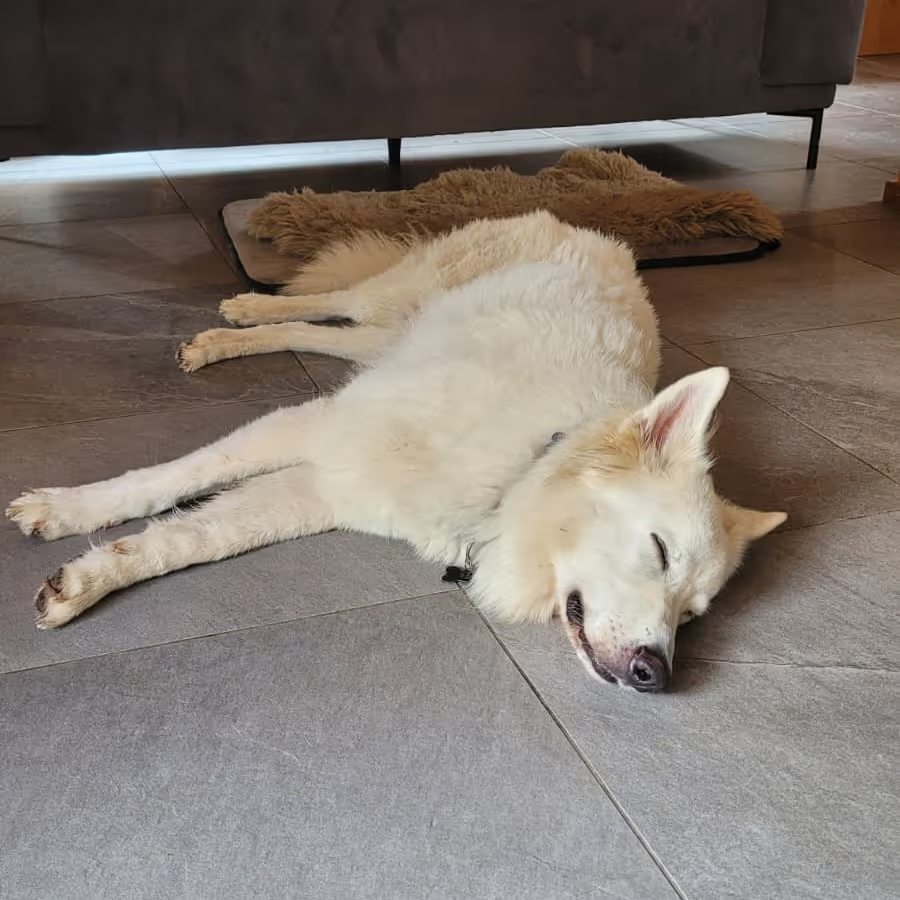
On a sit in Switzerland, we looked after a Swiss Shepherd, a large and powerful breed. On paper the listing described him as energetic, which seemed reasonable for the breed. What we were not prepared for was the volume and intensity of his reaction to anything that moved past the property. When he heard another dog, his bark carried across the valley. When he spotted another dog on a walk, he would launch forward with full force.
At over 90kg myself, I was able to brace and hold my ground once I learned to read his body language. A dog rarely lunges without warning. There is a moment of heightened attention, a stiffening, a shift in posture, before the leap. Once you learn to spot that window, you can shorten the lead and plant your feet before anything happens.
But here is the honest point: for a smaller person, or someone less physically strong, a 30kg dog in full lunge would be very difficult to control. This is not about experience or skill. It is about physics. A dog that can pull 90kg forward can absolutely overpower someone smaller. Knowing your own physical capability relative to the dog you are looking after is not optional. It is a safety consideration every sitter needs to make before confirming a sit.
The homeowners were themselves surprised by the behaviour. They mentioned it was not something that happened often with them. That is completely normal. Animals behave differently with their owners. The familiar presence of their person changes how a dog reads the world. The same dog who walks calmly beside its owner may react strongly beside a stranger. You will not fully know how a dog behaves until the owners have left and it is just you.
Knowing Your Own Limits Before You Accept the Sit
The listing photographs and description give a general picture but not a physical assessment of what you will be managing. A Swiss Shepherd, a Great Dane, a Saint Bernard: even a physically calm animal at this size is a significant presence on a lead. If they decide to move, they move.
On the flip side, size is not always the predictor. A 40kg dog that moves slowly gives you time to brace. A large, fast dog with high reactivity and a long lead is a different situation. Large dogs also tend to telegraph their intentions more clearly. It takes significant energy to get a massive dog moving at speed, and you can often see the preparation before it happens.
Think about it practically before you accept any sit involving a large or high-energy dog: can I safely stop this animal from pulling me onto a road? Can I hold my ground if it lunges toward another dog? If the honest answer is uncertain, that is worth factoring into your decision at the application stage. Our guide to evaluating house sitting listings covers what to look for before applying.
Reading the Dog: The First Hours and Days
You get the clearest read on a dog not when the owners are present, but in the moments just after they leave.
When owners are still there, the dog is in its most comfortable context. It may be relaxed, playful, and easy. The real picture emerges when the homeowners walk out the door. If the dog settles, lies down, and looks to you for reassurance, you know you have an easy sit. If it starts pacing toward the door, refusing food, or showing anxious behaviour, you are learning something the welcome guide did not cover.
In those first moments (and this applies to all new sits, not just reactive dogs) do not chase the dog or push for contact. Our guide to arriving at a house sit covers the first-day routine in full. Sit on the floor, move slowly, keep your energy calm and let the dog come to you. With two dogs, one will almost always be braver. It will approach first, sniff, and settle beside you. The second, more anxious dog watches this exchange and takes its cue. That first dog doing its job is truly one of the most useful things in a multi-dog sit.
On the first few walks, Caro and I go together. Not because one of us cannot handle it alone, but because two pairs of eyes see more than one. We observe how the dog responds to traffic, other dogs, cyclists, children, and narrow paths. After a few walks, we know whether the dog is relaxed enough for either of us to walk alone or whether it is a dog I should handle specifically because of the physical demands involved.

On the Lead: What to Do Before a Reaction Happens
The most important principle on walks with any reactive dog: shorten the lead before you need to.
A 10-metre extending lead is useful in open parks with no other dogs nearby. The moment you see another dog, a cyclist, or anything that has previously triggered a reaction, bring that lead in. A dog at close distance is dramatically easier to control than one at full extension. The physics are simple: the longer the lead, the more momentum the dog has before you feel the pull.
We never allow a lead to stay extended when approaching roads, other dogs, or busy areas. This is a habit, not a conscious decision per sit. It happens automatically. It is one of the habits that comes from experience. Our guide to getting started in house sitting covers how to build confidence with animals from your very first sit.
One principle that goes against some homeowners' preferences but that we apply consistently: we keep dogs on the lead for the full duration of a sit, even if the owner says it is fine off-lead. A two-week sit is not long enough to know how a dog will behave off-lead in every context. If a dog has never run off at home with its owner, that does not mean it will not bolt when separated from the only person it knows and managed by a relative stranger in an unfamiliar situation. If a dog runs, I have to explain to the homeowner why. If it gets hit by a car, I have to explain far worse. The lead stays on.
In Athens we looked after a French Bulldog who had a habit of lunging across the two roads near her usual dog park. She was so used to the route that she would bolt when she recognised it approaching. Because she was already close to me on the lead, the lunge had nowhere to go. She did not step into traffic. The lead being short in that moment was not a reaction. It was a habit.
What to Do When a Reaction Happens
Even with all of this, reactions happen. A dog that was calm yesterday can have a bad day. An unexpected stimulus appears around a corner before you can shorten the lead.
When a dog starts to react:
Stay calm. Your energy goes directly down the lead. A tense, anxious handler makes a reactive dog more anxious.
Create distance. Do not try to push through the trigger or hold your ground beside it. Turn and walk in the opposite direction, using your body to block the dog's line of sight if possible. Distance is the fastest reset.
Do not punish. Yanking the lead or shouting when a dog is already over its threshold adds stress and makes the behaviour worse over time. What you are managing is an emotional state, not a disobedience.
Reward when calm. If the dog settles once you have created distance, that is the moment to quietly acknowledge it: a calm word, a small treat if you have one. You are reinforcing the act of settling, not the reaction.
Note what triggered it. After the walk, take a moment to think about what the dog reacted to. Knowing specific triggers makes every subsequent walk easier to manage. If the trigger is something the homeowner should know about, send them a brief message. Our conflict resolution guide covers how to raise concerns without damaging the relationship.
Should You Attempt Any Training?
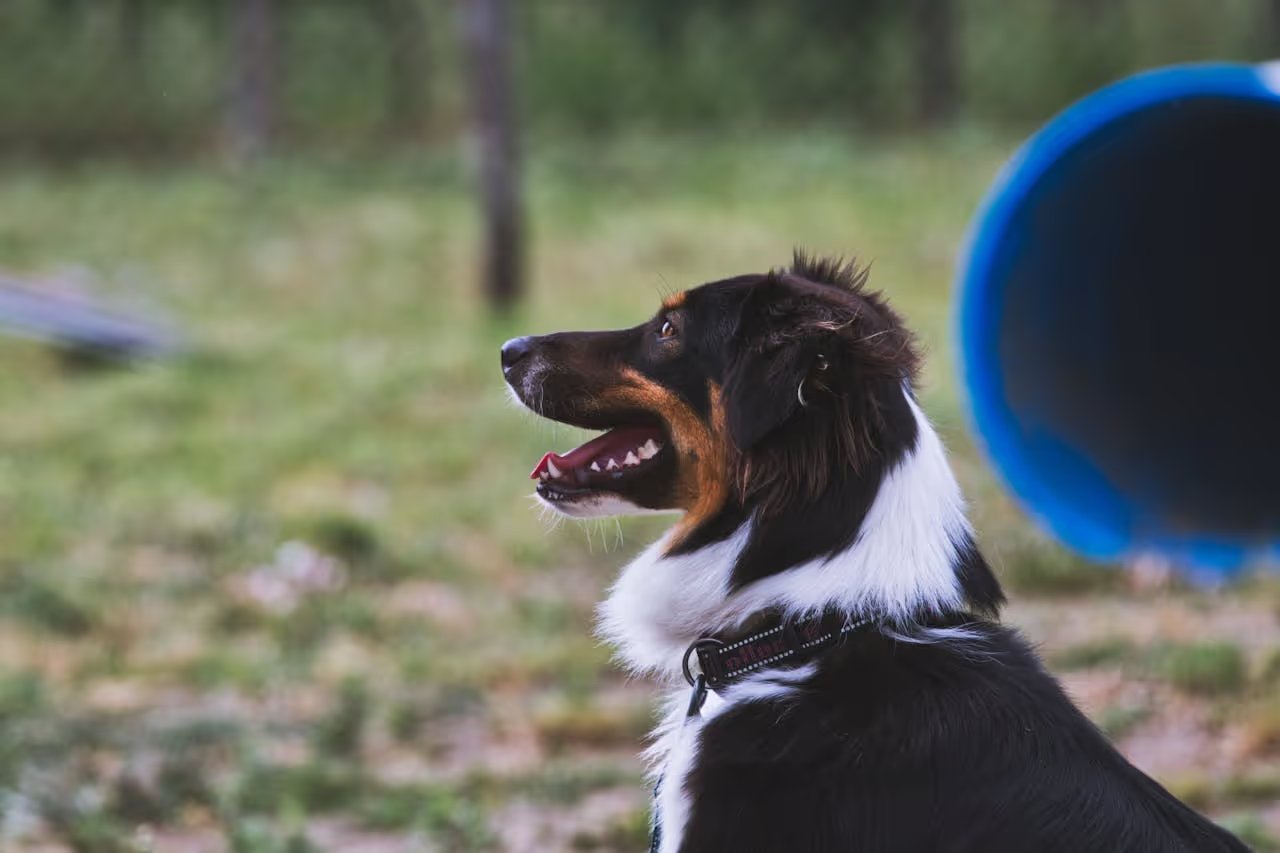
The short answer: no, not during a house sit.
You do not know what training programme the homeowner is already implementing. Introducing your own commands, correction methods, or routines on top of ongoing training can confuse the dog and potentially set back work the owner has been doing for months. On a short sit of one to two weeks, this is not your job.
There is one exception: trivial, low-stakes interactions that are clearly within the dog's existing repertoire. If a dog clearly knows "sit" and you use it to redirect attention during a calm moment, that is not training. That is communication. But introducing new commands, attempting desensitisation exercises, or trying to correct reactive behaviour with methods the owner has not mentioned is overstepping.
Your role on a short sit is management, not modification. Keep the dog safe, maintain its routine, and hand it back in the same condition you received it. The same logic applies to diet and other care decisions. See our full breakdown of what house sitters can and cannot change.
When to Contact the Owner
The Swiss Shepherd's reactivity was not a surprise to the owners, once they thought about it. They acknowledged it happened occasionally. That kind of information belongs in the listing, not a post-factum conversation, but the transparency when we raised it was helpful.
For minor reactivity that you can manage safely, a message framed casually is usually enough. "He gets a bit vocal when other dogs pass. Is that normal for him?" opens a conversation without alarming the owner unnecessarily. Most homeowners want to know their dog is being well understood.
For behaviour that feels unsafe (a dog that has snapped at you, a dog whose strength you cannot match, behaviour that escalates) contact the owner directly and be specific. Tell them what you observed, when it happened, and what you did. This is not a complaint. It is information they need, and it creates a written record of the situation.
Contacting the platform is a step beyond that. If a dog was listed as calm and is displaying genuine aggression that was not disclosed, THS clauses 5.2.4 and 5.2.11 explicitly prohibit animals with a history of attacks or aggression on the platform. That gives you documented grounds to raise a member dispute if needed. For most reactive dogs that are being managed safely, the platform does not need to be involved.
A Note on Breed and Physicality
We have looked after dogs across a wide size range: a French Bulldog in Athens, a Great Dane in Sydney, a 70kg Saint Bernard whose head was roughly the same size as mine. Size and breed give you general information but not a complete picture.
What matters more than breed is your own honest assessment of your physical capability relative to the specific dog. A powerful dog that moves slowly gives you time. A fast, high-energy dog at the end of a long lead in a busy street is a different situation. Know what you can safely manage before you confirm the sit, not after you have arrived and are holding a lead you cannot hold.
Caro and I have developed a natural division from this: if the first few walks show a dog that requires significant physical management, I walk it. Not because Caro is not capable, but because the combination of my size and the dog's energy means the margin for error is smaller on my side. That assessment happens in the first few days and is never discussed formally. It is just what makes sense.
Conclusion
A reactive dog on a house sit is not a reason to panic. It is a reason to prepare, to read the animal carefully in the first days, and to build habits on walks that mean a reaction never becomes a problem before you can respond to it.
Know your own physical limits. Keep the lead short near triggers. Never take a dog off-lead on a short sit. Go on the first walks as a pair if you can. Let the dog come to you rather than chasing it. And if the behaviour crosses from manageable to concerning, tell the owner directly and document it.
Join TrustedHouseSitters and read our guide to what to ask a homeowner before the sit. The right questions before arrival make every situation easier to manage once you are there. Use our 25% discount link when joining.
DM us @housesittersguide on Instagram with questions about a specific sit or dog situation. We answer everyone.

Frequently Asked Questions
What should I do if a dog lunges on a walk during a house sit?
Stay calm, create distance, and block the dog's line of sight from the trigger. Do not try to hold your ground beside the trigger. Turn and walk in the opposite direction, shortening the lead as you go. Reward the dog when it settles. Note what caused the reaction so you can anticipate it on future walks. Our day trip guide also covers how to plan outings when a dog has high needs.
Should I keep a dog on the lead even if the owner says off-lead is fine?
Yes. For the duration of a short sit, keep the dog on the lead. Two weeks is not long enough to know how a dog will behave off-lead in every context. If the dog runs off while in your care, you are responsible for the outcome. The lead stays on, regardless of what the homeowner says is normal. This also connects to our broader point in the pet rules article: following safety-critical instructions is non-negotiable, but using your judgement on things like walk duration is fine.
Can I try to train a reactive dog during a house sit?
No, beyond basic communication with commands the dog already knows. You do not know what training programme the homeowner is implementing. Introducing new methods or commands can confuse the dog and undo work the owner has been doing. On a short sit, your role is management, not training. Our article on following pet instructions covers where the line sits.
What if a dog's aggressive behaviour was not disclosed in the listing?
Contact the homeowner first with specific details of what you observed. If the behaviour is serious and the listing was materially inaccurate, THS clauses 5.2.4 and 5.2.11 prohibit animals with a history of aggression or attacks on the platform. You can raise a member dispute with THS if needed. For a sit you truly cannot complete safely, you are not obligated to stay.


Responses
What are your thoughts on this post?