

Home > Blog > The Psychology of Living in Other People's Spaces
Quick Facts
| Does it feel like a guest? | No, only in the final conversation before driving away. |
| What does it feel like? | Renting without the rent, after 20 sits in 12 countries. |
| How long to settle? | A month-long sit starts feeling like home around week two. |
| The kitchen problem | Layouts are similar; new kitchens feel natural by day three. |
| How to stop performing? | Clean as you go: make the bed, no dishes overnight. |
| Difficult sits in beautiful places | Stay factual: report issues neutrally, as we did in Kefalonia. |
After 20 sits across 12 countries, the only moment Caro and I feel truly like guests is the final conversation before we drive away. Everything before that, the first week of orientation, the middle weeks of routine, the last stretch before the owners return, feels more like a temporary version of renting than like being in someone else's space. The psychology of house sitting is not primarily about displacement. For sitters who approach it correctly, it is about discovery.
The research on this topic paints a picture of profound disorientation: sitters waking up in unfamiliar beds not knowing which country they are in, narrating their own actions in their head for an imaginary homeowner audience, spending a week eating over the sink to protect a white rug they are afraid to touch. These experiences are real and I do not dismiss them.
They are also not my experience.
If you are interested in getting into house sitting, our book Travel More for Less puts the whole process in one place: clear, step by step guidance from your first questions to your first confirmed sit, and the reviews that open the door to the next one.
One that acknowledges the genuine challenges while refusing to frame the experience as primarily one of loss and displacement. Use our 25% discount when joining.
The Renting Analogy
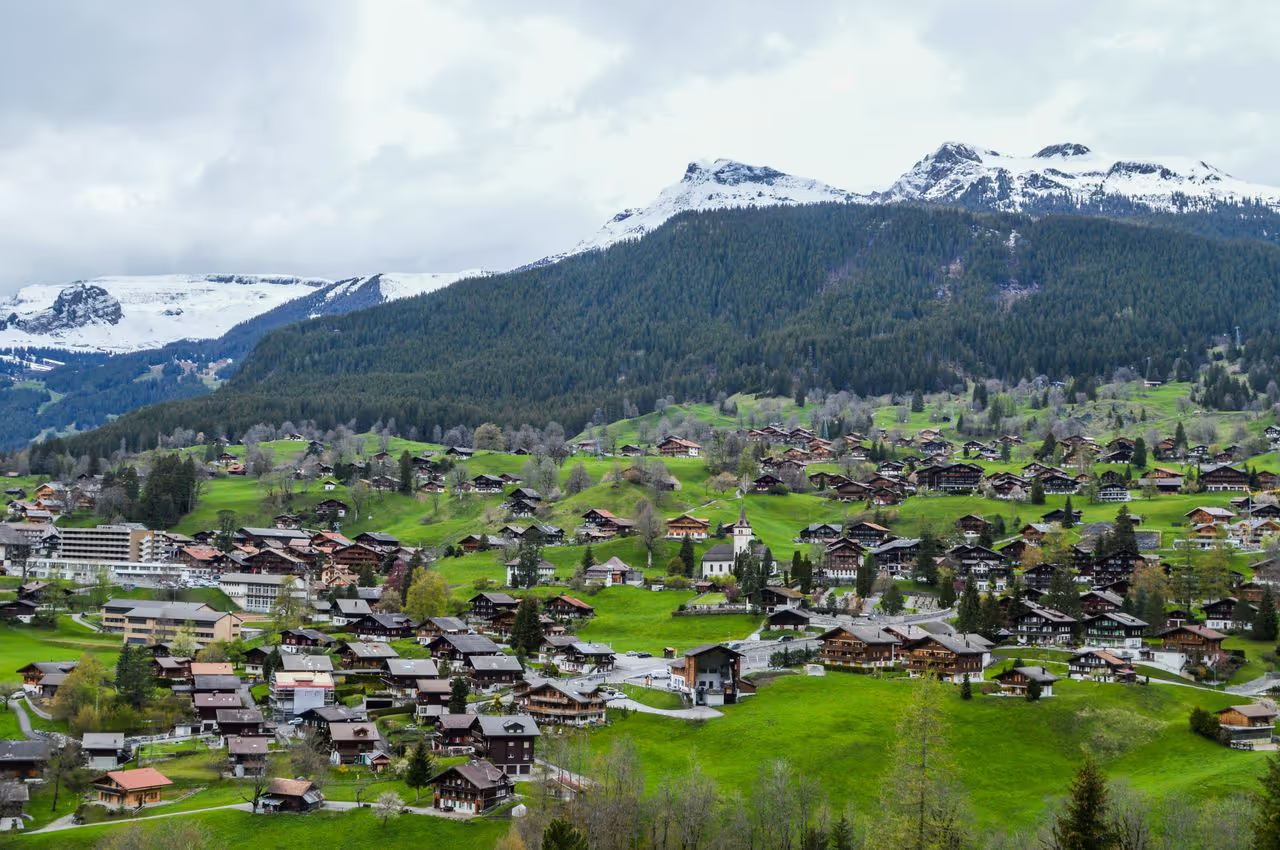
The most accurate framing I have for what house sitting feels like, particularly on a longer sit, is renting without the rent.
Most people who rent a home never truly own the space. The furniture is theirs, but the walls belong to someone else. The routines are theirs, but the lease is temporary. There is an implied tenant-landlord dynamic that places limits on what the resident can change, fix, or express. House sitting is structurally similar. Except that the arrangement is temporary by design rather than by financial necessity, and the terms are explicitly understood from the beginning.
On the six-month Portugal sit, this is exactly what it feels like. We did not bring our furniture. We do not have our own artwork on the walls. The chickens and the cat follow a routine that existed before we arrived. But the house is truly comfortable. We know where everything is. We have found our chairs. I have a spot where I work with the laptop, Caro has her couch. The rhythm of the day is ours. It feels like living, not visiting.
The psychological shift from "this is someone else's space" to "this is my temporary home" happens at different speeds depending on the sit length. On a one-week sit it may never fully arrive. On a month it starts around week two. On six months, we have been here three weeks and it already feels like we have been here much longer.
The Kitchen Question
The research highlights the kitchen as the place where displacement is most acutely felt. The puzzle-box of unfamiliar tools, the spice rack organised by logic you cannot decode, the knives that are either terrifyingly sharp or frustratingly dull.
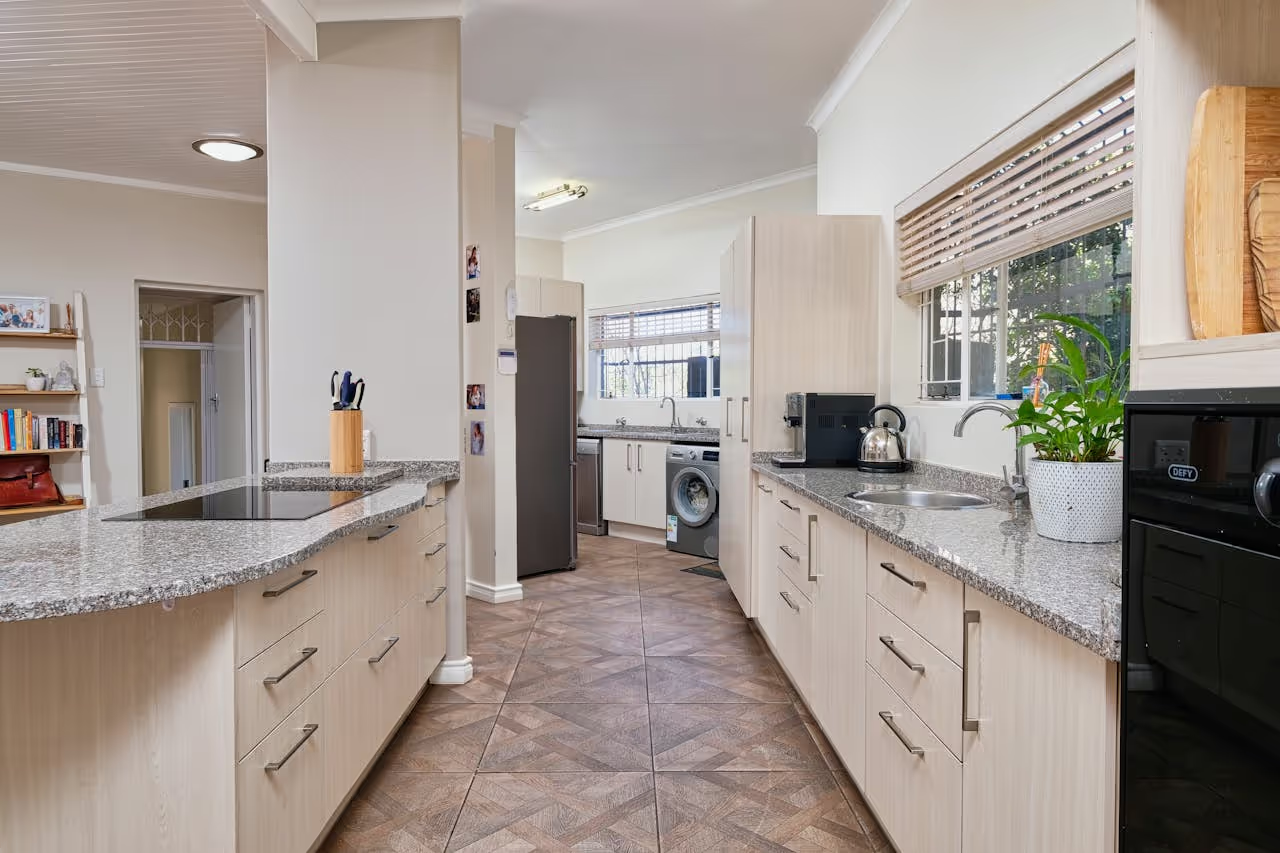
My experience is different and I think it reveals something useful. Kitchens across very different homes and countries are more consistently laid out than you might expect. Cutlery is almost always in the top drawer. Larger utensils are lower. Pots, pans, and baking equipment are further down or in the back. The logic is not arbitrary. It is the logic of kitchen use, shared by most people who organise a kitchen for practical daily cooking.
After enough sits, navigating a new kitchen becomes close to automatic. You know where to look. The first day involves a few extra seconds of searching. By the third day it is natural. This is not a trick or a technique. It is adaptation, and it happens faster than most new sitters expect.
Caro and I also travel with our own knives. Not because we are particular about equipment, but because we live in the van and the van has everything we own. When something from the van works better than the sit's equivalent, we use it. This is a small but practical advantage of the hybrid model. The option to supplement the sit's equipment without replacing it.
Performative Living: Why Tidiness Changes Everything
The "performative living" described in the research. Narrating your own actions for an imagined audience, afraid to leave a fingerprint. Is real for sitters who are not naturally tidy. For sitters who are, it barely registers.
Caro and I are truly clean people. We make the bed daily. We do not leave dishes overnight. We wipe the shower glass down after every use. We clean up as we go rather than cleaning before the owners return. This is not performance. It is how we live. Because of that, if a homeowner walked in at any point during a sit, the house would look fine. The imaginary audience has nothing to find.
The lesson for sitters who do feel the performance anxiety: the anxiety exists because there is a gap between how you are living and how you believe the homeowner expects the house to be kept. The gap does not go away by worrying about it. It goes away by closing it. By maintaining the house at a standard that would satisfy any reasonable owner at any moment, without treating it as performance, just as normal life. Our cleaning and etiquette guide covers what this looks like in practice.
When the Setting Is Beautiful and the Experience Is Not
Several sits have been objectively beautiful and subjectively difficult simultaneously. Kefalonia. The fuses that melted, the undisclosed cats, the cameras. Was a sit that looked extraordinary from outside and felt uncomfortable to be in. The first Portugal sit had a garden, a pleasant house, and a backdrop that photographs well. It also had a resource-guarding dog, three nights of broken sleep, and communication that became increasingly tense.
What allowed us to address the difficulties without either suppressing them or blaming the homeowners was framing. We reported the fleas in Kefalonia in a neutral, factual tone and asked for a solution. We reported the dog's behaviour in Portugal the same way. Not accusation, not complaint. Factual description, followed by a question about how to proceed.
The guilt of being unhappy in a beautiful place is something I recognise from the community discussions, and I think it is a form of self-gaslighting that does more harm than the discomfort it is trying to suppress. A difficult sit is a difficult sit regardless of the view from the window. Acknowledging it accurately, communicating about it professionally, and finding the solution or making the decision to leave is better than suppressing it to appear appropriately grateful. Our mental fatigue guide covers this dynamic in full.
Minimalism and the Portable Life
The research describes sitters building "portable home kits". A favourite blanket, a ceramic figurine, a specific mug. To create continuity across sits. Caro and I do not do this in any deliberate way. We have everything we own in the van. The van is our continuity. The sit is the place we stop.
What the van provides that a suitcase cannot is the complete absence of storage anxiety. We do not arrive at a sit wondering where our things will go or whether we are bringing too much for the space. Our things stay in the van. We bring what we need for the sit. A week of clothes, the laptops, the essentials. And leave the rest. The sit is not supplemented by our belongings; it is inhabited by us without them. A tiny home tests the same principle from the opposite side, and what actually changes when the property is only a few square metres is worth reading before you apply.
This minimalism has an unexpected psychological benefit. With fewer of your own things present, you engage with the sit on its own terms rather than trying to impose your own environment on top of it. We do not rearrange homeowners' homes, we do not try to make the space look more like ours, we do not replace their aesthetic with ours. We live in what is there. And what is usually there, for the kinds of sits Caro and I apply for, is comfortable, considered, and pleasant. Our building trust guide covers the approach to sits that makes this possible.

The Moment of Guesthood
The only moment I truly feel like a guest in someone else's space is the final conversation before we drive away.
The handover is complete. The house is clean. The pets are fed. The owner has confirmed everything is in order. We have a brief exchange. How the sit went, something about the animals, something about where we are headed next. And then we get in the van.
That conversation is the only moment in the whole sit where the dynamic of guest and host is clearly defined. Before it, we are the people looking after this home. After it, we have moved on to the next one. The conversation itself is the threshold.
I do not find this uncomfortable. By the time the sit ends, Caro and I are usually already thinking about where we are going next. The goodbye is warm and genuine. We have invested in the sit, cared for the animals, and often formed a real connection with the owners. But it does not produce the sense of loss or displacement that the research suggests many sitters feel.
I think this is partly because we are already moving. The van is outside. The next sit, or the next stretch of road, is already visible from where we are standing. The lifestyle makes transitions its currency rather than its cost.
What House Sitting Actually Teaches You About Yourself
The most underrepresented insight in the research on the psychology of house sitting is this: living in other people's spaces teaches you what you actually want from your own.
Caro and I have lived in houses with pools we could not use because the weather was wrong, in farmhouses with pellet stoves and 15kg bags of fuel, in minimalist apartments in central city locations, in rural properties with enormous gardens and animals. We have slept in beds facing windows, facing walls, facing nothing. We have cooked in kitchens with three burners and kitchens with six. We have lived with cats that needed kidney stone medication and chickens that woke us at 6:00.
Most people go their entire lives without knowing what kind of home truly suits them, because they settle into the first arrangement that is affordable and available and never leave it long enough to find out whether it fits. Caro and I are building that knowledge across years of varied experience, in different countries, at different scales. We know we like Portugal. We know we like Switzerland. We are learning what kind of home. The light, the layout, the relationship to outdoor space. Makes us feel most comfortable.
That is not displacement. That is one of the most useful things travel can do. Our slow travel article and benefits of house sitting for nomads guide cover what this kind of immersive travel produces over time.
Join TrustedHouseSitters with 25% off. DM us @housesittersguide on Instagram. We answer everyone.

Frequently Asked Questions
Does living in other people's homes feel strange after a while?
It becomes more natural with experience, not less. The disorientation that new sitters describe. Not knowing which bedroom you are in, navigating an unfamiliar kitchen. Fades quickly with practice. After enough sits, the adaptation becomes automatic. The layout of most kitchens follows a similar logic. The general geography of a home orients itself within the first day. What feels strange on the first sit feels unremarkable on the tenth.
How do you make a house sit feel like home?
Find your spot. The first thing Caro and I do is identify the chair and desk setup that works for us. That chair becomes the anchor for the whole sit. The place where work happens, where the day settles. This is not about rearranging the homeowner's home; it is about identifying what is already there that fits. A longer sit, three weeks or more, will feel truly like home without any deliberate effort. Shorter sits require more conscious claiming of a corner.
Do house sitters feel like permanent guests?
Less so over time. The "permanent guest" feeling is most acute in the first week and on shorter sits. With experience, the framing shifts from "guest in someone's home" to "temporary resident". A meaningful distinction that changes how comfortable and autonomous you feel in the space. The moment this shift happens varies by sit length, personality, and how well-matched the sit is to your preferences and lifestyle.
How do you handle the difficult sits in beautiful places?
By staying factual and communicating directly. The guilt of finding a beautiful sit difficult is real, but it is not useful. Acknowledging that something is hard, communicating it professionally to the homeowner, and either resolving it or making a decision to leave is the correct response. Suppressing it to appear grateful produces worse outcomes. Both for the sit and for your own wellbeing. Our mental fatigue guide covers this in full.


Responses
What are your thoughts on this post?