

Home > Blog > What Moving Every Few Weeks Does to Your Body
Quick Facts
| Quick Facts | |
|---|---|
| Sleep adjustment period | Three to seven days at each new sit |
| Water change impact | Dry skin and digestive adjustment — carry a filter |
| Allergy exposure | Cat allergy reduced significantly after repeated exposure |
| Arrival fatigue pattern | Low energy for first two days — normal and temporary |
| Van vs house sleep | Van sleep often deeper due to cold temperatures and fresh air |
| Posture note | Van life harder on posture — house sitting significantly better |
The physical toll of moving every few weeks is real but manageable. Sleep takes three to seven days to normalise in a new environment. Water changes show up in your skin before anything else. New allergens require adjustment time. The arrival dip in energy and mood is predictable enough that knowing it is coming makes it easier to move through. None of it is serious. All of it is worth understanding before you start.
Caro and I have been moving between sits and driving the T4 across Europe since November 2025. Twenty sits, twelve countries, and somewhere around 19,000 kilometres of road between them. We are both reasonably healthy people who eat well, move enough, and pay attention to what our bodies are telling us. Over three years of this lifestyle, certain physical patterns have emerged at each transition that we now recognise and manage rather than just endure. This article is an honest account of what those patterns are and what we do about them.
If you are considering this lifestyle and want to understand what it actually feels like in the body, this is the article we wish had existed when we started. If you are already living it and recognise some of what follows, you are not imagining it.
If you are interested in getting into house sitting, our book Travel More for Less puts the whole process in one place: clear, step by step guidance from your first questions to your first confirmed sit, and the reviews that open the door to the next one.
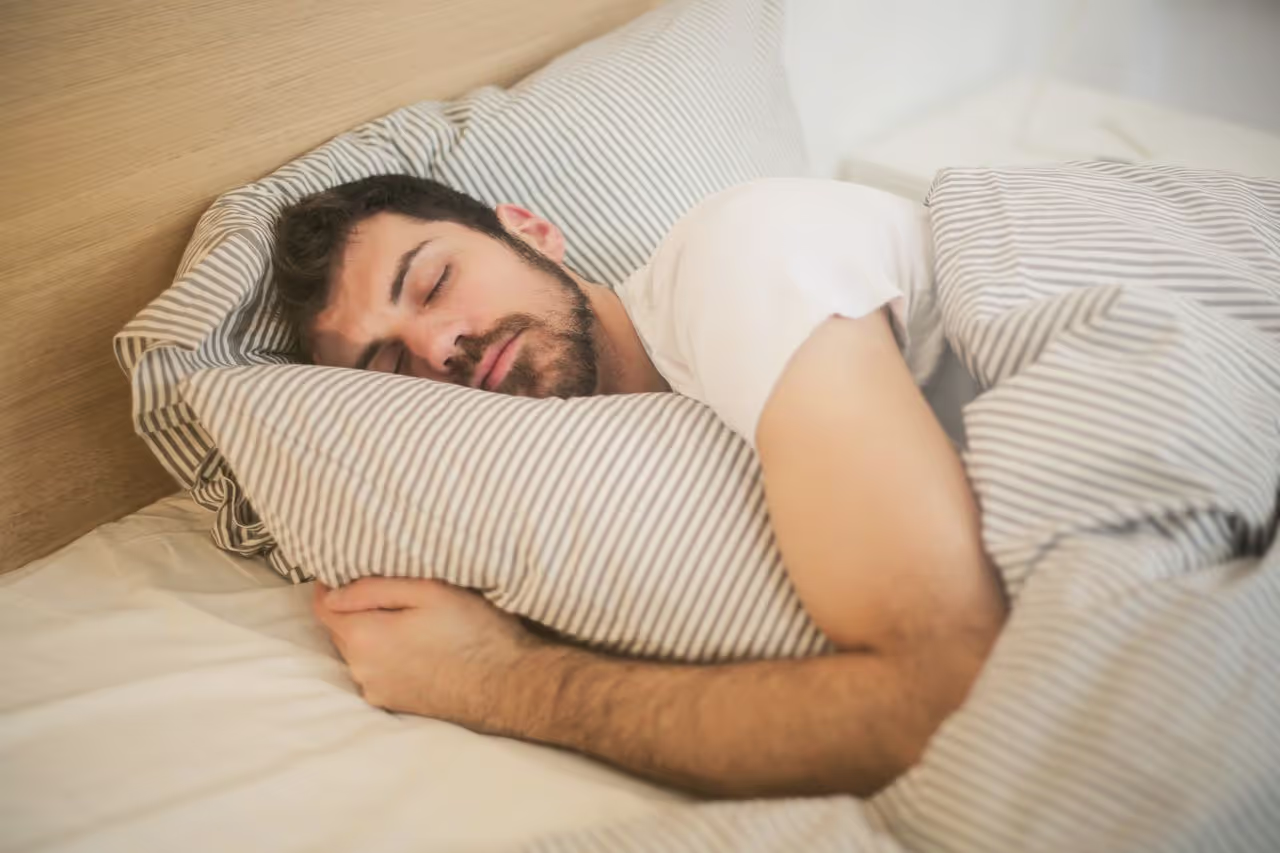
The Sleep Problem Nobody Talks About
Every time we arrive at a new sit, sleep gets worse before it gets better.
The first few nights in a new environment I find myself lying awake for longer than I should, unable to settle into the kind of deep sleep I need to function well the following day. This is not anxiety about the sit or the pets or the homeowner. It is simply the body in an unfamiliar space, registering that something is different and staying more alert than it needs to be. The scientific term for this is the first-night effect — the brain maintains a degree of vigilance in new environments that it does not apply in familiar ones. For most people it resolves after a few nights. For me it takes somewhere between three and seven days before sleep feels normal again.
The consequence is predictable. Poor sleep in the first few days of a sit means lower energy, lower enthusiasm, and a slower start to what might otherwise be an exciting new location. I have learned to sleep in slightly during those first days rather than forcing myself to operate at full capacity on insufficient rest. The adjustment happens regardless. Trying to push through it just makes it slower.
The other variable is the bed itself. I have a strong preference for a firmer sleeping surface, and not every homeowner shares that preference. A soft mattress topper is the most common culprit. In most cases it can simply be removed, which immediately improves the support enough to make a meaningful difference. If you have a firm mattress preference, check this on arrival day rather than suffering through a week of poor sleep before doing something about it. The what house sitters can and cannot change article covers what is reasonable to adjust in a home you are looking after.
What Water Does to Your Body
This one surprised us when we first noticed it, and it has been consistent across twelve countries.
Changing water source shows up in the skin first. Within the first few nights at a new sit, both Caro and I notice dryness that was not there before. The water chemistry is different — mineral content, chlorine levels, pH — and the body registers the change on the surface before anywhere else. It is not dramatic and it resolves as the body adjusts, but it is reliable enough that we now expect it at every transition.
I lived in Iceland for a period before this trip, and the water there was spring-fed directly into the home with no filtration required. It was the most genuinely hydrating water I have ever drunk. Every glass felt like it was doing something. The contrast with heavily treated municipal water in large European cities is noticeable, not just in how the skin responds but in how the body feels more generally.
Caro and I carry a water filter everywhere — both in the van and into every sit. It is a simple filtration system, a Brita-style jug, which we know is not the most sophisticated option available but which makes a consistent and noticeable difference to how the water tastes and how our bodies respond to it. We fill it from the tap at every new location and use it as our primary drinking water throughout the sit. It is one of the simplest health decisions we make and one we would not travel without.
If you are moving regularly between different European water systems, your skin and digestion will tell you when the chemistry has changed. A filter does not eliminate that adjustment entirely but it reduces it significantly.

Allergens and New Environments
Twenty different homes means twenty different dust profiles, cleaning product arsenals, pet dander concentrations, mould histories, and plant collections. Your respiratory system encounters a new combination of environmental factors at every transition, and not all of them are benign.
I have a cat allergy. Or rather, I had one. In the early stages of house sitting, exposure to multiple cats would require antihistamines to manage. After three years and many cat sits, that sensitivity has reduced noticeably. These days I might notice a mild stuffiness on arrival at a new cat sit, but it resolves quickly and rarely requires medication. The body adapts to repeated exposure over time, which is a useful thing to know for anyone who is considering house sitting but worries about pet allergies. Consistent exposure tends to reduce the severity of the reaction rather than worsen it.
Cleaning products are a separate issue. Caro and I have a preference for natural cleaning products, and not every homeowner stocks them. When we clean with whatever is provided in the home, we wear gloves as standard practice. Where possible we substitute some of the cleaning routine with natural alternatives we carry ourselves. This is partly a skin sensitivity consideration and partly a preference for not breathing harsh chemicals in an enclosed space. The cleaning and etiquette guide covers what cleaning responsibilities are typically expected of sitters and how to approach them practically.
New pollen profiles, unfamiliar plants, and different seasonal conditions all contribute to the allergen load at each new location. The current Portugal sit involves four chickens — Kiwi, Clucky, Coocoo, and Snowy — which introduced a different kind of dust and dander to the daily routine than previous cat and dog sits. The body adjusts, but it takes time and it takes energy that is not always visible as a symptom.
The Arrival Dip
There is a predictable pattern that plays out in the first two days of every new sit, and recognising it as a pattern rather than a problem has made it significantly easier to manage.
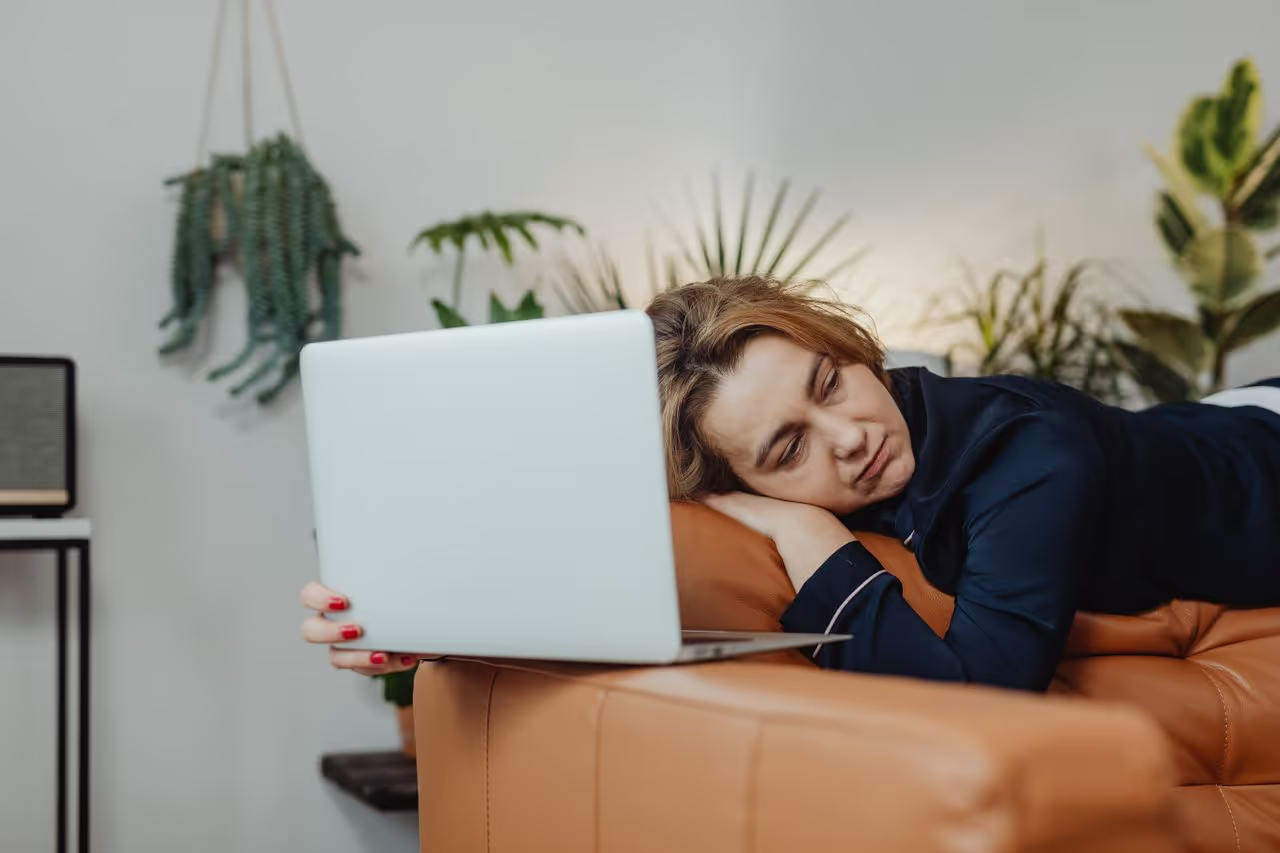
Arrival day involves driving, unpacking, meeting pets, absorbing new information, and orienting to a new space. It is stimulating and often exciting, but it is also tiring in a way that is easy to underestimate. The first night is usually the worst for sleep. The second day is when the fatigue catches up — lower energy, less motivation, a mild flatness that can look like disappointment in the sit itself but is almost always just the body processing the transition.
By day three or four, with better sleep and a growing familiarity with the space and the animals, the mood shifts noticeably. The sit starts to feel comfortable. The pets have usually begun to trust us by this point and that shift in the animal's behaviour is one of the clearest signals that the settling-in phase is complete. Once that happens the sit tends to become what it was always going to be — enjoyable, interesting, and something we look forward to continuing.
The practical lesson from this pattern is to plan for the arrival dip rather than being surprised by it. We do not schedule demanding work deadlines or social plans for the first two days of a new sit. We allow the transition to happen at its own pace. The slow morning routine article covers how we structure the early days of a sit to give the adjustment period the space it needs.
Fitness and Keeping the Body Moving
I was never a dedicated gym person, and three years of slow travel has not changed that. What it has changed is my understanding of what counts as adequate movement.
In the van between sits, Caro and I walk a great deal. Exploring a new town, finding a viewpoint, walking the coastline or a forest trail — this kind of movement accumulates into something that functions as exercise without feeling like it. By the time we arrive at a sit, we are usually more physically active than we would have been in a settled city life, despite never having set foot in a gym.
During sits, the routine varies by location. At the current Portugal sit, watering the garden daily adds incidental movement to the morning. Dog sits add structure through walk routines. I have recently started using a 12kg macebell for basic strength work — the goal is to remain agile and functional rather than to build mass. It travels easily and does not require space or equipment.
Running is occasional rather than regular. What matters more is that we eat well. Caro and I prioritise whole food and cook from scratch as much as possible. I stopped drinking alcohol recently and noticed a significant reduction in inflammation almost immediately — joint stiffness I had attributed to travel and sleeping in unfamiliar beds reduced noticeably within a few weeks. That single change has had more physical impact than any exercise routine.
The keeping fit during house sitting and van life article covers the fitness side of this lifestyle in more detail if that is a specific concern.
Van Life Versus House Sitting: What the Body Actually Prefers
This comparison is more interesting than it first appears, because the answers are not what you might expect.
Sleep quality in the van is often better than in a house. The best nights of sleep on this entire trip have been some of the coldest — parked somewhere elevated, outside temperatures near zero, thick sleeping bags, fresh air circulating through the vents. The cold encourages the kind of deep, continuous sleep that is harder to achieve in a warm bedroom. There is also something about the absence of screens, the physical tiredness from a day of driving or walking, and the simplicity of the environment that prepares the body for rest more effectively than a comfortable guest bedroom sometimes does.
Digestion in the van is also notably better, largely because of what we eat. Van cooking tends toward simple, ingredient-led meals — salads, eggs, grains, whatever is fresh from a local market. The high fibre intake from consistently eating that way keeps the digestive system functioning well in a way that is harder to maintain when a house sit comes with a fully stocked pantry and the temptation to cook more elaborate meals.
Where the van clearly loses is posture. Living in a T4 means spending a lot of time in positions that a physiotherapist would not recommend — crouching to cook, sitting on a low bed edge, contorting around the cab. Over weeks, the cumulative effect on the lower back and hips is noticeable. House sitting, with a proper desk, a full-size sofa, and a bed at the right height, is significantly better for postural health. For anyone who works remotely, the desk situation alone is worth the membership fee. Our best home office setups for house sitters article covers what to look for in a listing if remote work ergonomics matter to you.

Everything in this article reflects what works for Caro and me personally. We are not doctors, and none of this is medical advice. Two people who have traveled across twelve countries will have developed habits that suit their specific bodies, tolerances, and circumstances — and those habits will not be right for everyone.
Someone with severe cat allergies should not assume that repeated exposure will reduce their sensitivity the way it has for me. Someone with a serious respiratory condition needs professional guidance, not a tip about leaving the roof vent open. The honest truth about full-time travel is that you figure out what your body needs by paying attention to it over time.
The patterns we have identified are ours. Yours will likely be different, and the process of discovering them is part of what the lifestyle teaches you. Take what is useful, discard what is not, and always prioritise what your own body is telling you over what worked for someone else.
What to Do About All of This
The physical demands of moving regularly are real but none of them require dramatic intervention. A few consistent habits absorb most of the impact.
Carry a water filter and use it at every new location. Expect the first three to seven days of sleep to be disrupted and plan around that rather than fighting it. Check the bed on arrival day and make adjustments if needed. Wear gloves when cleaning with unfamiliar products. Allow two days for arrival fatigue without loading them with obligations. Move daily in whatever form is natural to the environment — walks, runs, garden work, pet care. Eat simply and consistently regardless of what the homeowner's kitchen contains.
None of this is complicated. The body is more adaptable than most people give it credit for, and the adaptation that happens over years of this lifestyle is mostly positive — reduced allergy sensitivity, better instincts about what environments suit you, a physical resilience that comes from having navigated dozens of transitions without falling apart.
Conclusion
Moving every few weeks is a physical experience as much as a logistical one. The body keeps a record of every new bed, every different water supply, every unfamiliar allergen, and every disrupted night of sleep. Over time it adapts to most of it. But understanding the patterns — the arrival dip, the sleep adjustment window, the water change showing up in the skin — makes each transition easier to move through because you know what is happening and roughly how long it will last.
Three years and 20 sits in, Caro and I are healthier than we were when we started. The movement, the food, the fresh air, the absence of a sedentary commute and office environment — these things add up. The physical toll of constant change is real. The physical benefit of this lifestyle is also real. Both are true at the same time.
Caro and I have completed 20 house sits across 12 countries, driven 19,000km in Australia and 24,000km in our 1998 VW T4, and saved over $26,500 in accommodation costs. If you have a question about staying healthy while house sitting, send us a message on Instagram — we read every DM.

Frequently Asked Questions
How long does it take to adjust to a new house sit environment?
For sleep, three to seven days is typical. The body maintains a mild vigilance in unfamiliar spaces that disrupts deep sleep until the environment becomes familiar. Energy and mood tend to follow sleep quality, so the first two days of a new sit are often the flattest. By day three or four, once the pets have settled with you and the space feels familiar, the adjustment is usually complete.
Does changing water sources affect your health during house sitting?
Yes, and the skin is usually the first place it shows. Different water chemistry — mineral content, chlorine levels, pH — produces noticeable dryness within the first few nights at a new location. Carrying a simple water filter and using it at every new sit reduces the impact significantly. It does not eliminate the adjustment entirely but it makes the transition considerably smoother.
Can you house sit if you have pet allergies?
In many cases, yes — and the sensitivity may reduce over time. Caro and I house sit regularly with cats despite my cat allergy. Repeated exposure over three years has reduced the severity of the reaction noticeably. What once required antihistamines now produces mild stuffiness at most. If you have a pet allergy, start with lighter exposure sits and assess how your body responds rather than ruling it out entirely.
What is arrival fatigue in house sitting?
A predictable dip in energy and mood that occurs in the first one to two days of a new sit. It is caused by the physical and cognitive effort of transitioning — driving, unpacking, orienting to a new space, absorbing information about the home and pets. It is normal, temporary, and resolves with rest. Planning around it rather than pushing through it makes the adjustment faster.
Is van life or house sitting better for physical health?
Both have genuine advantages. Van sleep can be deeper due to cold temperatures and fresh air. Van eating tends toward simpler, higher-fibre food. House sitting is significantly better for posture, sleep surface quality, and the ability to maintain a functional workspace for remote work. The healthiest version of this lifestyle combines both — using the van for movement and simple eating between sits, and using house sits for rest, routine, and recovery.
How do you stay fit when moving between different house sits?
By accumulating incidental movement rather than relying on gym access. Walking while exploring new areas, pet care routines, garden work, and occasional runs provide consistent physical activity without requiring equipment or a fixed location. A portable piece of resistance equipment — a kettlebell, a macebell, resistance bands — travels easily and adds structure when needed. Diet and sleep quality have a larger impact on how the body feels than any specific exercise routine.


Responses
What are your thoughts on this post?