

Home > Blog > Pet Grooming During a House Sit
Quick Facts
| Quick Facts | |
|---|---|
| The real rule | Not what the task is, but whether it was disclosed upfront and the sitter agreed to it |
| Default expectation | Basic care only: feeding, brushing, wiping muddy paws, an occasional bath |
| Skilled tasks (nail trims, dematting, teeth cleaning) | Handle before or after the sit, unless a genuine daily need makes that impossible |
| If a sitter agrees to something skilled | They still need proper instruction first, for their own safety and the pet's |
| If a sitter isn't capable | Better to let nails grow a little long than risk an injury |
| What homeowners shouldn't do | Save up two weeks of accumulated grooming needs for the sitter to handle |
| Our own experience | Daily teeth cleaning for a sick cat in Cries, regular brushing in Manosque and Tavira, chicken parasite spray in Portugal |
What matters isn't whether a task is "basic" or "skilled," it's whether it was disclosed upfront in the listing and video call, and whether the sitter genuinely agreed to it. Basic care, feeding, brushing, wiping muddy paws, is a fair default expectation for any sit. Skilled tasks like nail trims or dematting should generally happen before or after the sit, but if a pet has a genuine, disclosed daily need, a willing and properly instructed sitter can reasonably take it on. What's never fair is springing an undisclosed task on a sitter mid-sit, or saving up two weeks of accumulated grooming for them to handle simply because they happen to be there.
Every longer-haired dog that spends time outside is going to end up with knots, grass, and general debris in its coat. That's not a grooming failure on anyone's part, it's just what happens, and having a brush on hand for those moments is a normal part of the job. But there's a real line between that kind of basic upkeep and anything requiring actual training, and where that line sits depends less on the task itself than on what was agreed to and when.
If you are interested in getting into house sitting, our book Travel More for Less puts the whole process in one place: clear, step by step guidance from your first questions to your first confirmed sit, and the reviews that open the door to the next one.
This guide covers the actual rule that decides what's fair to expect, when skilled tasks can genuinely become part of a sit, and how to handle it if something comes up that's beyond what you're comfortable doing.
The Real Rule: Disclosure and Consent, Not Task Type
Whether a grooming task is fair to ask of a sitter comes down to two things: was it disclosed before the sit began, and did the sitter genuinely agree to it, with proper instruction. The task itself matters less than whether both sides were upfront about it from the start.
Basic care is the default expectation for every sit, regardless of what's discussed beforehand. Brushing out knots and debris, wiping down muddy paws after a walk, and giving a pet a bath if it's rolled in something unpleasant all fall into this category, the same as feeding and walking. Most homeowners don't even think of this as "grooming," it's just ordinary care, and most sitters handle it without being specifically asked. We'd do these things regardless, partly for the pet and partly because neither of us wants mud tracked through a house for two weeks.
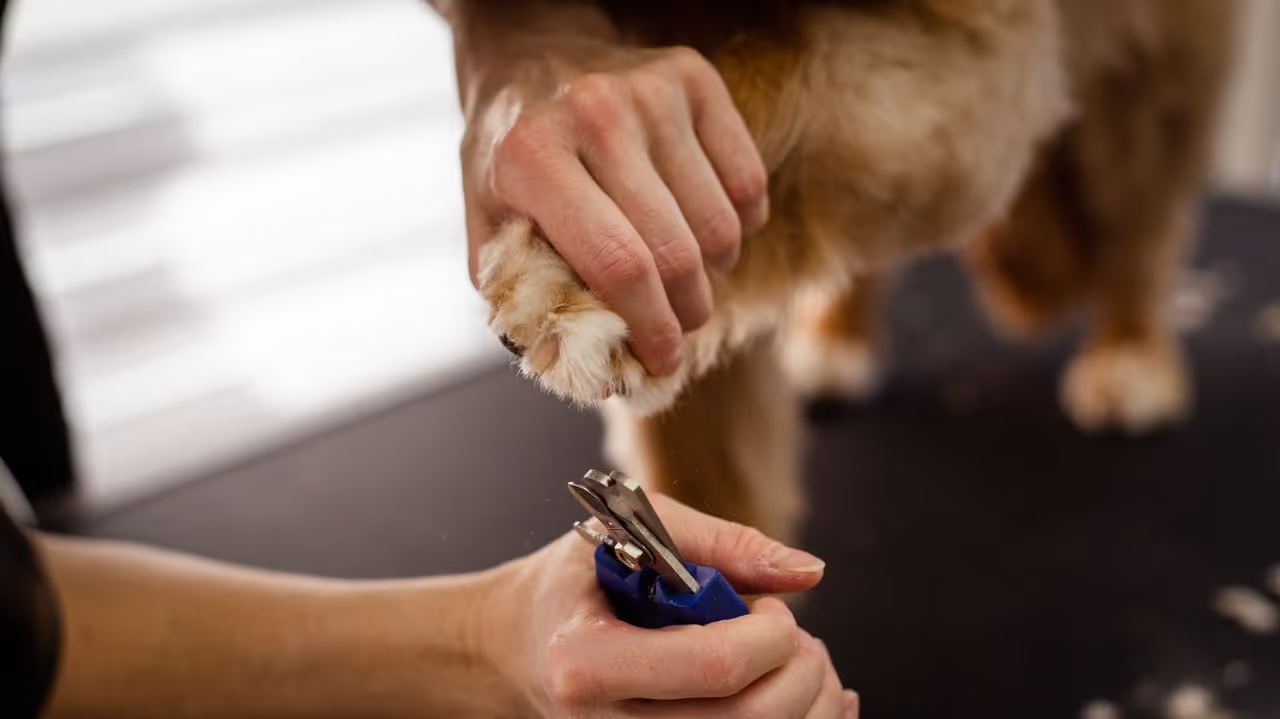
Skilled tasks, nail trims, hair clipping, dematting, teeth cleaning, are a different matter, and the right approach is usually to have them handled before the homeowner leaves or after they return, not during the sit. Most bookings run a month or less, and a dog or cat simply won't suffer for going without a trim or a dematting session for that stretch. Saving these tasks for outside the sit removes the risk entirely and is the simplest, safest default.
The exception is a genuine, ongoing daily need that can't reasonably wait. We looked after a cat in Cries, Switzerland, whose teeth needed cleaning every single day because of an illness that was causing tooth loss.
This wasn't optional maintenance that could be postponed for two weeks, it was daily medical care, not unlike the routines covered in our guide to giving a pet medication during a house sit. The homeowner disclosed this clearly before the sit, walked us through the exact technique during the handover (wrapping the cat gently in a blanket, one of us holding while the other opened its mouth with a cotton bud), and we agreed to take it on knowing exactly what it involved. That's the model: disclosed upfront, demonstrated properly, agreed to with full understanding of what's required.
What's never acceptable is asking a sitter to do something skilled that was never mentioned in the listing or the video call. If a homeowner didn't disclose a grooming need beforehand and then expects a sitter to handle it mid-sit, that's not something the sitter agreed to, and they shouldn't be expected to fulfil it. Transparency from the start is what allows sitters to genuinely opt in, or to decide a particular sit isn't the right fit for their skills, before they've committed to anything.
Even a Willing Sitter Needs Proper Instruction
Agreeing to do something isn't the same as being equipped to do it safely, and that gap matters more than it might seem.
Even a sitter who's genuinely comfortable taking on a skilled task, nail trims, teeth cleaning, anything with real risk attached, needs to be shown exactly how to do it properly before the homeowner leaves. Willingness on its own doesn't substitute for a proper demonstration during the handover. If that instruction hasn't happened, or if it turns out during the sit that the task is more difficult than expected, the sitter shouldn't feel obligated to push through anyway.
Sometimes the right call is simply to let something wait. If nails are getting a little long but trimming them properly isn't something the sitter can do safely, it's far better to let them grow slightly longer for the rest of the sit than to risk injuring the pet through an attempt neither the pet nor the sitter was properly prepared for. That's not a failure of care. It's the correct decision, and our house sitting safety guide covers the broader principle of knowing when to stop rather than push through.

Don't Save Up Grooming Needs for the Sitter
A house sit is not an opportunity to offload two weeks of accumulated maintenance the homeowner doesn't normally keep up with themselves.
We've noticed this pattern in some listings: homeowners tacking on extra responsibilities and daily routines that they don't actually maintain themselves day to day, often with good intentions, wanting the best possible care for their pet, but the effect works against them. A sitter taken on for a fair exchange, home and pet care in return for accommodation, shouldn't return to find a list of grooming tasks that quietly grew well beyond what a normal two-week period of basic care would involve.
The fix is the same as everywhere else in this article: transparency from the start. If a pet has a genuine, regular grooming need, disclose it clearly in the listing and confirm it on the video call, so a sitter can decide upfront whether it's something they're comfortable with. What shouldn't happen is a homeowner treating the sit as a convenient moment to catch up on things that were never part of the pet's actual day-to-day routine.
Know Your Own Limits, Even If You've Agreed to Something
Be honest with yourself about what you can actually do safely, even after agreeing to a task during the video call.
If something turns out to be harder than expected once you're actually doing it, say so rather than pushing through and risking an injury to the pet. It's a far better outcome to tell the homeowner "I'm finding this more difficult than I expected, can we adjust" than to attempt it anyway out of a sense of obligation.
Injuring a pet through a task you weren't fully equipped for, even one you agreed to, is a serious thing, both for the animal and for your own reputation as a sitter. Our insurance coverage guide covers where liability actually sits if something goes wrong during a task like this.
This works both ways. If you genuinely have relevant experience, a background in grooming, veterinary work, or handling animals professionally, say so clearly when discussing a sit with disclosed grooming needs. That honesty is what lets a homeowner match the right sitter to the right sit, rather than either underselling a capable sitter or overloading one who isn't equipped for it.
What to Ask Before You Accept a Sit With Known Grooming Needs
If a listing mentions a longer-haired pet or any specific grooming routine, ask directly on the video call rather than guessing after you arrive.
Ask what routine maintenance the homeowner already does themselves, whether anything beyond basic brushing has ever been expected of a sitter in the past, and whether there's a grooming kit or brush provided. Our full guide to what to ask a homeowner before you house sit covers the broader pre-sit conversation, and this is worth folding into that same call rather than treating as a separate topic.
It's also worth mentioning any relevant skills or limitations in your own profile or application, the same way you'd mention experience with medication or reactive animals. If you're new to sitting entirely, our guide to getting sits without prior experience covers how to present your genuine skill level honestly rather than overstating it to secure a sit.
Beyond Dogs and Cats: Other Grooming-Adjacent Tasks
Grooming-type responsibilities aren't limited to dogs and cats, and it's worth thinking about the category more broadly.
On our current sit in Portugal, we spray the chickens with an anti-parasite treatment every two weeks, a quick, simple task that involves picking up each bird, holding it briefly, and applying the spray. It's not glamorous, but it's exactly the kind of routine maintenance task that falls into the same "basic and manageable, once shown properly" category as brushing a dog.
The same disclosure-and-consent principle applies regardless of species: if it's routine, disclosed, and demonstrated, it's fair. If it's sprung on a sitter unannounced, it isn't. Our guide to caring for a senior pet during a house sit covers a related category, since older pets often come with a few extra routine needs worth discussing upfront too.
Have you been asked to handle a grooming task you weren't expecting? We'd like to hear how you handled it in the comments, especially if it came up unexpectedly partway through a sit.
Bottom Line
The task itself was never really the question. Whether a grooming responsibility is fair to ask of a sitter comes down to disclosure and consent: was it mentioned in the listing, discussed on the video call, and properly demonstrated during the handover.
Basic care, brushing, wiping paws, an occasional bath, is a fair default for every sit. Skilled tasks belong outside the sit unless there's a genuine, disclosed, ongoing need and a willing, properly instructed sitter. And no homeowner should treat a two-week sit as the moment to finally catch up on maintenance that was never part of the pet's actual routine.
Caro and I have completed 20 house sits across 12 countries, driven 19,000km in Australia and 24,000km in our 1998 VW T4, and saved over $26,500 in accommodation costs over three years of house sitting.
If you've got a grooming question about an upcoming sit, drop it in the comments below or DM us @housesittersguide, we answer everyone. And if you're setting up Trusted House Sitters membership, our 25% discount code is worth grabbing while you're there.

Frequently Asked Questions
Is a house sitter expected to groom pets?
Basic maintenance grooming, yes: brushing out knots, wiping muddy paws, an occasional bath. Skilled tasks like nail trims or teeth cleaning are only fair to expect if they were disclosed in the listing or video call and the sitter genuinely agreed to them, with proper instruction.
Can a house sitter trim a pet's nails?
Only with proper instruction and genuine agreement beforehand. If a pet's nails need trimming during a sit and the sitter wasn't shown how or doesn't feel confident, it's better to let them grow slightly long for the remainder of the sit than risk an injury.
What if a pet needs daily grooming or medical care that can't wait?
Disclose it clearly before the sit and demonstrate the exact technique during the handover. A willing, properly instructed sitter can take on a genuine daily need, the way we cleaned a cat's teeth every day in Cries due to an illness. The key is upfront disclosure and real consent, not a task sprung on a sitter mid-sit.
Should homeowners save up grooming tasks for when a sitter arrives?
No. A sit is a fair exchange of pet and home care for accommodation, not an opportunity to catch up on maintenance the homeowner doesn't normally keep up with. Any genuine, regular grooming need should be disclosed in the listing so a sitter can decide upfront whether it's something they're comfortable with.
Should sitters mention grooming skills in their profile?
Yes, if they genuinely have relevant experience. It's a real point in a sitter's favour, the same way medication experience or comfort with reactive animals is. Most sits never require anything beyond basic brushing, so its absence isn't a barrier either.
Related Guides
Looking After Dogs During a House Sit — General dog care fundamentals
What to Ask a Homeowner Before You House Sit — The full pre-sit question list
House Sitting with Chickens or Ducks — Routine care beyond cats and dogs
House Sitting Profile Guide — How to mention relevant skills and experience
What House Sitters Can and Can't Change — The broader boundary conversation


Responses
What are your thoughts on this post?