

Home > Blog > How to Safely Park Your Campervan During a House Sit
Quick Facts
| Quick Facts | |
|---|---|
| Best parking situation | Inside the property with gates closed |
| Stealth principle | No stickers, no markings, nothing to signal campervan contents |
| Most important security step | Keep everything out of sight — including shoes |
| Moisture prevention | Leave roof vent slightly open, blast heating on return |
| Battery for two-week sits | Drive occasionally if possible — disconnect for longer periods |
| GPS tracker | Hidden in the vehicle — non-negotiable for extended parking |
The safest place to park any vehicle during a house sit is inside the property itself. When that is not possible, the stealth approach — nothing visible, nothing signalling what is inside — is the most effective deterrent available. Security hardware helps. Invisibility helps more.
Caro and I have been parking our 1998 VW T4 across twelve countries for three years. We have never had a break-in, never returned to a flat battery from extended parking, and never come back to the van in a worse state than we left it. That consistency is not luck. It is a practical approach to parking that applies to any campervan or car, regardless of make, age, or size. This article covers what we do and why it works.
If you are interested in getting into house sitting, our book Travel More for Less puts the whole process in one place: clear, step by step guidance from your first questions to your first confirmed sit, and the reviews that open the door to the next one.
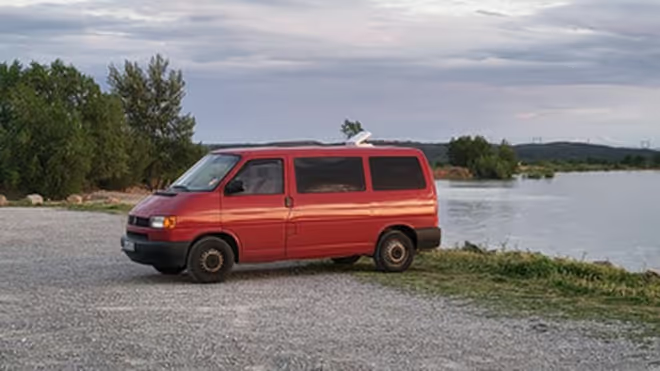
Why Having Your Own Vehicle Changes Where You Can Sit
Before getting into the parking specifics, it is worth naming something that most house sitting guides overlook. Having your own vehicle does not just solve the parking problem — it opens up a completely different category of sits.
Before confirming any sit, it is worth asking the homeowner directly whether there is parking available at the property and whether your vehicle will fit. Our T4 is 4.7 metres long, which means it fits in most standard driveways without any issue. If you are travelling in a larger setup — a long-wheelbase van, a motorhome, or a vehicle with a roof structure that adds height — this conversation becomes more important. A homeowner who has never measured their driveway or checked the clearance of their gate may not know whether your specific vehicle fits until you ask. Raising it during the video call or in a message before confirming means there are no surprises on arrival day. If the property cannot accommodate your vehicle, ask whether there is suitable parking nearby. In many cases there is, and a five-minute walk from a secure street spot to the front door is a perfectly workable solution.
Sitters who rely on public transport are effectively limited to listings in or near city centres. Sitters with a vehicle can apply for sits on the outskirts, in the countryside, in small towns, in rural areas that buses do not reach. Those properties tend to be larger, quieter, and often significantly more beautiful than urban listings. Houses with gardens, gates, private driveways, and the kind of space that makes a long sit genuinely comfortable. In most cases, those properties also come with somewhere secure to park — inside the gate, on the driveway, or in a dedicated parking area. The vehicle solves the parking problem by giving you access to the sits where parking is not a problem in the first place.
Our campervan versus house sitting guide covers the broader dynamic of combining the two. The best countries for van life and house sitting covers where the combination works best geographically.
The Ideal Parking Situation
The ideal parking situation during a house sit is inside the property. Gates closed, vehicle off the street, out of view from passers-by. This is the situation we aim for on every sit and it is achievable more often than you might expect precisely because of the point above — the sits that come with a driveway or gated entrance are the ones that require a vehicle to reach.
When the vehicle is inside a property we essentially stop thinking about it. It is not generating any concern, it is not exposed to street-level attention, and it is immediately available whenever we need it. At the current six-month Portugal sit, the T4 sits within the property for weeks at a time without being moved. We use it once or twice a week for errands or exploring, which is enough to keep the battery in good condition without any additional maintenance.
When inside parking is not available, the street immediately adjacent to the property is the next best option. In Athens, we arrived to find a car pulling out directly in front of the house sit's entrance as we turned onto the street. The van ended up parked within five metres of the front door. We made a simple decision: the vehicle was not moving until we left for the next sit. Athens is walkable and Uber is inexpensive. There was no reason to risk losing a spot that good. That decision meant two weeks of complete peace of mind about the van while we explored the city entirely on foot and by car app.
The Stealth Principle
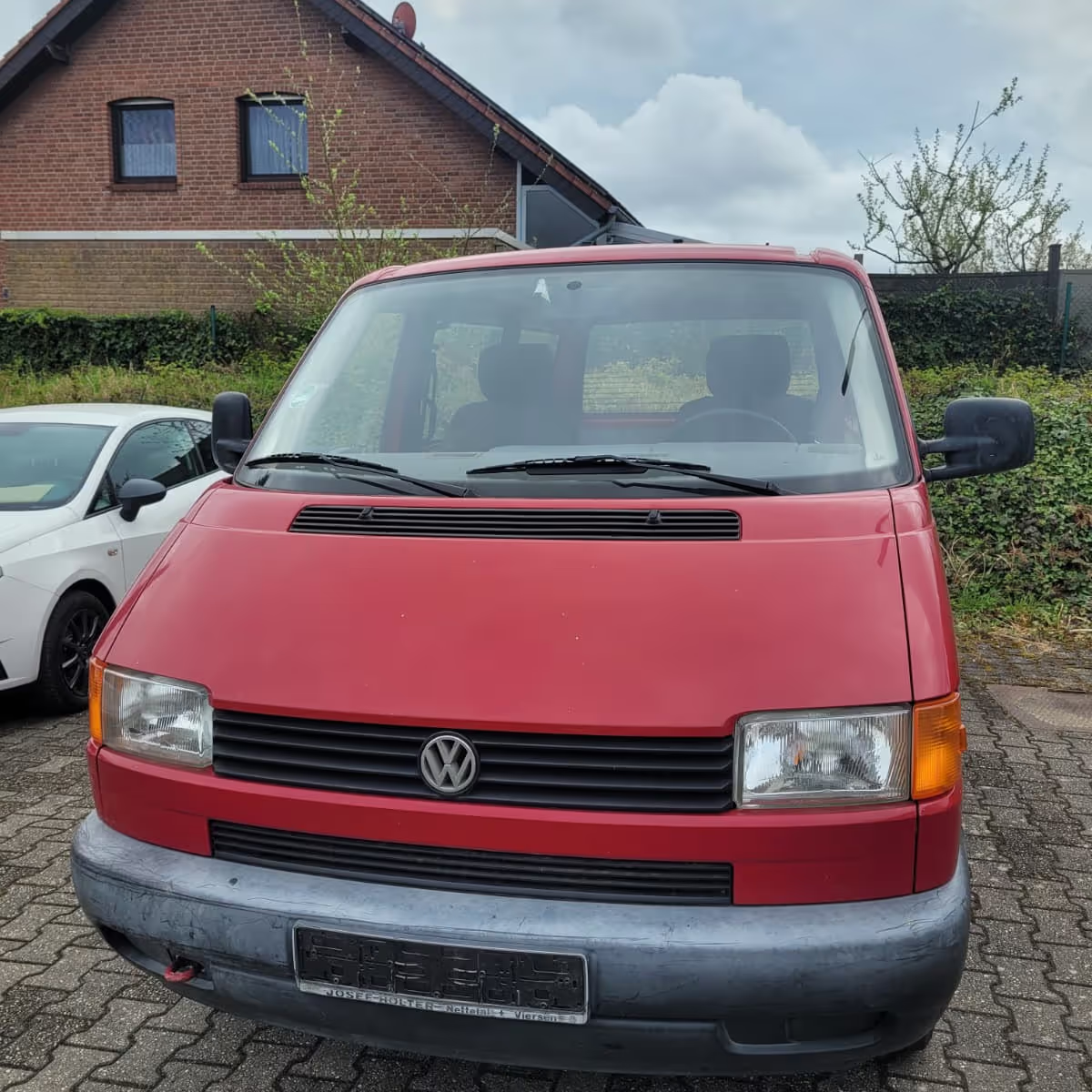
This applies to any vehicle, not just campervans. The principle is simple: make your vehicle look as unremarkable as possible so it does not attract attention.
For campervans specifically, this means no exterior stickers, no roof boxes with obvious lifestyle branding, nothing on the outside to signal that the vehicle is someone's home and therefore likely to contain valuable belongings. A plain, undecorated van looks like a vehicle a tradesperson might use. A van covered in travel stickers and surf decals looks like a vehicle containing laptops, cameras, and cash.
Our T4 is intentionally basic on the outside. No markings, no branding, nothing to distinguish it from any other commercial van of the same era. The tinted rear windows mean there is nothing visible even if someone looks directly at the glass. This stealth approach has served us across twelve countries without a single incident. We consider it more effective than any physical security measure because it removes the motivation before the opportunity arises.
Before leaving any vehicle for an extended period, close all curtains or window covers. Clear the cab entirely — nothing on the seats, nothing on the dashboard, nothing in the footwells. Not a jacket, not a charger cable, not a pair of shoes. This last point is worth taking seriously. Most people think twice before leaving a laptop visible. Fewer people think about the jacket on the passenger seat or the bag in the footwell. Anything visible signals that there are belongings inside worth taking. An empty-looking interior signals nothing.
This applies equally to a regular car parked near a house sit. A car with bags on the back seat is an invitation. A car with nothing visible is not.
Physical Security
The approach to physical security depends on your vehicle and your comfort level, but a few principles apply universally.
A hidden GPS tracker is the single piece of hardware we would consider non-negotiable for any vehicle left parked for an extended period. It is not visible from inside or outside the vehicle and its location should be kept private. If the vehicle were ever stolen or towed without your knowledge, you would have a location immediately. The tracker has never been needed for its primary purpose in three years of travel, but its presence means we are never in a situation where a missing vehicle is simply gone.
Steering locks and wheel clamps are effective visible deterrents. The argument for them is straightforward: an opportunistic thief who sees one will move on to an easier target. The argument against, particularly for the stealth approach, is that a visible lock on a plain-looking vehicle signals that something inside is worth protecting. Whether to use them depends on your vehicle, your location, and your read of the environment. In a high-traffic urban area with a fully fitted campervan, a wheel clamp is a sensible layer. In a quiet rural driveway with a plain-looking vehicle, it may draw more attention than it deflects.
Deadlocks fitted independently of the central locking system provide an additional layer that cannot be bypassed by jamming or cloning a key fob. For campervans that are someone's primary home, this upgrade is worth considering. For vehicles that are parked within a secure property for the duration of a sit, the additional cost may not be necessary.
Whatever security measures you choose, apply the stealth principle first. Everything else is secondary to removing the visual incentive.
Battery Management for Extended Parking
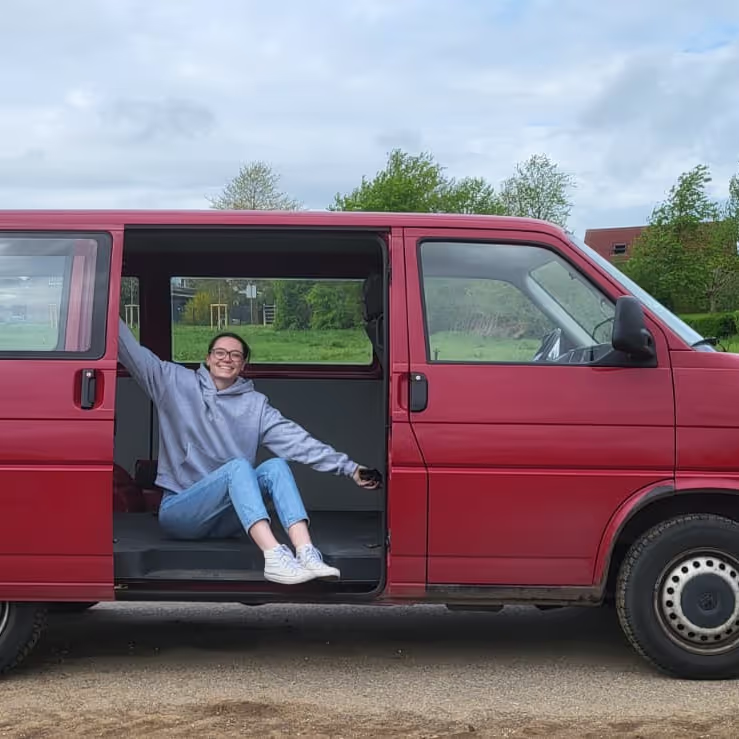
Battery management during extended parking depends largely on how old your vehicle is.
For older vehicles like our 1998 T4, disconnecting the main battery for any sit longer than two weeks is a sensible precaution. Older vehicles have simpler electronics and a battery that has already done years of work. Parasitic drain from the limited onboard systems is low, but an older battery has less reserve to absorb it. Disconnecting the main battery and any secondary chargers takes a few minutes and completely eliminates the risk of returning to something that will not start.
For newer vehicles, the calculation is different. Modern cars have significantly more complex onboard electronics — alarms, computers, keyless entry systems — that draw a continuous current even when the vehicle is switched off. Disconnecting the battery on a newer vehicle can also reset onboard computers, trip meters, and in some cases cause issues with security systems that require a dealer reset. For most modern vehicles, the simpler and safer approach is to start the engine and let it run for ten to fifteen minutes every week or so. This tops up the battery through the alternator without the risk of disrupting any onboard systems. In practice, even after a full month of sitting, most modern cars will start without any issue if the battery was healthy when you parked.
The general rule is straightforward: older vehicle, disconnect. Newer vehicle, run it periodically. If you are unsure which category your vehicle falls into, check with your manufacturer or a mechanic before leaving it parked for an extended period.
But again, usually if you run the car every 2-3 weeks for even 5 min, it should top up the battery enough for another few weeks.
Moisture and Interior Condition
A closed vehicle sitting in varying temperatures for two weeks will accumulate condensation, particularly in cooler or wetter conditions. The fix is consistent ventilation rather than any product.
For campervans with a roof vent, leave it partially open throughout the parking period. Not wide enough to allow rain in, but enough to allow air to circulate through the interior. This prevents the stale, damp atmosphere that builds up in a completely sealed space and significantly reduces condensation on the walls and windows.
On return after a period of wet or cold weather, run the vehicle's heating at full power for a few minutes. This drives out residual moisture quickly and leaves the interior dry. It is a simple habit that takes almost no time and prevents the gradual accumulation of dampness that eventually becomes a persistent smell or a mould problem.
If your campervan has a fixed bed, consider lifting the mattress briefly on your return to air the base. A mattress that has been compressed in one position for two weeks without airflow will retain moisture from normal sleeping use. A few minutes of airflow before making the bed again prevents long-term problems.
For cars parked during a sit rather than lived in, moisture is less of a concern. A brief airing on return is usually sufficient.
Where We Have Felt Safe and Where We Expected to Feel Unsafe
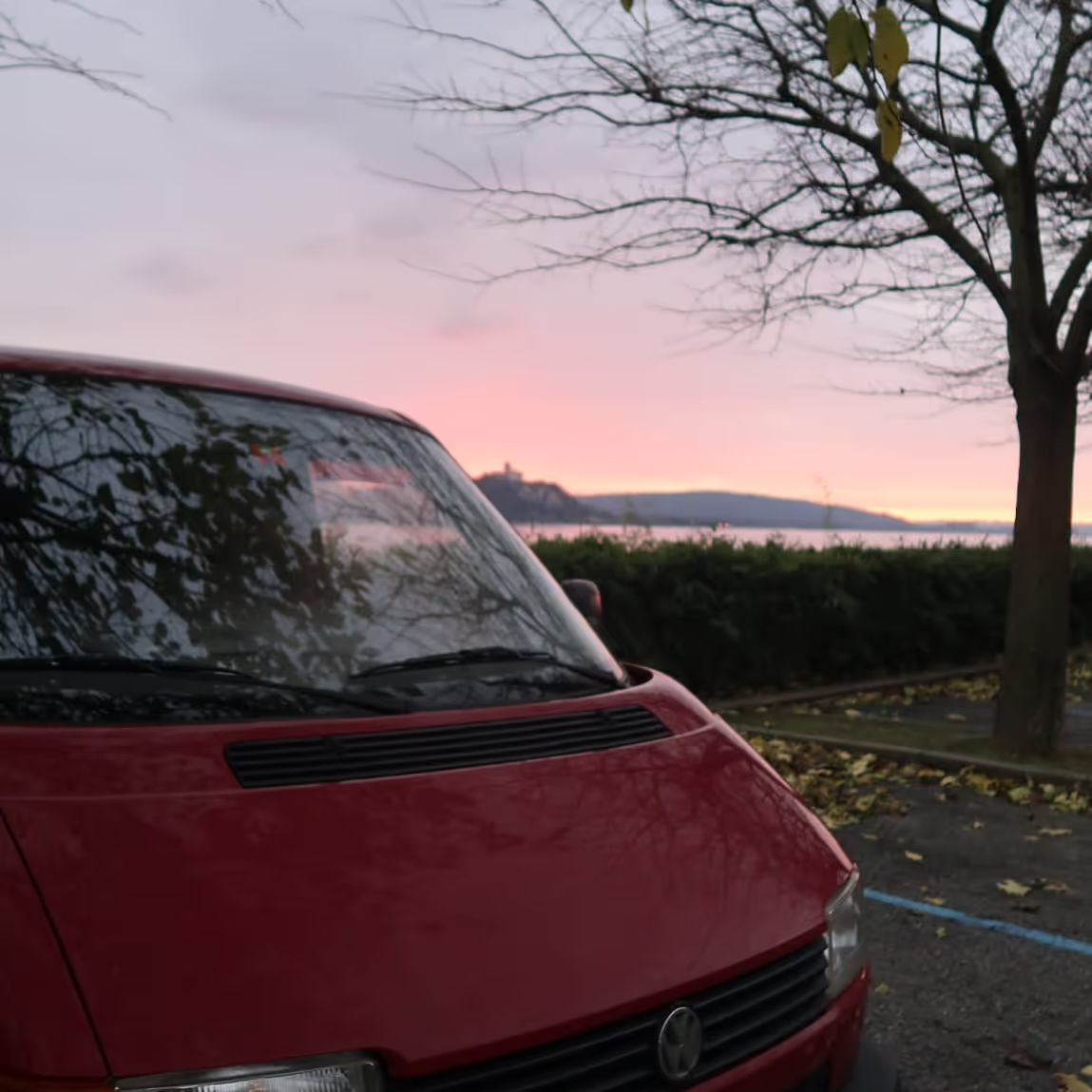
The region that generated the most pre-arrival anxiety for parking was the Balkans. The reputation that precedes that area, based on forum discussions and secondhand stories, suggested a higher risk of vehicle theft and break-ins than western Europe. The reality was the opposite of the expectation. We had no issues anywhere in the Balkans. The vehicle sat undisturbed in every location we used.
The honest conclusion from three years of parking across twelve countries is that the risk is almost always lower than the reputation suggests, and the incidents that do occur are almost always connected to visible valuables rather than random targeting. The forums that generate stories about vehicle theft tend to amplify the exceptions. The thousands of uneventful parking experiences do not generate posts.
This does not mean risk does not exist. It means the risk is largely controllable. Keep things out of sight, choose parking locations with reasonable foot traffic and lighting, avoid spots that feel wrong for reasons you cannot articulate, and trust that instinct when it fires. If a spot feels uncomfortable, move. The cost of finding a different location is always lower than the cost of ignoring a feeling that turned out to be correct.
Spain, and particularly cities like Barcelona and Madrid, has a genuine reputation for vehicle break-ins that the van life community takes seriously. In those cities, parking inside a secure campsite or paid car park on the outskirts and using public transport to reach the centre is the standard recommendation. It is advice worth following. The stealth principle still applies, but the risk profile in busy tourist-heavy city centres is meaningfully higher than elsewhere.
The Pre-Departure Checklist
Before leaving any vehicle for a sit of a week or longer, run through these steps.
Clear the cab entirely — nothing on seats, dashboard, footwells, or visible anywhere through the windows. Close all interior curtains or window covers. Check that the roof vent is partially open for airflow but not open enough to allow rain in. Verify the GPS tracker is active. Confirm the parking location is legal for the full duration of the sit — some European cities have time-limited street parking that results in a fine or tow after a few days. Read any parking signs carefully before walking away, ideally photographing them as a record.
For sits longer than two weeks: disconnect the main battery and any secondary chargers, check tyre pressure, and note the exact location of the vehicle including what3words or a pin drop. After two weeks of sitting, a brief walk around the vehicle before driving off catches anything obvious before it becomes a problem on the road.
The van breakdown and house sitting article covers what to do if the vehicle does develop an issue during or between sits.
Conclusion
Parking a vehicle safely during a house sit comes down to three things: location, invisibility, and a short pre-departure checklist. The location problem largely solves itself when you have a vehicle, because the sits worth applying for tend to be the ones with private parking. The invisibility problem is solved by keeping everything out of sight and resisting the urge to personalise the exterior. The checklist is short enough to run through in ten minutes before walking away.
Three years across twelve countries, no break-ins, no flat batteries from extended parking, no moisture problems that proper ventilation did not prevent. The approach works regardless of what you are driving.
Caro and I have completed 20 house sits across 12 countries, driven 19,000km in Australia and 24,000km in our 1998 VW T4, and saved over $26,500 in accommodation costs. If you have a question about combining van life with house sitting, send us a message on Instagram — we read every DM.

Frequently Asked Questions
Where should I park my campervan during a house sit?
Inside the property if at all possible. Most sits outside city centres come with a driveway, gates, or dedicated parking that makes this straightforward. When inside parking is not available, the street immediately adjacent to the property is the next best option. Choose a spot you are happy to leave for the duration of the sit rather than one you will need to move regularly.
How do I prevent my vehicle battery from draining during a two-week sit?
If you are driving the vehicle once or twice a week, regular use is sufficient. For sits where the vehicle will sit completely unused, disconnect the main battery and any secondary chargers to eliminate parasitic drain. Modern vehicles draw a small continuous current from onboard electronics even when switched off. Disconnecting eliminates that drain entirely for the parking period.
How do I prevent moisture buildup in a parked campervan?
Leave a roof vent partially open for airflow throughout the parking period. On return after wet or cold weather, run the heating at full power for a few minutes to drive out residual moisture. For fixed bed setups, lift the mattress briefly on return to air the base before making it up again.
What is the stealth campervan approach and why does it work?
Keeping the vehicle's exterior unremarkable and the interior completely clear of visible belongings removes the visual cues that attract opportunistic attention. No stickers, no branding, nothing visible inside — not a jacket, not a charger, not a pair of shoes. An empty-looking vehicle gives a potential thief no reason to stop. A vehicle with visible contents gives them several.
Is it safe to leave a campervan or car parked in European cities for two weeks?
In most cases yes, provided you apply the basics: nothing visible inside, a sensible parking location, and a hidden GPS tracker. The reputation of certain regions tends to be worse than the reality. Most incidents that do occur are connected to visible valuables rather than random targeting. In cities with a genuine break-in reputation, such as Barcelona or Madrid, parking inside a secure facility on the outskirts and using public transport is the recommended approach.
Do I need a steering lock or wheel clamp on a campervan?
They are a useful visible deterrent in high-risk urban areas but not essential if the stealth principle is applied consistently. A hidden GPS tracker is the one piece of hardware we consider non-negotiable for any extended parking period. Deadlocks fitted independently of the central locking system provide a meaningful additional layer for fully fitted campervans used as a primary home.


Responses
What are your thoughts on this post?