

Home > Blog > What If You Don't Bond With the Pet During a House Sit?
| Quick Facts | |
|---|---|
| Is this common | More common than people admit, especially with cats and shy rescue dogs |
| Does it reflect on you | Almost never, especially if the homeowner already knows the pet's personality |
| What to do | Stay neutral, let the pet approach you, don't force interaction |
| Shy vs stressed | Shy pets relax with space and time. Stressed pets retreat further the more you try |
| Best update for a homeowner | Photos of the pet eating, resting, or comfortable, even from a distance |
Most articles about house sitting and pets assume a bond will happen, and usually it does. But sometimes it doesn't, or it doesn't happen the way you expected, and almost nobody talks about what that's actually like. A cat that hides for most of a sit. A dog that tolerates you but never warms up. This is normal, it's rarely about you, and how you handle it matters more than whether it happens at all.
Caro and I have completed 20 house sits across 12 countries, and in every one of them, we've had some kind of connection with the pets, sometimes immediate, sometimes gradual. But before we started house sitting, I did dog walking, and one particular dog never connected with me at all, no matter what I did.
If you are interested in getting into house sitting, our book Travel More for Less puts the whole process in one place: clear, step by step guidance from your first questions to your first confirmed sit, and the reviews that open the door to the next one.
The Dog That Never Connected
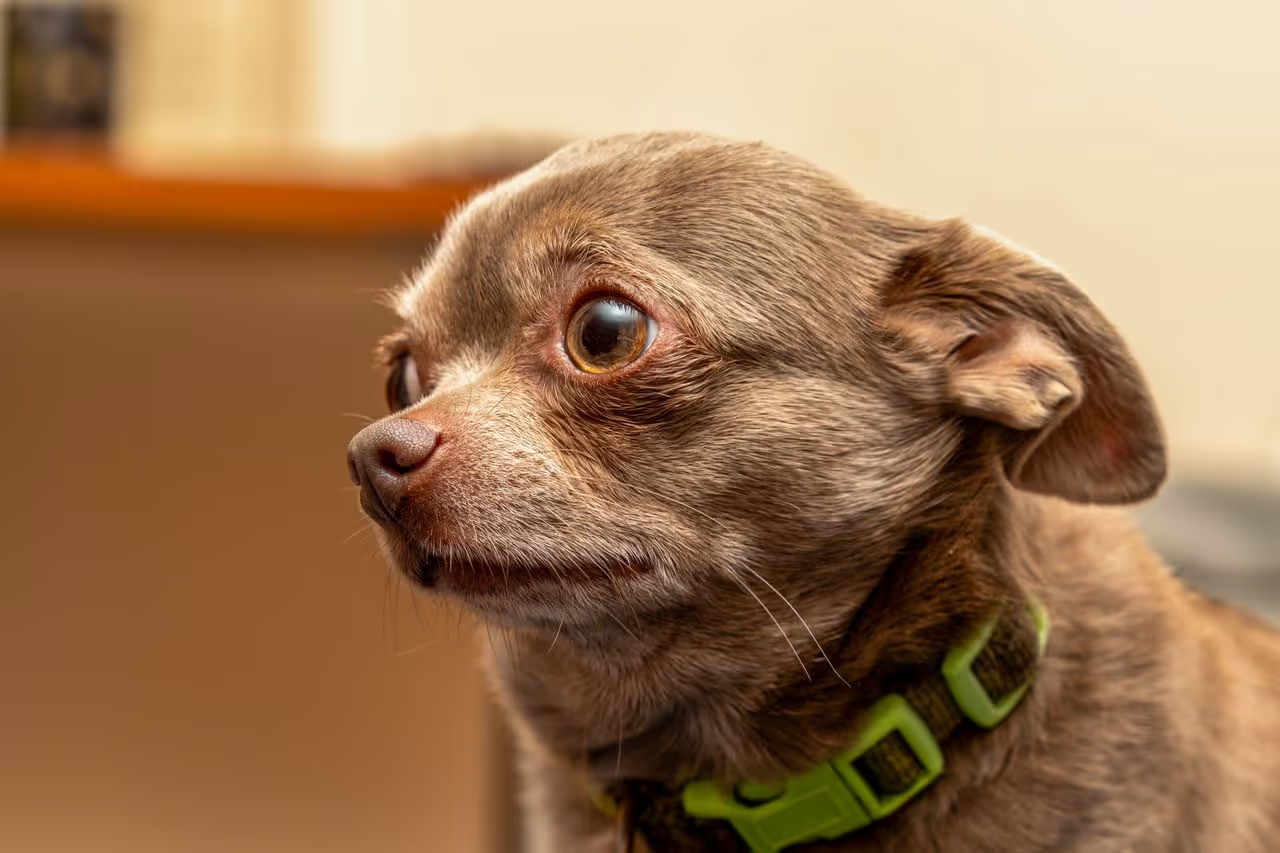
Before house sitting, I did regular dog walks for a rescue dog from Bulgaria. The owner told me upfront that the dog was afraid of men, and within the first walk, that became very clear. No matter how friendly I was, how slowly I approached, or what I did, the dog was scared of me. It would run away, hide under the bed, and only come out when the owner was home.
I used to wear a cap a lot in summer, and looking back, that may well have been part of it. Faces partially obscured can be genuinely frightening for a dog that's already wary of men, regardless of how calm the rest of your body language is.
One day I took the dog out alone, and it bolted into the forest. We found it eventually, but that moment made the situation completely clear. This wasn't a dog that would warm up with time or patience. It was a dog with a specific, deep-rooted fear that I happened to represent, through no fault of my own.
After that, I stopped walking that particular dog. Not because I'd failed, but because continuing genuinely risked the dog's safety. A frightened animal that bolts is a missing pet situation waiting to happen, and the kindest thing I could do was remove myself from the equation.
Going In Neutral
Since starting house sitting, Caro and I have approached every sit the same way: neutral. We don't chase the pet for attention. We don't try to manufacture a bond on day one. We let the animal come to us, on its own terms, whenever that happens to be.
At our current sit in Portugal, the cat is extremely friendly. But even here, we didn't go looking for that. One day, it simply came and lay down next to me, and I gave it a few pats, which it clearly enjoyed. That's the whole interaction, repeated naturally, dozens of times since. The cat is in control of when that happens, and because of that, it never feels pressured.
This approach matters more than it might seem. A pet that's nervous, shy, or simply not used to strangers is far more likely to relax around someone who isn't actively pursuing it. The moment you remove the pressure to perform affection, on either side, the relationship can develop at whatever pace actually suits the animal. Sometimes that's immediately. Sometimes it's gradually. Sometimes it stays at "comfortable in the same room" for the whole sit, and that's a perfectly fine outcome too.
When the Homeowner Already Knows
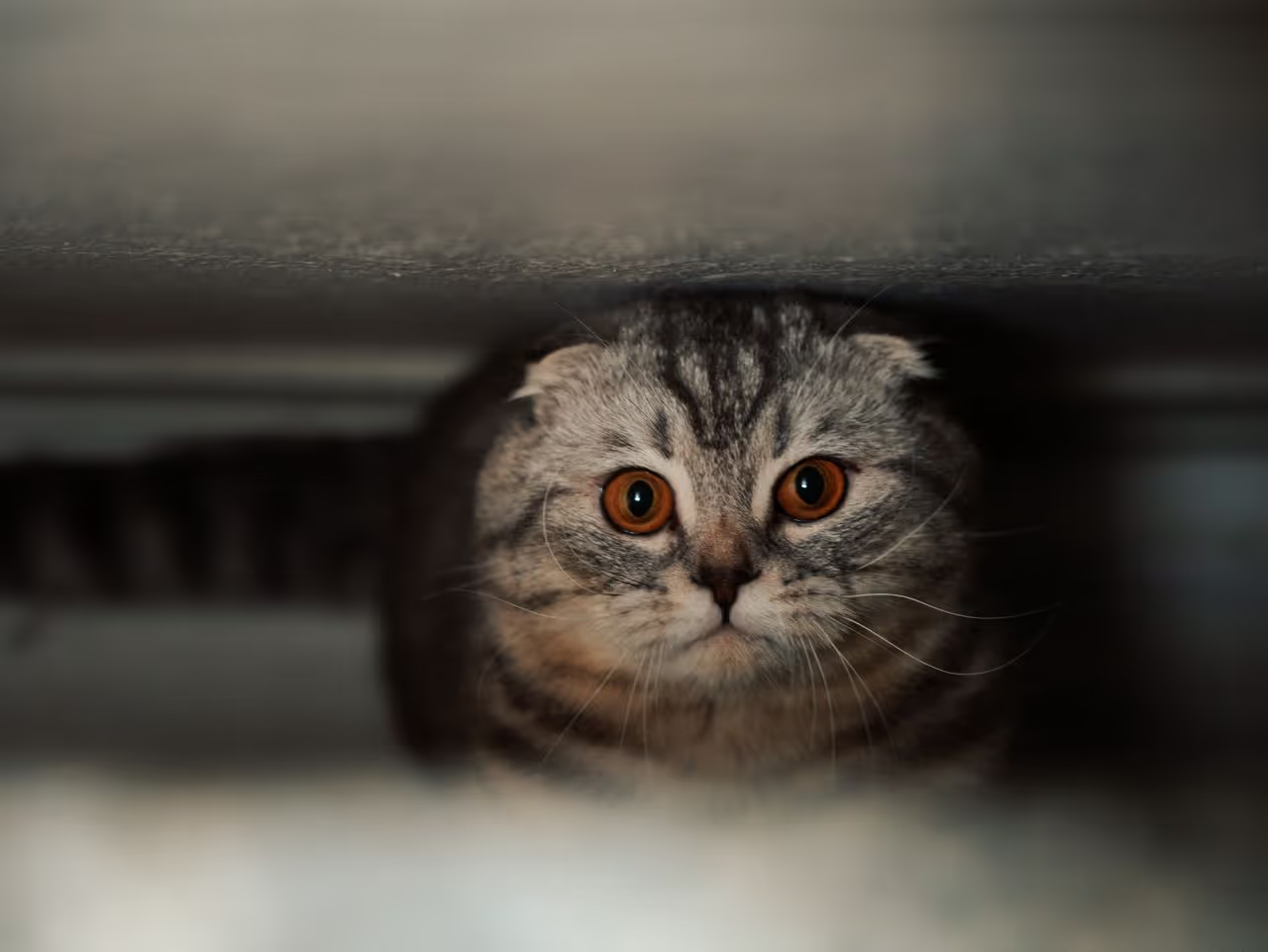
In our experience, if a pet is genuinely shy or doesn't connect easily with new people, the homeowner almost always knows this already. It's part of who the animal is, and it would have come up before the sit, either in the listing, the welcome guide, or during the video call.
At a sit in Ostuni, where I was looking after four cats, the homeowner specifically told me in advance that one of the cats did not feel comfortable around new people, and that she was completely understanding if there was never any connection at all during the sit. She'd set the expectation honestly, which meant there was nothing for me to worry about if that's exactly how it played out.
What actually happened was that by day two or three, that same cat was comfortable enough to approach for cuddles. It didn't last the whole sit, it came and went, but it happened often enough that the homeowner was genuinely surprised. She mentioned it in the review afterward, not because i had done anything unusual, but because I hadn't pushed for it, and the cat had decided on its own terms that I was safe.
This is the pattern worth understanding. When a homeowner already knows their pet's personality and has told you about it, there's no expectation gap to manage. You're not failing to meet a standard, because the standard was never "this pet will love you." It was "this pet might not, and that's fine."
What to Send the Homeowner When the Pet Isn't Affectionate
We've written before about how photos of a relaxed pet reassure homeowners more than almost anything else, a pet lying on its back, comfortable, clearly at ease. But what do you do when the pet simply isn't presenting that way, no matter how well it's being cared for?
The answer is: you photograph what's actually there. A cat eating from its bowl. A dog curled up across the room, even if it's not curled up next to you. These photos still communicate the thing that actually matters: the pet is eating, resting, and safe. A homeowner who already knows their pet is shy doesn't need a photo of affection to feel reassured. They need to know the routine is being maintained and the pet seems okay, even from a distance.
If, every now and then, there's a moment of genuine comfort, even briefly, that's worth capturing too. Not as proof of anything, but because it's a nice thing to share. The Ostuni cat photos weren't sent to prove I was doing a good job. They were sent because it was a small, genuinely lovely thing that happened, and the homeowner appreciated knowing about it.
Shy Versus Stressed: How to Tell the Difference
This distinction matters, because the right response is different depending on which one you're dealing with.
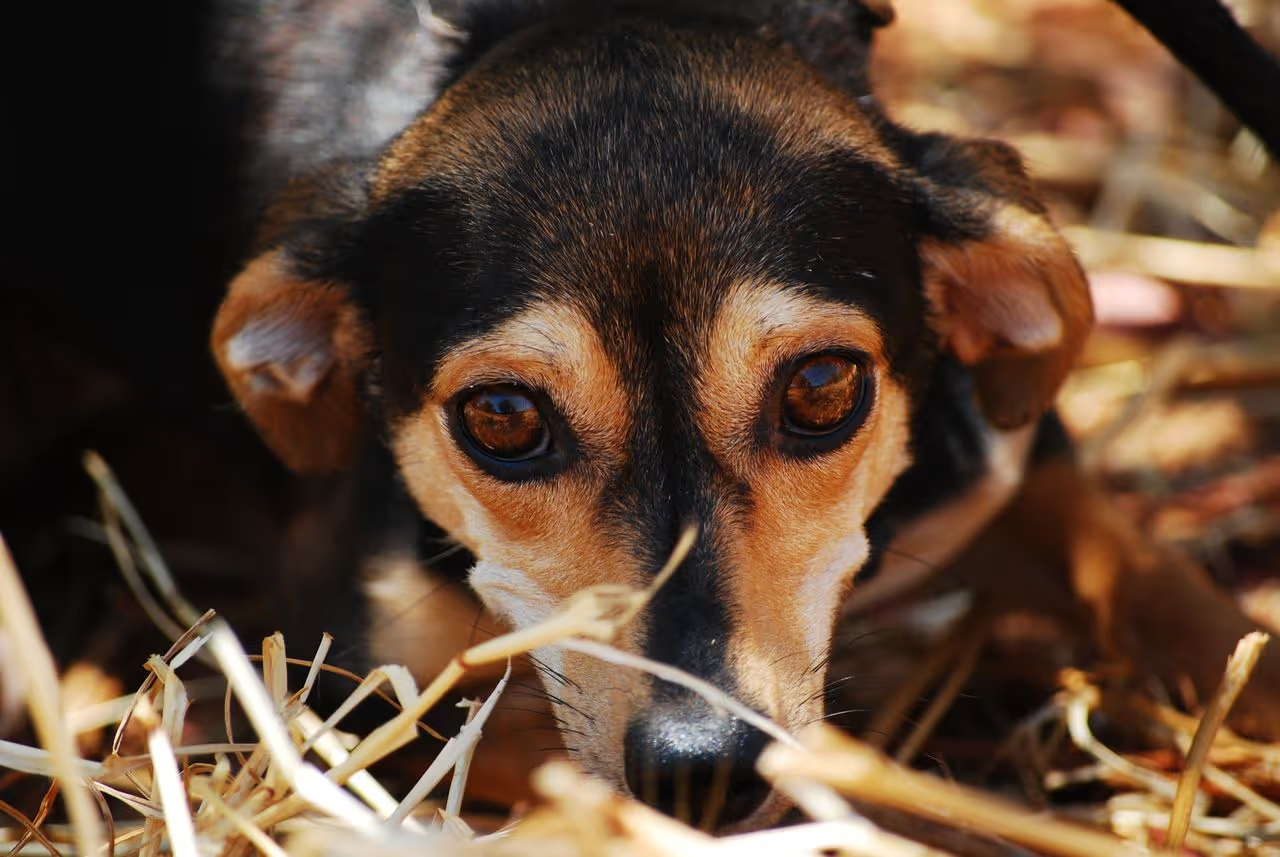
A shy pet is one that takes time to warm up, but generally seems okay. It might avoid you initially, watch from a distance, or retreat to a favourite spot, but its eating, sleeping, and overall behaviour stay normal. Given space and time, a shy pet often becomes more comfortable, sometimes within days, sometimes not until the very end of the sit, sometimes not at all. Either way, the pet itself isn't suffering.
A stressed pet is different, and the signals tend to escalate rather than settle. With the Bulgarian rescue dog, the pattern was telling: the dog was fine when the owner was present, but the moment it was just the dog and me, it would retreat, hide, or try to escape entirely. That's not shyness settling over time. That's active distress that gets worse the more you try to engage.
If you notice a pet getting more withdrawn, more reactive, or showing signs of genuine fear (cowering, attempting to flee, refusal to eat) rather than just cautious distance, the right response is to back off entirely and let the homeowner know. This isn't a situation to push through hoping it improves. Our reactive and aggressive dog guide and separation anxiety guide cover related situations where a pet's distress needs to be addressed directly rather than waited out.
None of this is animal behaviour expertise, just patterns we've noticed across 20 sits. If a pet's behaviour seems like more than shyness, a vet or a qualified animal behaviourist is always the better source than a blog post.
| Signal | Shy Pet | Stressed Pet |
|---|---|---|
| Initial reaction to you | Watches from a distance, avoids approach | Hides immediately, may flee the room |
| Eating and drinking | Normal, even if it happens when you're not nearby | Reduced appetite or refuses to eat when alone with you |
| Behaviour over the first few days | Gradually more visible, may approach on its own terms | Stays the same or gets more withdrawn |
| When the homeowner is present | May behave the same as with you | Often calm and normal, very different from when alone with you |
| Body language | Cautious but relaxed once settled, normal sleeping positions | Cowering, tucked tail, flattened ears, hypervigilance |
| Response to space and time | Often improves, sometimes within days | Doesn't improve, or escalates the more it's left alone with you |
| What it usually means | A personality trait, often already known to the homeowner | A specific fear or trauma response that needs to be managed, not waited out |
| Right response | Stay neutral, follow the routine, let it come to you | Minimise direct interaction, prioritise safety, tell the homeowner |
Giving a Nervous Pet Space, Practically
If you do find yourself with a pet that's nervous around you, there are a few things that genuinely help, all of which come down to the same underlying idea: remove the pressure.
Don't approach the pet directly, especially not head-on. Let it observe you from a distance for as long as it needs to. Sit down near where the food is, rather than standing over it, so that if the pet does want to approach, eating is the easy, low-stakes reason to do so. Avoid sudden movements, and avoid the temptation to talk to the pet constantly in an attempt to reassure it, sometimes silence and stillness are more reassuring than a stream of friendly chatter.
Most importantly, don't take it personally if none of this changes anything during your sit. Some pets need far more time than a two-week sit provides, and some pets, like the Bulgarian rescue, have specific associations that no amount of patience from a stranger will undo quickly. That's not a verdict on you. It's just where that particular animal is in its own life.
Building Trust Through Information, Not Just Time
A lot of what determines whether a shy pet settles quickly or stays anxious for the whole sit comes down to something that happens before you ever arrive: how much the homeowner told you in the welcome guide.
A nervous pet doesn't need more time with you specifically. It needs you to act in ways that are predictable and familiar, and the only way to do that from day one is to already know what predictable looks like for that particular animal. If the welcome guide tells you the cat eats at the same time every evening, retreats to a specific room when stressed, or has a particular routine around the door, you can simply follow that from the start. The pet experiences a new person behaving exactly the way it expects a person in this house to behave, which is about as reassuring as a stranger can possibly be.
This is the practical version of something we've written about elsewhere: a thorough welcome guide isn't just convenient, it actively shapes how the sit unfolds. For a confident, social pet, missing details in the guide barely matter, the pet will approach you regardless and you'll figure things out together. For a shy or anxious pet, those same missing details are exactly the gap where things go wrong. A sitter who doesn't know the cat hides during vacuuming, or that the dog needs its lead clipped on before the front door opens rather than after, is a sitter who will unknowingly do the one thing that undoes a day of careful, neutral patience.
So if there's one piece of advice for looking after a shy pet well, it's this: read the welcome guide as if it's the most important document of the entire sit, because for this particular pet, it is. Match the routine exactly, especially in the first few days. Don't introduce anything new, no new feeding spot, no new walking route, no rearranged furniture, until the pet has had time to confirm that you're safe within the world it already knows. Trust, for a nervous animal, isn't really about you. It's about whether its world stayed the same. The more of that world the homeowner described and the more closely you replicate it, the faster a shy pet can relax, sometimes far faster than anyone expected.
When the Lack of Connection Becomes the Story
Looking back, the moments that stand out aren't always the ones where everything went smoothly from day one. The Ostuni cat is memorable precisely because the expectation was so clearly set, no connection expected, and what actually happened exceeded it. If the cat had stayed distant the entire two weeks, that would have been a completely unremarkable, normal sit. The fact that it didn't is what made it worth remembering, and worth the homeowner mentioning in the review.
If you go into a sit neutral, without expecting a particular outcome, there's very little that can actually go wrong here. A pet that stays distant the whole time is just a pet being itself, looked after exactly as it should be. A pet that surprises you partway through is a nice bonus. Either way, the job, feeding, routine, safety, and care, gets done the same regardless of how affectionate the animal feels like being that day.
Conclusion
A pet not bonding with you isn't a failure, and in most cases it isn't even unusual. Shy cats, wary rescue dogs, and animals that simply prefer their own space exist everywhere, and a homeowner who knows their pet well almost always knows this in advance. Go in neutral, let the animal set the pace, send photos of whatever's actually happening rather than what you think the homeowner wants to see, and pay attention to the difference between shyness and genuine stress.
Sometimes nothing changes, and that's a completely normal sit. Sometimes, like in Ostuni, something does, and it becomes one of the small, unexpected highlights of the whole trip.
Caro and I have completed 20 house sits across 12 countries, driven 19,000km in Australia and 24,000km in our 1998 VW T4, and saved over $26,500 in accommodation costs over three years of house sitting. If you have questions about a pet that hasn't warmed up to you during a sit, send us a message on Instagram, we read every DM.

Frequently Asked Questions
Is it normal for a pet not to bond with a house sitter?
Yes, and it's far more common than it might seem from how house sitting is usually described. Cats especially can remain distant or hidden for most or all of a sit, particularly if they're naturally shy or unused to strangers. If the homeowner already knows their pet's personality, this is expected and not a reflection of how well the pet is being cared for.
How should I act if a pet seems nervous around me?
Stay neutral and let the pet set the pace. Avoid chasing it for attention, approaching it directly, or forcing interaction. Sit near food rather than over it, move slowly, and give the pet space to observe you and decide for itself when it feels comfortable. Some pets warm up within days, others take the whole sit, and some don't warm up at all, all of which can be completely normal.
What's the difference between a shy pet and a stressed pet?
A shy pet generally seems okay otherwise, eating and sleeping normally, just cautious or distant. A stressed pet shows escalating distress, becoming more withdrawn or reactive the more it's engaged with, sometimes attempting to flee or hide entirely when left alone with the sitter. Shy pets often improve with space and time. Stressed pets need a different response, including letting the homeowner know, rather than waiting it out.
What should I send the homeowner if their pet won't come near me?
Photos of the pet eating, resting, or otherwise going about its normal routine, even from a distance, communicate that everything is fine. A homeowner who already knows their pet is shy doesn't need a photo of affection to feel reassured. If a brief moment of comfort does happen, it's worth sharing too, but it's not necessary for a good update.
Should I try harder to bond with a pet that isn't responding to me?
No. Trying harder, more attention, more direct interaction, tends to backfire with nervous animals, making them retreat further. The most effective approach is almost always to do less: stay calm, stay nearby without pressure, and let the animal decide when and whether to engage.
What should I do if a pet seems genuinely afraid of me specifically?
If a pet shows ongoing fear that doesn't improve with space and time, particularly if it seems linked to something specific like a person's appearance, voice, or movements, the safest approach is to minimise direct interaction, prioritise the pet's safety (especially during walks or off-lead time), and communicate honestly with the homeowner about what you're observing.




Responses
What are your thoughts on this post?