

Home > Blog > Neighbour Interactions During a House Sit
Quick Facts
| How often do neighbour issues arise | Rarely — most sits involve barely any neighbour interaction |
| The most common neighbour experience | A hello in passing, a brief chat, nothing more |
| The Lullin situation | A man peeping around the corner of the garden — confronted, warned, never seen again |
| Third party entering the property | A friend of the owner arrived to give the pet medication — uncomfortable, handled calmly |
| Best prevention | Homeowner informs neighbours before the sit starts |
| Sitter approach on day one | Greet if you cross paths — no need to go out of your way |
| When to report | If behaviour repeats, escalates, or makes you feel unsafe |
On most sits neighbours barely notice you. The exceptions come from two avoidable causes: the homeowner did not tell them a sitter was arriving, or the sitter refused to explain. A warm thirty-second introduction defuses almost everything. If behaviour repeats or feels threatening, call the police, not the platform.
If you are interested in getting into house sitting, our book Travel More for Less puts the whole process in one place: clear, step by step guidance from your first questions to your first confirmed sit, and the reviews that open the door to the next one.
The dramatic stories on Reddit and the forums. Police called on sitters, confrontations at the door, neighbours entering the property. Do happen. They are also not the norm. The reason they dominate community discussions is that normal sits do not produce forum posts.
This article covers what actually happens, what happened to us in Lullin, and the practical approach that prevents most issues from developing into anything significant.
Use our 25% discount when joining.
The Reality: Most Neighbours Mind Their Own Business
There is something worth noting about modern neighbourhood culture before getting into specific situations. Most people do not know their neighbours. They come home from work, go inside, and stay there. This is broadly true across Europe and beyond. In Germany particularly, Caro and I lived in an apartment building for nearly two years, gave chocolates to the neighbours when we moved in, and met them a handful of times across the whole period.
In a house sitting context, this means that the vast majority of sits see almost no neighbourly interaction at all. A polite wave, occasionally a brief exchange about the weather or the dog. In most cases the homeowner has already told the immediate neighbours that a sitter is coming, which pre-empts any suspicion.
The sits where neighbours have known about us in advance have been entirely smooth. A quick introduction. "yes, we are looking after the house for a few weeks, good to meet you". Is usually the end of it. The homeowner's prior communication does the heavy lifting.
The Lullin Situation
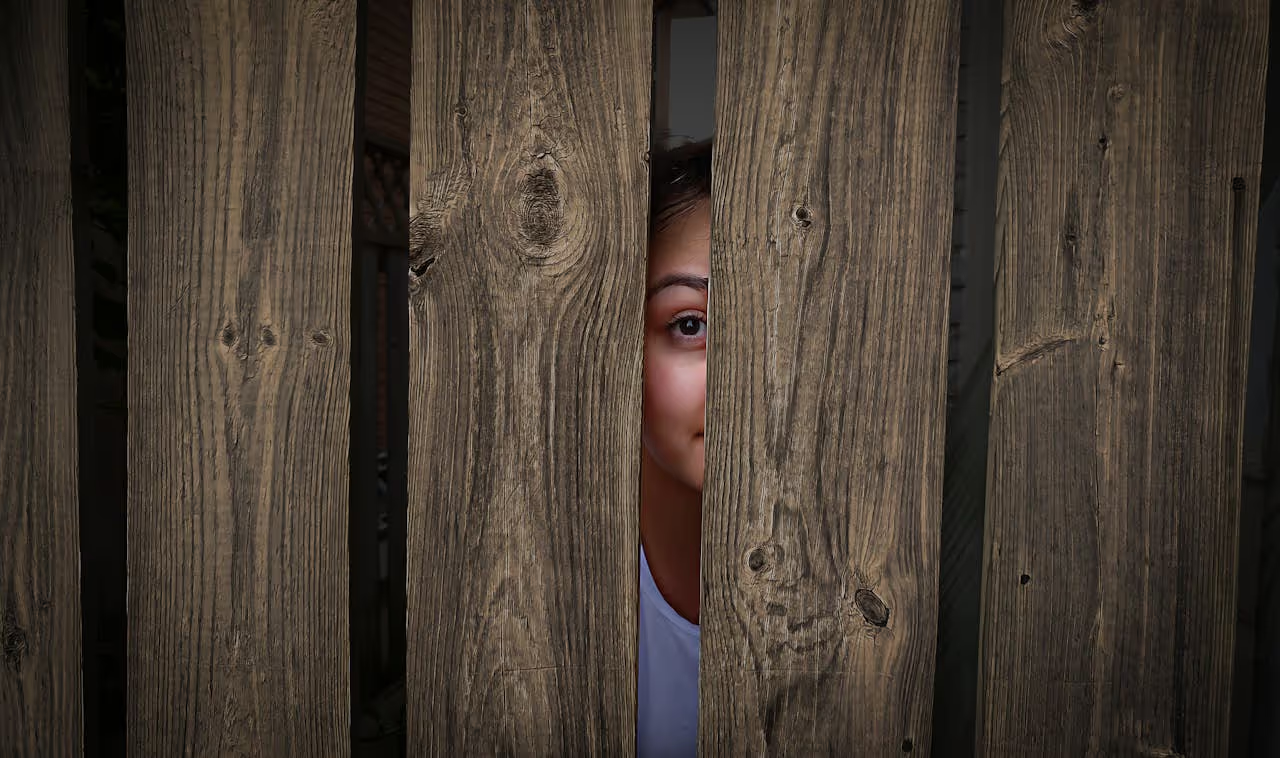
In Lullin, France, Caro was sunbathing in the backyard when she noticed a figure peer around the corner of the garden and quickly pull back. She called out to me immediately.
I went around the corner and saw an older neighbour walking away from the property. I followed him and told him clearly not to come back. From that point on he was rarely visible. He stayed close to his own property for the remainder of the sit. We informed the homeowners about what happened.
Their initial response was that he owned a shed behind the property and had access to that area. When we explained it was not the shed access that concerned us. It was the peering around the corner at Caro in the garden. They apologised for his behaviour.
We chose not to call the police at that point because the situation had resolved. He did not return to the property line. If he had come back, we would have called. That is the right threshold: if behaviour repeats, escalates, or makes you feel unsafe, the police are the appropriate first call. Not the platform, which cannot do anything about a neighbour.
Our house sitting legal issues guide covers what escalation looks like when a situation goes beyond what the platform can handle.
The Third Party With a Key
In one sit, a friend of the homeowners had a key and was coming to give the pet some medication. We knew about this in advance. Even knowing it was coming, having someone we had never met turn up and potentially enter the house while our personal belongings were inside felt uncomfortable.
It is not about whether the house was clean or whether the person was trustworthy. It is about having your private space entered by a stranger when you are responsible for the property. That is a reasonable discomfort regardless of the circumstances.
The platform position is that third parties entering the property during a sit is against THS terms of service unless explicitly agreed. In practice, a short visit to hand over medication or pick something up is manageable if it is disclosed upfront and handled in a transparent way. What is not acceptable is a neighbour or friend entering the house without warning and without the sitter's knowledge.
If a homeowner mentions that someone might pop over, ask for the name, the purpose, and the expected timing. Treat it as a known variable rather than a threat. If someone enters without warning and without prior disclosure, note it with the homeowner and contact the platform to log it. Not to escalate, but to create a record. Our snooping and privacy guide covers the third party entry question in full.
Why Sitters Get Questioned or Reported
The community stories about neighbours calling the police on sitters or confronting them at the door almost always involve one of two conditions: the homeowner did not inform the neighbours, or the sitter refused to explain themselves when asked.
Both are avoidable.
A homeowner who tells their immediate neighbours that a sitter is arriving on a specific date has removed the ambiguity that generates suspicion. The neighbour sees a stranger and already knows why they are there. No call required.
A sitter who, when asked by a neighbour who they are, says "I don't have to tell you anything" is technically correct and practically creating a problem. Informing a neighbour that you are looking after the house while the owner is away takes thirty seconds and defuses essentially every situation of this kind. The information is not sensitive. The sitter is not disclosing anything that compromises the homeowner's privacy. A brief, warm explanation. "I am house sitting for [name] while they are travelling". Is almost always enough.
The cases where neighbours push further and refuse to accept this explanation are the unusual ones, and they tend to reflect something about the neighbourhood rather than the sitter. In those cases, having the homeowner's contact number available and offering to call them directly in the neighbour's presence resolves almost everything that remains.
What Homeowners Should Do Before the Sit
The homeowner has the most leverage to prevent neighbour issues before they start. The actions are simple and take very little time.
Tell immediate neighbours the sitter is coming. Their name, the dates, and that they are looking after the pets. A brief message or conversation covers everything. This is the single most effective preventive measure available.
If a neighbour has a spare key, make clear before the sit that it is for genuine emergencies only and not to be used for casual access. Mention this explicitly in the welcome guide and in the pre-sit video call.
Do not ask neighbours to check in on the sitter. If you have vetted the sitter properly, communicated clearly about expectations, and the sitter is sending regular updates, there is no need for a neighbour to verify anything. A homeowner who sends a neighbour to check on a sitter is implicitly communicating that they do not trust them. Our why homeowners are not getting applications guide covers why the trust signal matters in the other direction too.
The Communication Loop That Prevents Most Issues
The community forum stories about neighbours being asked to check in on sitters almost always have the same root cause: the homeowner stopped hearing from the sitter. A sitter who is communicating regularly. A photo of the pets, a brief note about the garden, a quick message when something interesting happens. Gives the homeowner no reason to send anyone to verify.
Some sitters feel that regular updates are an imposition or evidence of a controlling homeowner. I disagree. After all, a home and pets are often a person's most valued possessions. It is entirely reasonable for a homeowner to want to know things are well. The sitter who communicates unprompted, who sends a picture when the cat found a sunny spot or the dog loved the walk, is the sitter who never gets a neighbour checking in. Our building trust guide covers this dynamic from the sitter's side.
What to Do in Each Scenario
Neighbour questions who you are. Explain warmly and briefly that you are house sitting while the owners are away. Offer the homeowner's contact number if needed. That is almost always sufficient.
Neighbour enters the property without notice. Contact the homeowner and note it. If it happens again, log it with the platform. Ask the homeowner to confirm clearly to the neighbour that access is not permitted during the sit.
Neighbour behaviour feels threatening or harassing. Do not wait for the platform to resolve this. If you feel unsafe, the police are the right first call. Note everything, inform the homeowner, and contact the platform to log the situation. Your safety comes before the sit.
Homeowner sends a neighbour or friend to check in. If it is a one-off and disclosed in advance, treat it calmly. Introduce yourself, be warm, and move on. If it becomes a pattern, raise it with the homeowner directly: regular communication from you should mean they do not need anyone else to verify how things are going.
Someone you have never met has a key and may use it. Ask the homeowner for the name, purpose, and timing before arrival. It is reasonable to request they text you before entering. Not because you have anything to hide but because it is your temporary home and a basic courtesy.
A Note on Perspective
The community reaction to platform terms violations. Someone pointing out that a neighbour entering is "against THS T&Cs", is technically correct but practically less useful than a warm introduction and a brief conversation. Most neighbour situations are human situations, not platform situations. They are resolved by the same tools that resolve most human situations: a bit of warmth, a bit of transparency, and a willingness to address things directly rather than waiting for someone else to fix them.
If it becomes a genuine issue. Repeated unauthorised entry, threatening behaviour, harassment. Then the platform and the authorities are the correct escalation. Everything short of that is usually manageable with the tools you already have.
Join TrustedHouseSitters with 25% off and DM us @housesittersguide on Instagram. We answer everyone.

Frequently Asked Questions
Should I introduce myself to neighbours at the start of a house sit?
You do not need to go out of your way, but if you cross paths, a brief friendly introduction is worth doing. Tell them you are house sitting for the owners, mention the timeframe, and that is usually enough. If the homeowner has already told them to expect you, the introduction is simply confirmation. In either case, being recognisable and approachable removes the most common source of neighbour suspicion.
What should I do if a neighbour enters the property during my sit?
Contact the homeowner immediately and ask them to clarify to the neighbour that entry is not permitted during the sit. If it happens again, log it with TrustedHouseSitters support to create a paper trail. A one-off with prior notice and a disclosed purpose is manageable. Repeated or unannounced entry is a boundary violation worth documenting. Our privacy and snooping guide covers the full situation.
What if a neighbour seems suspicious of me or reports me to the police?
Stay calm, explain clearly that you are house sitting, and offer the homeowner's contact number. Having a copy of your confirmed sit booking accessible on your phone is helpful. A simple warm explanation resolves the vast majority of these situations. If a neighbour's behaviour escalates beyond a question into harassment or intimidation, the police are the appropriate call. The platform cannot resolve a safety situation.
Should homeowners tell their neighbours about the sitter?
Yes. It is the most effective preventive measure available. A neighbour who already knows a sitter is coming has no reason for suspicion. Inform immediate neighbours of the sitter's name and dates before departure. If a neighbour has a spare key, make clear that it is for genuine emergencies only.


Responses
What are your thoughts on this post?