

Home > Blog > Mould During a House Sit: Health Risks and What to Actually Do
Quick Facts
| Quick Facts | |
|---|---|
| Recommended indoor humidity | Below 60%, ideally 30-50%, per EPA and CDC guidance |
| Health risk of damp or mouldy buildings | WHO links this to up to a 75% greater risk of respiratory symptoms and asthma |
| Is "black mould" uniquely dangerous? | Not really, per the CDC. "Toxic mould" isn't an accurate term, most black mould's health effects are similar to other common indoor moulds |
| Small, cleanable patch | Wipe down with a mild detergent, or white vinegar and water |
| Larger area (10+ square feet) or recurring growth | CDC/EPA guidance suggests this generally needs professional remediation, not DIY cleaning |
| Our own line | A small patch, cleaned and it doesn't return, is fine. A strong odor makes us reconsider. Visible black mould across a wall means we end the sit |
Keep indoor humidity under 60%, ideally 30-50%, and clean small patches with vinegar. The WHO links damp or mouldy homes to up to 75% more respiratory symptoms and asthma. Anything over 10 square feet, or mould that returns, needs professional remediation. An entire blackened wall means ending the sit.
This is not medical advice. We are not doctors, health professionals, or mould remediation specialists. The information here is drawn from CDC, EPA, and WHO guidance, general facts, not a diagnosis or treatment plan for your specific situation. If you're experiencing genuine health symptoms, speak with a doctor rather than relying on anything written here.
Mould is one of the few house sit issues that's genuinely worth prioritizing your own health over the arrangement itself. We dealt with real, visible black mould during a period living in Bochum, high humidity, mould growing behind furniture and in room corners despite the heater running and windows open, and it taught us both how manageable a small problem actually is and where the line sits for walking away entirely. The EPA and CDC's own guidance backs up what we ended up doing by instinct: keep humidity under 60%, clean small patches promptly, and treat anything larger or recurring as a real problem rather than something to just wipe down and ignore.
Mould is rarely something homeowners think to mention in a listing, and it's rarely something sitters know to ask about, which means it tends to be discovered rather than disclosed. This guide covers what actually causes it, what the health science genuinely says versus what's overstated online, how to tell a manageable patch from a real problem, and what we've personally done about it, including the story of the one sit where it became a serious enough issue to change how we approach every listing since.
We've completed 20 sits across 12 countries, and mould has come up more than once, most recently as a faint smell in our current Portugal sit that we're actively managing rather than ignoring.
What Actually Happened in Bochum
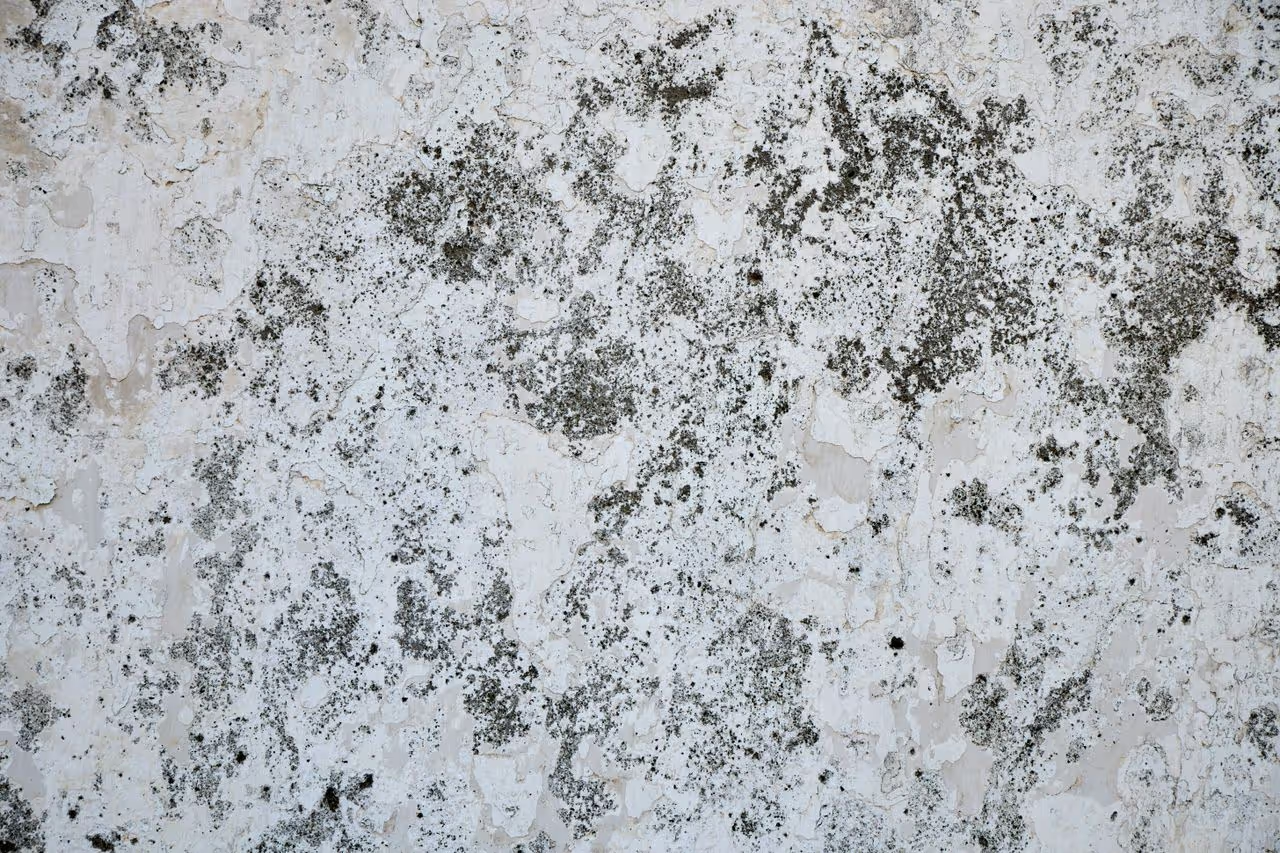
The flat we lived in had genuinely high humidity, high enough that black mould appeared visibly on white walls, easy to spot behind the couch and tucked into room corners. I noticed the effect on my own body before I noticed the mould itself: trouble breathing properly, disrupted sleep, a persistent feeling of wet lungs. That physical response is what actually pushed us to act, not just the visible spots on the wall.
We started with a granule-based dehumidifier, which wasn't nearly enough. Within days we'd ordered a proper energy-efficient electric dehumidifier, and the difference was immediate, the air genuinely felt lighter the moment we switched it on, and sleep improved right away. In winter, it ran continuously, pulling out roughly two litres of water a day, since opening windows in the cold didn't meaningfully help. In summer, keeping windows open most of the time was enough on its own. For ongoing spots, I used white vinegar and water, sprayed directly onto visible growth and wiped down, reapplying whenever it reappeared. It wasn't a permanent fix, the real solution would have been repairing the source of the moisture properly, but as renters on a short lease, that wasn't something we were in a position to do ourselves.
How Much Humidity Is Actually Safe
| Relative Humidity | Risk Level | What This Looks Like in Practice |
|---|---|---|
| Below 30% | Too dry | Dry mucous membranes, higher risk of respiratory infections, static electricity, cracked wood furniture |
| 30-50% | Ideal range | EPA-recommended target for most living spaces, comfortable and low mould risk |
| 50-60% | Elevated but manageable | Mould risk increases with sustained exposure on organic materials, worth monitoring and addressing with ventilation |
| Above 60% | High risk | EPA-identified threshold at which mould can grow on organic surfaces given time and surface contact |
| Sustained 70%+ | Active growth conditions | Visible mould growth becomes likely within days to weeks depending on material and ventilation |
A cheap humidity meter, generally $10-$50, is genuinely worth having in your own travel kit if you're doing this lifestyle long-term. It turns "does this feel a bit damp" into an actual number you can act on.
The Common Types of Household Mould
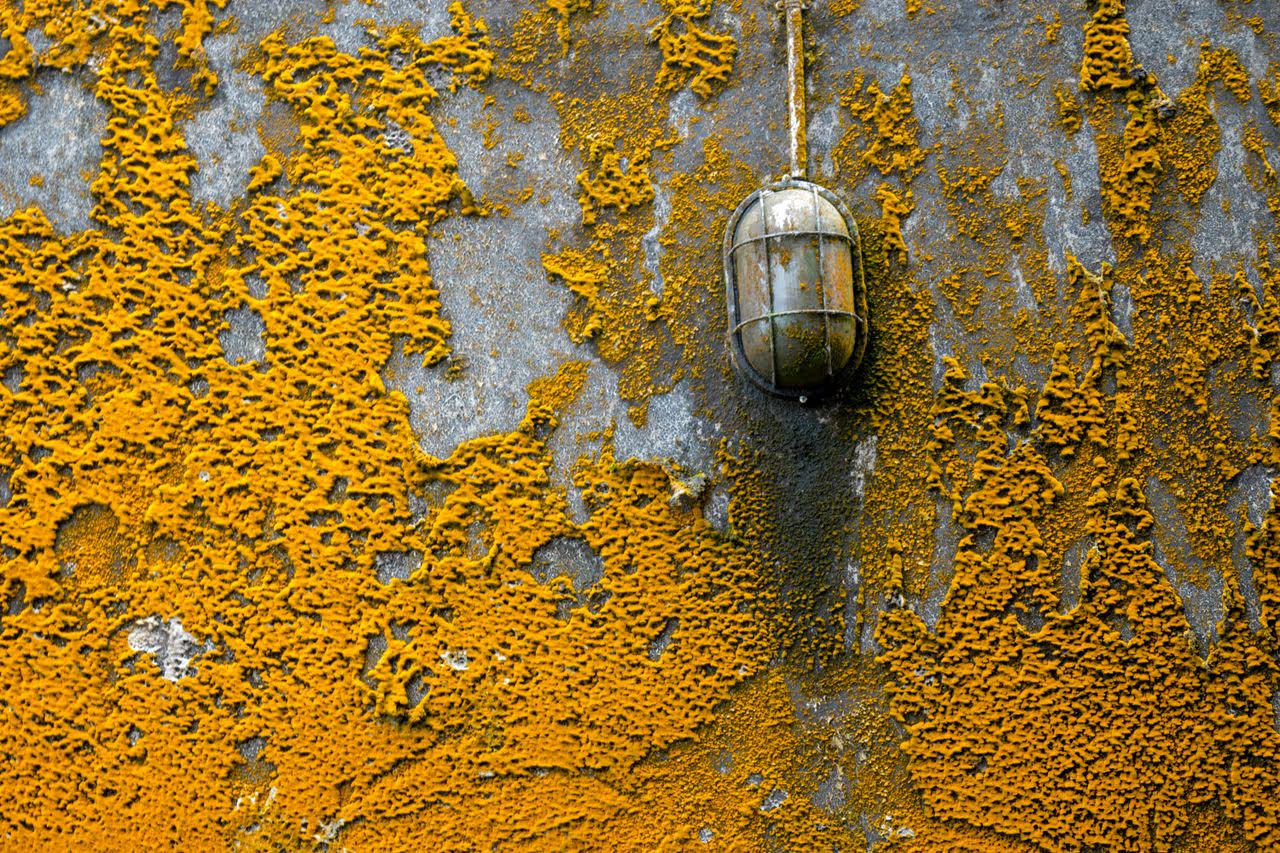
Identifying mould visually has real limits, several common species look similar, and the CDC doesn't actually recommend testing to identify the exact type, since the guidance is to remove any mould and fix the underlying moisture regardless of species. Still, it's useful to know roughly what you might be looking at.
| Mould Type | What It Looks Like | Common Locations | Health Effects |
|---|---|---|---|
| Cladosporium | Black, green, or brown, often on textiles or painted walls | Fabric, wood, HVAC systems, painted surfaces | Allergic reactions, sinus congestion, coughing, itchy or watery eyes, similar to hay fever |
| Penicillium | Often blue-green, sometimes white | Wallpaper, wallpaper glue, decaying fabric, water-damaged materials | Allergies, hay fever symptoms, asthma triggers |
| Aspergillus | Black on the surface, whitish, yellow, or greenish underneath | Damp areas like basements and bathrooms, household dust, decaying matter | Most people inhale it without getting sick; some strains produce mycotoxins and can cause serious illness in people with weakened immune systems |
| Stachybotrys ("black mould") | Dark green or black, slimy appearance, potent musty smell | Drywall, wallpaper, ceiling tiles, anywhere with sustained high moisture | Respiratory symptoms (congestion, wheezing, coughing); the CDC notes "toxic mould" isn't an accurate term, though some strains do produce mycotoxins |
What the Health Guidance Actually Says
The WHO's review of the evidence found that occupants of damp or mouldy buildings face up to a 75% greater risk of respiratory symptoms and asthma. That's a real, meaningful number, not something to dismiss. At the same time, it's worth being balanced rather than alarmist: the CDC explicitly states that "toxic mould" isn't an accurate term, and the health effects associated with black mould specifically are generally similar to other common indoor moulds, not the uniquely dangerous substance it's sometimes portrayed as in more sensational coverage.
Reactions vary significantly by person, people with asthma, COPD, or a compromised immune system are more susceptible, and a completely healthy person may have a much milder response to the same exposure.
When to Clean It Yourself, and When Not To
The CDC and EPA's practical cleanup guidance draws a useful, size-based line worth knowing. A small area can generally be cleaned with a mild detergent and water, or a solution like white vinegar, and CDC guidance specifically warns never to mix bleach with ammonia or other cleaning products when doing this. Areas larger than roughly 10 square feet, or mould that keeps returning despite cleaning, generally call for professional remediation rather than DIY effort.
Porous materials that have gotten wet and stayed wet, carpet, drywall, ceiling tiles, may need to be discarded entirely rather than cleaned, since mould can penetrate them in a way that surface cleaning doesn't fully address. If you're dealing with something at that scale during a sit, that's well past the point of a quick vinegar wipe-down being a reasonable response.
Our Own Line: When to Clean, and When to Leave
Here's the honest framework we actually use, built from watching how people generally treat small problems as more tolerable than they actually are. It's easy to look at a minor issue and decide it's not worth the disruption of addressing properly, but a small, ignored problem can genuinely compound into something with lasting consequences.
My own father's experience with pneumonia is a real, if unrelated, example of exactly that pattern: what started as something he let build for a few days turned into hospitalization and a considerably longer, harder recovery than if he'd acted earlier. We think about mould the same way.
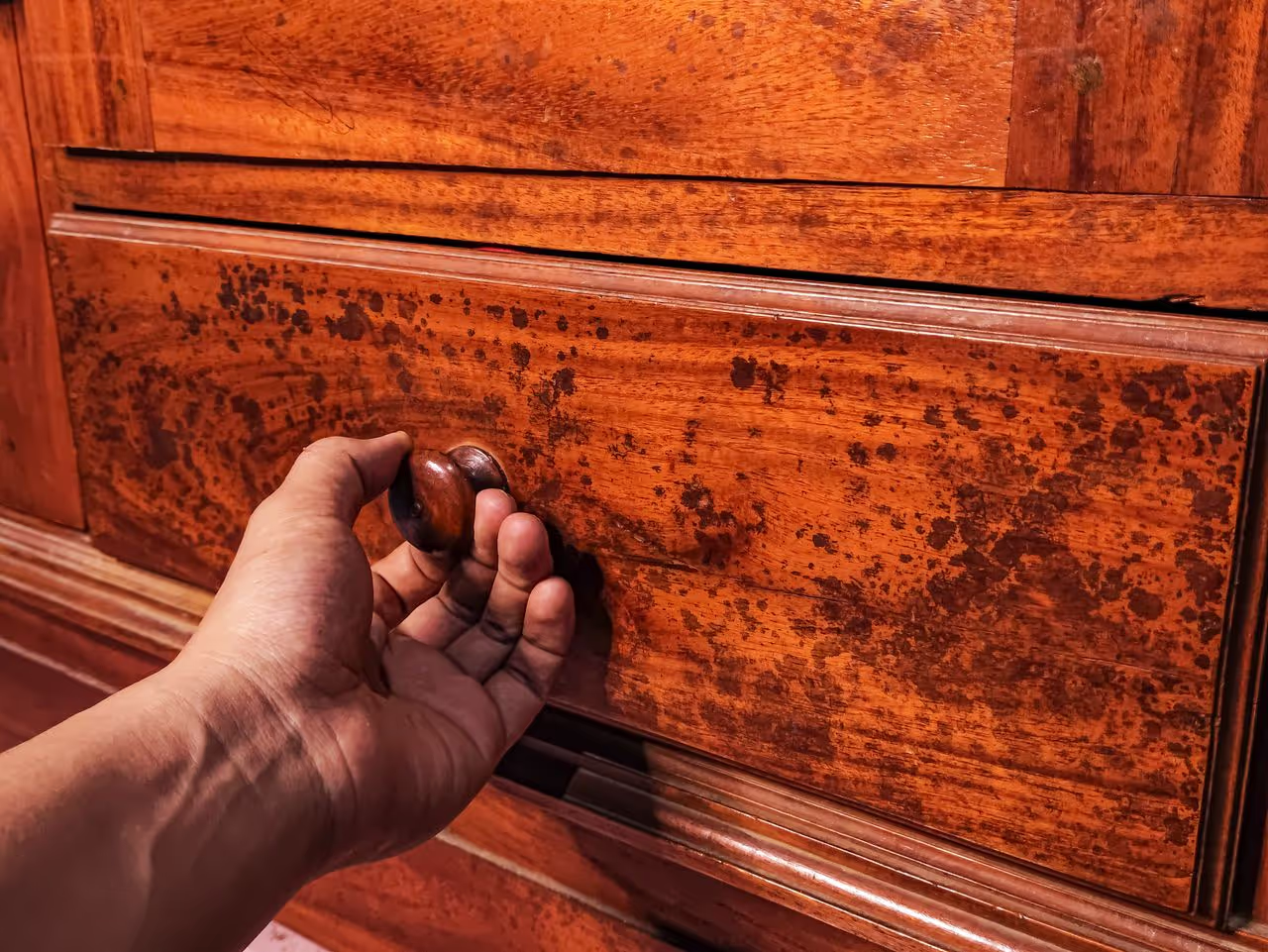
If it's a small, isolated patch and a quick clean with vinegar takes care of it without returning, that's manageable, no different from any other minor upkeep task during a sit. If there's a persistent, strong odor that a quick clean doesn't resolve, that's the point we start seriously reconsidering whether to continue.
And if we arrive to find something like an entire wall visibly covered in black mould, we end the sit immediately. We notify the platform, notify the homeowner directly and honestly, and explain plainly that we're not willing to risk our own health to complete the arrangement.
Our guide to what to do when the home is filthy on arrival covers this same escalation process in more general terms, documentation, contacting the homeowner, involving the platform if needed, and it applies directly here too.
What to Ask Before You Accept a Sit
Since mould is rarely disclosed proactively, it's worth asking about directly rather than hoping it doesn't come up. Our pre-sit video call guide and our guide to what to ask a homeowner before you house sit both cover the broader set of practical questions worth raising before you commit, and a simple, direct question about any known damp, humidity, or mould issues fits naturally alongside those.
For Homeowners: This Is a Safety Issue, Not Just a Presentation One
If you're listing a home with any known humidity or mould history, it's worth taking seriously as a genuine safety consideration, not just something a sitter will tolerate the same way they'd tolerate a slightly dated kitchen. Just because you've lived with a condition in your own home doesn't mean it's genuinely safe for someone else to be exposed to it, particularly if you don't know a sitter's own health sensitivities in advance.
If there's a known issue, whether that's black mould, a persistent damp smell, or high humidity you've simply adapted to over time, address it properly before a sit begins: a dehumidifier running consistently, a leak actually repaired, ventilation genuinely improved, rather than leaving it for a sitter to manage on your behalf. Our full house sitting safety guide and our guide to house sitting cleaning etiquette both cover the broader standard worth setting for any sitter arriving at your home.
Have you dealt with mould or humidity issues during a sit, on either side of the arrangement? We'd like to hear how you handled it, drop it in the comments below.
The Bottom Line
Mould is genuinely one of the few house sit issues where prioritizing your own health over completing the arrangement is the right call, not an overreaction. A small, cleanable patch is a normal part of living in an older or humid home and doesn't warrant alarm.
A persistent, unresolved problem, especially one large enough or severe enough to match CDC and EPA's own thresholds for professional remediation, is a different situation entirely, and it's worth treating it that way rather than pushing through out of a sense of obligation.
Caro and I have completed 20 house sits across 12 countries, driven 19,000km in Australia and 24,000km in our 1998 VW T4, and saved over $26,500 in accommodation costs over three years of house sitting. If mould or humidity has ever been a real issue on one of your sits, DM us @housesittersguide, we answer everyone.

Frequently Asked Questions
What humidity level actually causes mould to grow?
The EPA identifies indoor relative humidity above 60% as the threshold where mould can grow on organic surfaces, with an ideal target range of 30-50%. Keeping humidity controlled, through ventilation or a dehumidifier, is the most effective way to prevent mould rather than just cleaning it after it appears.
Is black mould more dangerous than other types of mould?
Not really, according to the CDC, which states that "toxic mould" isn't an accurate term. Black mould's general health effects are similar to those of other common indoor moulds. Reactions vary significantly by individual, and people with asthma, COPD, or a compromised immune system are more susceptible than a generally healthy person.
What are the most common types of mould found in homes?
Cladosporium, Penicillium, Aspergillus, and Stachybotrys (commonly called black mould) are the most frequently encountered household moulds. They vary in appearance and specific health effects, but the CDC's practical guidance is the same for all of them: remove the mould safely and fix the underlying moisture source, rather than relying on visual identification alone.
When should I clean mould myself versus calling a professional?
A small, isolated patch can generally be cleaned with a mild detergent or a solution like white vinegar and water. Areas larger than roughly 10 square feet, or mould that keeps returning despite cleaning, are generally better handled by professional remediation rather than repeated DIY cleaning.
Should I end a house sit because of mould?
If it's a small patch that cleans up and doesn't return, that's manageable. If there's a persistent strong odor a quick clean doesn't resolve, or visible mould across a large area like an entire wall, it's reasonable to end the sit, notify the homeowner and platform honestly, and prioritize your own health over completing the arrangement.


Responses
What are your thoughts on this post?