

Home > Blog > When Minimalism Meets Hoarding: House Sitting in Cluttered, Maximalist Spaces
Quick Facts
| Quick Facts | |
|---|---|
| Have we sat in a genuinely cluttered home? | Once, in Luxembourg, where every wall and surface was filled |
| Curated collecting vs. clutter | A library or an ordered collection has character. Indiscriminate accumulation is a different, more unsettling thing |
| Why visual overload is real, not just preference | Sensory systems take in up to 1 billion bits of information per second; conscious thought processes only about 10 |
| For sitters | If uncertain from listing photos, ask for a video walkthrough before accepting |
| For homeowners | Honest, current photos and a tidy home before a sitter arrives make a real difference |
| Can a cluttered sit still work? | Yes, in our experience, tidying and organizing as you go made it manageable |
A curated collection and genuine clutter are not the same thing, even though they can look similar in a listing photo. A wall of books in a small library is inviting. A house where every surface, every wall, every shelf is filled with mismatched memorabilia is something else entirely, and it's not just a matter of taste. Sensory systems take in as much as a billion bits of information per second, while conscious thought can only process a fraction of that, roughly 10 bits per second. A visually overloaded room genuinely taxes the brain in a way a simple, uncluttered one doesn't. We've only sat in one home that crossed clearly into this territory, in Luxembourg, and it was manageable, but tedious in a way that taught us something real about what we actually look for in a sit now. Space itself changes the calculation in the other direction, and sitting a home where room is the scarce thing is a different set of problems again.
If you are interested in getting into house sitting, our book Travel More for Less puts the whole process in one place: clear, step by step guidance from your first questions to your first confirmed sit, and the reviews that open the door to the next one.
This guide covers the real difference between a home with character and a home that's genuinely overwhelming, why the discomfort is a legitimate cognitive response rather than pickiness, and how to handle it from both sides if it comes up.
Where My Own Minimalism Comes From
I didn't arrive at minimalism as an abstract lifestyle choice. It comes directly from growing up around the opposite of it. My father was, and still is, quite a collector, hundreds of fish sculptures in every size and shape fill his home in Poland. Watching that accumulate over years is, I think, exactly what shaped me into someone who doesn't grow attached to things. Beyond my laptop, which I genuinely need for work, I don't think there's a single possession I'd have real difficulty parting with, including clothes and physical mementos. We photograph what matters and keep it on the cloud. That's enough for us.
This isn't a criticism of my father's collection, to be clear. It's ordered, it's specific, it's his. But living around that volume of stuff for years taught me directly what excess actually does to a space, and to a mind trying to rest in it.
Character vs. Clutter: The Real Distinction
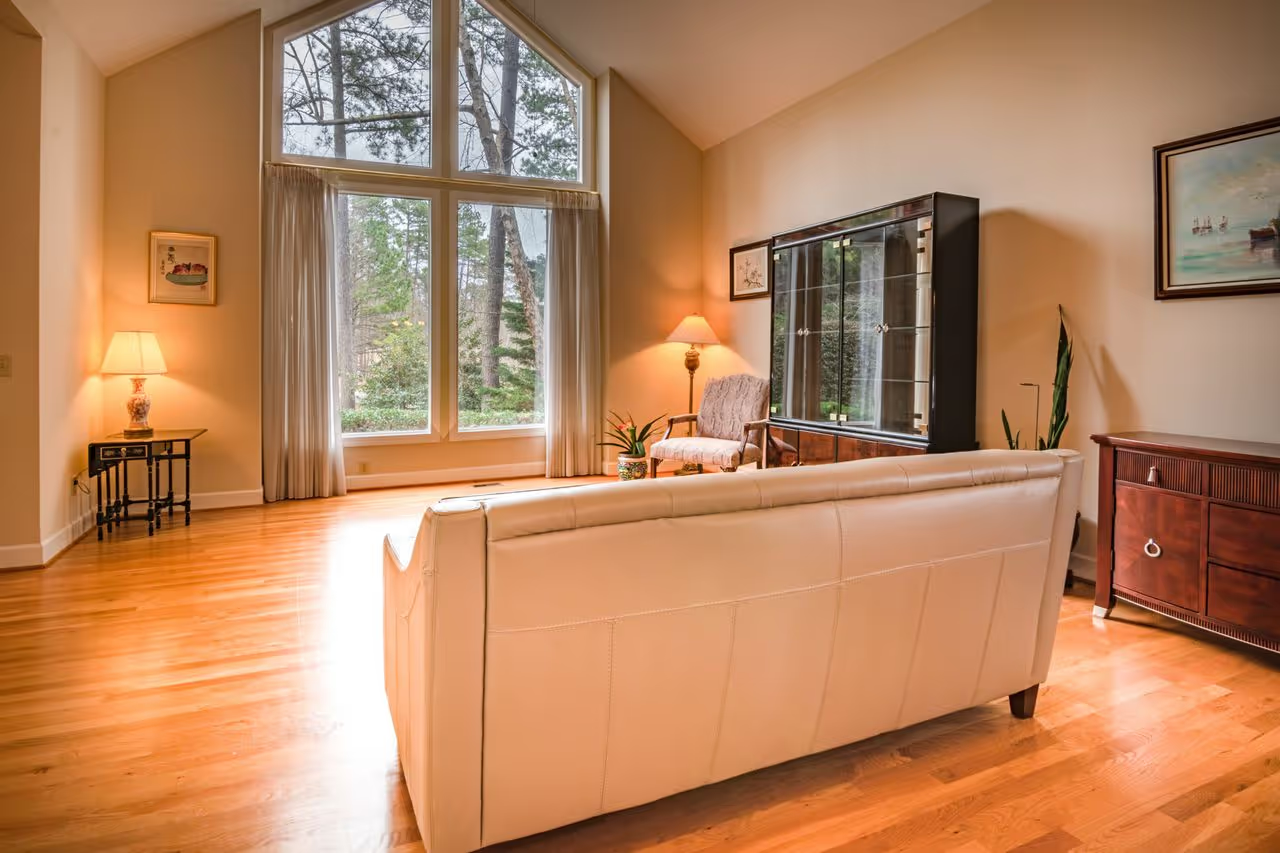
There's a genuine, meaningful difference between a home with personality and a home that's simply overloaded, and it comes down to order, not quantity alone.
A room full of books, arranged with a proper reading nook, is inviting. It signals thought and care, and it gives a space genuine character. A well-organized collection, even a large one like my father's fish sculptures, has the same quality: it's curated, it tells you something specific about the person, and it doesn't create visual chaos because there's an internal logic to how it's displayed.
What's different is a home where mismatched pictures, toys, ornaments, and memorabilia cover every surface without any evident order. That's not character, it's noise. And there's a real reason it feels different in the body, not just in preference. A 2024 Caltech study published in Neuron found that while human sensory systems take in roughly a billion bits of information every second, conscious thought can only process about 10 bits per second, an extraordinary bottleneck between what we sense and what we can actually think about. A simple, uncluttered room asks very little of that narrow channel. A room demanding constant visual sorting, is that a photo, an ornament, something that needs picking up, keeps that bottleneck working overtime, and it's genuinely tiring in a way that has nothing to do with being fussy.

What Luxembourg Actually Taught Us
The one sit that crossed clearly into overwhelming territory for us was in Luxembourg. Every wall, every shelf, every available surface had something on it. Nothing was dangerous or unsafe, it was simply full, consistently, throughout the entire home.
For someone who works and thinks best in clear space, it was genuinely tedious. Not because anything was wrong with the house itself, but because my mind kept quietly cataloguing everything in view rather than settling.
We managed it by tidying and organizing as we went, clearing surfaces we actually used, keeping our own space within the home simple even if the rest of it wasn't ours to change. It worked. The sit was completely manageable in the end. But it was the sit that made us realize how deliberately we now filter for calm, uncluttered spaces before applying anywhere, using listing photos as a genuine screening tool rather than just a nice-to-have.
For Sitters: What to Actually Do About It
If listing photos leave you uncertain about how cluttered a home actually is, ask directly. A pre-sit video call or a specific request for a video walkthrough of the main living areas resolves this far better than static photos ever will, since photos can be selectively framed in ways a walkthrough can't hide.
If you do end up in a genuinely cluttered home, the practical fix is the same one that worked for us: keep your own daily-use spaces tidy and organized as you go, rather than trying to reorganize the homeowner's home or letting the clutter accumulate further. Our cleaning and etiquette guide covers the broader standard worth maintaining regardless of how the home was left, and our guide to what house sitters can and cannot change covers where the boundary sits if you're ever tempted to do more than tidy.
If the clutter genuinely crosses into something that raises safety or hygiene concerns, blocked exits, pest risk, anything beyond simple visual excess, that's a different and more serious conversation, worth raising directly and factually with the homeowner or, if necessary, the platform, rather than something to simply push through.

For Homeowners: What Makes the Difference
If your home has a lot of character, or genuinely a lot of stuff, honesty in your listing matters more than it might seem. Use current, accurate photos rather than ones that flatter the space more than it actually looks day to day, and do a real tidy before a sitter arrives rather than leaving it exactly as daily life left it.
This isn't about hiding who you are or how you live. It's about giving a sitter an accurate picture so the match is a genuine fit rather than a surprise on arrival. A sitter who knows what they're walking into, and has chosen it anyway, settles in far more easily than one who's quietly recalibrating their expectations on day one.
Have you ever sat in a home that felt genuinely overwhelming, or one with a collection you found unexpectedly charming? We'd like to hear where you drew the line, drop it in the comments below.
The Bottom Line
A curated collection and genuine clutter aren't the same experience, even if they look similar in a photo, and the discomfort of an overloaded space is a real cognitive response, not just pickiness. The fix is straightforward on both sides: honest listings and photos from homeowners, and a willingness to ask directly, or request a video walkthrough, from sitters who aren't sure what they're walking into. Done that way, even a genuinely full, characterful home can be a completely manageable, even memorable, sit.
Caro and I have completed 20 house sits across 12 countries, driven 19,000km in Australia and 24,000km in our 1998 VW T4, and saved over $26,500 in accommodation costs over three years of house sitting. If you're unsure about a listing's photos before applying, DM us @housesittersguide, we answer everyone.

Frequently Asked Questions
What's the difference between a home with character and a genuinely cluttered one?
Order. A curated collection, a library, an organized display of specific items, has character and often makes a home feel more inviting. Genuine clutter is indiscriminate accumulation without evident order, and it creates a different, more overwhelming feeling regardless of how interesting any individual item might be.
Is it normal to feel overwhelmed in a visually cluttered home?
Yes, and there's a real cognitive basis for it. Research shows human sensory systems take in as much as a billion bits of information per second, while conscious thought processes only about 10 bits per second. A visually busy space demands constant sorting from an already narrow processing channel, which is genuinely tiring.
How can I tell how cluttered a home actually is before accepting a sit?
Listing photos can be selectively framed, so if you're uncertain, ask directly for a video walkthrough of the main living areas during your pre-sit video call. This gives a far more accurate picture than static photos alone.
Can a genuinely cluttered sit still work out well?
Often, yes. Keeping your own daily-use spaces tidy and organized as you go, without trying to reorganize the homeowner's home, is usually enough to make even a full, characterful home a manageable sit.


Responses
What are your thoughts on this post?