

Home > Blog > Loneliness and Solo House Sitting
Quick Facts
| Solo sit that shaped my view of solitude | Montanel, France — five months, no animals, deep rural village |
| Did loneliness hit | Yes — but it was manageable and often productive |
| What made it worse | No routine, late nights, no project to work on |
| What made it better | Routine, garden work, an online project, getting outside |
| Pet companionship as a genuine antidote | Yes — especially dogs, which return affection consistently |
| The Iceland low point | Drinking too much, eating badly, gaming, truly stagnant — until a plan forced the change |
| The beach in Greece | The moment I stopped questioning whether I deserved the life I had built |
Five months alone in Montanel taught me that loneliness is structural, not a personal failing, and it rarely looks dramatic. Routine built around a passion project is the fix: daily exercise, plus sits with animals for companionship. When the low will not lift with action, seek professional support.
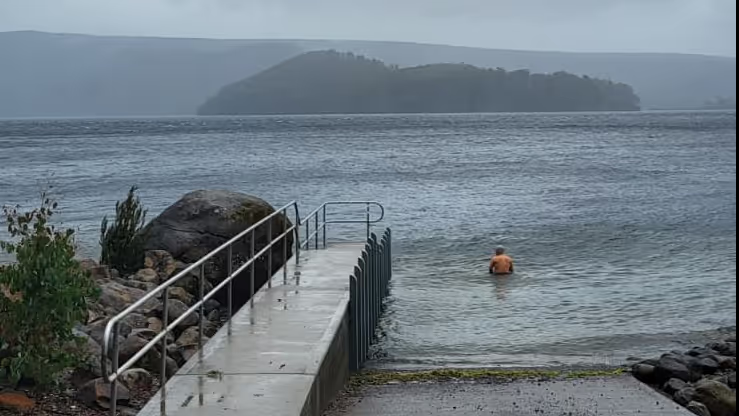
There is a particular kind of loneliness that only comes when you are alone in a very quiet place with no particular reason to be anywhere by any particular time. Montanel, France, is a small rural village. Five months. No animals in the house. No obligations beyond the garden and the property. The homeowner was not present. The nearest town was a drive away.
I was twenty-something, living in France for the first time, and for a while I slept until midday, went to bed at three in the morning, ate when I was hungry, and felt the days dissolve into each other without shape.
That is what unstructured solitude looks like before you learn how to manage it. It is not dramatic. It does not announce itself as a crisis. It just quietly removes all the texture from a day until everything feels slightly grey.
This article is about that experience and what I have learned from it. Including the beach in Greece years later where I cried from something closer to the opposite.
If you are interested in getting into house sitting, our book Travel More for Less puts the whole process in one place: clear, step by step guidance from your first questions to your first confirmed sit, and the reviews that open the door to the next one.
This article is about what happens inside.
Loneliness Does Not Look Like You Think It Will
The research into solo sitting communities describes a "loneliness paradox". The feeling is often most intense not in genuine isolation but in moments of contrast. Surrounded by couples. Scrolling through friends' social feeds at home while you are three countries away in a quiet house. The life you are living looks extraordinary from the outside and sometimes feels inadequate from the inside, and the gap between those two things is where the loneliness actually lives.
I have experienced this. Not constantly, and not as something that overwhelmed me, but as a real texture of the solo lifestyle. The moment I recognised it. That the feeling was not a sign something was wrong with the choice I had made, but a predictable feature of the arrangement. It became manageable in a different way.
What made Montanel hard was the absence of structure. When there is no shape to the day, the mind fills the space with whatever is most available, and what is most available when you are isolated and understimulated is usually not your best thinking. The days without routine were the hard days. The days when I found something to work on were fine.
The Montanel Realisation: Routine Is Not Optional
After several weeks of formless days in Montanel, I started working seriously on an online project. Within a few weeks the results were visible. Small results. Not a transformation. But enough to create momentum. Enough to give the day a shape and the week a direction.
This is something I still feel now, six months into a Portugal sit. When I gathered myself in Montanel and focused on a single project, I was excited. The house sitting gave me the time and the space. The project gave me the reason to use it. Without the project, the time was just time. With it, the time was potential.
The research community calls this the "fortress of routine". A predictable daily structure that provides the anchor that location cannot provide when you are constantly moving. I would go further than that framing. Routine is not just a coping mechanism for loneliness. It is the condition under which most creative and productive work actually happens. The nomadic lifestyle offers extraordinary freedom. Freedom without direction is just drift.
For solo sitters specifically: find a passion project before you get on the road, not after you have already started feeling the emptiness. Right now I am writing about house sitting, which creates a loop. I sit, I experience things, I research, I write, I learn more, I sit better.
Caro is building a resource website for student teachers. Within a month her site went from 100 visitors to 2,000. The excitement of seeing that number grow is enough to make every morning feel purposeful. That sense of purpose is the antidote to the grey formlessness that unstructured solitude produces.
The Iceland Low: What Genuine Stagnation Looks Like
I want to be specific about the low points because the house sitting lifestyle tends to attract people who are already managing the tension between an adventurous life and a stable one, and the lows are worth describing clearly rather than euphemistically.
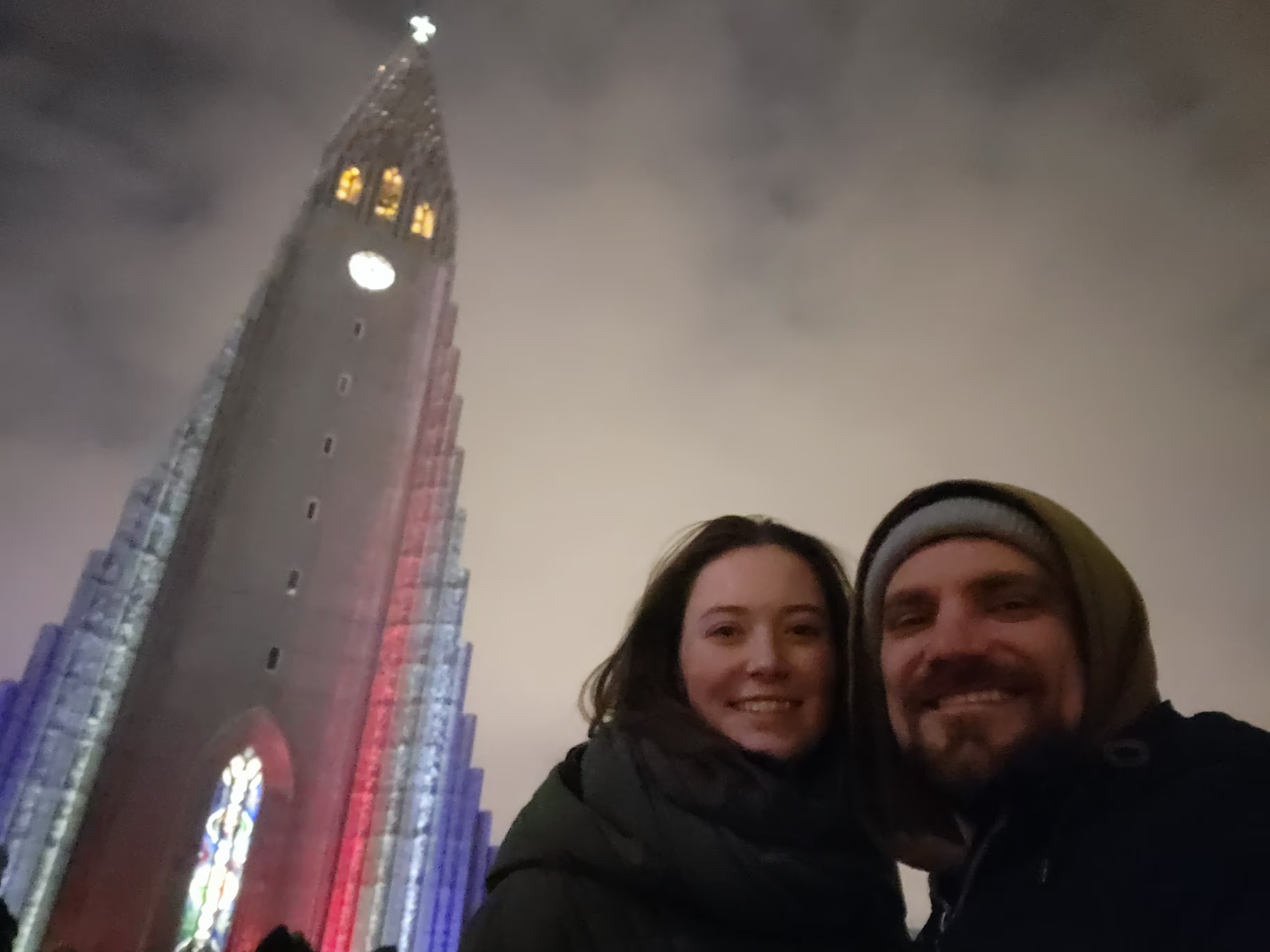
In Iceland, running a business that had stopped engaging me, I was drinking too much, eating badly, gaming excessively, truly not looking after myself. The outlook had narrowed to the point where I could not see past the week. The stagnation was not dramatic. It looked like ordinary days where nothing was quite right. But it was real and it had been building for longer than I admitted to myself at the time.
What broke it was a plan. Not a feeling. Not a conversation. A concrete sequence of actions: close the business, cancel the accounts, settle the taxes, leave the country. Each step was painful in its own way. But executing the plan restored a sense of agency that the stagnation had eroded. The universe, as I think of it, sent me Caro. She arrived at the moment when I had already committed to the change. That timing feels significant to me, whether or not it is causal.
The practical lesson: when you are in a genuine low, the most important thing is not to wait to feel better before making a plan. Make the plan from wherever you are, however you feel, and let the execution of the plan do the work of changing how you feel. Sitting with the discomfort and hoping it passes is sometimes necessary. Sitting with it indefinitely while the source of the problem remains unchanged is not a strategy.
If you are experiencing depression, anxiety, or isolation that feels larger than something you can manage with routine and purpose, online therapy is now truly accessible. The nomadic lifestyle is not an obstacle to professional support. It is an argument for building that support into the infrastructure of the life before you need it urgently.
The Beach in Greece
I want to describe one specific moment on the other end of the spectrum.
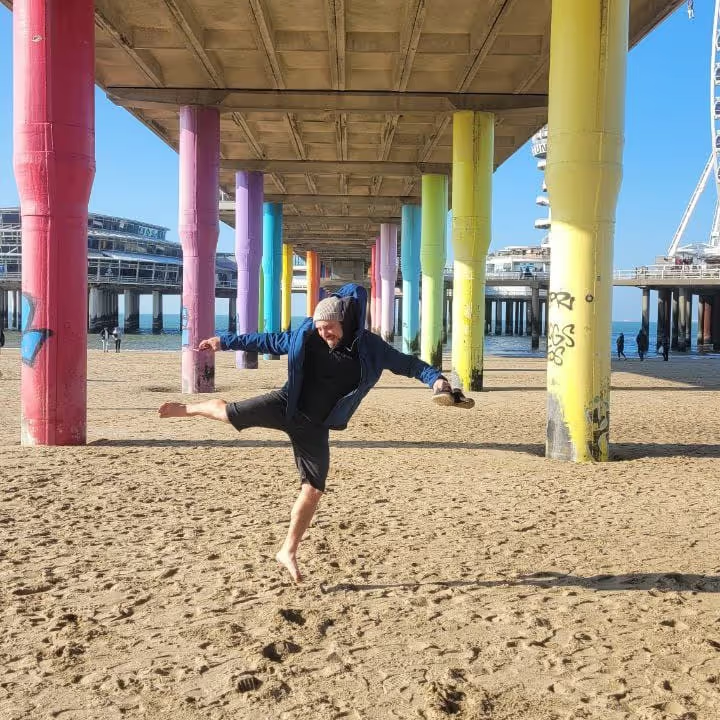
We had just driven into Greece from Albania. Caro and I were sitting on a beach with two dogs. I had a coffee. The sea was in front of us.
And I cried.
Not from sadness. From something closer to the recognition that the life I had built was real and I was in it. For a long time I had carried a version of impostor syndrome that I could not quite name. The sense that this life was too good to be something I had earned, that the extraordinary experiences were somehow happening despite me rather than because of choices I had made. The beach in Greece was the moment that resolved, at least partially.
I had stepped outside comfort into genuine uncertainty, many times over many years, in many countries. Most people do not do that. The willingness to try. To leave, to start over, to rip the bandaid when the wound is not healing. Is the thing that produces an extraordinary life. Not luck, not privilege, not accident. The courage to make uncomfortable decisions and live with the uncertainty of them.
This matters for loneliness specifically because loneliness on the road is partly generated by that same questioning. The "sunshine and storm" tension. The feeling that you have no right to feel low when you are living a dream. Is a form of the same impostor syndrome. The resolution is the same too: you earned the right to the lows as much as to the highs. A life of constant ease makes everything feel ordinary. The contrast is the texture.
Pets as Genuine Companions
One specific thing the solo sitting lifestyle offers that other forms of solo travel do not is consistent animal companionship. Caro and I have spent evenings with cats curled on our laps, mornings with dogs whose entire orientation toward the world is warmth and presence, and now months with chickens who come to the fence when they see us coming.
This is not a trivial thing. Physical touch and the specific kind of affection that animals provide. Without agenda, without performance, without the complexity of human relationships is a real buffer against the isolation that solo sitting can produce. The dog that greets you every morning regardless of your mood is not solving the structural problem of loneliness, but it is providing something that a flat without animals cannot.
The research describes pets as "social catalysts". Dogs especially create natural opportunities for conversation on walks, in parks, in local spaces. This is accurate. But the deeper value is the companionship itself. A cat that chooses to spend the evening next to you is offering something genuine and the fact that it is temporary does not make it less real.
For solo sitters specifically: choose sits with animals, particularly if you know the solitude is going to be a challenge. The animal routines also provide the structural anchors that formless days lack. Feeding at a set time, walks at predictable intervals, evening check-ins. They build the routine for you when you have not yet built it yourself.
The Practical Guide: What Actually Works
Based on five months in Montanel, a low in Iceland, a beach in Greece, and twenty sits across twelve countries, here is what I would tell a solo sitter about managing loneliness in truth:
Build a routine before you need one. Set a wake time, a work period, an exercise habit, and a consistent end to the day. The routine is not exciting. It is the infrastructure that makes everything else possible. Read our remote working during a house sit guide for the practical setup.
Find a passion project. Not a hobby. A project with a measurable outcome. A website, a course, a skill, something you are building toward. The feeling of progress is the most effective daily mood regulator available that does not involve substances or external validation.
Exercise. This is not optional for managing mood over any extended period. It oxygenates the blood and interrupts negative thought loops in a way that no amount of reflection can replicate. A daily walk, a run, a local gym. Anything consistent.
Go outside and become a regular somewhere. A specific café, a market, a park. Not to socialise aggressively but to be a recognisable presence. Familiarity builds naturally without the pressure of introduction. This is the "slowmad" approach. Longer sits, local presence, the feeling of coming back to something rather than always starting over.
Keep roots connections alive. Regular calls with family, consistent communication with close friends. Not to report on the adventure, but genuine mutual engagement. These connections provide the emotional continuity that location cannot.
Sit with the solitude deliberately. The best test of your relationship with yourself is Vipassana. A ten-day silent meditation retreat available by donation worldwide. I recommend it. It is not comfortable, but the clarity that follows is real. Learning to be truly present with yourself without distraction is the foundation of everything else.
Make a plan when you need one. Loneliness and stagnation are uncomfortable. Waiting for the discomfort to pass without changing anything is not a strategy. Identify what needs to change and start the steps. The plan does not have to be perfect. It just has to be a plan.
Join TrustedHouseSitters with 25% off. Read our building trust as a new sitter guide for the mindset that makes this lifestyle sustainable long-term.
DM us @housesittersguide on Instagram. We answer everyone.
Frequently Asked Questions
Is loneliness common among solo house sitters?
Yes. It is a structural feature of the lifestyle, not a personal failing. Constant movement, temporary connections, and the absence of a fixed social network create conditions where loneliness is predictable. The most experienced long-term sitters do not eliminate it. They design a life that reduces it through routine, purpose, and genuine connection maintained deliberately.
Does caring for pets actually help with loneliness during a house sit?
Yes, meaningfully so. The physical companionship of animals. Particularly dogs and cats. Provides a form of consistent, unconditional presence that buffers against isolation in ways that are not trivially replaceable. Animal routines also build the daily structure that formless days lack. Solo sitters specifically benefit from choosing sits with animals rather than property-only sits.
What is the most effective thing a solo sitter can do to manage loneliness?
Build a routine around a passion project. The combination of predictable daily structure and work toward a meaningful outcome addresses the two main drivers of the lonely low. Formlessness and purposelessness. Exercise as a non-negotiable daily habit supports this. Social connection matters too, but purpose and routine come first.
How do you know when loneliness has become something more serious?
When the low does not lift with action and the outlook narrows to the point where planning feels impossible. Genuine depression is different from the ordinary loneliness of solo travel. It affects your ability to function rather than just your mood. Online therapy is accessible worldwide and does not require stability of location. If the feelings are large, professional support is the right response. The nomadic lifestyle is not an obstacle to getting help.


Responses
What are your thoughts on this post?