

Home > Blog > Lending Your Car to a House Sitter
Quick Facts
| Is a car expected by sitters? | No — most experienced sitters arrange their own transport and treat a car as a bonus |
| When a car actually matters | Remote or rural sits with limited public transport, particularly longer stays |
| The insurance rule | Call your insurer before anything else. Do not assume coverage exists. |
| If you do lend it | Confirm insurance in writing, document the car's condition, get the agreement in writing |
| If you do not | A clear listing with honest transport information is a perfectly good sit |
TrustedHouseSitters and Nomador both exclude motor vehicles from their protection plans, so your own insurer is the only cover when lending a car to a house sitter. Call them first, confirm the named driver in writing, and set fuel, fines and damage terms before the sit.
The first and only time I was offered use of a car during a house sit, it did not go the way either of us expected.
I was in Montanel, France, on a solo sit. The homeowner had offered the car as part of the arrangement: listed, mentioned on the video call, planned around. Then, a few days before I flew from Australia to France, the owner contacted me asking for payment for both the car and the accommodation during the sit. That was not what was agreed. It was a significant lesson about international house sitting when you are coming from the other side of the world. When you fly to a sit from Australia, the flights are booked, the costs are sunk, and saying no becomes very expensive.
It is also worth being clear: what that homeowner did was a violation of TrustedHouseSitters' Terms of Service. THS is an exchange-only platform. Homeowners are explicitly prohibited from charging sitters any form of payment, rent, or fee. If a homeowner asks for money after a sit is confirmed, that is not a negotiating grey area. It is a breach of the platform's terms and should be reported to THS immediately.
This happened before Caro and I were experienced sitters on THS. If it happened today, I would cancel the sit and report it to the platform without hesitation. Now that we travel Europe continuously in our VW T4, we can always drive on to the next sit if something feels wrong. That flexibility changes the calculation. But even without a van, the right response to a homeowner asking for payment is to decline, document the request, and contact THS support. Our conflict resolution guide covers the exact process for reporting a homeowner and what evidence THS accepts.
This guide is written for homeowners. But the sitter's perspective shapes the advice throughout, because the whole point is an arrangement that works well for both parties.
A Car Is a Bonus, Not a Requirement
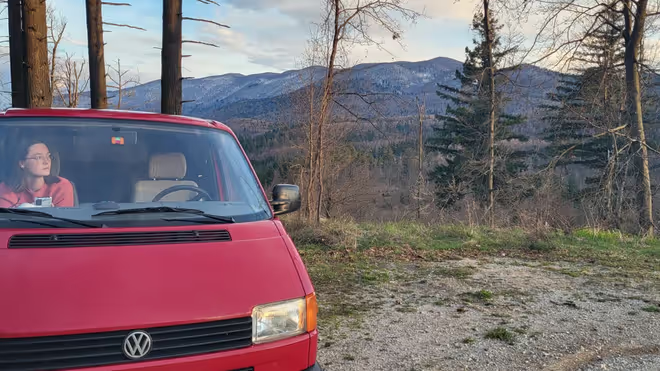
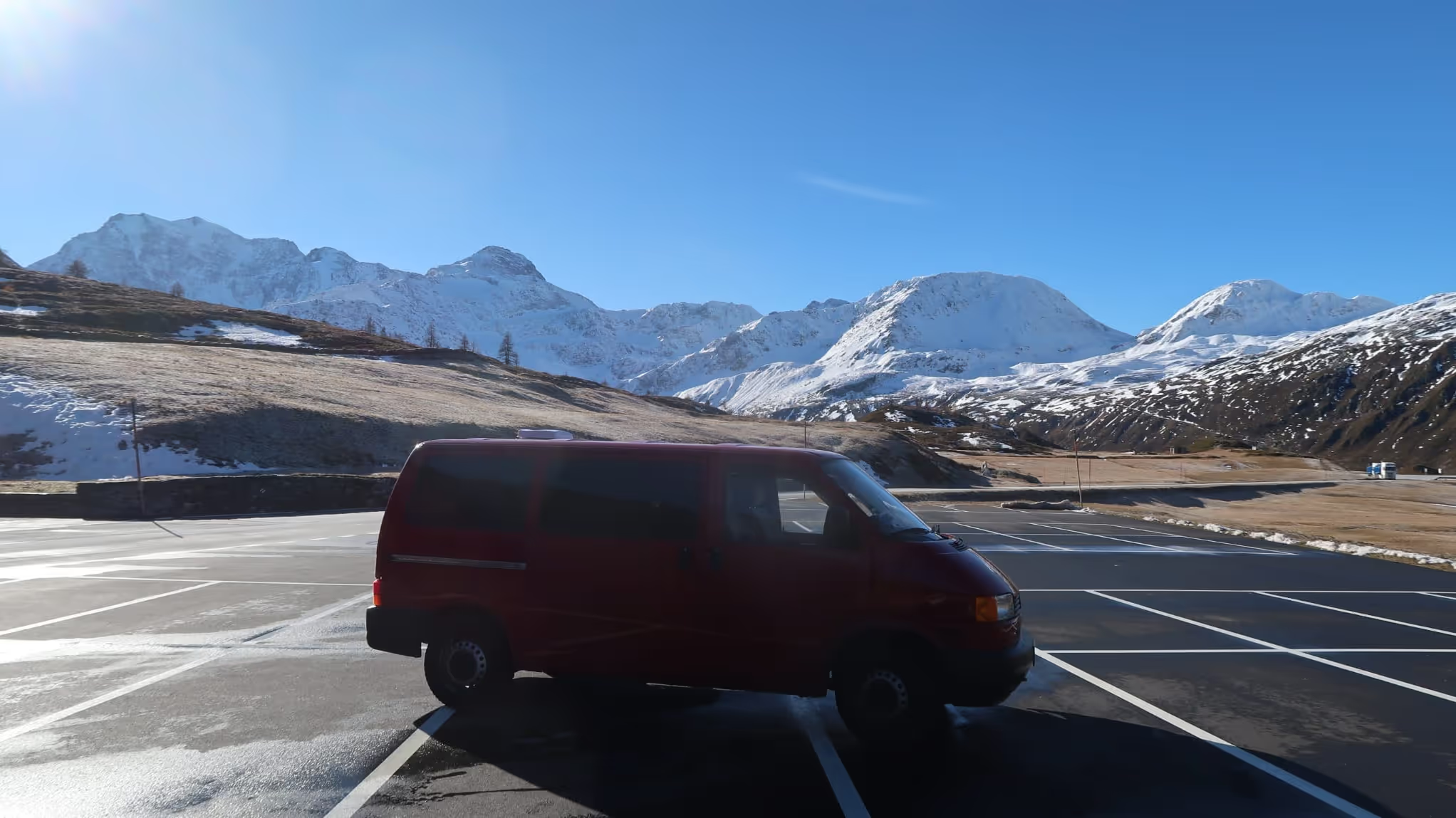
Most experienced sitters do not expect a car and do not need one to take a sit. Caro and I travel full-time in a VW T4 campervan that parks in city streets, fits on most residential properties, and gives us complete transport independence wherever we go. We have parked directly outside the property in Athens, tucked into a side street in France, and used the van as daily transport throughout sits across Europe.
For sitters like us, a car in the listing is a detail, not a deciding factor. We would not let the presence or absence of a homeowner's car determine whether we apply, unless we were flying into an unfamiliar region with no other options. In that case, a car offer does meaningfully shift the appeal of a remote or rural listing.
The honest position, from the sitter's side: if a car is offered, it is a bonus. If it is not offered, that is fine, provided the listing is honest about what transport exists nearby. What is not fine is a car being implied in a listing and the conversation changing after the sit is confirmed or after flights are booked.
If you offer a car, mean it. If you do not want to lend it, do not include it in the listing. Clarity before confirmation protects both sides.
When a Car Actually Matters
The transport question is almost entirely determined by location.
For urban sits, a sitter with a phone and a transit app can navigate comfortably. In Athens the homeowners offered us their scooter. We appreciated the gesture and declined. The city was walkable, Uber was affordable, and adding an unfamiliar scooter in heavy city traffic was unnecessary complexity. The sit was excellent without it.
For rural sits, the calculation is completely different. Our month in Lullin, France was set in the countryside. Without a car, we would have been effectively stuck at the property for the entire duration. Public transport existed in theory but the distances to the nearest town, supermarket, and any point of interest made daily life without a vehicle difficult. Having the car was not a perk. It was what made the sit workable as a month-long experience.
This distinction matters for homeowners writing listings. If your property is remote, being honest about whether a car is necessary rather than merely available helps attract sitters who are actually suited to the sit. A sitter who arrives at a rural property expecting to manage without a car and then discovers there is no realistic way to buy groceries is a sitter who will find the sit harder than they expected.
| Location type | Car recommended? | Practical alternative | Notes |
|---|---|---|---|
| Major city (London, Paris, Athens) | Not recommended | Public transit, Uber, walking | Insurance complexity outweighs need |
| Suburban area | Optional | Local bus, cycling | Confirm insurance policy first |
| Small town with walkable centre | Rarely needed | Walking, occasional taxi | Low need in most cases |
| Rural with limited transport | Yes — state in listing | None reliable | Essential for sits over a week |
| Remote with no public transport | Yes — or state clearly | None | Consider making it a listing condition |
The Insurance Question
One critical detail that most sitters and homeowners overlook: both TrustedHouseSitters and Nomador explicitly exclude motor vehicles from their protection plans. Our house sitting insurance guide covers the full terms. If a sitter damages a homeowner's car during a sit, the platform will not cover it. If the sitter is in an accident, the platform will not cover it. If the car is stolen while in the sitter's care, the platform will not cover it. This means the homeowner's own car insurance is the only protection either party has, which makes checking it before handing over the keys the single most important step in this entire process.
Before you do anything else, call your insurer.
Most standard car insurance policies do not automatically cover third-party named drivers beyond close family members. Some do, with restrictions. Some require a separate policy add-on. The number of homeowners who assume their car is covered for a sitter, and have never actually checked, is significant.
The questions to ask your insurer: does my policy cover an occasional named driver who is not a family member? Does the driver's nationality affect coverage? Are there age restrictions? What is the claims process if an incident occurs while a third party is driving? Get the answers in writing. Not a verbal reassurance from a call centre, but a written confirmation by email.
If your policy does not cover the sitter, you have three options: arrange temporary named driver coverage, tell the sitter the car is available but they must arrange their own additional coverage, or not offer the car. All three are reasonable. Lending the car without confirmed coverage is not.
For sitters who find themselves being offered a car mid-arrangement: clarify the insurance position before driving. Our legal issues guide covers the broader legal framework around house sitting arrangements.
The Written Agreement
If you decide to lend the car, the terms should be in writing before the sitter arrives. This protects both sides and removes any ambiguity if something goes wrong.
The agreement should cover: whether the sitter is authorised to drive the car, any restrictions on use (distance limits, certain roads, time of day), who is responsible for fuel, what happens if a traffic fine is issued during the sit, and how any damage or incident should be reported. We built a free car use agreement template specifically for house sitting arrangements. It covers these points and can be adapted for any country.
Document the car's condition before the sitter takes it. A video walkthrough noting existing scratches, dents, and the current fuel level, shared with the sitter on the day, creates a clear baseline. If you have a dashcam, make sure the sitter knows it exists. This is a transparency point, not a surveillance one.
A WhatsApp message confirming the agreement ("the car is available for your use during the sit, insurance confirmed, fuel to be replaced before you leave") is the minimum written record. A signed agreement document is better for longer sits or higher-value vehicles.
On fuel: With petrol costs significantly higher across World in 2026, refilling the tank after using the car is the expected standard and should be stated explicitly in the agreement. Unless the homeowner specifically says otherwise, the sitter refills to the level they found it. A simple practical tip: place a small sticker on or near the fuel cap indicating the correct fuel type (petrol, diesel, LPG). It takes ten seconds to add and prevents a costly misfuelling mistake that ruins everyone's day.
On electric vehicles: If your car is an EV, the refuelling question needs its own answer. Is charging included in the home's electricity bills and therefore covered as part of the sit, or should the sitter use a public charging app at their own expense? State this clearly in the agreement. The equivalent of "return with a full tank" for an EV is "return with the battery at the same level you found it", but who pays for the electricity to get it there needs to be agreed in advance, not assumed.

If You Decide Not to Lend the Car
A sit without a car is still an excellent sit if the listing is honest about transport.
For urban and suburban sits, describe the public transport options nearby. Bus stop or train station walking distance. Whether there is an Uber or taxi service in the area. Any nearby hire options if the sitter needs a vehicle for a day trip.
For rural sits without a car, be explicit about this in the listing. Some sitters have their own transport. Some are willing to arrange hire. Some will not apply, which is exactly the right outcome. You want sitters who can make the sit work, not sitters who accept a sit and then struggle with transport for a month.
The worst outcome is a listing that implies a car will be available, or simply does not mention transport, and a sitter arrives unprepared. This creates a difficult situation for both parties, particularly if the sitter has already paid for flights from another country.
Why We Choose Not to Use a Homeowner's Car
Caro and I have used a homeowner's car exactly once, and it was not for personal use. At a sit early in our journey, the homeowners were going to dinner the night before they left. I offered to drive them there and pick them up so they could have a drink without worrying about driving home. It took ten minutes each way. They were delighted. It cost me nothing and it was a small gesture that meant a lot to them.
Beyond that, we have never relied on a homeowner's vehicle. The T4 is always with us. Having our own transport removes the insurance conversation, the fuel conversation, the damage conversation, and all the potential friction that car use introduces into an otherwise simple exchange.
It also means we can apply for sits that are far from public transport, on farms, in countryside properties, in places that would be inaccessible without a vehicle. These are often the most beautiful sits available, and many sitters skip them specifically because they do not have transport. Our parking the van during a sit article covers the logistics of having a vehicle at a property.
For sitters who do not have their own vehicle, a homeowner's car can be genuinely valuable. In those cases, the agreement process covered above is not optional. It is essential. The flat tire thread exists because neither party had that conversation beforehand, and by the time the tire was flat, it was too late to agree on the rules.
Conclusion
Lending a car to a house sitter can work well and can meaningfully improve the experience of a rural or remote sit. It can also become complicated if the insurance question has not been answered properly, if the terms were not agreed in writing, or if a car was promised and then withheld after flights were booked.
The Montanel experience taught me this the hard way, arriving at a sit with a different arrangement than agreed. The lesson is simple: whatever you offer in your listing should reflect what will actually be there when the sitter arrives.
Find verified, reviewed sitters through TrustedHouseSitters using our 25% discount, or Nomador for France and French-speaking Europe.
DM us @housesittersguide on Instagram with questions about car arrangements or any other sit logistics. We answer everyone.

Frequently Asked Questions
Should I lend my car to a house sitter?
Only if your insurance explicitly covers a named third-party driver and you are willing to put the arrangement in writing. Call your insurer first. If coverage exists, document the car's condition beforehand. If coverage does not exist, do not offer the car without arranging additional coverage first.
What if the house sitter has an accident in my car?
Your insurer is the first call. Whether the claim is covered depends entirely on whether the sitter was a named authorised driver under your policy. This is why confirming coverage in writing before the sit starts is essential. Without confirmed coverage, you may be personally liable for the full cost of the damage.
Do house sitters expect a car?
No. Most experienced sitters plan around not having one. A car is appreciated when offered and not expected when absent. For rural and remote sits where transport is limited, mentioning this clearly in the listing allows sitters to make an informed decision about whether the sit suits their circumstances.
What should a car use agreement cover?
Authorisation to drive, any restrictions on use, fuel responsibility, traffic fine responsibility, and the reporting process for any incident. Our free car agreement template covers all of these and can be adapted for any country.
What if the homeowner offers a car and then withdraws it?
This is a significant problem if the sitter has made travel or planning decisions based on the car being available. Any change to what was agreed in the listing should be communicated as early as possible and should give the sitter the option to withdraw from the sit without financial penalty if the change materially affects what was offered. Platform support can be involved if the withdrawal is disputed.
Who pays for a flat tire on a homeowner's car during a sit?
There is no universal rule, which is exactly why it should be discussed before the sit starts. A sitter should at minimum offer to pay or contribute. A flat from normal driving is debatable, but the car was in the sitter's care. A flat from driver error is clearly the sitter's responsibility. If the homeowner declines the offer, that is their choice.
Does TrustedHouseSitters insurance cover car damage?
No. Both TrustedHouseSitters and Nomador explicitly exclude motor vehicles from their coverage. The only relevant insurance is the homeowner's own policy, and whether it covers other drivers. This must be confirmed before the sitter drives the car.


Responses
What are your thoughts on this post?