

Home > Blog > Leaving Pets Overnight During a House Sit
Quick Facts
| Our position | We have never left pets overnight in 20 sits. we consider it part of the responsibility |
| Cats overnight | Generally manageable with food, water, and outdoor access. still discuss with the homeowner first |
| Dogs overnight | Higher risk. anxiety, barking, destructive behaviour, potential safety issues |
| What THS says | No specific clause on overnight absence. "how long can the pet be left alone" field covers daytime hours |
| If you need to be away overnight | Contact the homeowner and arrange alternative care before leaving |
| The day trips comparison | Our day trip guide covers up to 8-hour absences; overnight is a different question |
We have never left pets overnight in 20 sits. An overnight absence removes the sitter for 12 to 18 hours, covering the evening routine and morning feed. Independent outdoor cats can manage with the homeowner's written agreement; dogs rarely can. If you cannot reach the homeowner, stay.
On our month-long sit in Lullin, France looking after Piton and Muscaton (two independent outdoor cats) we took day trips regularly and stayed out for up to eight hours at a time. We never stayed away overnight. Every evening we came back to feed them, spend time with them, and settle in for the night. A month-long sit gives you time to build a real routine, and that routine included coming home.
If you are interested in getting into house sitting, our book Travel More for Less puts the whole process in one place: clear, step by step guidance from your first questions to your first confirmed sit, and the reviews that open the door to the next one.
Why Overnight Is a Different Question
Overnight absence is categorically different from a day trip. A day trip is a gap in care measured in hours. An overnight absence removes the sitter from the home for potentially 12 to 18 hours, covering the animals' evening routine, overnight settling period, and morning feed, while also leaving the property unoccupied, unsecured by a present person, and without anyone to respond if something goes wrong.
The day trip question is primarily about how long a pet can comfortably manage alone. The overnight question is also about whether the sit's core obligation is being met. The homeowner arranged a house sitter rather than a pet boarding service specifically because they wanted a person in the home: maintaining routines, providing presence, and handling anything unexpected. An overnight absence removes that entirely.
There is also a practical distinction that matters for pet wellbeing. The evening routine (a final walk for the dog, a late feed for the cats, settling an anxious animal) is not optional in the way that a midday walk can sometimes be shifted. The overnight hours are when pets with separation anxiety or sound sensitivity are most at risk of distress. The Portugal sheepdog we are currently sitting is a clear example: he barks throughout the night and requires significant settling before he is calm. Leaving him alone overnight would be neither safe nor kind.
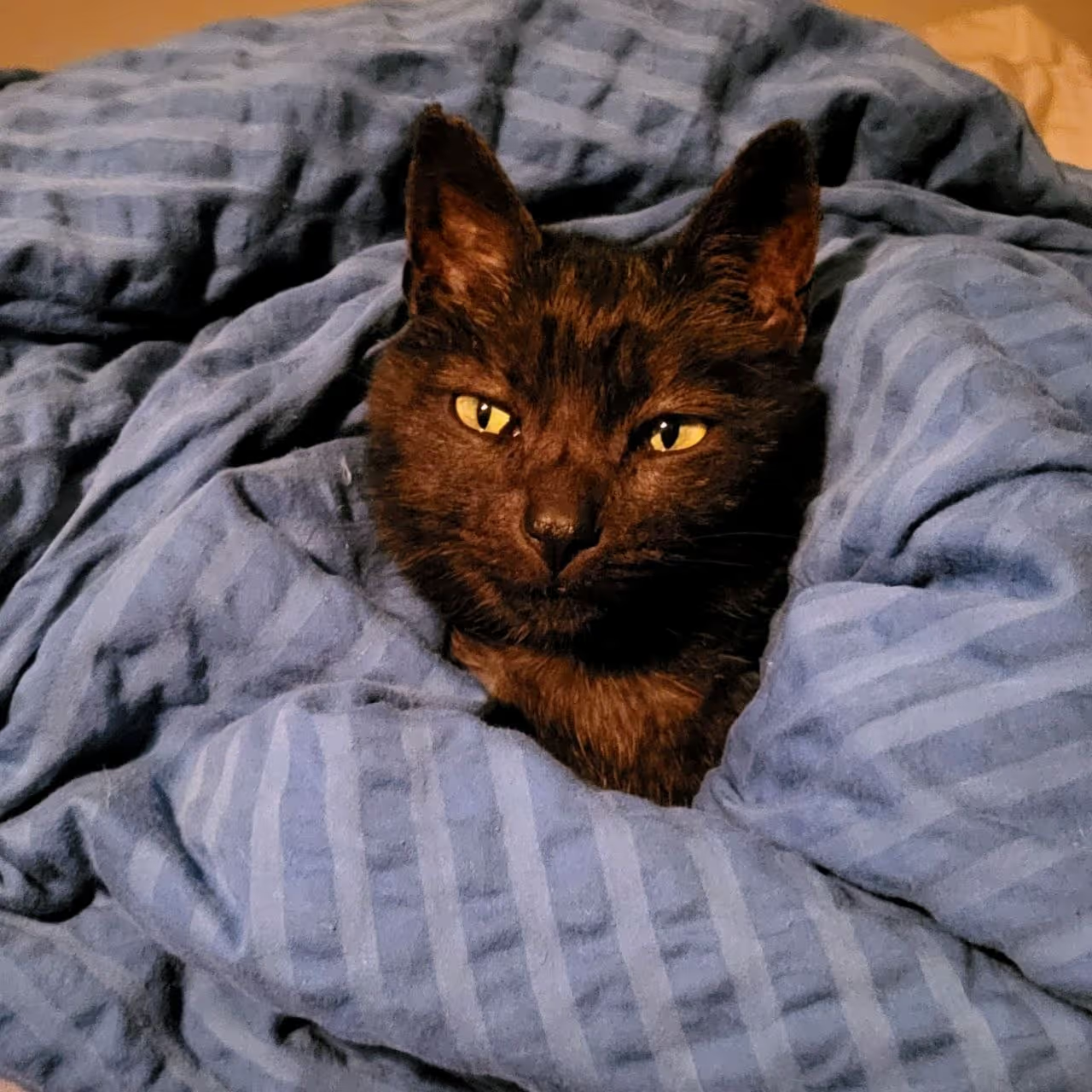
Cats: The Most Independent Case
Cats are the animal where overnight absence is most commonly discussed and most defensible, in the right circumstances.
An independent outdoor cat with unrestricted access to leave the house, food and water topped up, and a litter box that is clean can truly manage overnight without acute distress. Cats sleep for the majority of their day and night, and an outdoor cat has an entire environment to occupy itself with. For a sit like Lullin, where Piton and Muscaton were fully outdoor cats with their own routines that had little to do with us beyond feeding, an overnight absence would have had minimal impact on the animals themselves.
That said, Caro and I would not leave any cat overnight without first discussing it with the homeowner. The decision is not ours to make unilaterally. The homeowner placed their trust in a person being present. Even if the animal will be fine, confirming with the homeowner before staying away overnight is the right approach. A brief message: "We have the opportunity to spend a night in [city]. are you comfortable with the cats being alone overnight with food and water left out?". is a five-minute conversation that either grants permission or prompts a discussion.
Indoor-only cats are a different calculation. Without outdoor access, they are entirely dependent on whoever is in the home for stimulation, feeding, and litter box management. An overnight absence that extends a feeding gap beyond 12 to 16 hours is not appropriate for most adult indoor cats, and some are significantly more social and anxiety-prone than the stereotypically independent cat suggests.
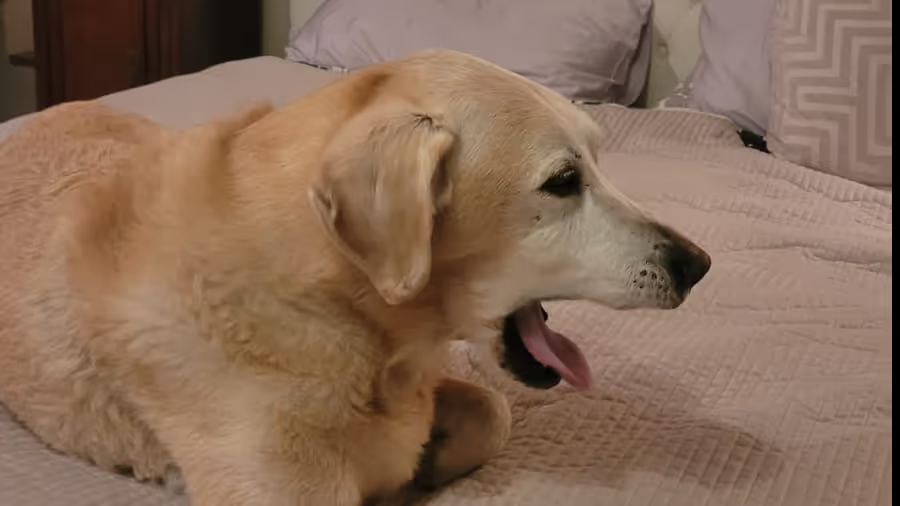
Dogs: A Much Higher Risk
Dogs are where overnight absence becomes truly problematic in most cases.
Dogs are social animals with strong attachment to their people. A dog that has been with the sitter for a week has transferred significant attachment to that person. An overnight absence removes the one familiar presence the dog has, in the home of their owner who is also absent, potentially for the first time in their life in this particular combination of circumstances.
The results are predictable: barking through the night, whining, destructive behaviour, and in some cases aggression toward other pets. The current Portugal sit demonstrates this clearly. When the sheepdog is separated from us even within the home (sleeping outside the bedroom on a mat), he barks throughout the night and becomes more aggressive toward other animals. An overnight absence would be significantly worse.
There are dogs that manage alone well overnight: older, calmer dogs with established independence and no separation anxiety, in situations where the homeowner has explicitly confirmed they do it routinely. But these are the exceptions, not the rule, and confirming this with the homeowner before acting on the assumption is essential.
A dog that barks through the night alone creates problems beyond the animal itself. Neighbours hear it, and the disturbance is real. And a dog that has been distressed through the night often shows the evidence: damaged furniture, soiled areas, or a visibly unsettled animal when the sitter returns. that the homeowner will notice immediately.
What the Platform Says
THS does not have a specific clause addressing overnight absence directly in the terms and conditions. The "how long can the pet be left alone" field in the listing is the closest indicator, and this is most naturally interpreted as a daytime figure based on the homeowner's own working routine. A homeowner who lists 8 hours is reflecting a working day, not signalling that overnight absence is acceptable.
The absence of a specific rule does not mean overnight absence is implicitly permitted. The overall spirit of THS and house sitting generally is that a responsible person is present in the home and caring for the animals. An overnight absence that was not explicitly discussed and approved by the homeowner is a breach of that spirit even if it does not violate a specific clause.
If there is any doubt: ask the homeowner. Their answer is the definitive guide, and having it in writing protects both parties.
What to Do If You Need to Be Away Overnight
There will be sits where an overnight trip becomes desirable: a festival, a friend's wedding nearby, an opportunity that requires staying away. The approach is the same regardless of the reason.
Assess the animals first. A sit with two independent outdoor cats is a truly different situation from a sit with an anxious dog. Your honest assessment of whether the animals can manage is the starting point, not the end point.
Contact the homeowner before making any arrangements. Explain the situation and ask directly whether they are comfortable with the animals being alone overnight. Most homeowners will give you a clear answer. Some will say yes for cats and no for dogs. Some will suggest a neighbour who can check in. Some will ask you to arrange a substitute sitter.
If the homeowner agrees, confirm it in writing and document the arrangements made: food topped up, water full, litter box clean, any specific instructions.
If the homeowner is not reachable or you cannot get a clear answer, the default should be to stay. An unapproved overnight absence is not a risk worth taking against the backdrop of the trust the homeowner placed in you.
Where possible, plan to minimise the absence. Leaving in the morning and returning by midnight is significantly better than leaving the evening before and returning mid-morning. Getting back to do the evening routine, even if late, is worth the effort.
The Alternative: Choose the Right Sit
The most practical long-term solution is to apply for sits whose animal type and homeowner expectations align with how you want to travel.
Caro and I have never needed to leave a sit overnight because we plan our travel around the sit rather than trying to fit the sit around travel plans we already had. A sit with two independent outdoor cats gives us significantly more flexibility than one with a single anxious dog. If overnight travel is something you want to do regularly, applying specifically for longer cat sits or sits where the homeowner has confirmed flexibility around overnight absence is a better approach than testing the boundaries of every sit.
Our guide to what to ask a homeowner before a sit covers the questions that surface these expectations before you commit. Our day trip guide covers the shorter absences that are easier to manage and rarely require homeowner approval for adult cats and calm adult dogs.
Conclusion
We have never left pets overnight in 20 sits. Not because we have not had the opportunity, but because we consider presence in the home to be part of the responsibility we took on when we applied for the sit. The homeowner arranged a sitter, not a check-in service.
For cats, particularly independent outdoor cats, overnight absence with the homeowner's knowledge and agreement is the most defensible scenario. For dogs, it is rarely appropriate without explicit prior discussion and arrangements.
If you need to be away overnight: assess the animals, contact the homeowner, get agreement in writing, and make the appropriate arrangements. If you cannot get a clear answer from the homeowner, stay.
Join TrustedHouseSitters with 25% off using our discount link and read our pet emergency guide before any sit where you are the only person responsible for an animal's welfare overnight.
DM us @housesittersguide on Instagram with questions. We answer everyone.

Frequently Asked Questions
Can a house sitter leave pets alone overnight?
In general, no. Not without explicit agreement from the homeowner. The core obligation of house sitting is to be present and caring for the animals. An overnight absence removes that entirely. For independent outdoor cats with the homeowner's prior agreement, it is the most defensible scenario. For dogs, it is rarely appropriate and carries significant risk of distress and behavioural problems. See our day trip guide for shorter absences.
What does TrustedHouseSitters say about overnight absence?
THS does not have a specific clause on overnight absence, but the spirit of the platform is that a responsible person is present and caring for the animals. The "pet can be left alone for X hours" listing field reflects the homeowner's working-day estimate, not an overnight allowance. When in doubt, ask the homeowner directly and confirm their answer in writing.
Is it okay to leave cats overnight during a house sit?
Possibly, especially for independent outdoor cats with food, water, and outdoor access, but only with the homeowner's knowledge and agreement. Indoor-only cats, very young or elderly cats, and cats with known anxiety are not appropriate candidates for overnight absence. Even for independent cats, contacting the homeowner before staying away is the right approach.
What should I do if I need to leave the house sit overnight?
Assess the animals, contact the homeowner, get agreement in writing, and make any necessary arrangements before leaving. If the homeowner cannot be reached, the default should be to stay. If you know in advance that overnight trips may be part of your travel plans, raise this before confirming the sit so expectations are clear from the start. Our guide to what to ask a homeowner before a sit covers the right questions.


Responses
What are your thoughts on this post?