

Home > Blog > The Boredom Problem: Is House Sitting Actually Less Exciting Than It Looks?
Quick Facts
| Quick Facts | |
|---|---|
| Is boredom a real part of this lifestyle? | Yes, and it's normal. Anyone claiming otherwise is selling something |
| When it hit us hardest | Around the two-to-three week mark of a month-long sit in Lullin, France, after we'd already seen everything nearby |
| What actually fixes it | Structure and purpose, not a new location. A weekly plan matters more than where you are |
| Another real fix | Mixing short and long sits deliberately. Constant long stays or constant short ones both lead to burnout in different ways |
| The real gap between the highlight reel and reality | You could be doing many of the same "exciting" things from your own hometown |
| Our honest verdict | Less exciting than it looks, and that's not a flaw, it's actually the point |
Yes, house sitting is genuinely less exciting than it looks in a photo. We've felt real, specific boredom during this lifestyle, not vaguely, but concretely, counting down the final two weeks of a month-long sit in France because we'd already done everything there was to do nearby. This isn't a confession we're embarrassed to make. It's the most honest thing we can tell you about this lifestyle, and understanding it properly is what's actually let us handle six months in one place without losing our minds.
We think about this topic differently from most travel content, because most travel content has a reason to keep the highlight reel going. We don't. This site exists to help people actually do this lifestyle well, and doing it well means being honest about the parts that don't photograph nicely.
If you are interested in getting into house sitting, our book Travel More for Less puts the whole process in one place: clear, step by step guidance from your first questions to your first confirmed sit, and the reviews that open the door to the next one.
We've completed 20 sits across 12 countries, and if you only read the highlight version of that, you'd assume every single day looked like a postcard. It doesn't. This article is about the days that don't.
What Boredom Actually Looks Like, Concretely
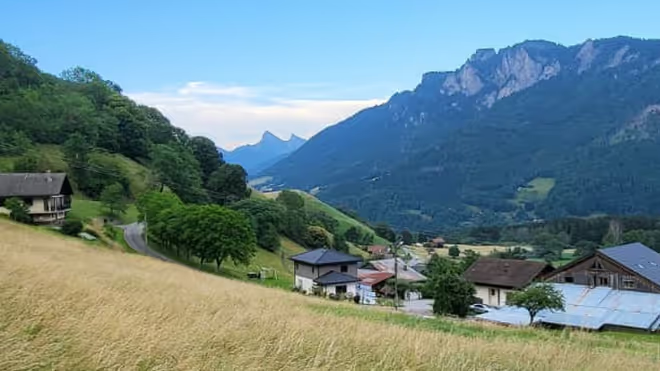
In Lullin, France, we spent a month in a sit we genuinely loved. We traveled around, saw everything nearby worth seeing, worked on a few side projects, and by any honest measure had a fulfilling stretch of time. And still, somewhere around the two-to-three week mark, both of us were quietly counting down to the end.
It wasn't that anything was wrong. It was that we'd done what there was to do, and the remaining two weeks just sat there, unstructured, with nothing new pulling us forward. When the sit ended, we were genuinely happy about it. Looking back on it now, it was a lovely month. Both things are true at once, and we think that contradiction is exactly what most people never hear about this lifestyle. This is part of why we've written honestly elsewhere about what constant travel actually does to the body, the flat stretches aren't just mental, they show up physically too if you're not paying attention to them.
The Gap Between the Photo and the Actual Day
Here's the part we think gets misunderstood the most. When we post a photo online, it's us at our most excited, an incredible view, a new place, something genuinely delicious. What that photo doesn't show is that you could often go find something almost as good from your own hometown, if you looked for it the same way.
The lifestyle is fun. It is exciting. We've experienced things we'll never forget. But in plenty of ordinary stretches, there's real, actual nothing happening. A stale afternoon. A day that looks, from the inside, exactly like a slow Tuesday would look anywhere else. People see the highlight reel and assume the whole thing is made of highlights. It isn't, and no honest account of this lifestyle can pretend otherwise.
Why Constant Travel Specifically Can Wear Thin
There's a specific mechanism behind this worth naming directly: constant travel, moving between places often, tends to erode two things people don't expect, friendship and routine.
You end up with fewer deep friendships, since you're rarely anywhere long enough to build them the way you would staying still. And you lose the daily structure that, for a lot of people, is actually what makes life feel steady and worth showing up for.
Add enough new places, new views, new experiences back to back, and something strange happens: the newness itself starts to lose its charm. You become, in a real sense, overwhelmed by excitement, to the point that excitement stops registering as excitement at all.
We don't think this means travel is bad, or that people shouldn't do it. We think everyone should try an extended stretch of it at least once, if only so they never spend the rest of their life wondering "what if." But we also think it's genuinely not for everyone, and there's nothing wrong with that.
Some people need more time to process what they're experiencing. Some people need the structure of a daily routine to actually feel good. Both are completely valid ways to live, and figuring out which one you actually are matters more than which lifestyle looks better online. Our guide to building a social life while house sitting covers the friendship side of this directly, since it's genuinely one of the harder things to maintain moving this often, and one of the things that matters most for actually feeling settled somewhere.
Six Months in One Place: The Real Test
What's actually happened has surprised us. We've found real purpose in this stretch, specifically building our own projects, and that's changed the entire texture of the time. Some weeks, our days feel too short. Some weeks fly by because we're genuinely absorbed in something we care about, not because the location itself is endlessly entertaining.
The house hasn't changed. What changed is that we brought something to do here beyond simply being here. Our guide to the psychology of living in other people's spaces covers a related side of this, how much a home that isn't yours still shapes your mental state over an extended stay, worth reading if you're weighing a long sit yourself.
The Actual Fix: Structure, Not Scenery
Here's what we've learned, and it's the part we think matters most if you're considering this lifestyle yourself: the fix for boredom was never a better location. It was structure.
Every Monday, our day off, Caro and I sit down and plan the week, what we want to get done, exercise goals, anything besides work. Knowing what's coming, having some sense of direction for the days ahead, is what actually keeps us engaged, far more than whichever view happens to be outside the window that month. A day in the most beautiful place in the world can be genuinely boring if you repeat it without purpose. A relatively ordinary day can feel completely full if you know exactly why you're showing up for it.
If you're planning your own extended sit, our guide to staying productive working from someone else's home and our long-term house sitting guide both cover the practical side of building this kind of structure into a longer stay, and our guide to slow travel through house sitting covers the broader philosophy behind choosing depth over constant novelty in the first place.
The Other Fix: Mixing Short and Long Sits Deliberately
There's a second lever worth using, and it works differently from structure within a single sit: deliberately mixing how long your sits actually are.
Not every sit has to be long-term, and moving between homes more often can genuinely be revitalizing rather than draining. There's something motivating about arriving somewhere new, not bound by whatever difficulties or ruts had built up in the last place. A fresh space gives you a fresh start almost automatically, new things to notice, a different rhythm to figure out, and that alone can be enough to reset your energy. We've written before about how a new environment functions as a genuine psychological reset, and that effect is real here too: moving more often keeps things feeling fresh in a way that staying still eventually stops doing.
But constant movement carries its own risk, the fatigue and friendship erosion we covered above. The honest answer isn't picking one extreme. It's mixing both deliberately. A run of shorter, more frequent sits gives you variety, momentum, and enough novelty to stay genuinely engaged. A longer sit afterward gives you the time to actually relax, process everything you've experienced, and build the kind of depth and routine that constant movement never allows. Doing only one or the other, endless short sits or endless long ones, tends to end the same way: real burnout, just from a different direction. Our guide to how we plan campervan routes between sits covers how we actually build this mix into our own planning rather than letting it happen by accident.
If you're planning your own mix of short and long sits, our 25% discount on TrustedHouseSitters membership is worth using regardless of which length you're leaning toward for your next one.
The Pets Themselves Are Part of the Fix
Here's something we don't think gets enough credit: the animals aren't just the responsibility that comes with a sit. They're genuinely one of the best defenses against the flat, boring stretches.
A dog doesn't care how many times you've already walked that route this month. It wants to go again, today, now, with real enthusiasm, and that pulls you outside and moving in a way that's easy to skip if you're relying on your own motivation alone. Our guide to keeping fit during house sitting and van life covers this in more depth, but the short version is that a dog's own routine becomes your routine, whether you were feeling up for it that particular day or not.
Cats do this differently, but they do it. A cat demanding attention at exactly the wrong moment, chasing something across the room, deciding your laptop is now the most interesting object in the house, breaks up a slow afternoon in a way that's genuinely hard to replicate on your own. Even the more independent animals we've looked after, our guide to house sitting with chickens or ducks covers a good example, still give a day a shape it wouldn't otherwise have: feeding times, checking on them, noticing their individual personalities over weeks rather than days.
None of this replaces the structure we've talked about above. But it's worth naming directly: part of why a long sit is more manageable than an equivalent stretch of ordinary daily life is that you're not doing it alone. There's always something else in the house with its own needs, its own energy, and its own way of nudging you out of a stale afternoon, whether you were in the mood for it or not.
Our Honest Verdict
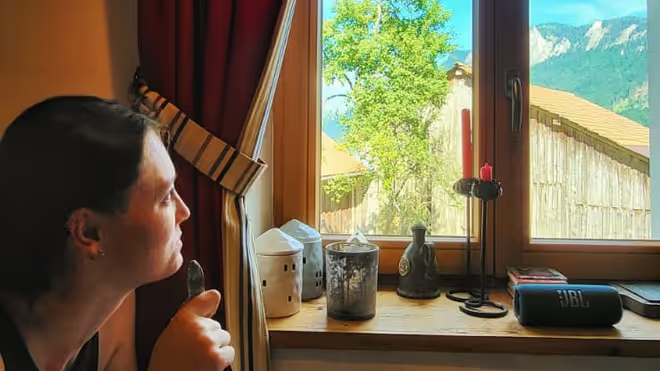
Yes. House sitting is less exciting than it looks, and we don't think that's a flaw in the lifestyle. We think it's actually the point.
A life built entirely around constant excitement isn't sustainable for anyone, and chasing it is a genuinely exhausting way to live. What we've found instead, especially in this longer sit, is something better than constant excitement: a life we're actually building rather than just documenting.
If you can't find a way to make an ordinary day genuinely worth showing up for, no location, however beautiful, will fix that for you. And if you can, the specific place you're doing it from starts to matter a lot less than people assume. If you're deciding whether this lifestyle is actually right for you at all, our honest answer on whether house sitting is worth it covers the fuller picture, including the other real trade-offs beyond boredom specifically.
Have you experienced real boredom during a long sit, or found something that actually fixed it for you? We'd like to hear about it, drop it in the comments below.
The Bottom Line
This lifestyle is genuinely exciting, and it's also, honestly and unavoidably, sometimes boring. Both are true, and pretending otherwise does a disservice to anyone actually considering it. The people who thrive doing this long-term aren't the ones who've found an endless supply of new experiences. They're the ones who've learned to build real structure into ordinary days, mix up how long they stay in any one place, and let the animals themselves do some of the work of keeping life interesting.
Caro and I have completed 20 house sits across 12 countries, driven 19,000km in Australia and 24,000km in our 1998 VW T4, and saved over $26,500 in accommodation costs over three years of house sitting through TrustedHouseSitters. If you've felt this same tension between the highlight reel and the actual day-to-day, DM us @housesittersguide, we answer everyone.

Frequently Asked Questions
Is house sitting actually boring?
It can be, genuinely, and that's normal rather than a sign something's wrong. Extended stretches without a clear sense of purpose or routine can feel flat regardless of how beautiful the location is. Structure, not scenery, is what actually prevents this.
Why does constant travel sometimes feel less exciting over time?
Frequent movement tends to erode both deep friendships and daily routine, two things that give most people a real sense of stability. Enough new experiences back to back can also become overwhelming in a way that dulls the excitement itself rather than sustaining it.
How do you avoid boredom on a long house sit?
Build genuine structure into the time rather than relying on the location to keep things interesting. A weekly plan, a clear sense of what you're working toward, and a defined day off make a bigger difference than moving somewhere new.
Does mixing short and long sits actually help with burnout?
Yes. Constant short sits can be exhausting without enough time to properly relax and process what you've experienced. Constant long sits can eventually feel stagnant without the freshness a new environment provides. Deliberately mixing both tends to avoid burnout from either direction.
Is house sitting a good fit for everyone?
No, and that's fine. Some people thrive on the flexibility and variety. Others genuinely need more routine and processing time than this lifestyle naturally provides. Neither is a better way to live, they're just different.


Responses
What are your thoughts on this post?