

Home > Blog > How to Verify a House Sitter
Quick Facts
| What "verified" usually means | Identity confirmed — passport matches face, not a criminal check |
| Background checks | Available on THS (US sitters) and some regional platforms — look for a specific badge |
| Verified reviews | The most reliable signal — completed sits reviewed by real homeowners |
| First Aid / pet certifications | Platforms do not check these — ask directly if it matters to you |
| Police clearance | You can ask for one — legitimate sitters with nothing to hide will not object |
| Best protection | A platform with verified reviews + a video call + your own judgment |
Verified badges confirm identity, not character; a criminal background check is a separate layer. The strongest signal is a pattern of verified reviews from completed sits. Look for at least three, insist on a video call with the camera on, and ask directly about specific pet care experience.
The short answer for homeowners: Verified badges are a starting point, not a guarantee. They confirm identity, not character. The most reliable signal on any platform is a pattern of positive verified reviews from completed sits, combined with your own read of the sitter during a video call. This guide explains what each layer of verification actually checks and how to fill the gaps that platforms leave open.
What "Verified" Actually Means
The green tick or verified badge on a house sitting profile triggers an instinctive sense of reassurance. It is worth understanding exactly what it covers before you rely on it.
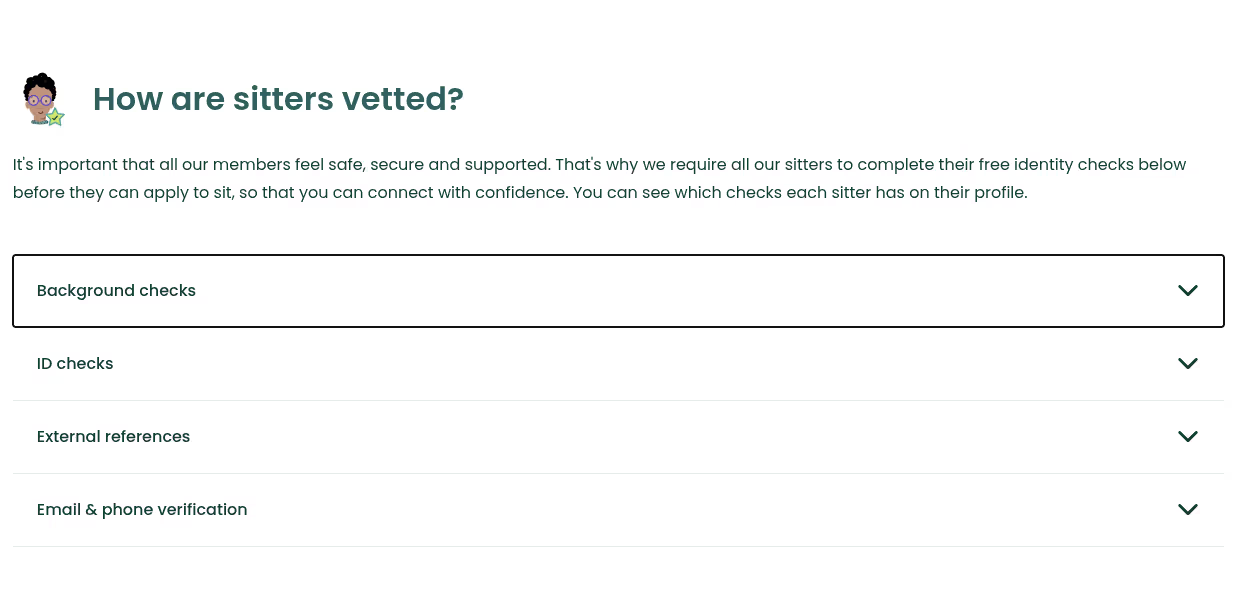
On most platforms, the baseline verification confirms that the person behind the profile is real: their name matches a government-issued document such as a passport or driver's licence, and their email address and phone number have been confirmed as active. This stops people from creating anonymous or entirely fictitious profiles, which is meaningful. It does not tell you anything about the person's history, character, or past behaviour in someone else's home.
If you are interested in getting into house sitting, our book Travel More for Less puts the whole process in one place: clear, step by step guidance from your first questions to your first confirmed sit, and the reviews that open the door to the next one.
The rule for reading badges: look for what the badge specifically says it checked. A badge labelled "ID Verified" means identity. A badge labelled "Background Check" means a criminal database search. Never assume one covers the other.
Verified Reviews: The Most Reliable Signal
If a platform only lets you look at one thing, look at the review history.
Verified reviews on platforms like TrustedHouseSitters are attached to completed sits. They can only be left by homeowners who actually hosted that sitter through the platform, and they can only be left once per sit. This makes them meaningfully harder to fabricate than references provided by the sitter themselves.
A sitter with 15 verified reviews across multiple countries, multiple pet types, and multiple homeowners has a documented track record. Each review represents a real person who trusted them with their home and chose to say something publicly about the experience. Reading across those reviews for patterns (is communication mentioned consistently? are the pets described as well cared for?) gives you a more useful picture than any badge.
Character references provided by the sitter themselves (from friends, family, or former employers) are a different category. They demonstrate initiative and care, but they cannot be verified and carry less weight than reviews from platform sits. If a sitter has no platform reviews yet, references are worth reading. If they have extensive platform history, references are supplementary.
Our article on which platforms have verified reviews covers how each major platform handles the review process in detail.

The Video Call
No verification system replaces your own judgment on a video call. We have written a full guide to what to cover on the house sitting video call, but from a verification standpoint the call serves two purposes.
The first is identity confirmation. A sitter who appears on camera and speaks to you directly is almost certainly who they say they are. Scammers and fake profiles avoid video calls. If a sitter declines to turn on their camera or is persistently unavailable for a call, that is a significant warning sign regardless of their badge status.
The second is character assessment. You can read how someone talks about their previous sits, whether they ask thoughtful questions about your pets and home, and whether they seem curious about the sit rather than just the free accommodation. This is information no algorithm produces.
If a sitter is applying for an international sit from another country, a video call is even more important. It confirms they are real, establishes a personal connection, and lets you ask specific questions about how they have handled previous sits in countries they did not speak the language of, or situations where something went wrong.
Police Clearances
You can ask a sitter for a police clearance certificate. This is a document issued by national or regional authorities that confirms no criminal record (or discloses what exists). It is not the same as a platform background check. It is a formal government document.
It is reasonable to ask for this, particularly for longer sits or sits involving children. The way to ask without creating awkwardness is to frame it as standard procedure: "We ask all our sitters for a copy of their police clearance as part of our standard process." Framing it as your policy rather than a specific concern about that individual removes any suggestion of personal distrust.
A sitter with a clean record who is serious about house sitting will not object. Our safety guide covers more on what legitimate sitters expect from homeowners when it comes to vetting.
First Aid and Pet Certifications
House sitting platforms do not check or require any form of first aid, veterinary, or pet care certification. This is by design: the exchange is a private domestic arrangement, not a regulated service. Sitters are not required to have professional credentials to care for pets in someone's home.
This matters if your pet has complex medical needs. A sitter who says they have experience with diabetic cats, dogs requiring medication, or animals with specific behavioural conditions should be able to describe that experience in detail and provide references from relevant past sits. A general claim of "loving animals" is not the same as demonstrated experience with the specific care your animal requires.
If your pet has serious health conditions or requires clinical-level care, it is worth reading our article on pet boarding versus house sitting before deciding which approach is right for you. Boarding facilities are more likely to have trained veterinary staff available on-site.
If you want a sitter with first aid certification you can ask for it directly during the video call. Some sitters do hold pet first aid certificates, particularly those who have been sitting for several years and have taken additional training. It is not standard, but it exists.

Spotting Fake Profiles
Fake and bot accounts exist on house sitting platforms, though they are significantly rarer on paid platforms than free ones. A sitter who has paid a membership fee to join has already cleared a basic financial barrier that most scammers will not cross.
The warning signs of a fake or suspicious profile are consistent: no completed sit reviews, profile photos that look stock or AI-generated, a bio with vague or generic language and no specific details about experience, and reluctance to engage in a video call. A profile that ticks multiple of these boxes warrants extra caution.
On platforms like TrustedHouseSitters, the combination of a paid membership, an identity verification process, and a review system tied to completed sits means the overwhelming majority of profiles are genuine. The review history is your best ongoing protection.
What to Check Before Confirming
Before clicking confirm on any sitter, the practical checklist is: identity badge confirmed, background check badge present if available in your country, at least three verified reviews from completed platform sits, a video call completed with camera on, a profile bio that contains specific and verifiable detail rather than generic claims, and your own read of the person from the call.
No single element of this is a guarantee. Combined, they represent as thorough a due diligence process as the platform environment allows. The vast majority of house sitting arrangements go smoothly, not because every sitter has a perfect paper trail, but because the community self-selects for people who are committed to the exchange. Understanding what the verification tools cover and where they stop is what lets you use them intelligently rather than either over-relying on them or dismissing them.
For a deeper look at choosing the right platform for your location, our house sitting sites guide compares verification standards across all major platforms side by side.
Conclusion
Verification is a layered process. Platform badges confirm identity. Background checks search criminal records. Verified reviews document real experience. The video call confirms the person is who they say they are and gives you the information to make your own judgment. Each layer covers something the others do not.
Most sitters are exactly who their profiles say they are. But understanding what each verification tool checks, and asking the questions that fall outside what the platform checks automatically, is how you arrive at confidence rather than just hoping for the best.
Use our 25% discount on TrustedHouseSitters to get started on the platform with the most comprehensive verification infrastructure in the market.
DM us @housesittersguide on Instagram if you have questions about the vetting process. We answer everyone.

Frequently Asked Questions
Do verified badges on house sitting platforms guarantee a clean criminal record?
No. Most verified badges confirm identity only, meaning the person's name matches their government ID. A criminal background check is a separate step, available on some platforms (TrustedHouseSitters offers this for US-based members) and visible as a distinct badge. If a criminal check matters to you, look specifically for that badge rather than assuming any verification covers it.
Can I ask a sitter to provide a police clearance certificate?
Yes, and legitimate sitters will not object. Frame it as standard procedure: "we ask all our sitters for a police clearance as part of our process" rather than framing it as a specific concern about that individual. A sitter with nothing to hide and a genuine interest in the sit will provide it without issue.
Are house sitter references trustworthy?
Verified reviews from completed platform sits are the most trustworthy. They are tied to a real booking made through the platform and can only be submitted by the homeowner after the sit ends. Personal references provided by the sitter from friends or former employers are less verifiable but still worth reading for newer sitters who have no platform history yet.
Do house sitters need first aid or pet care qualifications?
No. House sitting is an unregulated domestic exchange and platforms do not require any certifications. If your pet has specific medical needs, ask the sitter to describe their relevant experience in detail and provide references from similar past sits. If clinical-level care is required, a boarding facility with veterinary staff may be more appropriate.
What are the red flags of a fake or suspicious profile?
No verified reviews, generic or vague bio language, stock-looking profile photos, and reluctance to do a video call. Fake profiles are significantly rarer on paid platforms because the membership fee filters out most bad actors. If a profile ticks multiple warning signs, move on to the next applicant.


Responses
What are your thoughts on this post?