

Home > Blog > House Sitting With Farm Animals
Quick Facts
| Farm animals on THS? | Yes. chickens, ducks, goats, horses, sheep all appear in listings |
| Are they common? | Less common than dog and cat sits. |
| THS Third Party Liability | Covers dogs and cats injuring others. farm animals are NOT covered |
| Chickens/ducks/poultry | Manageable without prior experience if the basics are understood |
| Goats | Require secure fencing knowledge and basic handling experience |
| Horses | Require genuine prior experience. do not accept without it |
| Biggest difference from pet sits | Locking animals in at night against predators is non-negotiable |
| Best bonus | Fresh eggs daily. one of the most satisfying parts of a poultry sit |
Chickens and ducks suit a first-timer if you lock them in at night, every night, because foxes will not wait. Goats need handling experience and tested fencing; horses only with genuine horse experience. TrustedHouseSitters' liability plan does not cover farm animals.
Caro and I are about to start a six-month sit in Portugal that includes four chickens alongside a cat. It is, in many ways, our dream house sit. rent-free for half a year in Portugal, a cat, and four chickens who will be producing fresh organic eggs throughout.
I have also volunteered at Fairfield City Farm in Sydney, cleaning coops for chickens, pigs, and horses. My sister owns two horses, two goats, seven sheep, two dogs, and chickens. I always have someone to call.
If you are interested in getting into house sitting, our book Travel More for Less puts the whole process in one place: clear, step by step guidance from your first questions to your first confirmed sit, and the reviews that open the door to the next one.
Chickens and Ducks: More Social Than You Expect
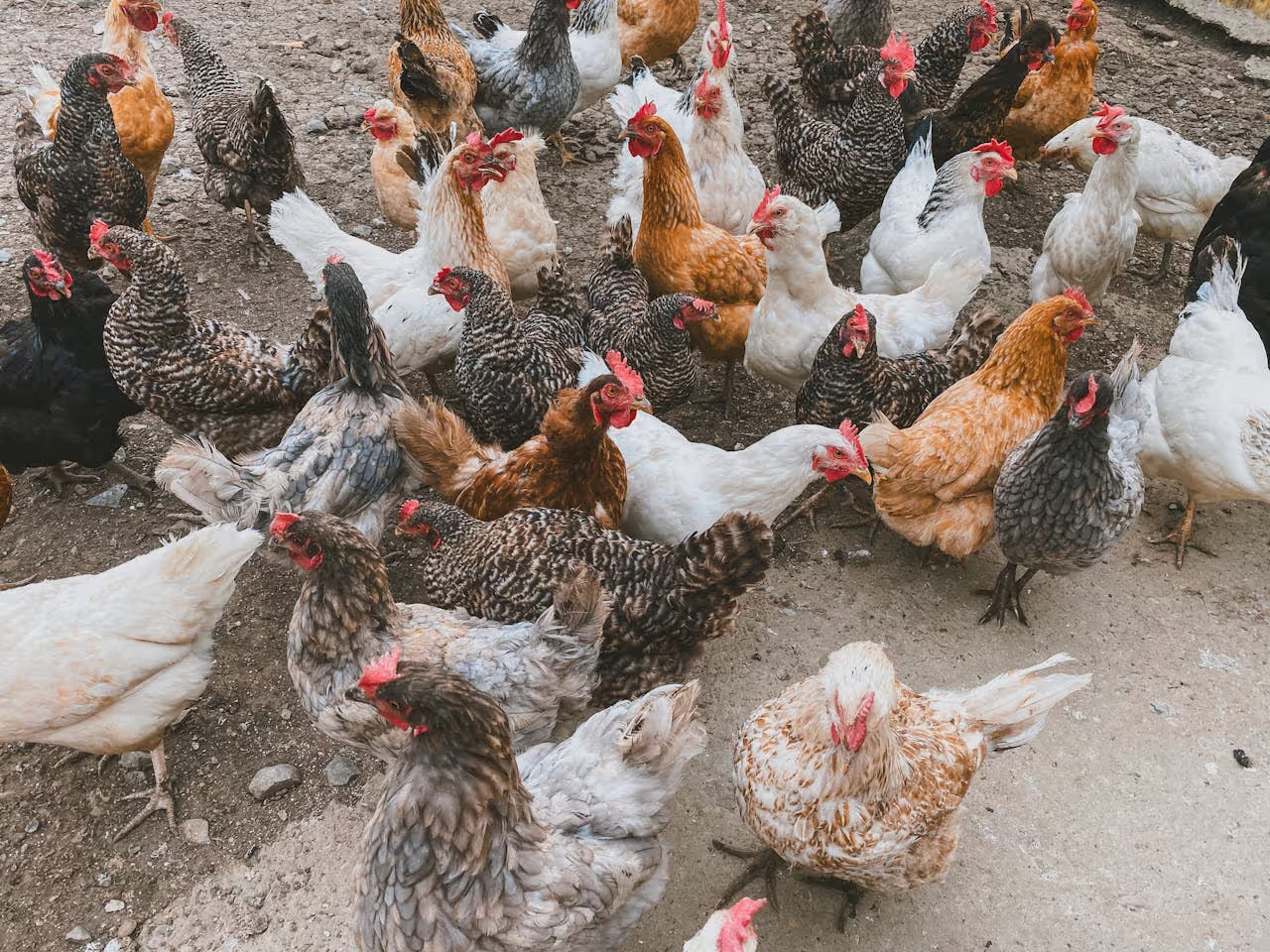
Chickens are not the low-maintenance background animals people assume. They are social, curious, and affectionate in their own way. I have watched chickens sprint out of their coops in the morning to get a scratch from their owners. I have seen them follow people around a yard the way a dog follows you from room to room. They are, in many respects, like cats. independent enough to manage themselves, but appreciative of attention when it is offered.
The daily routine for chickens or ducks is clear:
Keep the feeder full. Most chickens eat layer pellets or a mixed grain feed. The quantity depends on the number of birds and the homeowner's instructions, but a full feeder at the start of each day is the baseline.
Keep the water clean and topped up. Chickens drink more than you would expect, particularly in warm weather. A dirty drinker is a health risk. Clean it daily.
Collect the eggs each morning. Leaving eggs in the nest encourages broodiness and can attract predators. A daily collection keeps the coop running well and gives you fresh eggs. It is one of the most satisfying parts of a poultry sit.
Clean the bedding regularly. Straw or wood shaving bedding needs replacing every few days. This is the most time-consuming part of poultry care, but at a small scale it takes fifteen to twenty minutes. At Fairfield City Farm, cleaning the chicken coop was a daily morning task that never took long.
Move the run if it is portable. Many small backyard chicken enclosures are designed to be moved across a lawn so the birds always have fresh grass to forage. If the Portugal setup is this type, rotating the position every few days gives the chickens access to fresh ground and keeps the lawn from being stripped in one patch.
The critical difference from dog and cat care: you must lock the chickens into their coop at night. Unlike dogs and cats that can often roam a secured garden into the evening, chickens need to be physically secured at dusk. In Portugal, foxes are the primary threat. Birds of prey can also take chickens during daylight hours. An open coop at night is a coop that will not have the same number of chickens in the morning. Establish the lock-up time from the homeowner before the sit starts and treat it as a non-negotiable part of the evening routine.
Goats: The Next Step Up
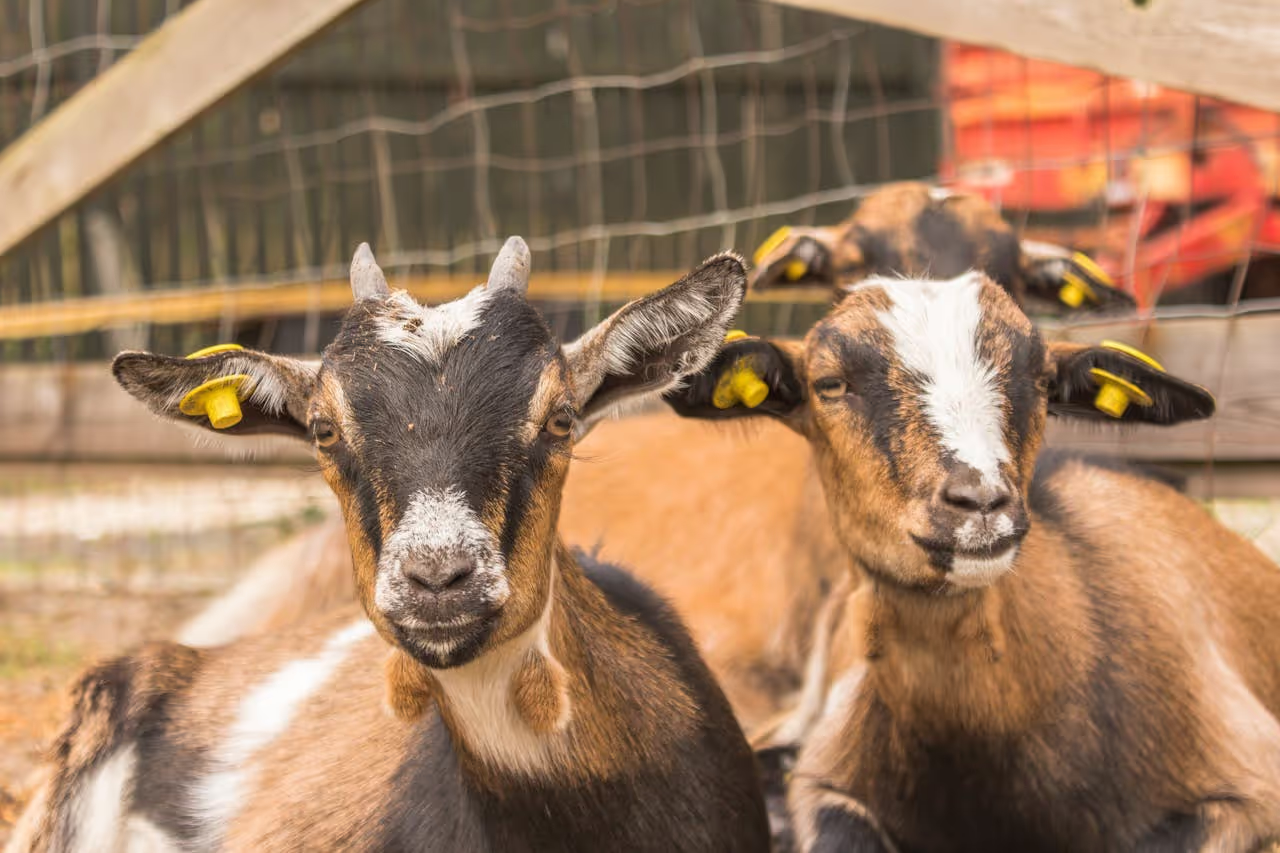
Goats are manageable for a sitter with some prior handling experience, but they are significantly more demanding than poultry.
The first thing to know about goats: they are escape artists. A fence that would contain a dog will not necessarily contain a goat. Goats climb, push, and find gaps. Before accepting a sit that includes goats, ask specifically about the fencing and whether it has been tested. A goat that escapes is a goat that can be hit by a car, eaten by a predator, or simply not found.
Goats also need daily feeding, fresh water, and regular hoof checks. Overgrown hooves are a welfare issue that develops over weeks, not days, so a short sit is unlikely to require trimming. Knowing what to look for (limping, weight-shifting, an animal that seems reluctant to walk normally) and reporting it to the homeowner promptly is important. If what an owner has asked for does not match what the animal appears to need, raising it without damaging the sit is the honest guide.
If you have no prior experience with goats and a listing includes them, consider whether your experience is adequate before applying. Goats are not dangerous in the way horses can be, but a goat that panics or charges can knock a person down, and a goat that is mishandled can injure itself. Our what to ask a homeowner guide covers the questions that surface whether the homeowner's expectations match your actual skill level.
Horses: Accept Only With Experience
I will not accept a house sit that includes horses. That is a firm personal position, and it comes from a specific memory.
I was on a horse riding camp as a child, sent by my mother. I was on a horse being led by an instructor when a foal nearby began jumping around. The foal kicked the instructor directly in the stomach. She was taken to hospital. She was ultimately fine. But I was perhaps eight years old and I remember that moment clearly, almost thirty years later.
My sister has owned and trained horses for years, including thoroughbreds. She knows exactly what she is doing and she is always available if I have a question. Even with that resource available, I would not take on horse care for a house sit. The gap between knowing enough to call someone and knowing enough to handle the situation yourself is the gap where horses injure people.
A startled horse, a horse that does not want to be caught, a horse that kicks without warning: these are not scenarios that can be safely navigated without prior handling experience. The consequences when something goes wrong with a large animal are immediate and serious.
If you have real horse experience (you have ridden regularly, handled horses on the ground, and know how to safely enter a stable) then a horse sit may be appropriate for you. If you do not have that experience, do not let a beautiful property or a compelling location override your honest assessment of what you are capable of. Our reactive dog guide makes the same point for large powerful dogs: know what you can safely manage before you commit.
This principle applies broadly to any animal you have not worked with. House sitting is built on the premise that the sitter is competent to care for the animals listed. Accepting a sit involving animals you are not confident handling is a disservice to the homeowner, a risk to the animals, and a risk to yourself.
What Is Not Covered by Platform Insurance
This is important and most sitters do not know it until it matters.
TrustedHouseSitters' Third Party Liability plan covers incidents where a dog or cat injures another person, their property, or their pets due to the sitter's negligence. Farm animals are not included. A goat that escapes and causes a road accident, a horse that injures someone, chickens that damage a neighbour's garden: none of these are covered.
This is also not technically insurance. It is a liability plan provided by the platform, and the terms are specific. Our complete house sitting insurance guide covers exactly what each platform plan includes and what sitters need to arrange separately for comprehensive cover.
If you are accepting a sit that includes farm animals (particularly goats or horses) make sure you understand what liability you are taking on and whether your personal travel or home insurance extends to it.
What to Ask Before Accepting a Farm Sit
The questions for a farm animal sit are more specific than for a standard pet sit, and the pre-sit video call is where to ask them.
For chickens or ducks: What is the feeding schedule and how much do they get? Where is the food stored and how is it measured? What time do they need to be locked in at night? Is there a portable run that needs moving, and how often? What should I do if I find fewer birds in the morning? Is there a vet or farm contact in case of illness?
For goats: Is the fencing secure against escape? When were their hooves last trimmed and is there anything to watch for? Are they halter trained and comfortable being handled? What is the feeding and water routine?
For horses: What is your experience level requirement? The homeowner should be asking you this question. If they are not, ask yourself whether the listing is appropriate.
For all farm animals: what does the homeowner want you to do if an animal seems unwell, injured, or missing? Who is the emergency contact: a vet, a neighbouring farmer, a friend with experience? This is the equivalent of the pet emergency question for domestic pets, and for farm animals it is even more important because the range of possible issues is broader.
The Portugal Chicken Sit: What We Are Looking Forward To
Caro is nervous. It will be her first time looking after chickens and she is not quite sure what to expect. I keep telling her there is nothing to worry about. Chickens are, in many ways, easier than cats. They have a clear routine, they largely look after themselves during the day, and the main jobs are feeding, watering, collecting eggs, and locking them in at night.
The fresh eggs every morning are a bonus that is hard to overstate. There is something about collecting eggs from chickens you have been caring for that feels like a different category of reward from anything a cat or dog provides. Six months in Portugal, a cat, four chickens, and daily fresh eggs. That is a house sit worth being proud of landing.
The homeowner will walk us through everything at handover. The food, the routine, the coop setup, the moving schedule for the run. We will take notes, confirm everything in writing, and refer back to it throughout the sit. Our no welcome guide article covers what to do if the handover is incomplete, though for a six-month sit with farm animals, a thorough briefing is non-negotiable.
When a Farm Sit Is Not a Fair Exchange
Not all farm sits are reasonable. The difference between house sitting and unpaid labour is a line that farm listings cross more often than any other category.
The most egregious version of this appears regularly in UK listings: a homeowner lists a property with cats, dogs, horses, sheep, and cows, expects a sitter to manage all of it, and then charges £500 per month in utilities. That is not house sitting. That is paid farm labour in reverse: the sitter pays for the privilege of doing a full-time job they were not trained for, on land the homeowner chose to own and is now declining to manage.
House sitting is a free exchange of value. The homeowner gets their home, pets, and property looked after. The sitter gets free accommodation. That exchange is roughly equal. The moment a homeowner starts charging utilities, demanding management of a working farm, or listing responsibilities that constitute full-time agricultural work, the exchange has broken down entirely. These listings should be reported to the platform and removed.
Looking after a full working farm is a full-time job. Anyone who has spent time on one knows this. Before any of your own work happens, the animals need feeding, watering, checking, and securing. If the farm is large enough to include cattle, horses, and sheep alongside domestic pets, that is an eight-hour day before you have opened a laptop. Taking on a sit like this means sacrificing the freedom and flexibility that makes house sitting worthwhile in the first place.
If a homeowner truly needs someone to manage a working farm in their absence, they have two appropriate options. They can hire an experienced farm hand, which is what the responsibility requires. Or they can look at platforms like Workaway or WWOOF, which are designed specifically for farm volunteer arrangements where the volunteer receives food and accommodation in exchange for a defined number of working hours. These are transparent arrangements where both parties understand what they are agreeing to.
What is not appropriate is listing a working farm on a free exchange house sitting platform, paying nothing, charging utilities, and expecting an untrained sitter to manage it safely. Farm owners took on that responsibility when they acquired the land and animals. The consequences of farm animals being mishandled by an inexperienced person are not abstract.
Farm Animals Are Among the Most Dangerous Animals in the World
This is not dramatic. It is statistical.
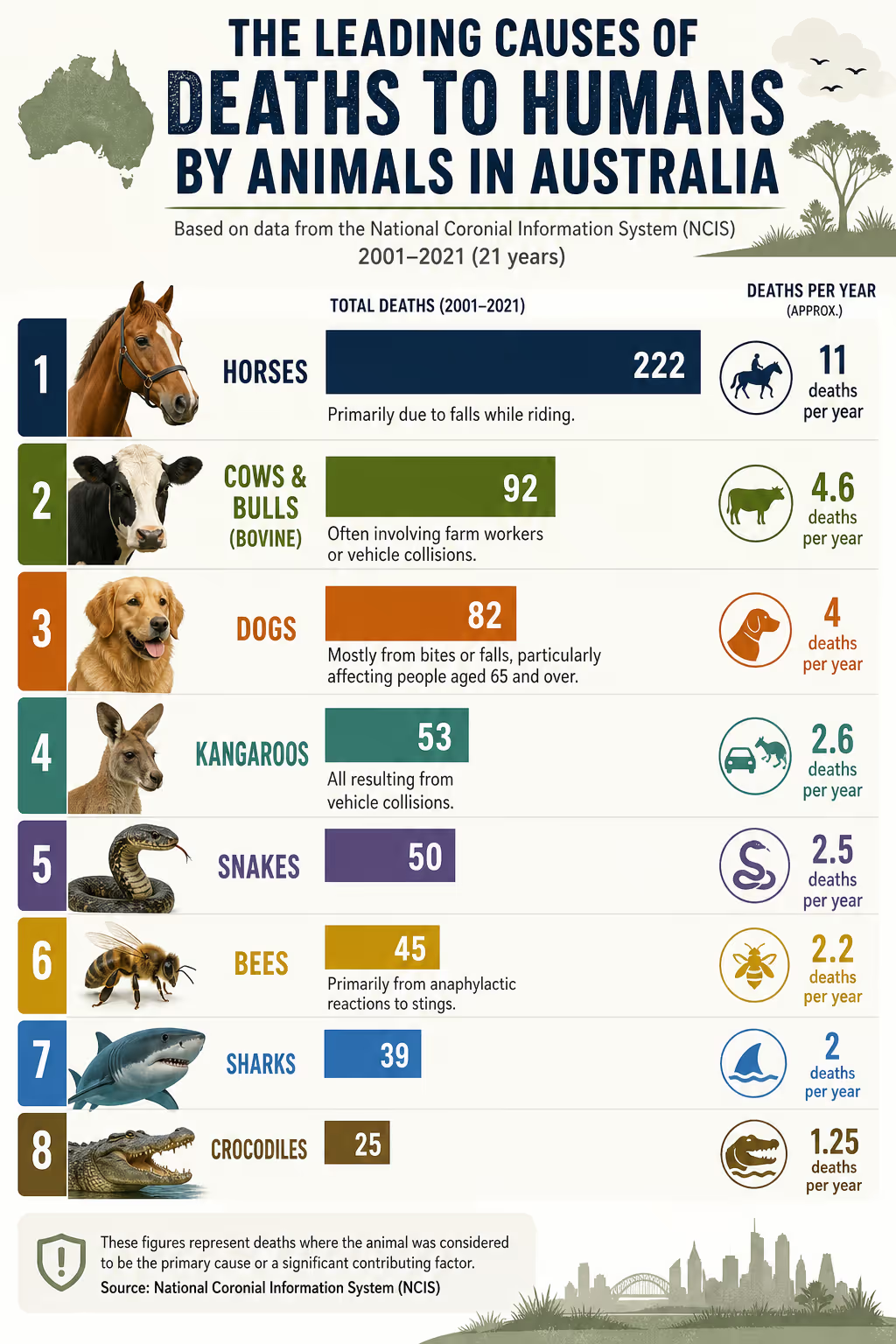
In Australia, the animals responsible for the most human deaths are not the ones tourists worry about. Not crocodiles, not funnel-web spiders, not eastern browns, not kangaroos. The most dangerous animals in Australia are horses and cattle, which together account for close to 300 deaths over a twenty-year period. These are domestic working animals that most people interact with in farm settings, and they kill more Australians than any other animal category.
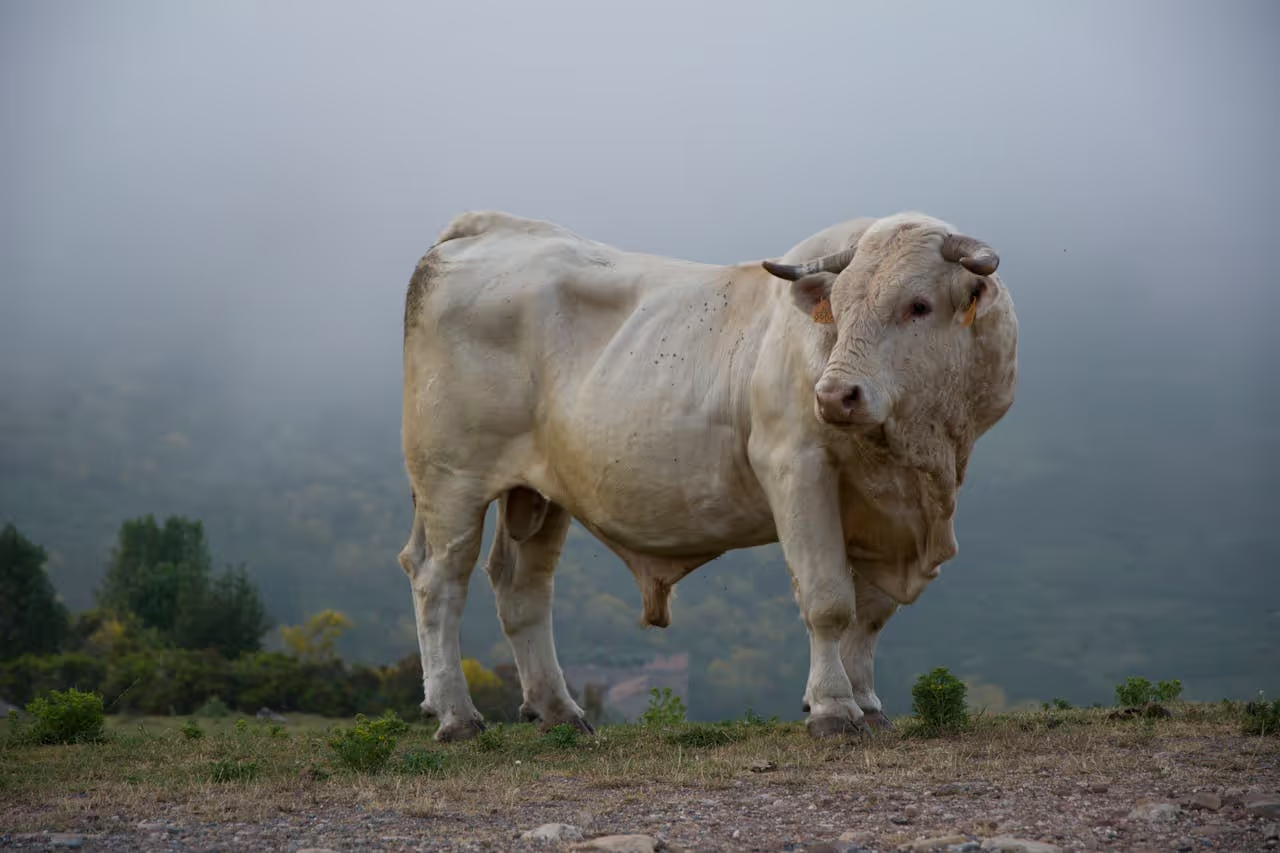
A startled cow is 600 kilograms of muscle that can move at 40 kilometres per hour and does not telegraph its intentions the way a dog does. A horse that kicks can shatter a bone with a single impact. These are not rare extreme-sport scenarios. These are everyday farm situations that go wrong when the person present does not know what they are doing.
This is not an argument against farm animal sits categorically. It is an argument for being honest about your experience level, for never accepting responsibilities you are not qualified to handle, and for understanding that "it will be fine" is not an adequate risk assessment when the animal outweighs you by several hundred kilograms. The plant side of that risk is genuinely underestimated, and which plants are actually toxic to pets covers the ones that turn up in gardens and paddocks.
Conclusion
Farm animal sits are an expanding category in house sitting and they offer some of the most rewarding experiences available. Chickens and ducks are accessible to sitters without prior experience, provided the basic routine is understood. Goats require some handling experience and fencing awareness. Horses require genuine prior experience and should not be accepted without it.
The most important difference from standard pet sits is the predator-proofing routine: farm animals need to be secured at night, every night, without exception. Miss it once and the consequences can be irreversible.
Check the insurance situation before accepting any farm animal sit. The THS Third Party Liability plan does not cover farm animals. See our insurance guide for the full picture.
Join TrustedHouseSitters with 25% off using our discount link and read our guide to what to ask before a sit before accepting any listing with farm animals.
DM us @housesittersguide on Instagram. We answer everyone.

Frequently Asked Questions
Can I house sit with farm animals if I have no experience?
It depends entirely on the animals. Chickens and ducks are manageable for a first-time sitter who understands the feeding, watering, egg collection, and coop lock-up routine. Goats require some prior handling experience. Horses should only be accepted by sitters with genuine, hands-on horse experience. Do not let an attractive listing override an honest assessment of what you can safely manage.
What is the most important thing to know about caring for chickens during a house sit?
Lock them in their coop every night without fail. This is the most critical difference from dog or cat care. Foxes, birds of prey, and other predators will take chickens given the opportunity. Establish the lock-up time from the homeowner before the sit starts and treat it as a non-negotiable part of the evening routine, regardless of what else is happening.
Does TrustedHouseSitters cover farm animals under their liability plan?
No. The THS Third Party Liability plan covers incidents involving dogs and cats only. Farm animals are outside its scope. This is also not technically insurance. It is a platform liability plan with specific terms. See our insurance guide for what is and is not covered and what you may need to arrange separately.
What should I ask a homeowner before accepting a sit with chickens?
Feeding schedule and quantities, water and egg collection routine, lock-up time, whether the run is portable and needs moving, what to do if an animal seems unwell, and who the emergency contact is. Ask these on the pre-sit video call and confirm the key points in writing so you have a reference during the sit.


Responses
What are your thoughts on this post?