

Home > Blog > House Sitting with Exotic Pets
Quick Facts
| How common are exotic sits? | Roughly 1 to 3% of listings, probably fewer. |
| Should you accept one? | Only species you already know, with full written documentation. |
| Would they sit birds? | No parrots: too many variables, including fatal non-stick cookware fumes. |
| Non-negotiable requirement | A complete welcome guide reviewed before you confirm the sit. |
| Best model for complex care? | Paid pet sitting, because the exchange is no longer equal. |
| Reptile equipment fails? | Contact the homeowner, then the exotic vet. Know it beforehand. |
Exotic pets appear in roughly 1-3% of house sitting listings — dogs, cats, rabbits, and fish are the overwhelming majority. When exotic pets do appear, they require a level of species-specific knowledge that most general house sitting guides do not cover. The principle that applies: only sit with animals you truly understand. For animals outside your experience, the welcome guide must have everything written down before you agree. For animals that make you uncertain, birds in particular, it is completely reasonable to decline. Paid pet sitting, not house sitting, is the more appropriate model for highly complex exotic care.
I grew up in Australia with two diamond pythons. Minty and Monty, approximately two metres each. A budgie, a turtle named Miecia who escaped her enormous enclosure twice and was eventually found as a shell in the neighbouring paddock, and a sister who once brought a rat home unannounced. Caro had two smaller snakes. Between us we have more experience with non-standard animals than most house sitters will ever accumulate.
If you are interested in getting into house sitting, our book Travel More for Less puts the whole process in one place: clear, step by step guidance from your first questions to your first confirmed sit, and the reviews that open the door to the next one.
That is a reflection of how rare these listings actually are. Use our 25% discount when joining.

How Common Are Exotic Pet Listings
Realistically, exotic animals appear in approximately 1-3% of house sitting listings, and probably less than that. The overwhelming majority of sits involve dogs and cats. Rabbits, fish, and chickens make up most of what remains. A reptile, a parrot, or an invertebrate in a listing is truly unusual.
This matters because the niche is small enough that sitters who are truly comfortable and experienced with exotic animals are in genuine demand. A profile that specifically mentions reptile or bird experience. With actual references. Will attract listings that most sitters never even apply for. The exotic pet owner community is tight-knit and a strong review carries significant weight. Our building trust as a new house sitter guide covers how niche credibility compounds.
The Core Principle: Only Sit What You Understand
House sitting is an exchange. Accommodation in return for reliable pet and home care. That exchange only works when the sitter can truly provide what the homeowner needs. For exotic pets, this means species-specific knowledge. Not theoretical knowledge from a quick search the night before, but actual familiarity with the animal's normal behaviour, environmental requirements, feeding routine, and the subtle signs that something is wrong.
My honest position: I stick to animals I know. I am comfortable with snakes and lizards because I have owned them. I know how they behave, what they need, how to handle them without causing stress, and what a healthy animal looks like compared to an unwell one. Taking on a sit with a species I had no experience with. Particularly one where mistakes carry serious consequences. Is not something I would do just for the experience of the sit.
For more complex exotic animals, paid pet sitting is a more appropriate model than house sitting. The equal exchange at the heart of house sitting works well when the care is manageable and the responsibilities are reasonable. When the care requires significant specialist knowledge, the homeowner is asking for something that warrants proper compensation, not just accommodation.
If you are truly interested in expanding into exotic pets, do it with an animal type you have personal experience with first. Then build from there. Our strange pet behaviours guide covers how to read animal behaviour across species. The same observational skills apply to exotic pets.
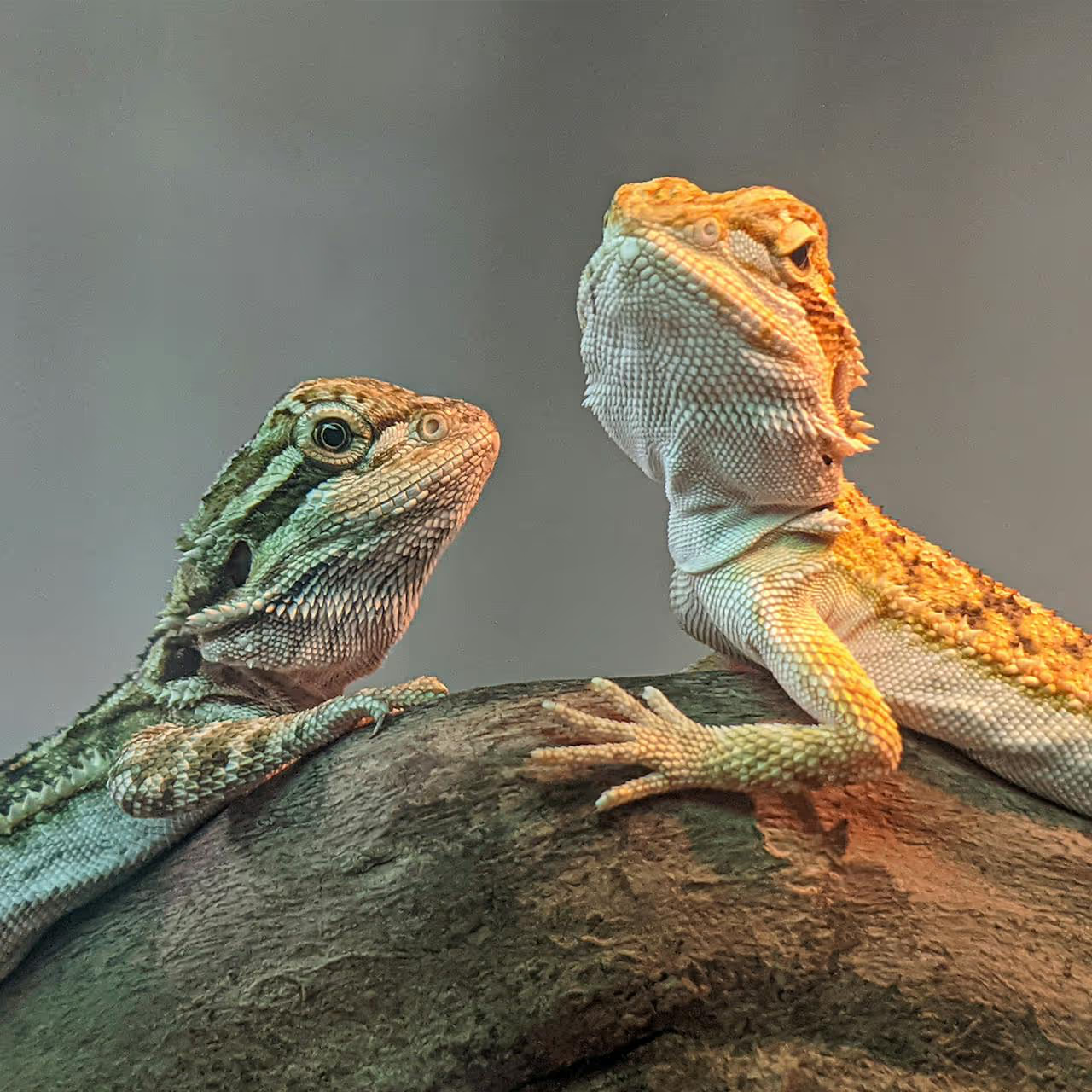
Reptiles: What to Know Before You Agree
Reptiles are not low-maintenance. They are high-precision. A dog communicates discomfort clearly. A reptile will stop eating, become slightly less active, or show a barely perceptible change in posture. And by the time those signs are noticeable to someone unfamiliar with the species, the animal may already be in serious difficulty.
The environmental requirements are non-negotiable. Most reptiles require a specific temperature gradient. A basking spot at one temperature, a cool side at another. Maintained continuously. UVB lighting is essential for many species and must be on the correct schedule. Humidity levels matter for many lizards and all snakes during shed cycles. Equipment failure. A thermostat that stops working, a bulb that blows, a heat mat that overheats. Can cause severe harm within hours.
For snakes specifically: the enclosure security matters as much as the temperature. Snakes are escape artists. A lid that is not correctly latched, a gap that seems too small to matter, a brief moment of distraction during feeding. Any of these can result in a snake that is somewhere in the house and impossible to find. Verify the escape protocol with the homeowner before the sit begins.
For lizards (bearded dragons, leopard geckos, chameleons): confirm the exact temperature ranges for both day and night, the age and replacement schedule of the UVB bulb, and whether handling is appropriate and how. Many lizards are more comfortable with minimal handling, particularly from unfamiliar people.
The questions to ask in the video call: What are the exact temperature ranges and how do you verify them? What equipment is in use and when was it last replaced? What does this animal look like when it is healthy? What are the early signs of a problem? Where is the nearest exotic animal vet?
Not all veterinary practices treat reptiles. Identify the specific practice before the sit starts, not during an emergency.
Birds: The Honest Advice
I would not sit a parrot or similar bird at this stage, and I say this having owned budgies. Not because I dislike birds, but because the variables are too many and the consequences of error too significant.
Parrots and cockatoos are emotionally complex animals that can suffer genuine psychological distress when their routine is disrupted and their primary bond is absent. They can become aggressive with unfamiliar people. They are acutely sensitive to household toxins. Non-stick cookware heated above a certain temperature releases fumes that can kill a bird in minutes, a fact that many homeowners do not mention because they have adapted their cooking habits so completely that they forget it is a variable worth declaring. If a bird escapes, the likelihood of recovery is low.
For a sitter who truly has parrot experience. Who has lived with one, understands their behavioural signals, and has handled the full range of what they produce emotionally and physically. A bird sit can work. For a sitter without that background, the research is clear: birds are not animals you can figure out as you go. The margin for error is narrow.
If you are considering a bird sit without prior experience, be completely transparent in your application. The homeowner with a parrot has heard from sitters who overstated their confidence before. Honesty about your learning curve, combined with evidence of genuine enthusiasm and a detailed pre-sit tutorial, is more compelling than claimed expertise the homeowner cannot verify. Our pre-sit video call guide covers how to structure that conversation
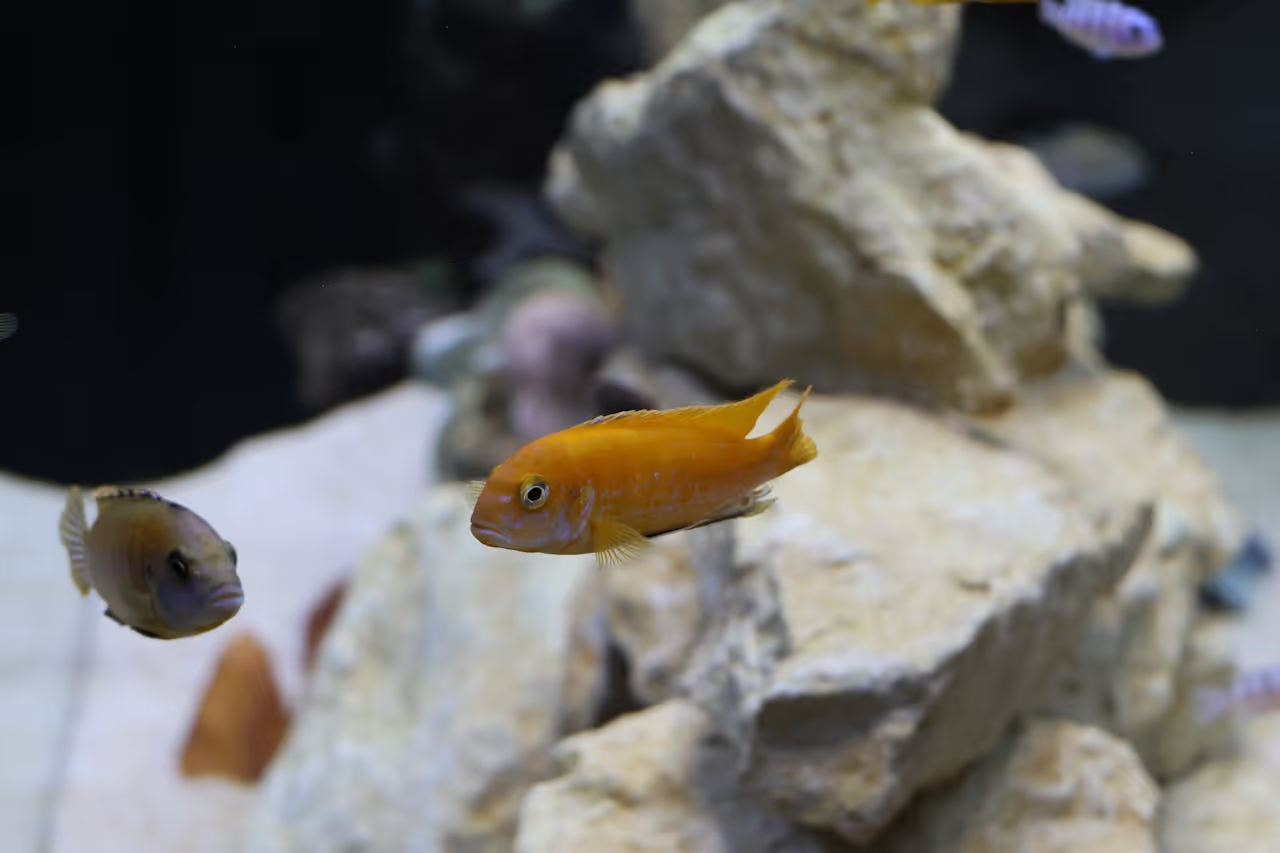
Small Mammals, Fish, and Invertebrates
Rabbits and guinea pigs are the most common non-cat, non-dog mammals on house sitting platforms. They are relatively manageable but require more engagement than many sitters expect. Rabbits are social, can develop GI stasis if their routine is disrupted, and need daily observation to catch health issues early.
Fish. Particularly fish in outdoor ponds or established aquarium systems. Require consistent feeding without overfeeding (the most common cause of fish death in care situations), basic water quality awareness, and the ability to spot a filter malfunction before it becomes catastrophic. The fish in Spain that Caro and I looked after in a backyard pond required daily feeding and nothing more, which represents the simpler end of the fish care spectrum. An established marine aquarium with water chemistry requirements is a different proposition entirely.
Tarantulas and invertebrates require minimal handling but precise environmental conditions and a calm, unhurried approach to feeding. The primary risk is handling stress during moulting. A tarantula in the middle of a moult is extremely vulnerable and should not be disturbed under any circumstances. Confirm with the homeowner whether the animal is approaching a moult before the sit begins.
For all of these animals, the same principle applies: the welcome guide must have the complete routine written down and accessible before you agree to the sit. Our welcome guide article covers what adequate documentation looks like.
The One Question That Reveals Everything
If a homeowner has a truly unusual or complex exotic pet and you are considering the sit, there is one question that tells you most of what you need to know about how prepared they are:
Is the pet's complete routine, food, quantities, feeding schedule, environmental settings, medication if any, and emergency contact for an exotic vet already written down in a welcome guide I can review before confirming?
A homeowner who answers yes and can send it to you before the sit is confirmed has thought clearly about the responsibility they are handing over. A homeowner who says they will "write something up" when you arrive, or who says the routine is easy and does not need to be documented, is transferring risk to you that they have not adequately managed themselves.
The welcome guide is the non-negotiable for any exotic pet sit. If it does not exist or is not specific enough, ask the homeowner to create one before you confirm. Our giving pet medication guide and our guide on house sitting with chickens and ducks cover the documentation standard for less common animals.
Building an Exotic Pet Profile
If you truly enjoy exotic animals and have real experience with them, this is one of the clearest paths to differentiating your profile on THS and similar platforms. The pool of sitters with verified reptile or avian experience is small. The pool of homeowners who desperately need a sitter they can actually trust with their unusual animal is growing.
A profile that mentions specific species you have experience with. Not vague claims of "interest in all animals" but named animals you have personally cared for. Combined with references from sits that involved those animals, will stand out in a way that no amount of general sitter profile polish can replicate.
The advice from the community: get the first exotic reference by being completely honest about your background and delivering excellent care. After that, the reviews compound in the same way they do for any specialist.
Join TrustedHouseSitters with 25% off and DM us @housesittersguide on Instagram. We answer everyone.

Frequently Asked Questions
Are exotic pet house sits common on TrustedHouseSitters?
No. They represent approximately 1-3% of listings, probably less. Dogs and cats dominate the platform. Rabbits, fish, and chickens make up most of the remaining sits. A reptile, bird, or invertebrate listing is truly unusual. This scarcity means experienced exotic pet sitters are disproportionately valuable in the community.
Should I accept a house sit with an exotic pet I have never cared for?
Only if you have genuine interest, the homeowner has comprehensive written documentation, and the animal's needs are within a learning curve you can handle safely. For highly complex animals. Certain reptiles, parrots, marine aquariums. The consequences of inexperience can be severe. Be transparent in your application about your background. Paid pet sitting is a more appropriate model for sits requiring significant specialist knowledge.
What is the most important preparation for an exotic pet sit?
A complete welcome guide with the full routine, environmental requirements, feeding specifics, and exotic vet contact details, reviewed before the sit is confirmed. Not a verbal summary at handover. A written document you can access and verify. The homeowner who cannot produce this has not adequately prepared for the responsibility transfer. Ask for it explicitly before confirming.
How do I handle an equipment failure during a reptile sit?
Contact the homeowner immediately, then the exotic vet if the homeowner is unreachable. Know the location of the nearest exotic animal vet before the sit begins. Not all practices treat reptiles or birds. For temperature-related emergencies, temporary solutions include battery-operated heat pads and ceramic heat emitters on manual timers, but these are bridges to professional consultation, not substitutes for proper equipment.


Responses
What are your thoughts on this post?